




Gold Corinthian Column Lamps
Gold corinthian column lamps bring neoclassical order to an interior through fluted shafts and elaborate capitals.
Gold Corinthian Column Lamps
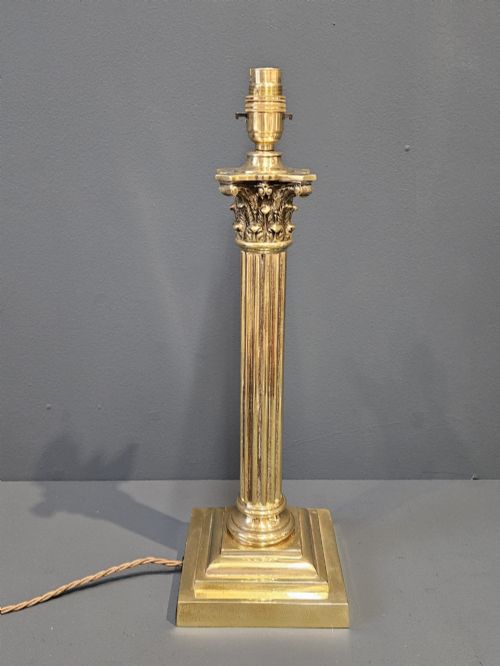
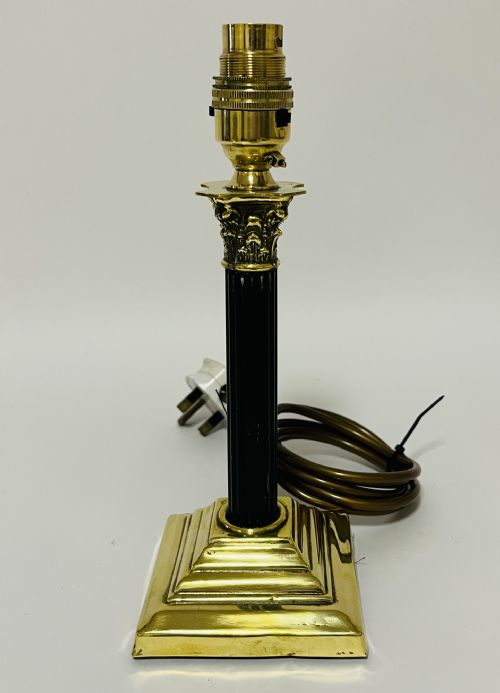
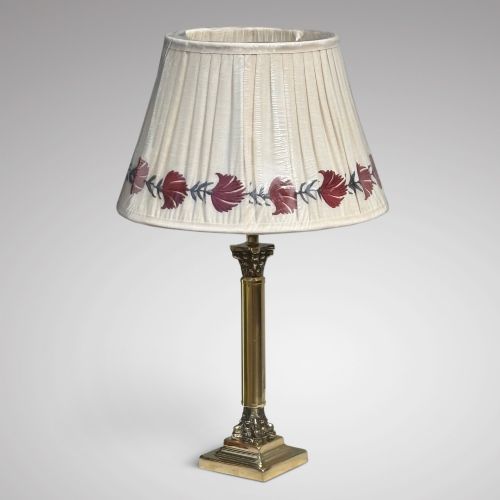
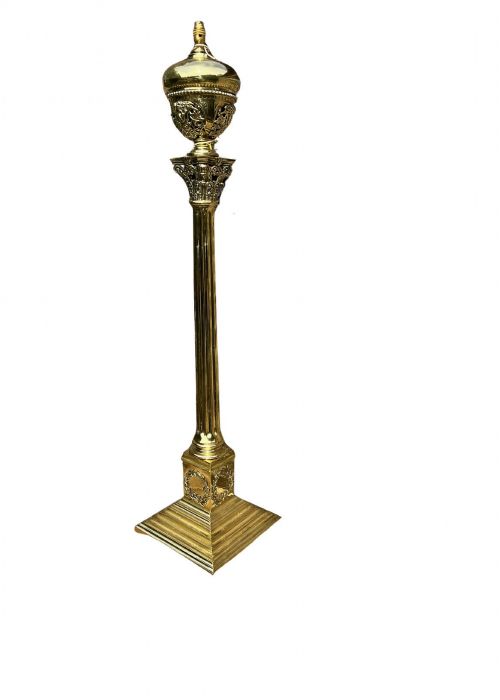
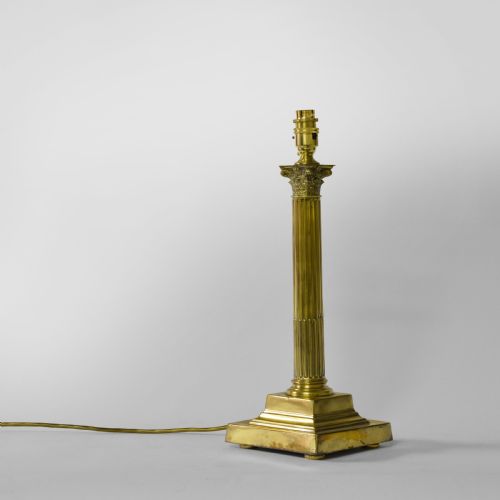
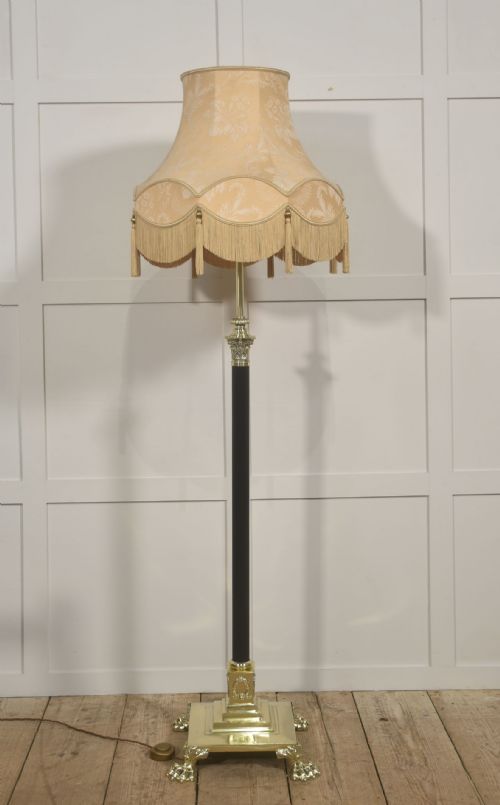
Gold corinthian column lamps draw upon classical architecture, translating stone orders into domestic lighting forms. When searching for gold corinthian column lamps, a buyer encounters upright shafts topped with ornate acanthus leaf capitals, cast in brass, gilt bronze or cast brass to achieve a golden metallic tone. Table lamps and taller standard floor lamps dominate the selection.
The periods represented on this page stretch from the Victorian era and the nineteenth century through the Edwardian period into the early twentieth century, with occasional examples from the nineteen-twenties and nineteen-thirties. Victorian and Edwardian iterations appear most frequently, often pairing polished or patinated brass with heavy bases.
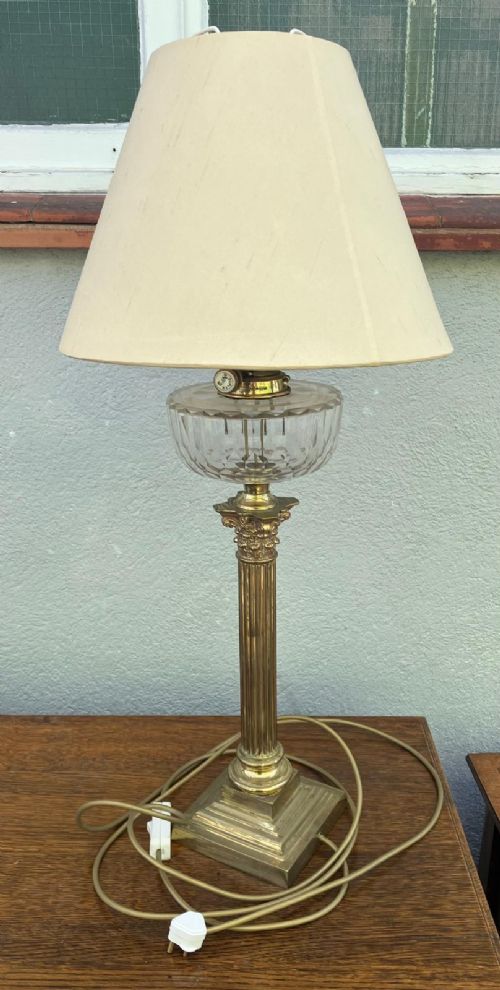
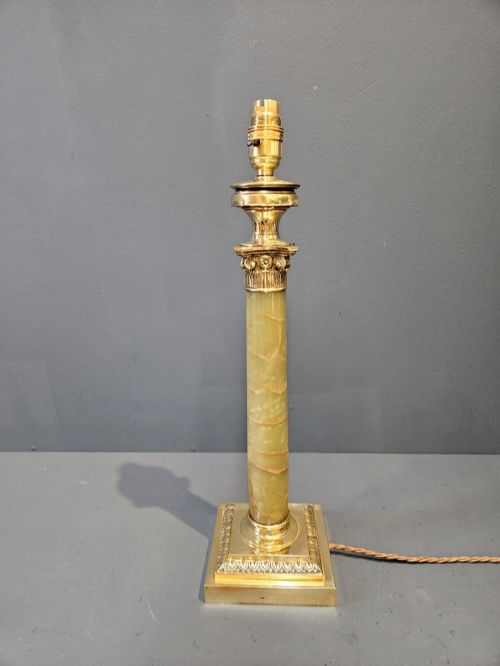
Makers and designers channel neoclassical and classical revival styles, producing both modest desk lamps and grand telescopic standard lamps. Certain variants incorporate contrasting materials such as marble or glass sections within the brass column structure to add visual weight and texture.
Distinctions in quality and execution
The crispness of the cast acanthus leaves on the capital separates superior examples from softer, worn castings that have lost their architectural definition. Crisp detailing requires sharp original moulds and careful post-casting chased finishing by hand.
Proportion and scale dictate the visual presence of a column lamp, where well-balanced diameters and substantial weight impart architectural dignity. Telescopic mechanisms on standard lamps operate smoothly on finer pieces, holding heights securely without wobble.
Columns arrived indoors when classical architecture became too heavy for the garden.
The Gold Corinthian Column Lamps Glossary
- Corinthian capital
- The uppermost member of a column, decorated with carved or cast acanthus leaves and scroll-like volutes. It represents the most ornate of the classical architectural orders.
- Fluted column
- A vertical shaft cut with parallel hollow grooves running from top to bottom. This technique creates rhythmic shadow lines that emphasise the height of the standard.
- Telescopic standard
- A floor lamp design featuring a sliding inner shaft that allows the overall height of the light to be adjusted up and down. This mechanism is frequently found on nineteenth century examples.
- Neoclassical revival
- A design movement drawing inspiration from the classical art and architecture of ancient Greece and Rome. It experienced major resurgences during the Victorian and Edwardian periods.
Gold Corinthian Column Lamps: Frequently Asked Questions
How do I date a brass column lamp?
Dating relies on observing construction methods, surface patination, and the styling of the base and wiring components. Victorian and Edwardian examples often display distinct casting techniques and heavier gauge brass compared to later twentieth-century interpretations.
Changes in switch mechanisms and plug types also offer clues, though many antique lamps have been rewired for modern safety and domestic use over their lifetimes.
Are these lamps suitable for low ceilings?
Table lamps fit easily onto sideboards, desks, and smaller tables without dominating room height. Standard floor lamps require more vertical clearance, particularly telescopic versions extended to their maximum height.
Choosing the correct shade proportion helps integrate a tall standard lamp into a room with standard ceiling heights without overwhelming the surrounding furniture.
How do I care for polished brass surfaces?
Regular dusting with a soft, dry cloth preserves the finish and prevents grime accumulation on intricate capital details. Avoid harsh chemical cleaners that strip patination or damage integrated marble and glass components.
Gentle application of specialised metal care products maintains the golden sheen of gilt bronze and cast brass elements safely.
What is the difference between a standard lamp and a table lamp?
Standard lamps stand directly on the floor as tall architectural floor pieces, designed to illuminate wider areas of a room. Table lamps are built on a smaller scale for placement on furniture surfaces.
Both formats utilise the same corinthian column vocabulary, allowing paired styling across different levels of an interior scheme.