


Gold Carved Wall Shelf
These gold carved wall shelf pieces combine gilded surfaces and carved timber to support objects or display spaces with decorative presence.
Gold Carved Wall Shelf
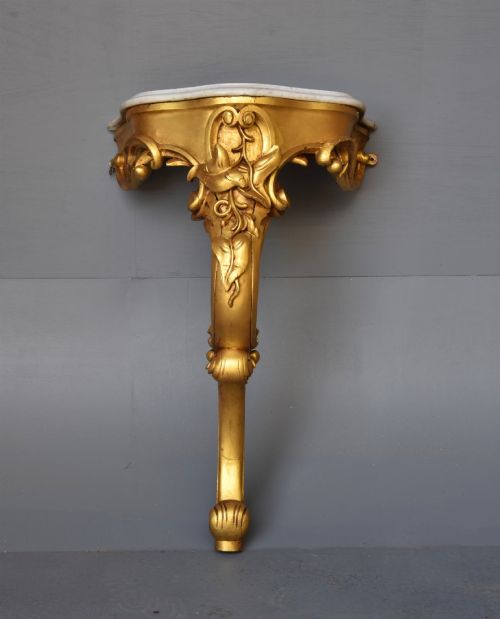
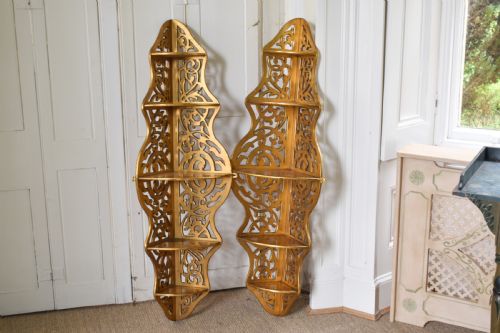
A gold carved wall shelf provides a compact display surface anchored directly to a vertical partition, taking forms such as wall brackets, corner shelves and console tables. These items serve to hold small decorative objects or simply punctuate a room with applied gilding and carved detail.
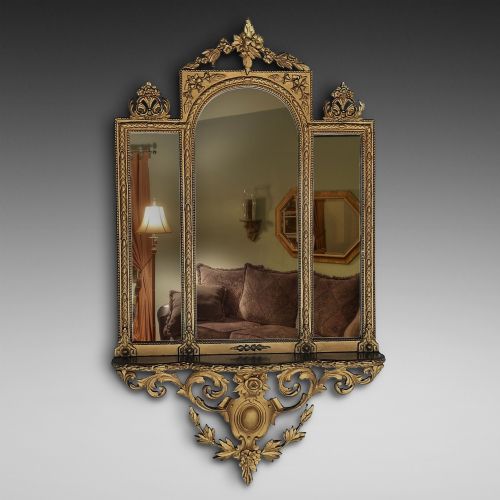
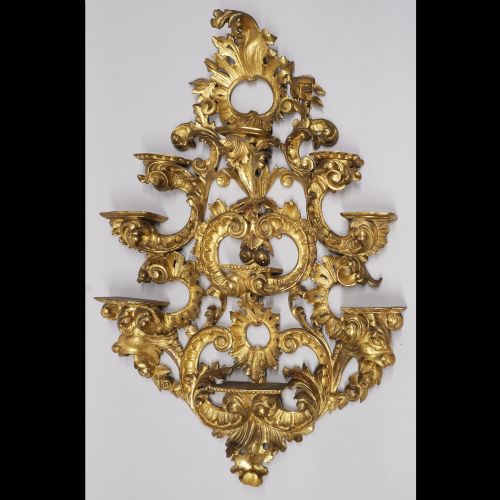
The selections available here span the 18th, 19th and early 20th centuries, drawing heavily on Victorian, Rococo Revival and Neoclassical vocabularies. Visitors will frequently encounter carved giltwood wall brackets and framed mirrors with integrated ledges alongside console pieces from various European origins.
How they were made
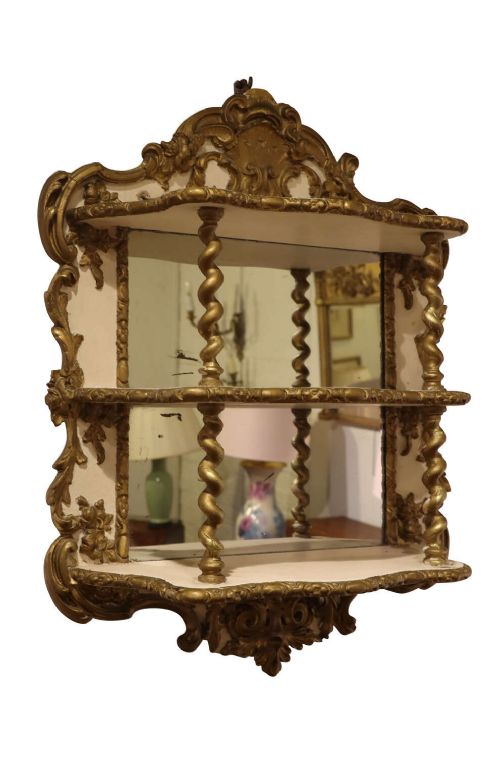
Maker operations rely on shaped timber forms built from wood, often finished with layers of gesso to receive gold leaf or applied gilt. Carving directly into the wood creates the structural relief before the gilding process is applied to catch the light.
Surfaces frequently incorporate mirror glass or painted elements alongside the dominant giltwood and gesso construction. This combination of materials establishes the reflective quality characteristic of these historical interior furnishings.
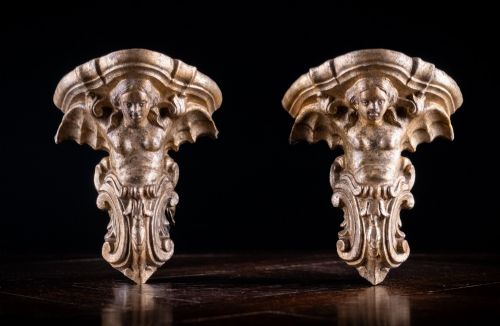
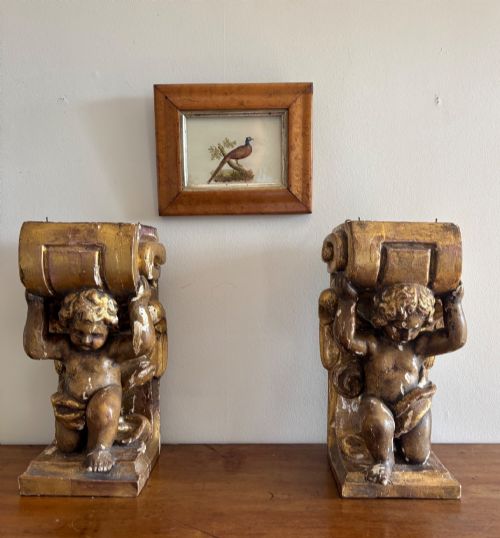
Some winged sirens and cherubs hold up these shelves, working quite hard for eternity.
What varies in quality
The depth and crispness of the carved detail distinguish superior examples from simpler production, particularly where acanthus leaves, cherubs or architectural motifs are rendered by hand. Finer pieces demonstrate careful undercutting and sharper definition in the gesso layer prior to gilding.
The application and retention of the gold leaf or gilt surface also mark differences across the range, with intact original gilding holding greater visual coherence than worn or heavily restored finishes. Construction methods, such as the joinery of wall brackets and the stability of the timber armature, further define the integrity of each piece.
Strahan of Dublin
The Gold Carved Wall Shelf Glossary
- Giltwood
- Wood that has been covered with thin sheets of gold leaf or gilt. This finish provides the characteristic metallic sheen seen on many period wall brackets and mirrors.
- Gesso
- A plaster-like mixture applied to wood surfaces as a preparation for painting or gilding. It allows carvers to achieve smooth details and relief ornamentation.
- Wall Bracket
- A supporting architectural member projecting from a wall to hold an ornament or shelf. These often feature elaborate carved scrollwork.
- Rococo Revival
- A design style popular in the 19th century emulating the 18th-century Rococo movement. It is characterised by asymmetry, curves, and naturalistic motifs like shells and foliage.
- Console Table
- A table fixed to a wall and supported by console brackets or legs. Some variants include an integrated wall shelf or mirror above.
Gold Carved Wall Shelf: Frequently Asked Questions
What is a gold carved wall shelf?
A gold carved wall shelf is a decorative wall-mounted support fashioned from wood with a gilt finish, used historically to display ornaments, clocks, or small sculptures.
These pieces range from single cantilevered brackets to elaborate console tables and mirror frames featuring integrated ledges.
How do I care for giltwood?
Giltwood surfaces require gentle dusting with a soft, dry brush to prevent accumulation without disturbing the delicate gold leaf layer. Moisture and harsh cleaning agents must be avoided entirely to preserve the original finish.
Placement should be away from direct heat sources and strong sunlight to prevent the underlying gesso and wood from drying out or cracking.
How do I tell Victorian from earlier pieces?
Victorian examples often employ heavier Rococo Revival or Neoclassical interpretations with machine-assisted elements, whereas 18th-century pieces typically show hand-carving directly into the timber base. Examining the gesso composition and the wear patterns on the gold leaf helps reveal the manufacturing period.
Stylistic cues such as sharper foliage relief and denser proportions also assist in separating mid-19th-century items from earlier Georgian production.