




Gold Cane Holder
A gold cane holder brings warmth and utility to a hallway, offering a gleaming home for walking sticks and umbrellas.
Gold Cane Holder
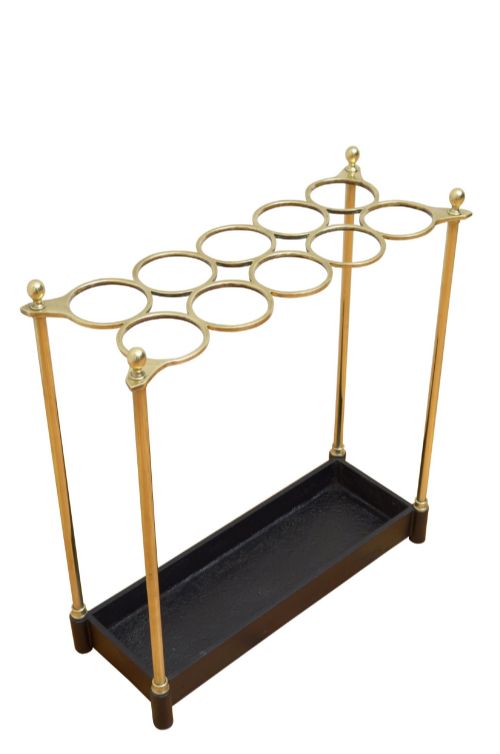
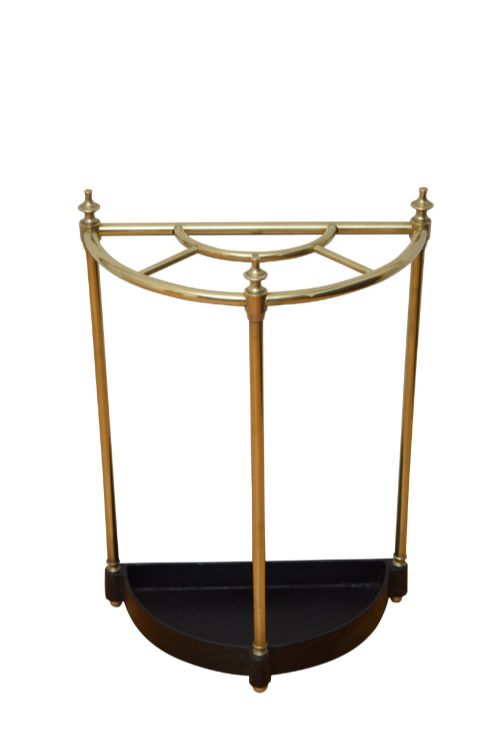
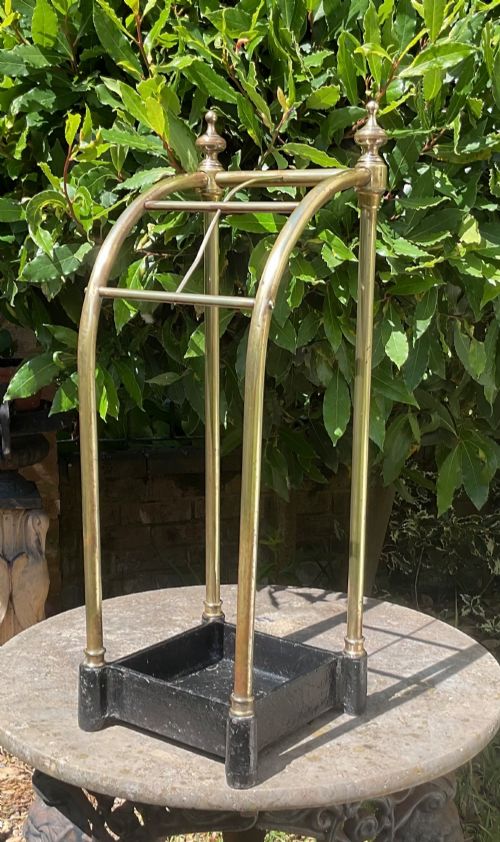
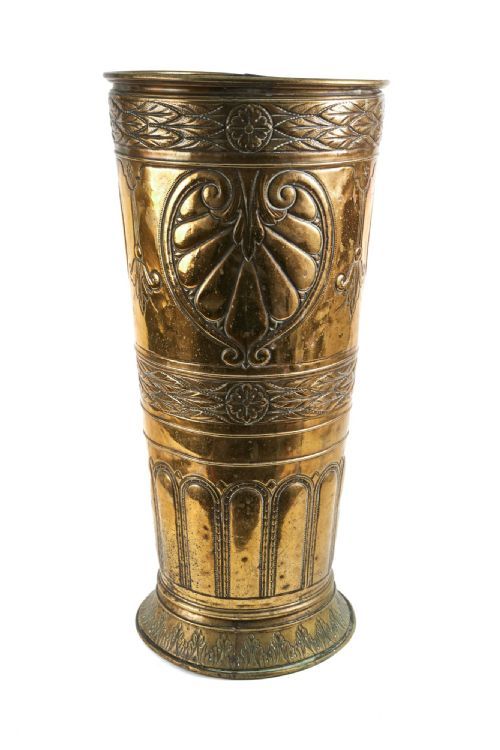
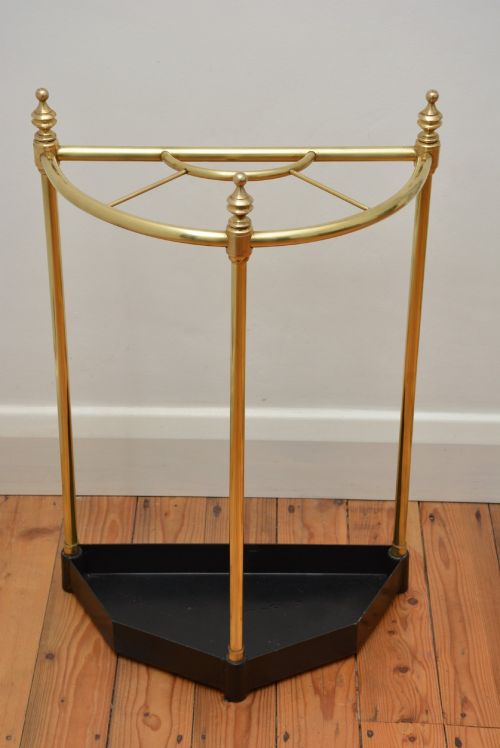
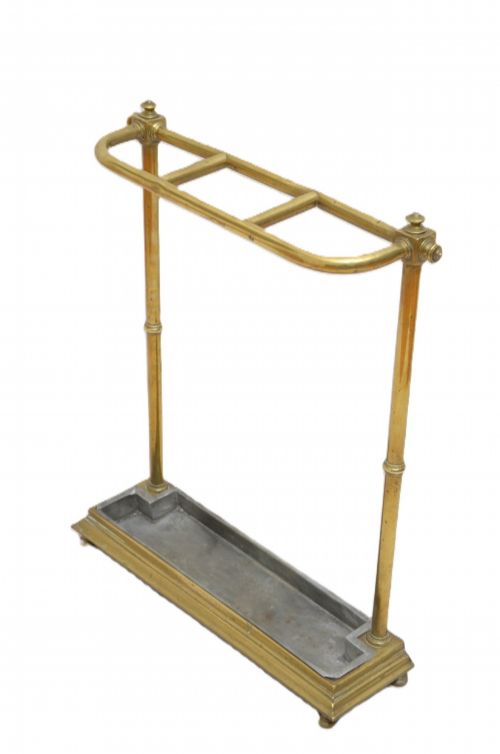
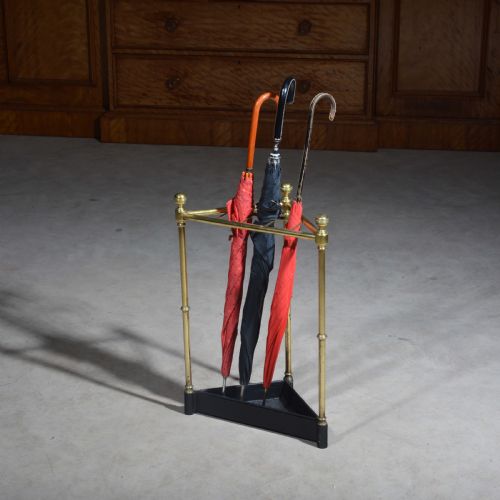
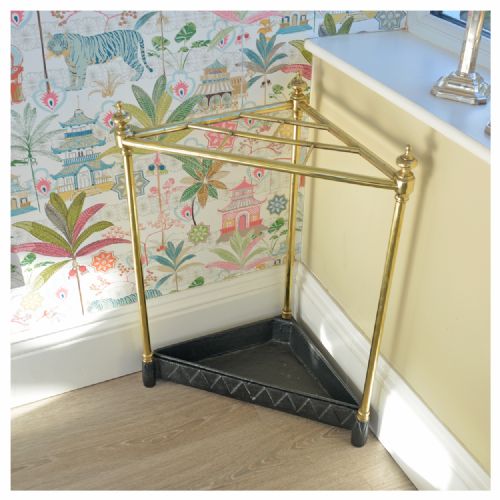
A gold cane holder typically takes the form of a brass umbrella stand or stick stand, designed to keep hallways orderly and elegant. Buyers searching for a gold cane holder encounter pieces shaped in semicircles, corners, or umbrella silhouettes, frequently rendered in polished brass that catches the light. The items seen on this page span the Victorian and Edwardian periods through to the early twentieth century, presenting robust hallway furniture built for daily service.
How they were made
Production relies heavily on brass and cast iron, utilising casting and forming techniques common to nineteenth-century foundries. Metal components are joined to create sturdy frames capable of supporting heavy walking canes and damp iron-shod umbrellas.
Foundries such as Falkirk Ironworks employed skilled moulding methods to shape decorative elements, whilst other makers utilised sheet brass and cast fittings. Drip trays form an integral part of the construction, catching moisture from umbrellas to protect interior floors.
Listings feature brass, cast iron, and metal materials spanning the Victorian, Edwardian, and mid-century modern periods.
What varies in quality
Quality resides in the weight of the metal, the crispness of the casting, and the presence of original drip trays. Finer pieces display substantial brass construction with detailed ball finials, secure division loops, and stable bun feet.
Simpler or later examples use lighter gauge materials and minimal ornamentation, reducing both the overall weight and the visual presence in a hallway. The distinction between standard production and top tier work rests on structural heft and the refinement of stylistic details.
Falkirk Ironworks
The Gold Cane Holder Glossary
- Demi Lune
- A half moon shape allowing furniture to stand flat against a hallway wall. This profile saves floor space whilst maintaining adequate depth for umbrellas.
- Drip tray
- A metal base plate positioned beneath the stand to catch water from wet umbrellas. It protects flooring from moisture and mud.
- Finial
- A decorative crowning ornament, often spherical or ball shaped, used on the top corners of stick stands. It adds a finished silhouette to the metalwork.
- Hall stand
- A piece of hallway furniture designed to accommodate coats, hats, and walking canes. Many include integrated loops or compartments for umbrellas.
- Cast iron
- A strong, heavy alloy poured into moulds to create rigid frames. It provides exceptional stability for tall umbrella stands.
Gold Cane Holder: Frequently Asked Questions
How do I clean a brass cane holder?
Polishing brass depends on whether you prefer a bright shine or an aged patina. Use a soft cloth and a gentle metal cleaner designed for brass.
Avoid harsh abrasives that can scratch the surface or remove historical wear. Regular dusting keeps the metal looking its best without stripping character.
Where should I place a stick stand?
Hallways and entrance porches serve as the traditional and practical locations for these stands. Their compact profiles allow them to fit neatly beside doors.
Ensure the floor beneath can handle any residual moisture, even with a drip tray in place. Positioning them away from direct foot traffic prevents accidental bumps.
Can these hold heavy walking sticks?
Solid brass and cast iron construction provides robust support for heavy walking canes and umbrellas. The sturdy bases prevent tipping during daily use.
Divided sections help keep multiple sticks upright and separated. This prevents heavy items from leaning too far to one side.
How do I date a brass umbrella stand?
Dating relies on stylistic clues such as Aesthetic Movement motifs, Art Nouveau curves, or Victorian ball finials. Construction methods and foundry marks also offer chronological clues.
Examining the fixings and the wear on the drip tray helps establish the age of the piece. Earlier nineteenth-century examples often feature heavier castings.