


Gold Cameo Pendant
These gold cameo pendant examples span Victorian shell, coral and onyx carvings set in gold frames, offering wearers classical portraits and historical profiles.
What these pieces are
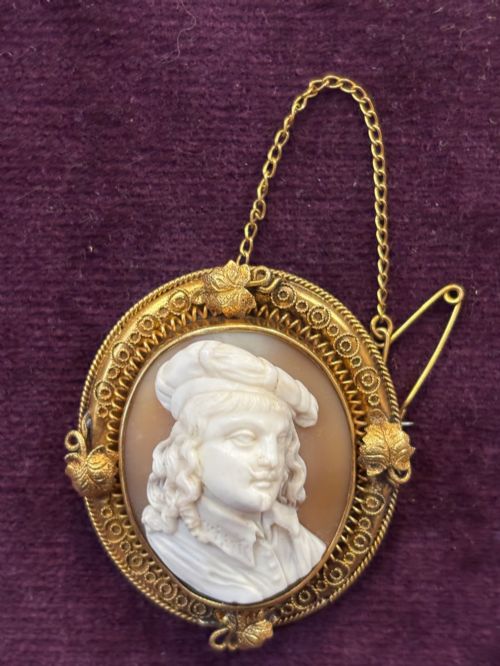
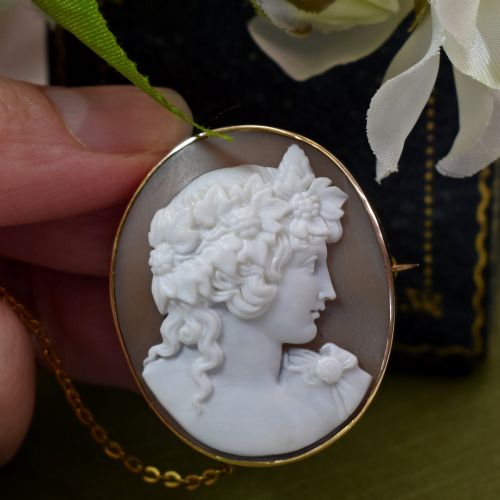
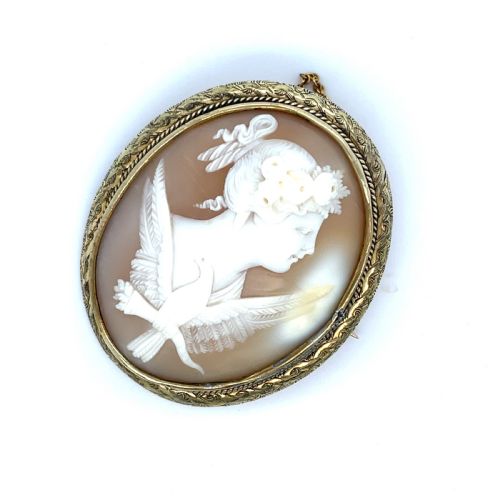
A gold cameo pendant sits as a sculpted relief ornament designed to hang from a chain, frequently double-purposed as a brooch with a secure pin fitting on the reverse. Buyers searching this phrase meet Victorian examples fashioned from shell, coral, onyx and turquoise blue stones.
The subjects range from classical profiles such as Diana and Apollo, Antinous as Dionysos, and historical figures like Bonnie Prince Charlie, carved with distinct portraiture. Many items present convertible mountings, functioning interchangeably as pendants and brooches.
Victorian pieces dominate the recorded selections, appearing in various gold standards from nine-carat to twenty-carat frames, alongside rolled gold variants adorned with pearls and leafed foliage.
How they were made
Recorded listings exclusively feature Victorian pieces, utilising shell, coral, onyx, and turquoise set in gold frames.
What varies in quality
The refinement of the carving separates standard production from finer work, visible in the depth of relief, the symmetry of the profile and the anatomical precision of the subject. Master carvers utilised the natural striations of the shell or coral to give hair and clothing a lifelike texture.
Mount construction and alloy selection distinguish the grade of the piece, with heavier gold standards and detailed wirework or granulation signalling superior manufacturing. Additional gemstone ornamentation, such as genuine seed pearls and turquoise cabochons, elevates the overall composition.
The Gold Cameo Pendant Glossary
- Cameo
- A method of carving an object such as a gemstone, shell or coral so that a raised relief image stands distinct from a coloured background. This technique dates back to antiquity and experienced a major revival during the Victorian era.
- Cabochon
- A gemstone shaped and polished with a smooth, rounded surface rather than faceted edges. These stones often appear alongside carved cameos in Victorian settings.
- Rolled gold
- A manufacturing method where a thin layer of gold is mechanically bonded to a base metal core. This technique provided the appearance of solid gold at a different cost point.
Frequently Asked Questions
Are these pendants also worn as brooches?
Many of these pieces feature integrated pin stems and safety catches on the reverse, allowing them to function as both brooches and necklaces.
This convertible design was standard practice for Victorian makers who wanted to maximise the versatility of their jewellery.
What subjects appear on these cameos?
The recorded pieces display classical mythological figures like Diana and Apollo alongside historical personalities including Bonnie Prince Charlie and Antinous as Dionysos.
Profile portraits of unnamed ladies also appear frequently across the selection.
Which gold standards are common?
The mountings utilise a range of gold purities, appearing in nine-carat, fourteen-carat, eighteen-carat, twenty-carat weights, and rolled gold settings.
Makers selected the alloy based on the intended weight and decorative detail of the frame.
What materials make up the carvings?
Carvers utilised natural materials including layered seashells, carved coral, and onyx with distinct colour variations.
These mediums allowed artisans to create striking contrast between the subject and the backing.