


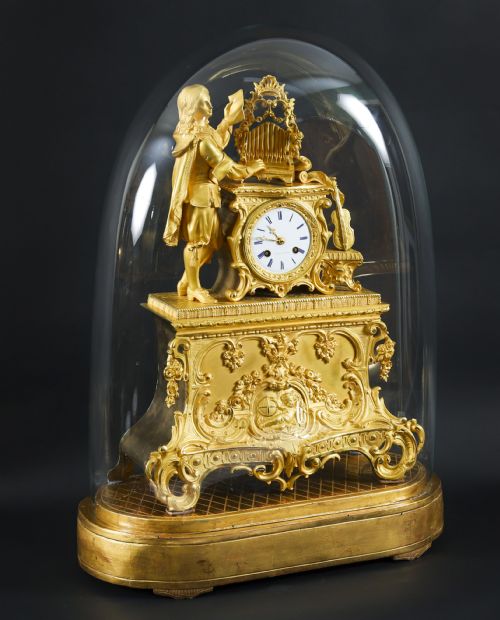


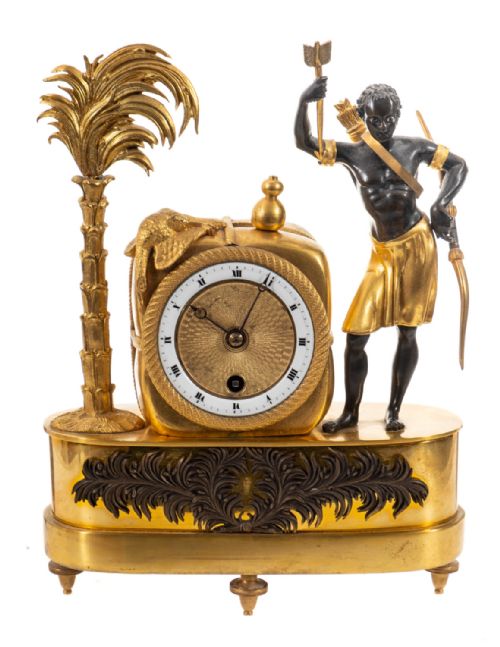

Gold Bronze Figural Clock
A gold bronze figural clock brings sculptural presence and mechanical precision together, offering a centrepiece of classical design.
Gold Bronze Figural Clock
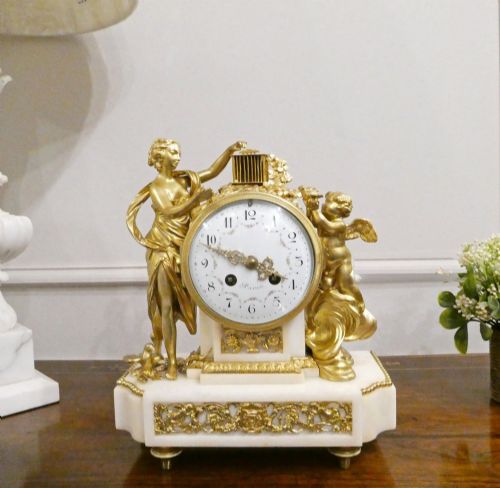
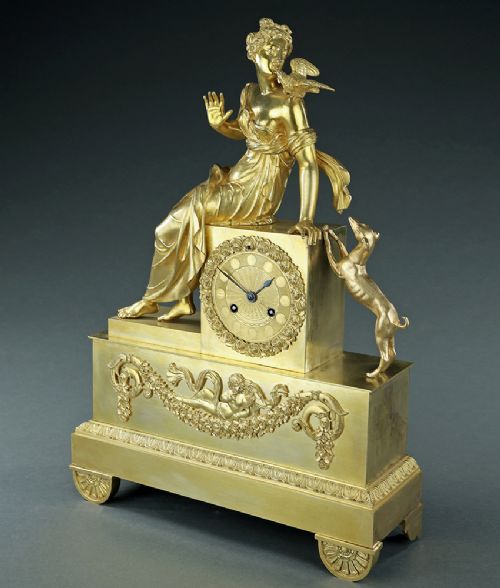
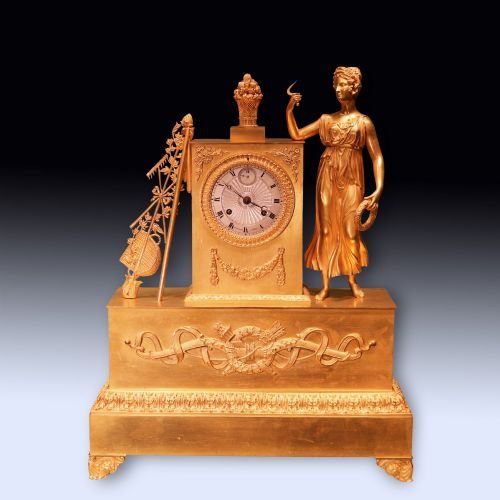
When you search for a gold bronze figural clock, you are looking at substantial mantel and table timepieces dominated by cast metal figures, classical deities, and allegorical subjects. The pieces on this page are predominantly nineteenth-century French works, alongside Regency examples from London makers.
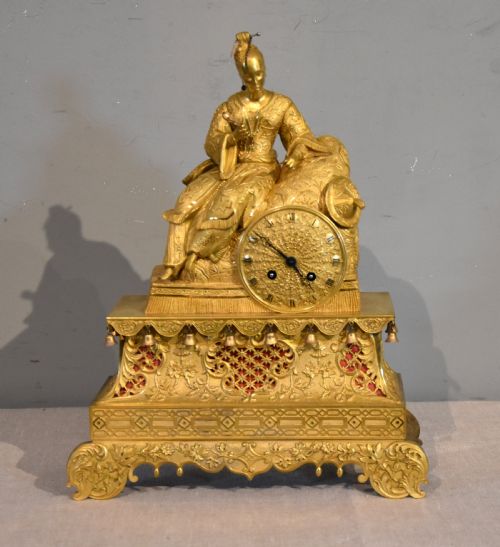
Most examples sit on marble or bronze plinths, combining gilt bronze and ormolu with hand-painted enamel dials or porcelain panels. Forms range from mythological scenes featuring Cupid, Diana, and Urania to architectural cases surmounted by lions, cherubs, and exotic figures.
The style spans French Empire, Rococo Revival, Louis XVI, and the Turkish taste, reflecting the diverse decorative impulses of the nineteenth century. These clocks served as functional timekeepers and status ornaments in domestic interiors.
What varies in quality
The mechanical movement inside dictates the engineering standard, with signed French movements by makers like Japy Freres or London fusee movements representing higher standards of clockmaking. Integrated decorative elements, such as hand-painted Sevres porcelain and substantial marble bases, further elevate the piece.
Listings include nineteenth-century French and Regency pieces utilising gilt bronze, marble, porcelain, and glass.
Canaillor of Paris·Japy Freres·Leroy Paris·Deniere Et Fils·John Bennett Cheapside London·James Murray London·Perigal and Duterrau·Baetens London·Bently and Beck London·Freres Raingo
The Gold Bronze Figural Clock Glossary
- Ormolu
- A gold-coloured bronze alloy treated with mercury gilding. This finish creates the characteristic bright metallic sheen seen on nineteenth-century French clock cases.
- Fusee
- A conical pulley connected to a cord or chain that equalises the torque of the mainspring. This mechanism ensures consistent timekeeping as the spring unwinds.
- Patinated bronze
- Bronze treated with chemical solutions to produce a dark, aged surface tone. It contrasts with the bright gilt highlights on figural clock cases.
- Enamel dial
- A metal dial face coated with fused glass powder and fired in a kiln. Numerals are painted onto the smooth white or coloured surface.
Gold Bronze Figural Clock: Frequently Asked Questions
How do I wind the clock?
Use the appropriate winding key on the dial apertures, turning gently until resistance is felt.
Avoid overwinding the mechanism to prevent damage to the mainsprings.
Where should I place it?
Position the clock on a stable mantelpiece or heavy table away from direct sunlight and moisture.
A level surface ensures the pendulum swings evenly for accurate timekeeping.
How do I identify the period?
Examine the stylistic motifs, such as neoclassical urns for Empire pieces or asymmetrical scrolls for Rococo Revival works.
Maker signatures on the movement backplate also help date the piece.
What is a fusee movement?
A fusee uses a conical drum and chain to regulate the pull of the mainspring.
This traditional British method maintains steady power delivery to the gear train.