

Gold Brass Appliques
Gold brass appliques are ornamental metal wall fixtures and mounts that bring period illumination and decorative detail to interior spaces.
Gold Brass Appliques
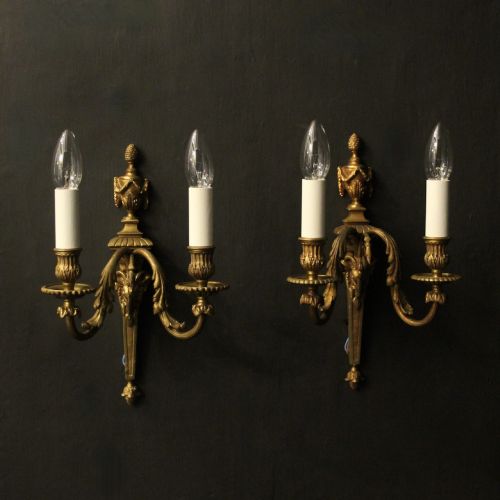
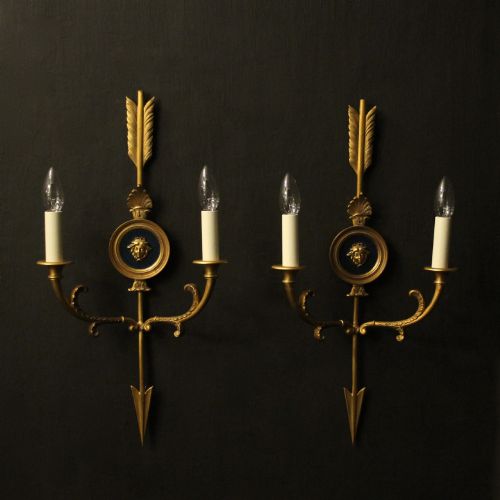
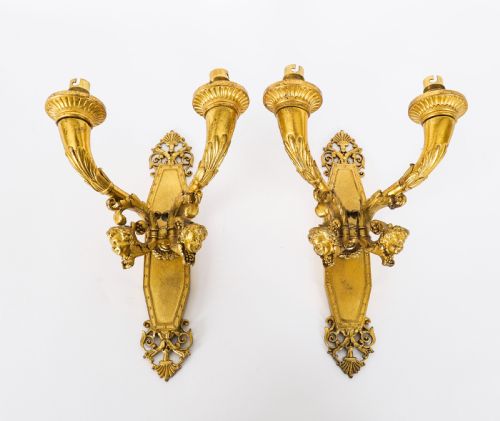
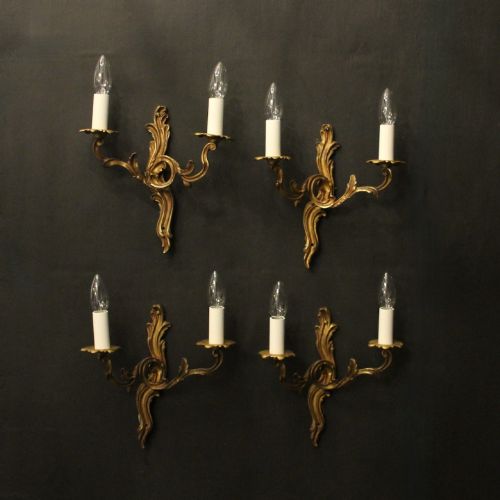
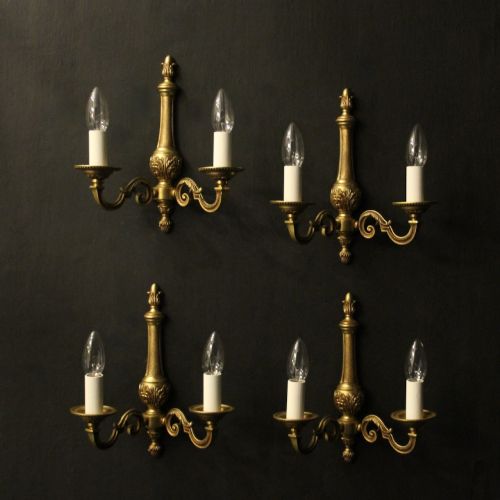
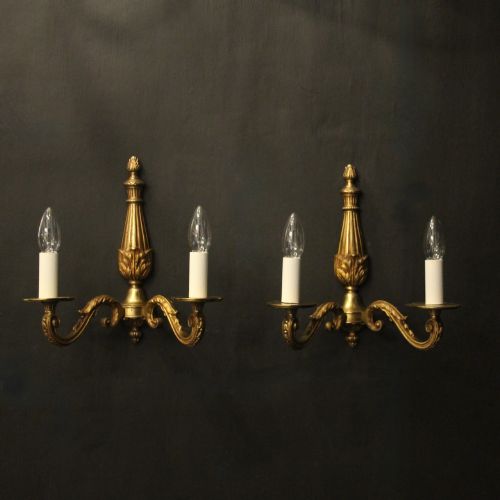
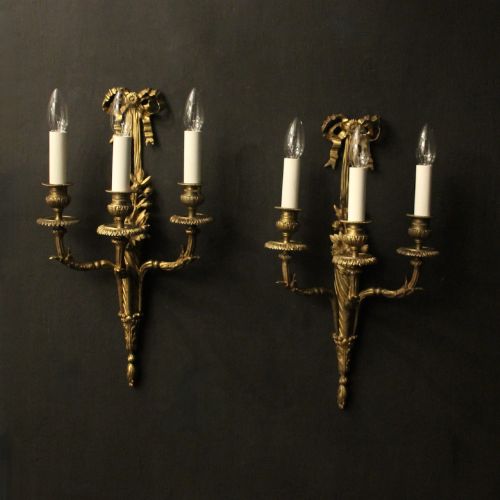
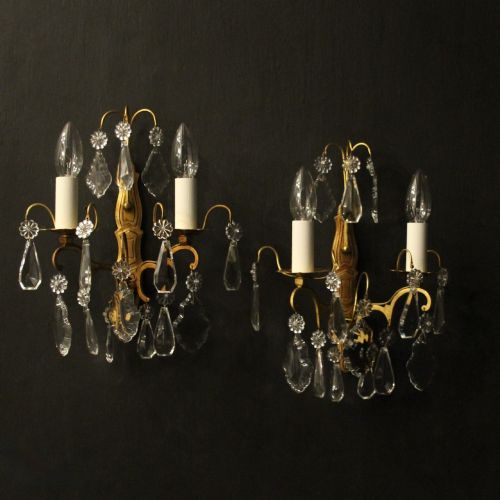
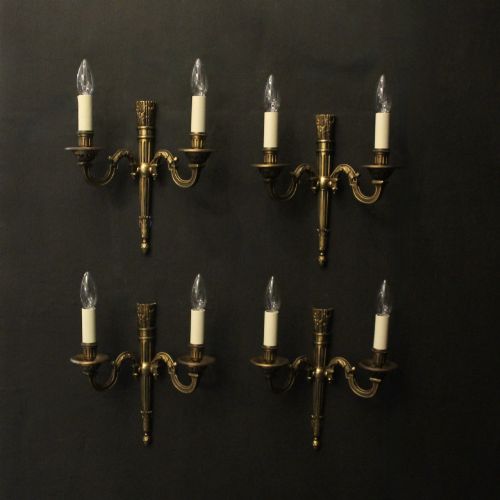
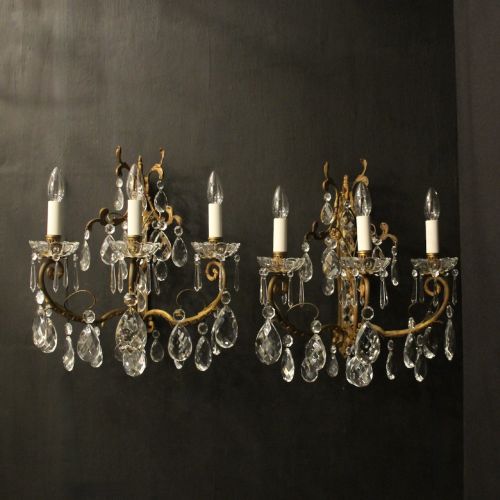
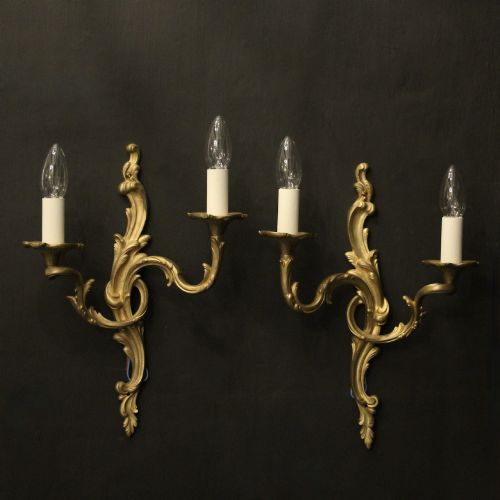
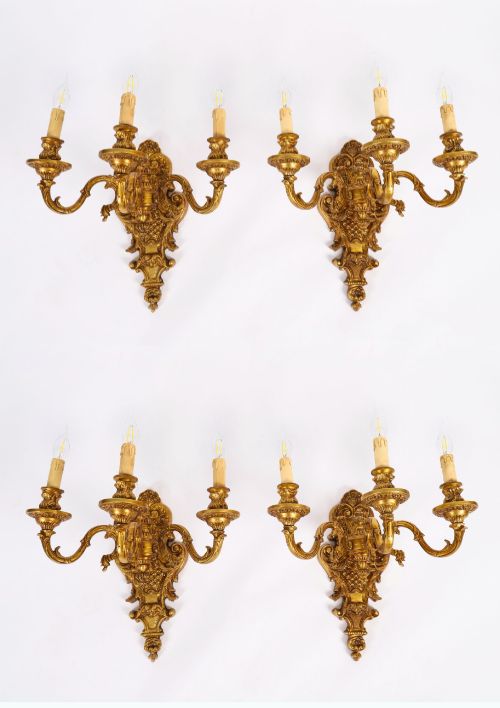
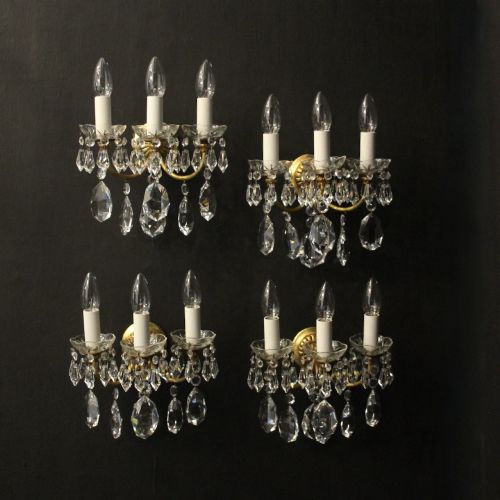
When you search for gold brass appliques, you encounter wall lights, wall sconces, and furniture mounts originating predominantly from French workshops across the nineteenth and early twentieth centuries. The selection spans single-arm fixtures to substantial sets of four or six matching lights.
The prevailing forms include twin-arm and triple-arm configurations, often styled in French Rococo, Louis XVI, or Empire designs. These pieces function as both functional wall illumination and decorative architectural accents.
How they were made
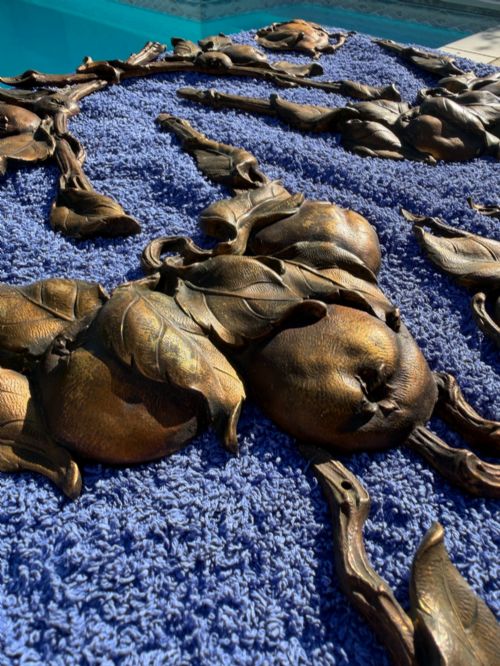
The fabrication relies on cast brass, bronze, and ormolu, utilising metal-working techniques that produce crisp surface relief and durable structural forms. Many pieces receive a layer of gilding to create the characteristic gold finish.
Some configurations incorporate crystal elements alongside the metal work to enhance the reflection of light from candles or early electric bulbs.
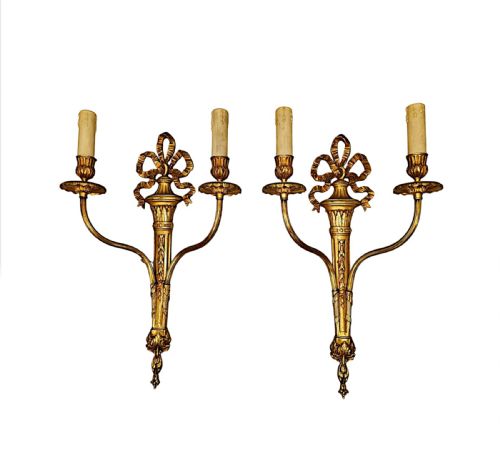
Certain wall lights feature carved ribbon motifs tied in permanent metal bows that have held their shape for a century.
What varies in quality
Quality reveals itself in the crispness of the casting and the depth of the chased detail across the metal surface. Finer examples display sharp definition in the acanthus leaves, ribbons, and rococo scrolls.
The integrity and preservation of the original gilding or ormolu finish significantly influence the visual impact of the piece. Substantial gauge metal and well-balanced arm construction separate standard items from superior workshop output.
Poix Blin
The Gold Brass Appliques Glossary
- Applique
- A decorative wall-mounted fixture or furniture mount used in interior decoration. It frequently takes the form of a candle sconce or electric wall light.
- Ormolu
- Finely ground high-carat gold applied to a bronze base metal using a mercury amalgamation process. This technique creates a durable golden surface common on French decorative items.
- Gilt Bronze
- Bronze metal treated with a thin layer of gold or gold-coloured leaf. This material provides the structural strength of bronze with the appearance of solid gold.
- Louis XVI Style
- A neoclassical design aesthetic characterised by straight lines, symmetry, and classical motifs such as urns and ribbons. It emerged during the late eighteenth century and saw frequent revival periods.
- Rococo Revival
- A nineteenth-century design movement mimicking the asymmetrical curves, C-scrolls, and naturalistic plant motifs of the earlier French Rococo period.
Gold Brass Appliques: Frequently Asked Questions
How do I mount gold brass appliques?
These fixtures attach directly to wall surfaces using secure screw fixings suited to the weight of the metal. Wiring configurations often require professional installation to meet current electrical standards.
Positioning depends on the room scale and the intended purpose, whether flanking a mirror or illuminating a hallway.
What is the difference between ormolu and gilt brass?
Ormolu specifically denotes mercury gilding applied to a bronze substrate, producing a deep and lasting golden lustre associated with high-end French production. Gilt brass uses brass as the base metal and may employ various gilding methods.
Both materials yield a bright golden appearance, but bronze offers a heavier and more durable foundation for intricate casting.
Are these wall lights wired for electricity?
Many twentieth-century pieces arrive adapted for modern electrical circuits, though wiring age varies across individual items. Some fixtures retain their original candle-holder configurations or historical conversion elements.
Inspection by a qualified electrician ensures safe operation within a modern domestic setting.
How do I date an antique wall sconce?
Dating relies on stylistic markers such as Rococo asymmetry versus Neoclassical symmetry, alongside the manufacturing techniques visible on the reverse of the casting. Material composition and screw types also offer clues to the period of origin.
Nineteenth-century examples often display hand-chased details, while later twentieth-century iterations show standardised production methods.