
Gold Bar Link Chain
When you search for a gold bar link chain, you are looking at substantial antique watch chains and necklaces designed to be worn across waistcoats or around the neck.
Gold Bar Link Chain
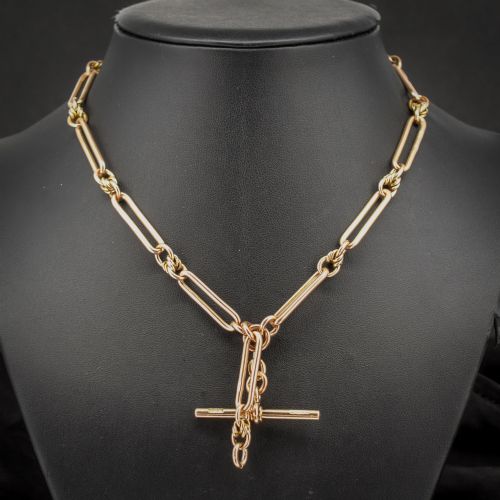
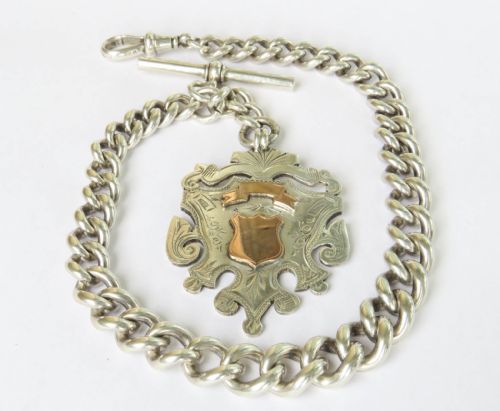
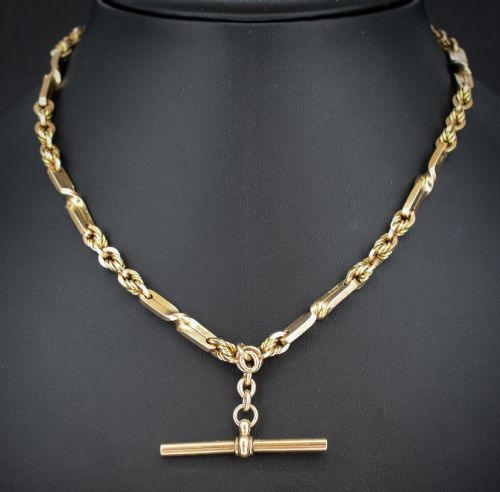
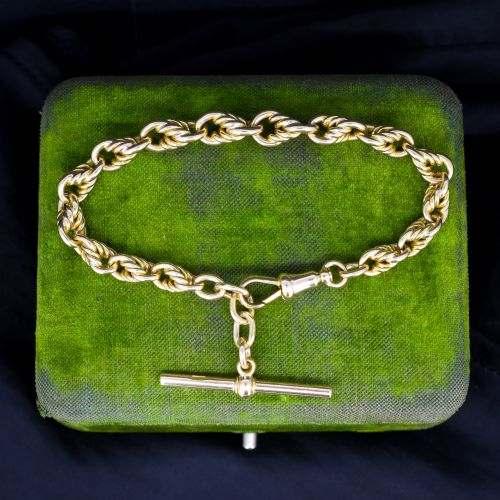
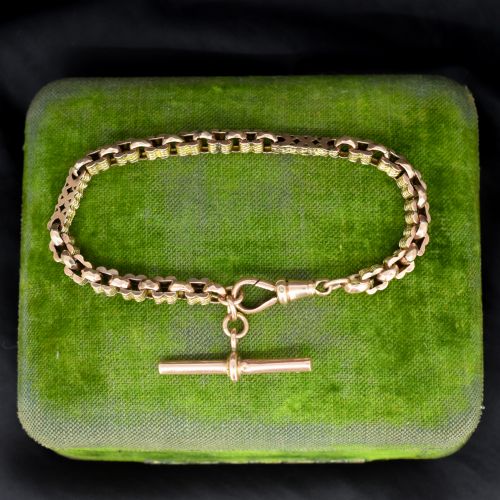
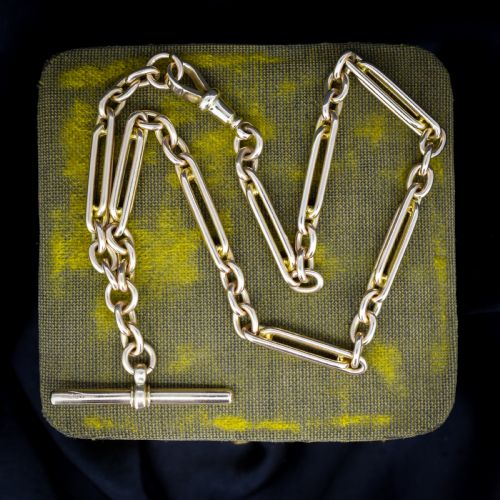
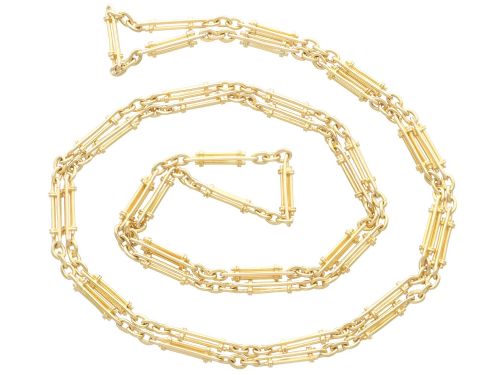
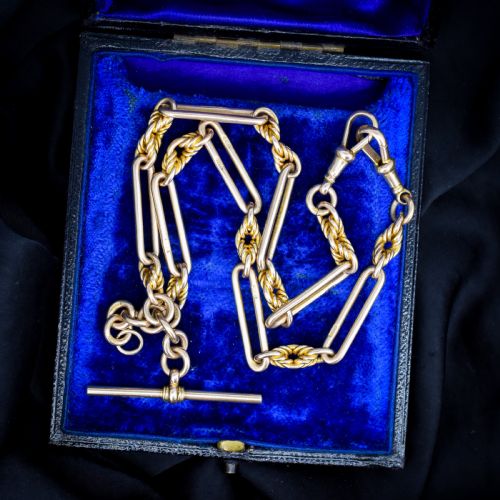
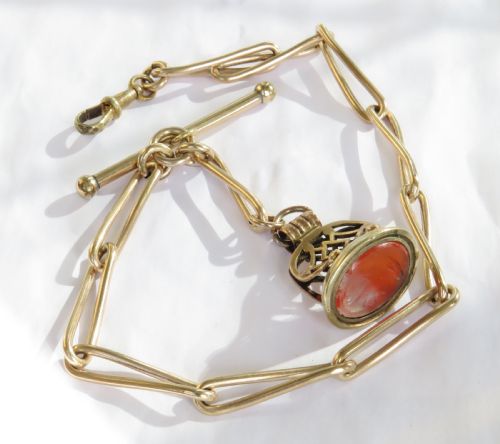
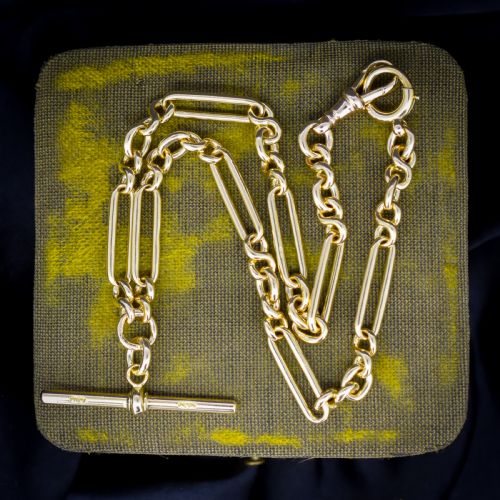
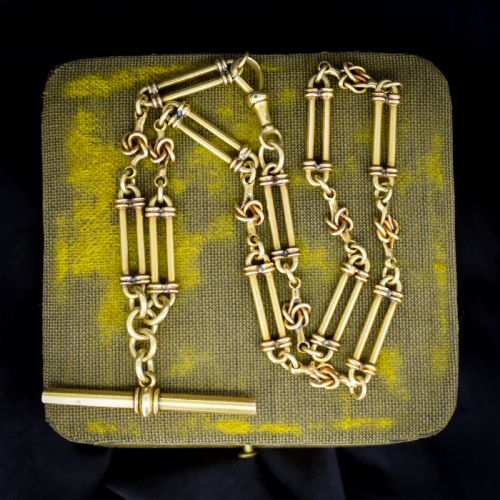
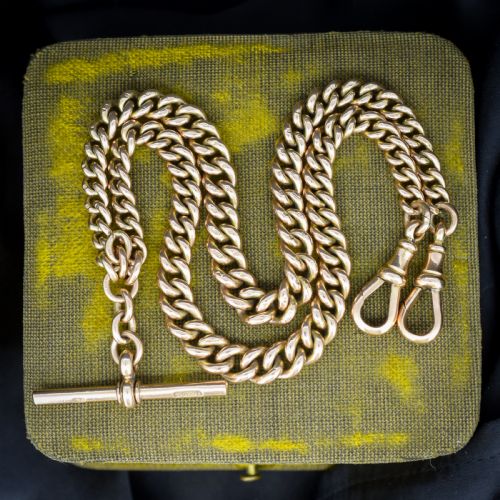
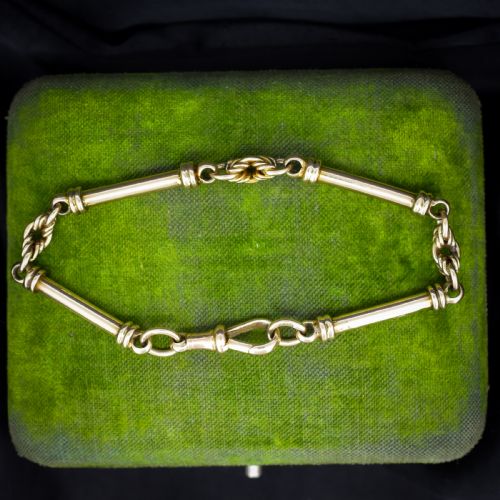
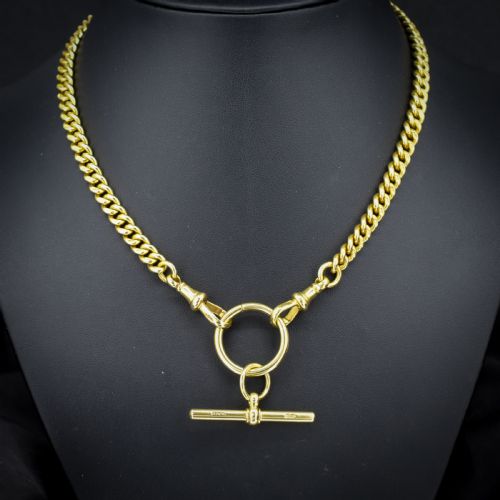
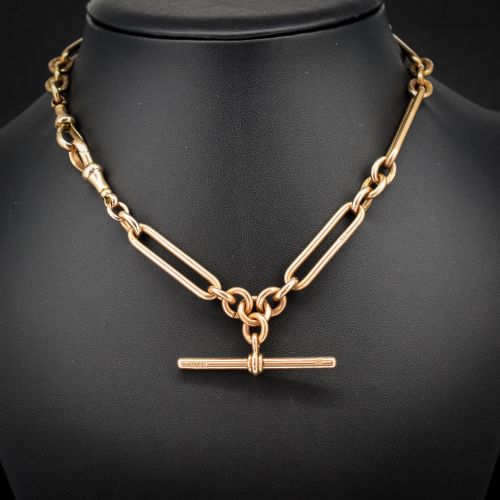
A gold bar link chain typically takes the form of an antique watch chain, albert chain, or converted necklace originating from the Victorian, Edwardian, and 1920s periods. These items frequently incorporate alternating bar links, trombone links, or curb links alongside functional components like dog clips, T-bars, and swivels. While many survive as pocket watch chains, a large portion function today as necklaces and bracelets.
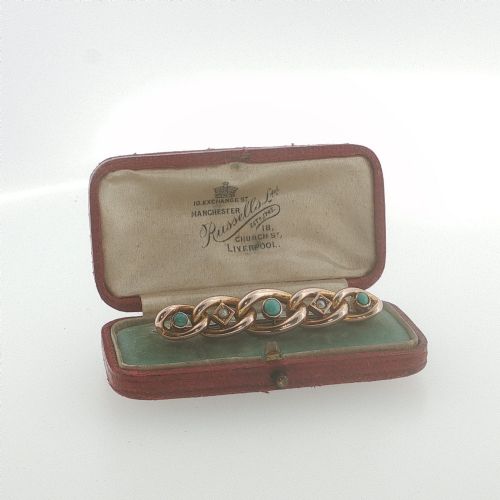
The pieces appearing on this page span the late nineteenth century through to the mid-century, including George V examples and Art Deco designs. Buyers frequently encounter 9ct rose gold and 9ct yellow gold, alongside rolled gold variants and occasional 15ct or 18ct gold pieces. Gemstone accents such as carnelian, turquoise, and seed pearls occasionally appear mounted on accompanying fobs or brooches.
How they were made
Goldsmiths constructed these chains using solid gold or rolled gold materials, joining individual links by hand or through early machinery. Tubular bars, love knots, and trombone links were soldered securely to maintain structural integrity under the daily weight of pocket watches and fobs.
Makers incorporated specialised hardware such as spring-loaded dog clips and swivel mechanisms to secure the chains to garments or buttonholes via T-bars. Surface ornamentation on links and fobs was often achieved through hand engraving or chasing.
Several chains arrive accompanied by tiny intaglio fobs depicting industrious scenes, such as haymaking.
What varies in quality
The distinction between standard and superior examples often rests upon the weight of the gold and the complexity of the link formations. Heavier pieces with substantial gram weights and fully stamped hallmarks command greater regard than lighter or hollow alternatives.
The completeness of the original components also determines distinction, particularly the presence of matching dog clips, functional T-bars, and original fobs rather than replacement parts.
The Gold Bar Link Chain Glossary
- Albert Chain
- A type of watch chain named after Prince Albert, designed to secure a pocket watch to a waistcoat through a T-bar. These chains often feature dog clips at either end for attaching accessories.
- Dog Clip
- A spring-loaded snap hook attached to the ends of watch chains for securing pocket watches, fobs, or charms. This mechanism allows the wearer to fasten and remove items quickly.
- T-Bar
- A small horizontal metal bar attached to the centre of an albert chain, used to anchor the chain through a buttonhole. It remains a defining feature of traditional pocket watch chains.
- Trombone Link
- An elongated rectangular metal link with folded ends, frequently alternating with smaller round or love knot links in antique chains. This link style is characteristic of Victorian and Edwardian watch chains.
- Rolled Gold
- A material consisting of a thin layer of gold mechanically bonded to a base metal core, offering the appearance of solid gold at a lower cost. Items made this way were popular for everyday wear.
Gold Bar Link Chain: Frequently Asked Questions
How do you wear a pocket watch chain as a necklace?
A pocket watch chain can be worn around the neck by fastening the dog clip directly to a loop or ring at the opposite end of the chain. The T-bar is typically left to hang as a decorative pendant.
Many antique chains listed on this market are already utilised this way by buyers. Their lengths, often between fourteen and twenty inches, suit this style of wear.
What is the difference between solid gold and rolled gold?
Solid gold chains are made entirely of gold alloy throughout the metal, such as nine carat or eighteen carat gold, ensuring durability and intrinsic value. Hallmarks stamped onto the links usually confirm the purity.
Rolled gold chains consist of a thick layer of gold fused to a base metal core. They offer the warm colour of gold while remaining lighter and more affordable.
How can I tell the period of a gold chain?
The period of a chain can often be determined by its specific link style, such as trombone or curb links, combined with any stamped hallmarks. Victorian and Edwardian pieces frequently display distinct maker marks and metal purity stamps.
Assay office marks, like the anchor for Birmingham or the crown for Chester, provide further clues to a piece's exact origin and age. Comparing the clasp mechanisms also helps identify manufacturing eras.