


Gold Aquamarine Ring
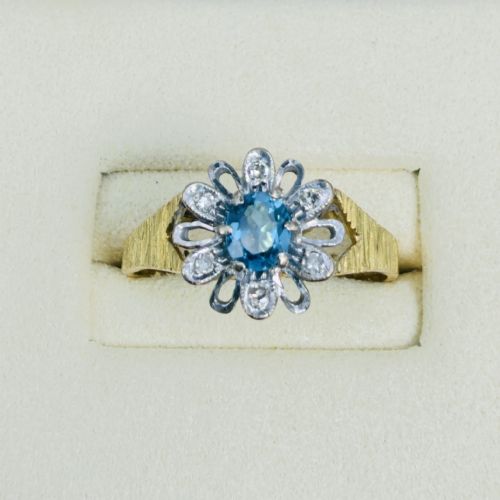
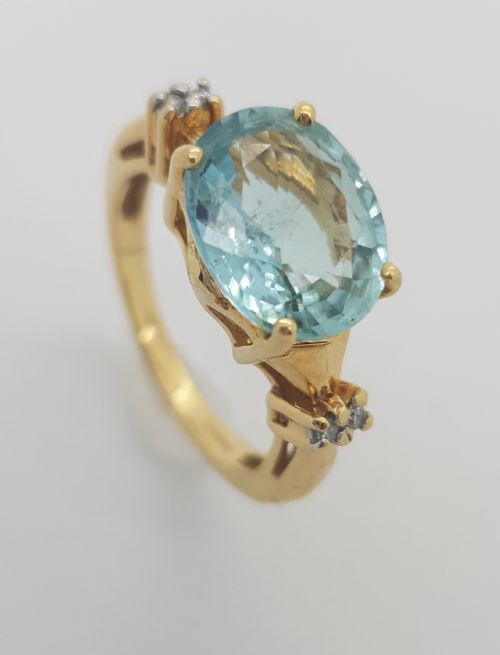
When you search for a gold aquamarine ring, you look at pale blue beryl set in yellow, white, or rose gold from decades past.
Gold Aquamarine Ring
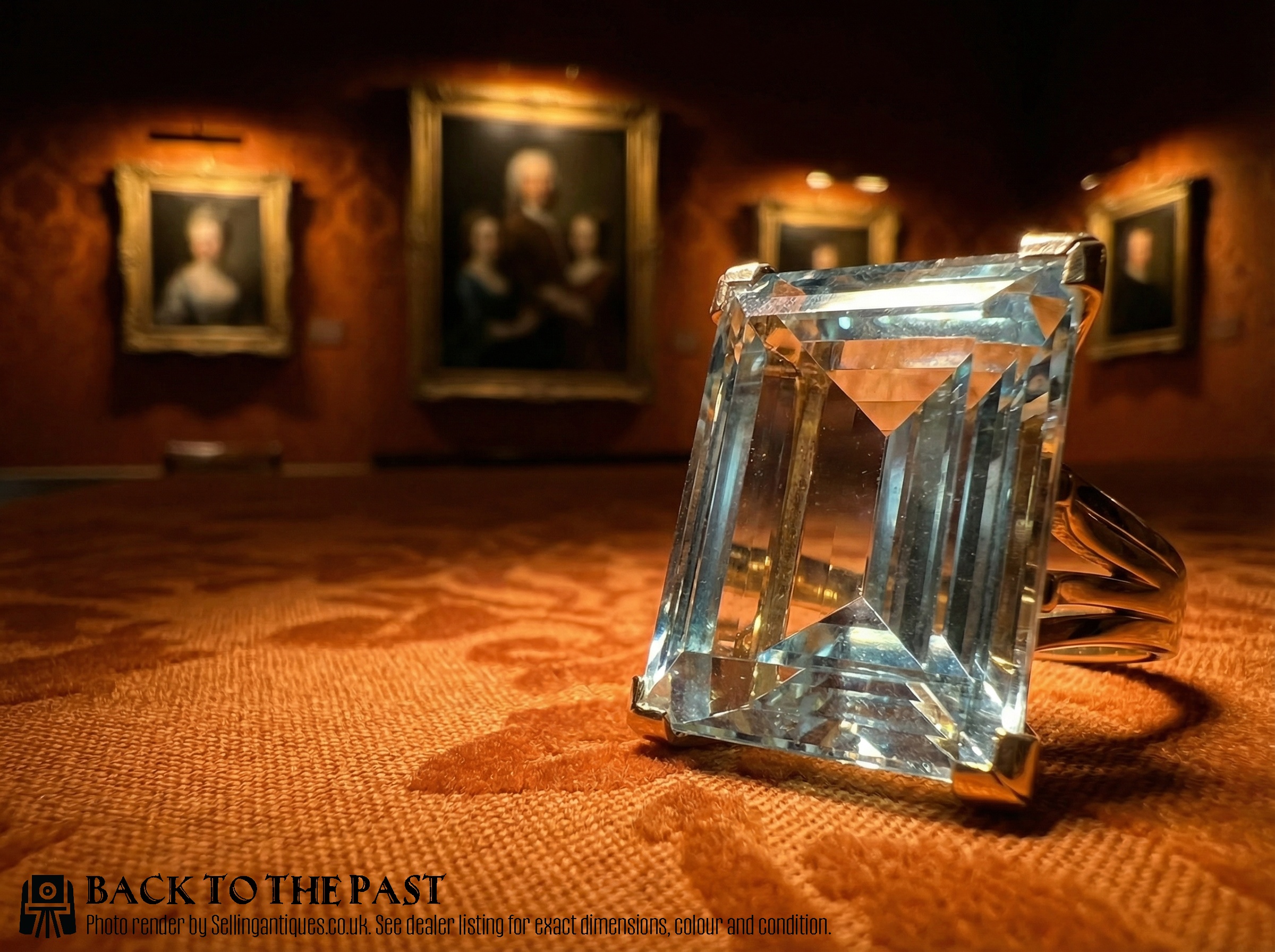
A gold aquamarine ring brings together pale blue or greenish-blue beryl and precious metal, spanning periods from the late nineteenth century through the mid-twentieth century. The selection ranges from delicate solitaire designs to substantial cocktail and dress rings featuring large emerald-cut stones.
Art Deco and Mid-Century pieces dominate the offerings, often pairing the central beryl with small diamonds in geometric or cluster arrangements. Yellow and white gold provide contrasting backdrops, with eighteen-carat and lower karatages appearing across various decades.
Buyers encounter both understated vintage bands and dramatic retro tank rings with heavy gold work. Each item reflects the design priorities of its era, from Edwardian delicacy to the bold scale of nineteen-forties and fifties cocktail jewellery.
How they were made
Goldsmiths set natural aquamarines into yellow, white, or rose gold, frequently utilising platinum claws or accents in Art Deco pieces to secure diamonds safely. Stones undergo step-cutting, oval faceting, or marquise shaping to maximise internal light return within the metal mount.
Construction methods shift from hand-worked Edwardian filigree and floral motifs to heavier cast platinum and gold tank settings popular during the mid-century period. Prong, bezel, and cluster settings hold the central beryl alongside old-cut or modern brilliant-cut diamonds.
Listings feature yellow gold, white gold, and platinum alongside nineteenth-century, Edwardian, Art Deco, and mid-century design periods.
What varies in quality
The intensity and depth of the beryl colour dictate much of the appeal, alongside crystal clarity and freedom from heavy internal inclusions. Larger carat weights, particularly in emerald-cut stones, alter the visual balance and presence on the hand.
The execution of the surrounding metalwork, whether delicate Edwardian piercing or bold retro geometry, defines the craftsmanship. Well-matched diamond accents and secure, original setting work elevate the standing of any piece.
The Gold Aquamarine Ring Glossary
- Aquamarine
- A blue to greenish-blue variety of mineral beryl named for its seawater hue. It shares mineral origins with emerald.
- Emerald Cut
- A rectangular or square gemstone cut with cropped corners and step facets. This cut highlights clarity in large stones.
- Tank Ring
- A bold, volumetric ring style born in the nineteen-forties. It frequently uses yellow gold and platinum in heavy, machine-inspired shapes.
- Solitaire
- A mounting holding a single central gemstone without secondary stones. This setting places full visual weight on the primary beryl.
- Cluster Ring
- A design featuring a central gemstone surrounded by a border of smaller stones, typically diamonds. This arrangement maximises overall sparkle.
Gold Aquamarine Ring: Frequently Asked Questions
How do I wear a large cocktail ring safely?
Large stone settings require care during daily tasks to avoid sharp impacts against hard surfaces. Rotating the ring palm-side down during heavy activity protects the beryl table.
Regular checks by a jeweller ensure the claw settings remain tight around the stone. Storing the piece in a dedicated box prevents scratching from harder gems.
How do I tell an Art Deco ring from a mid-century one?
Art Deco pieces from the nineteen-twenties and thirties favour geometric symmetry, white gold, and platinum with delicate milgrain edges. Settings often appear flat and linear.
Mid-century and retro rings from the nineteen-forties and fifties introduce bulky yellow gold, heavy three-dimensional curves, and sweeping scrolls. Stones scale up significantly in these later decades.
Does gold karat weight change the colour of the ring?
Higher karat yellow gold provides a rich, warm yellow tone that contrasts strongly with pale blue beryl. Lower karats or white gold offer a cooler background.
White gold and platinum mounts brighten the appearance of lighter aquamarines by reflecting white light through the crystal lattice.
What does an old-cut diamond look like?
Old-cut diamonds display smaller tables, higher crowns, and larger open culets compared to modern brilliant cuts. Their facets catch candlelight with softer, broader flashes.
These hand-pawned stones appear frequently in antique and vintage settings from the nineteenth century through the mid-twentieth century.