

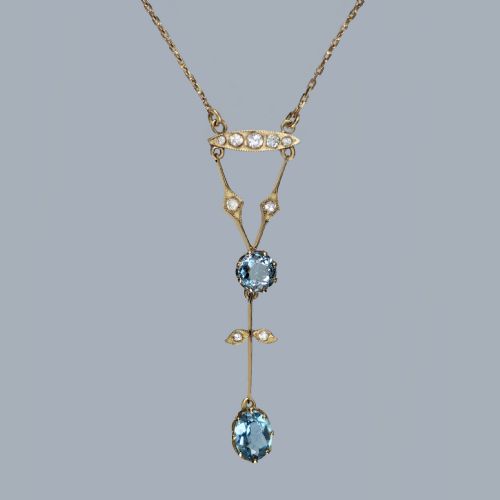


Gold Aquamarine Drop Pendant
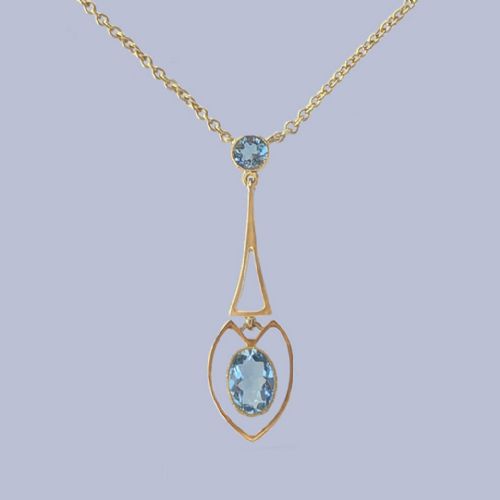
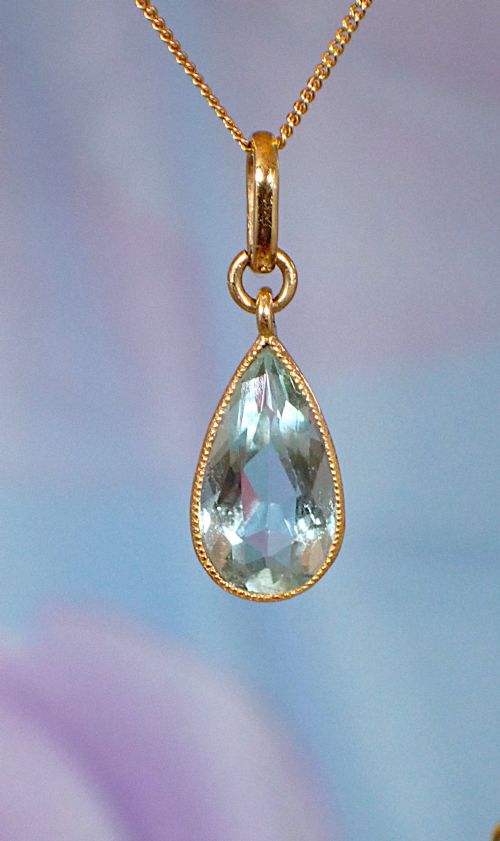
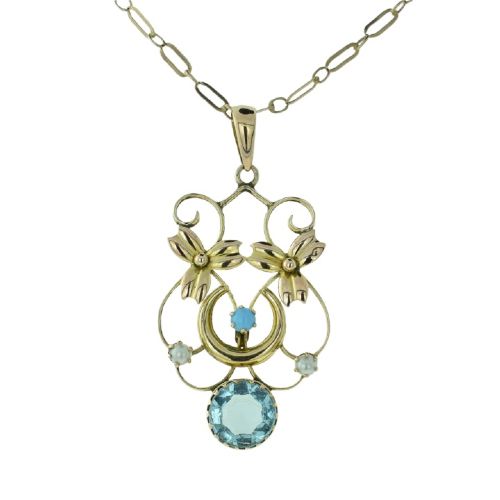
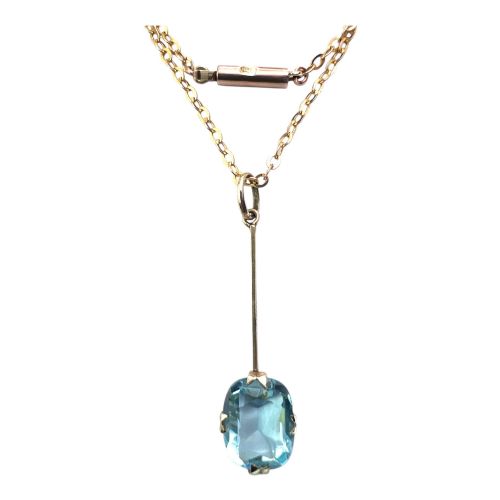
A gold aquamarine drop pendant brings together cool blue beryl and warm gold in a delicate hanging form.
Gold Aquamarine Drop Pendant
Makers of these pieces utilised varied gold purities, most frequently nine carat and fifteen carat gold, alongside higher karat options and platinum. The stones hang as individual drops, lavalieres, or cluster configurations, often paired with supporting gems.
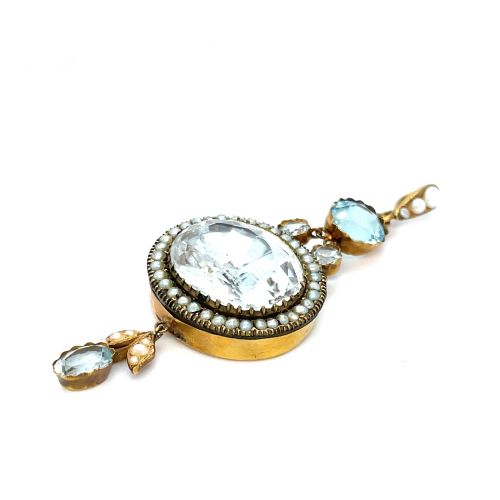
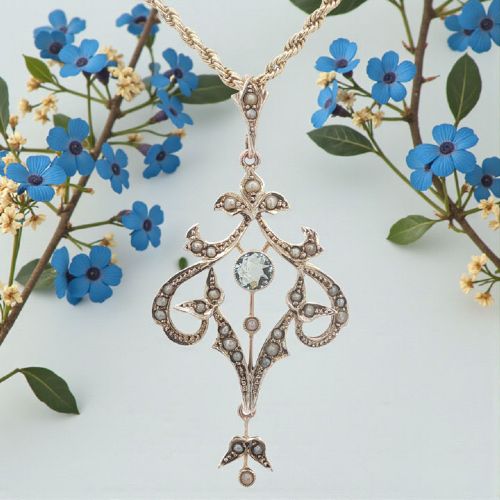
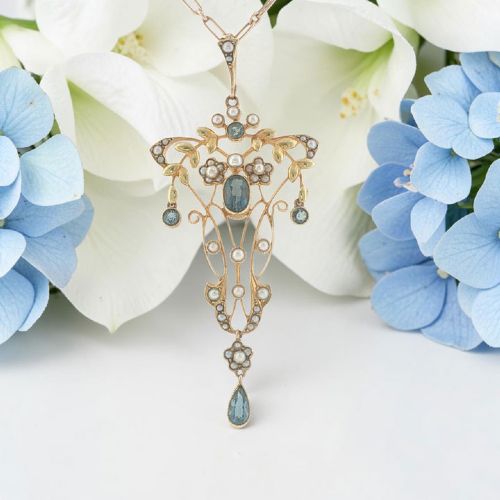
The evidence shows that these items frequently incorporate seed pearls, diamonds, and white sapphires alongside the central aquamarine. The overarching style reflects delicate wirework, foliate motifs, and geometric lines typical of early twentieth-century jewellery production.
How they were made
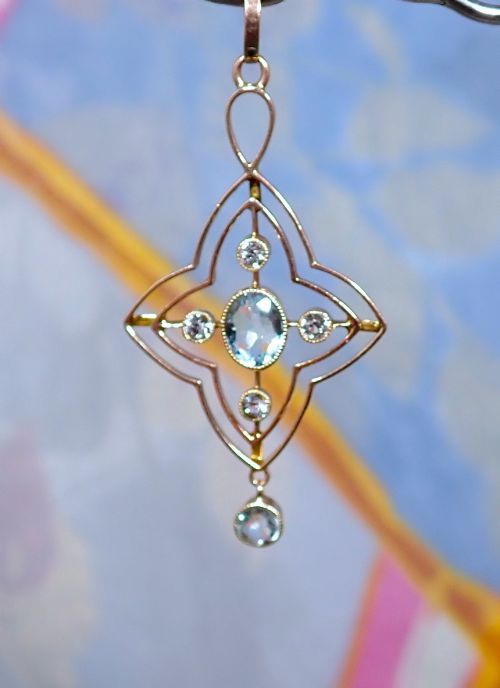
These items were constructed using gold sheet and wire, soldered together to create intricate openwork frames and knife-edge drops. Goldsmiths set aquamarines into claw or bezel settings, often accentuating the central pale blue stone with smaller flush-set or claw-set diamonds and seed pearls.
Pearls were typically half-drilled and mounted on tiny pins fixed directly to the gold backplates or swinging elements. Jewellers employed casting, hand-piercing, and granulation techniques to build layered pendant structures that allowed the primary aquamarine to catch the light.
Seed pearls and diamonds appear frequently as supporting stones alongside the central aquamarines in these drop pendants.
What varies in quality
The integration of supporting gemstones alters the character of the piece. Examples that combine aquamarines with demantoid garnets, natural pearls, and well-matched diamonds display a higher tier of period craftsmanship.
The Gold Aquamarine Drop Pendant Glossary
- Aquamarine
- A pale blue to light green variety of beryl mineral used as the primary gemstone in these pendants. It derives its name from seawater.
- Seed pearl
- A very small, natural or cultured pearl utilised in Victorian and Edwardian jewellery to accent central stones. These tiny pearls are often threaded or pinned in clusters.
- Lavalier
- A pendant featuring a primary drop stone suspended from a smaller secondary drop or chain link. This style gained popularity during the Edwardian and Art Nouveau periods.
- Knife-edge
- A thin bar of gold shaped like a knife blade, used in pendant construction to provide rigid support while maintaining a delicate visual profile.
Gold Aquamarine Drop Pendant: Frequently Asked Questions
How do I care for my gold aquamarine drop pendant?
Clean your pendant using warm soapy water and a soft brush, avoiding harsh chemical dips that might damage softer set pearls or foil backs.
Store the piece individually in a lined box to prevent the gold and stones from scratching against other items in your collection.
Are these pendants supplied with chains?
Many listings include period-appropriate chains, though some pendants are sold on their own to allow pairing with a chain of your choice.
Check the individual listing details to confirm whether the accompanying chain is original to the pendant or a later replacement.
How can I tell an Edwardian pendant from a Victorian one?
Edwardian pieces typically feature lighter, airier platinum or yellow gold wirework with floral or garland motifs, often incorporating aquamarine and seed pearls.
Victorian examples frequently display heavier gold settings, darker metal tones, or specific closed-back stone arrangements like foil backs.
What is the difference between 9ct and 15ct gold?
Fifteen carat gold contains a higher proportion of pure gold than nine carat gold, resulting in a richer, warmer yellow hue.
Both purities were standard during the Edwardian and Victorian eras, with fifteen carat metal generally reserved for finer pieces.