


Antique Aquamarine Lavalier
An antique aquamarine lavalier is a delicate pendant necklace suspending stones in an openwork drop, prized for its pale blue stones and graceful movement.
Antique Aquamarine Lavalier
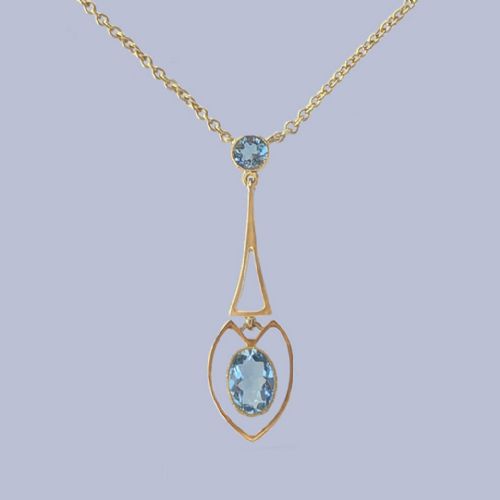
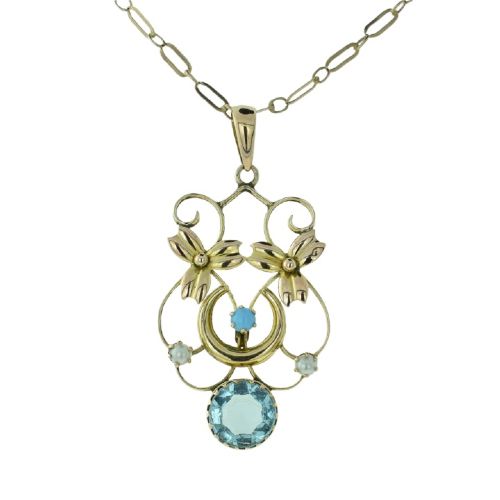
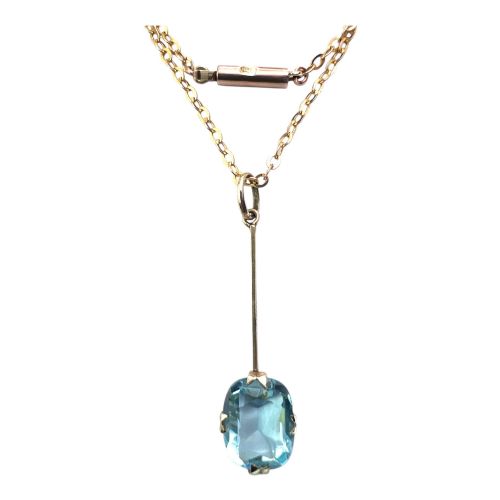
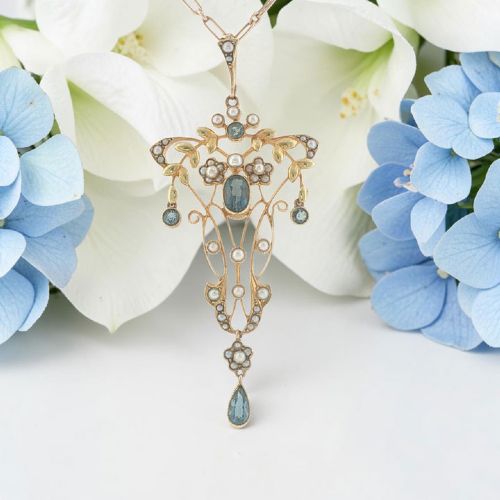
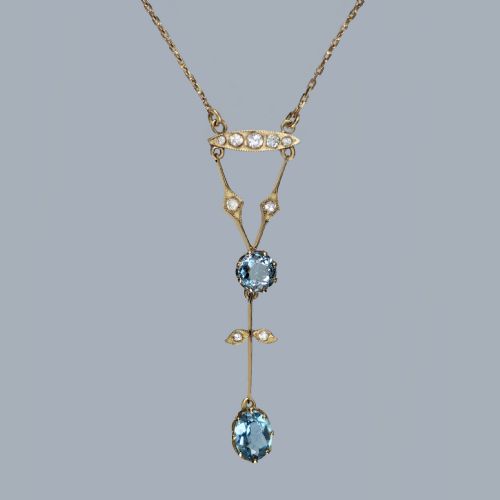
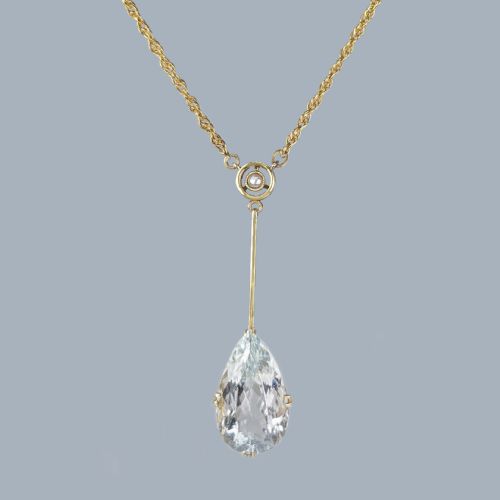
An antique aquamarine lavalier is a drop pendant necklace characteristically associated with the Edwardian period and the early twentieth century. These pieces combine pale aquamarine centre stones with seed pearls, diamonds, blue topaz, turquoise, or tourmaline mounted in gold settings.
The prevailing form on this page is the Edwardian drop necklace or pendant, often featuring a heart drop or linear configuration. These ornaments reflect the lighter aesthetic of the era, moving away from heavier Victorian designs towards fluid drops.
The primary styles seen among these jewels are Edwardian and Art Nouveau. Art Nouveau examples introduce organic motifs and flowing lines, while Edwardian pieces lean towards symmetrical drops and delicate wirework.
How they were made
These items are constructed predominantly in 15ct gold, 9ct gold, and rose gold. Goldsmiths shaped the metal into fine mounts, bezels, and wirework frames to hold the central aquamarines and supporting gems without weighing down the neckline.
Seed pearls are drilled and threaded or pegged onto the gold framework to accent the aquamarine drops. Diamonds and paste stones are flush-set or claw-set to provide points of brilliance alongside the transparent blue beryl.
Some pendants double as brooches, allowing the wearer to pin the lavalier to a lapel when tired of the chain.
What varies in quality
The distinction between tiers rests upon the choice of metal and the complexity of the goldwork. Pieces utilising 15ct gold typically command greater regard than those in 9ct gold, alongside finer execution in the pierced openwork and scroll motifs.
The saturation and clarity of the aquamarine, paired with the matching of seed pearls or the inclusion of diamonds, elevate an example. Superior items maintain intact original chains and secure settings that preserve the pendant's intended balance.
The Antique Aquamarine Lavalier Glossary
- Lavalier
- A pendant necklace featuring a small drop suspended below a main motif, popular during the early twentieth century. This configuration allows the lower stone to swing freely with movement.
- Seed pearl
- A very small, naturally or cultured saltwater or freshwater pearl used in clusters or borders. They frequently accent Edwardian and Art Nouveau gold work.
- Aquamarine
- A transparent, pale blue or greenish-blue variety of beryl. It serves as the principal gemstone in these necklaces.
- Art Nouveau
- A design style spanning the late nineteenth and early twentieth centuries characterised by flowing, organic lines and floral motifs. Pieces from this movement often incorporate asymmetric elements.
- Edwardian
- A period of jewellery design spanning the reign of King Edward VII, noted for platinum and gold lace-like settings and delicate gem pairings. This era produced the majority of the drop necklaces found here.
Antique Aquamarine Lavalier: Frequently Asked Questions
What is an antique aquamarine lavalier?
An antique aquamarine lavalier is a pendant necklace from the early twentieth century featuring a dangling blue beryl stone. These jewels typically incorporate gold chains and delicate drop configurations.
They emerged during periods when lighter, more fluid jewellery designs superseded heavier Victorian ornamentation.
How do I care for an antique lavalier?
These delicate gold and gemstone pieces require gentle cleaning with a soft cloth and warm soapy water. Avoid ultrasonic cleaners, as seed pearls and delicate settings can sustain damage.
Store the necklace flat in a lined box to prevent the chain from tangling and the gold drop from bending.
Are these necklaces made of solid gold?
The listings show pieces constructed from solid 15ct gold, 9ct gold, and rose gold. Goldsmiths of the era worked primarily in these alloys to fabricate the pendant frames and matching chains.
Testing confirms the gold standard used in each individual mounting.
What styles are common in these pendants?
Edwardian and Art Nouveau styles dominate this selection, featuring symmetrical lace-like wirework or organic, flowing lines. Designers combined aquamarines with seed pearls, diamonds, and tourmalines.
These aesthetic movements defined the elegant silhouette of early twentieth-century neckwear.