


Gold and Silver Light
Gold and silver light fixtures combine giltwood, gesso, metal, and glass to illuminate interiors.
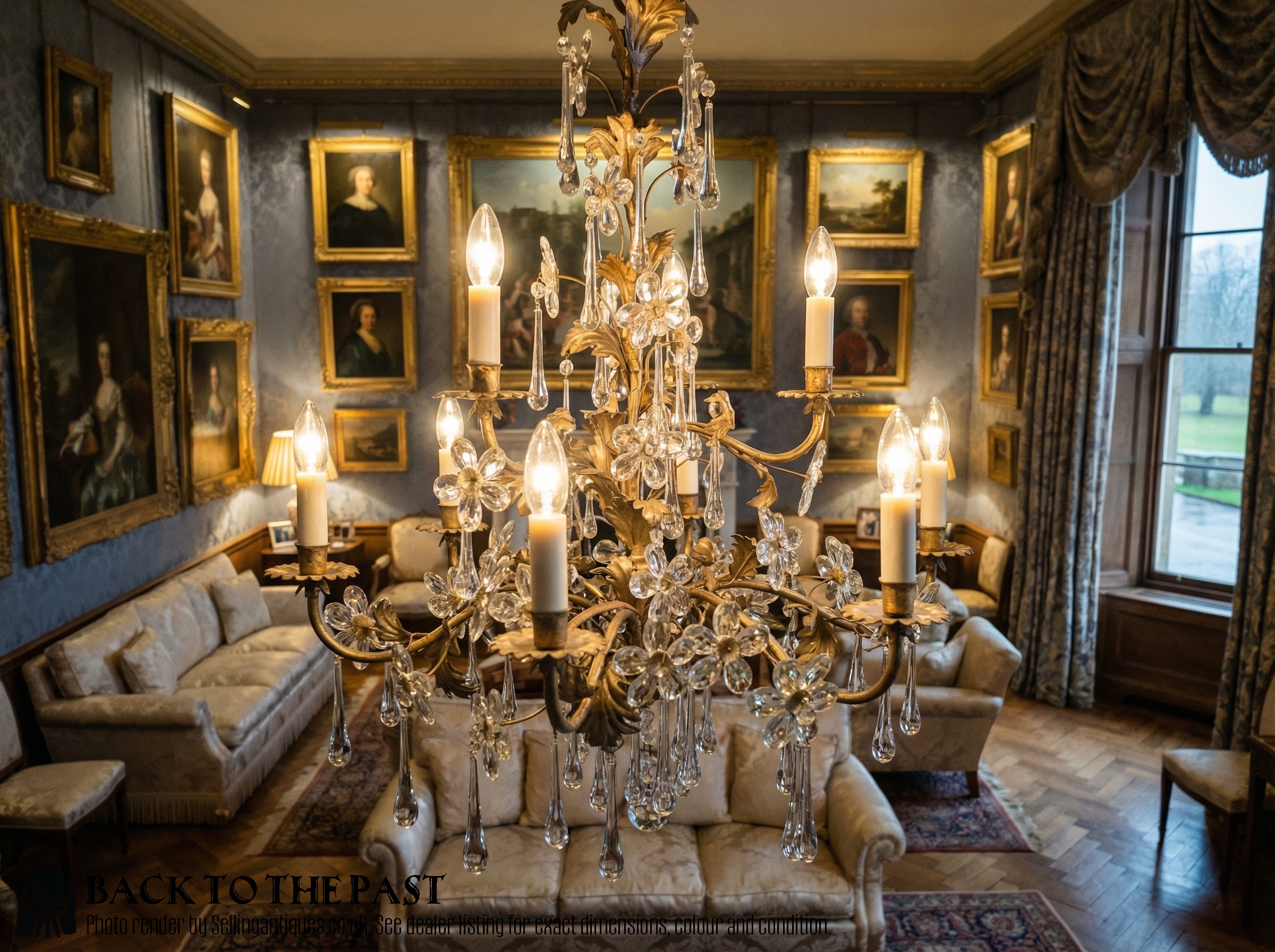
Gold and Silver Light
You are most likely to meet Italian wall lights and chandeliers finished in silver giltwood and gesso, alongside brass and bell metal candlesticks from various European origins. These pieces range from Georgian and Edwardian designs to Italian Baroque, Rococo Revival, and Florentine styles.
Buyers seek these objects for their ability to reflect candle or electric illumination through gilt surfaces, silver leaf, and Murano glass elements. The forms vary from twin and triple-arm wall sconces to large nine-light chandeliers and tall altar-type candlesticks.
How they were made
Maker workshops constructed the wooden bases of wall lights and chandeliers using carved timber, applying layers of gesso to smooth the surface before laying silver leaf and gold leaf coatings. Gilding techniques often involved burnishing the metal leaf to create contrast between matte and reflective areas.
Metal candlesticks, table lamps, and candelabra were cast in brass, bell metal, bronze, and iron, sometimes incorporating intricate metal work. Glass elements, including Murano components on wall lights, were hand-blown and shaped to complement the gilded wood and metal frameworks.
Gold and Silver Light Retail Price Guide 2026
Typical asking prices for gold and silver light among the pieces listed under this phrase on Sellingantiques today, from the lower quarter to the upper quarter. They describe what is for sale here now, not the wider market.
Listings span periods from the eighteenth century through Victorian, Edwardian, and nineteen-thirty items, utilising giltwood, brass, iron, and glass.
What varies in quality
The sophistication of the hand-carved wooden detail and the application of the silver and gold leaf separate standard items from superior examples. Finely sculpted cherubs, intricate floral motifs, and well-preserved gesso foundations indicate higher craftsmanship in Florentine and Italian Baroque pieces.
The grade of the underlying materials, such as heavy bell metal versus lighter cast brass, influences the substance and durability of the candlesticks and lamps. Uniformity in the silvered mecca finishes and the clarity of integrated glass components determine the refinement of the finished fixture.
The Gold and Silver Light Glossary
- Giltwood
- Wood that has been coated with gold leaf or gold paint. This finish creates a bright, reflective surface popular in Italian and Georgian decorative arts.
- Gesso
- A plaster mixture applied to wood surfaces as a base for gilding. It allows craftsmen to carve intricate relief details before applying silver leaf.
- Mecca
- A transparent yellow varnish applied over silver leaf to simulate the appearance of gold. It produces a warm, aged metallic tone seen on altar-type candlesticks.
- Bell Metal
- An alloy of copper and tin traditionally used for casting bells. It provides a resonant, durable material for heavy candlesticks.
- Murano Glass
- Glass made on the Venetian island of Murano. It is known for traditional hand-blown techniques incorporated into chandeliers and wall lights.
Gold and Silver Light: Frequently Asked Questions
What styles are common?
The pieces display Italian Baroque, Rococo Revival, Georgian, Edwardian, and Florentine styles. These designs reflect regional European aesthetics from the eighteenth to the early twentieth century.
Carved details and metallic finishes characterise these aesthetic traditions, uniting timber construction with reflective surfaces.
How were they used?
These fixtures provided illumination in domestic and religious settings using candles, oil, or electricity. Wall lights and chandeliers lit grand rooms, while candlesticks sat on tables and altars.
Altar-type candlesticks served ceremonial functions in churches before entering domestic collections as decorative objects.
How do I identify periods?
Period identification relies on material composition, manufacturing techniques, and stylistic markers such as Rococo curves or Edwardian metal work. Eighteenth-century pieces often feature heavy cast bell metal or Venetian-style giltwood.
Nineteenth and twentieth-century items incorporate silvered mecca, Murano glass elements, and gesso finishes typical of later Italian workshops.
Where were they made?
Origin points include Italy, particularly Florence and Venice, alongside broader French and English workshops. Italian pieces frequently utilise giltwood and silvered finishes.
Metal items like brass table lamps and bronze candelabra originate from various European metalworking centres active during the Victorian and Edwardian eras.