

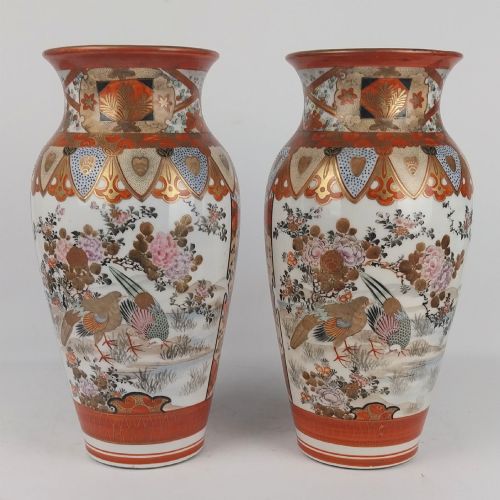
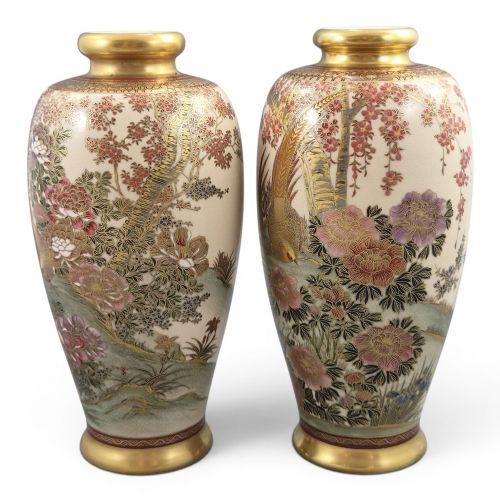


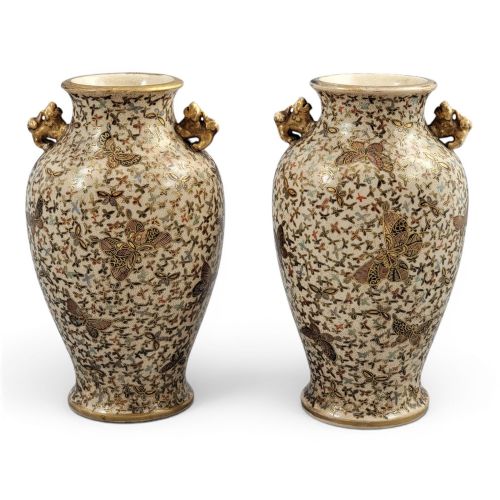


Gold and Polychrome Vases
Gold and polychrome vases combine lavish metallic lustre with vibrant enamel palettes across Japanese Satsuma earthenware and English porcelain.
Gold and Polychrome Vases
These gold and polychrome vases encompass Japanese Satsuma earthenware and Kutani wares alongside English porcelain from Worcester and Coalport, spanning the nineteenth century through the mid twentieth century. Buyers seeking gold and polychrome vases encounter both grand ceremonial pairs and domestic table lamps or pot pourri vessels.
Japanese Satsuma production dominates the selection, featuring intricate enamel painting enhanced with generous gold leaf or heavy gilding. English porcelain examples present hand painted botanical or fruit subjects framed by rich gold accents against white grounds.
Materials and construction
The makers formed these pieces from dense earthenware bodies or fine porcelain, applying opaque white enamels and vibrant mineral colours directly to the surface. Artisans then meticulously added gold leaf and intricate gilding to highlight figurative scenes, mon emblems, and botanical motifs.
French opaline glass pieces utilise delicate hand painted polychrome enamel decoration combined with traditional glass blowing techniques. British works from factories such as Royal Worcester and Coalport employ skilled hand painting executed over glazed porcelain surfaces.
Gold and Polychrome Vases Retail Price Guide 2026
Typical asking prices for gold and polychrome vases among the pieces listed under this phrase on Sellingantiques today, from the lower quarter to the upper quarter. They describe what is for sale here now, not the wider market.
Materials recorded across the selection include earthenware, porcelain, opaline glass, enamel, and applied gold leaf.
Assessing quality and execution
Quality rests upon the precision of the hand painting and the density of the gilding, with master signatures indicating superior studio production. Satsuma examples distinguish themselves through fine crackle glazes and densely packed figural compositions executed by named artists.
English porcelain pieces achieve distinction through detailed botanical or fruit rendering by known studio painters rather than transfer printing. The weight of the ceramic body and the crispness of the raised gold work further separate standard production from exhibition pieces.
Manpei Kobe·Kinzan·Hododa·Jean Francois Robert·H Ayrton·Richard Budd
The Gold and Polychrome Vases Glossary
- Satsuma
- A type of Japanese earthenware featuring a characteristic ivory crackle glaze decorated with rich enamels and raised gold. This ceramic style originated in Satsuma Province and gained immense popularity for export during the Meiji period.
- Polychrome
- Multicoloured decoration utilising various enamel pigments on ceramic or glass surfaces. Artisans apply these mineral colours to create complex pictorial scenes alongside gold detailing.
- Mon
- A Japanese heraldic badge or family crest used to identify clans and noble houses. These crests frequently appear on Satsuma pottery alongside rich gilt decoration.
- Pot Pourri Vase
- A decorative vessel pierced with ventilation holes in the lid to diffuse dried flower scents. These covered vases often feature elaborate hand painted fruit or floral panels.
- Gilding
- The application of gold leaf or gold dust to the surface of ceramics, glass, or metal objects. This technique creates lustrous metallic highlights that frame painted polychrome scenes.
Gold and Polychrome Vases: Frequently Asked Questions
How do I care for antique gold and polychrome vases?
Dust these delicate surfaces gently with a soft, dry brush to preserve the fragile enamel and gold leaf details.
Avoid using water, chemical cleaners, or abrasive cloths which can easily damage the hand painted decoration.
What is the difference between Satsuma and Kutani wares?
Satsuma pieces feature a distinctive cream coloured earthenware body covered in a fine network of transparent crackle glaze.
Kutani ceramics utilise different clay bodies and colour palettes, typically focusing on bold iron red and green enamels alongside gold.
How can I identify the maker of a Japanese vase?
Look closely at the base for handwritten artist signatures, studio stamps, or painted mon crests.
Exhibition pieces often bear specific signatures associated with master workshops from the Meiji and Showa periods.
Where were English fruit painted vases made?
Prominent English porcelain factories such as Royal Worcester and Coalport produced these elaborate hand painted vessels.
Skilled artists signed their fruit compositions directly onto the glazed porcelain body framed by rich gilding.