




Gold and Marble Clock
A gold and marble clock brings together polished stone and gilded metal to anchor a mantelpiece with nineteenth-century weight.
Gold and Marble Clock
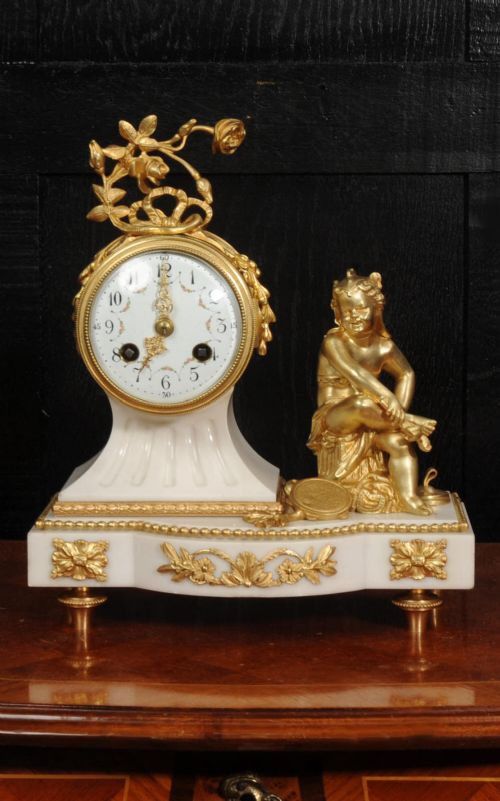
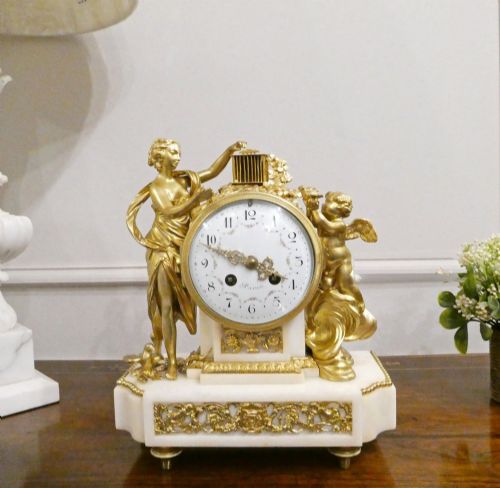
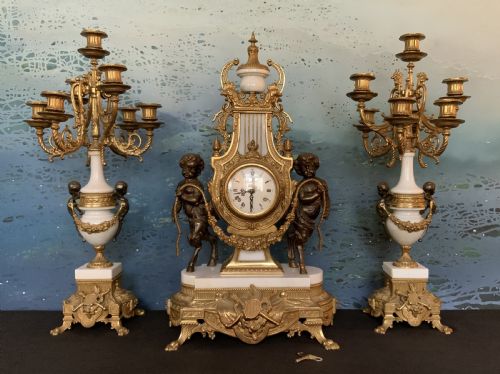
A gold and marble clock takes the form of a mantel clock, desk clock, or a larger multi-piece garniture set complete with matching candelabra. These objects originate predominantly from French workshops during the nineteenth century, reflecting classical tastes such as Louis XVI, Empire, and Rococo revival styles.
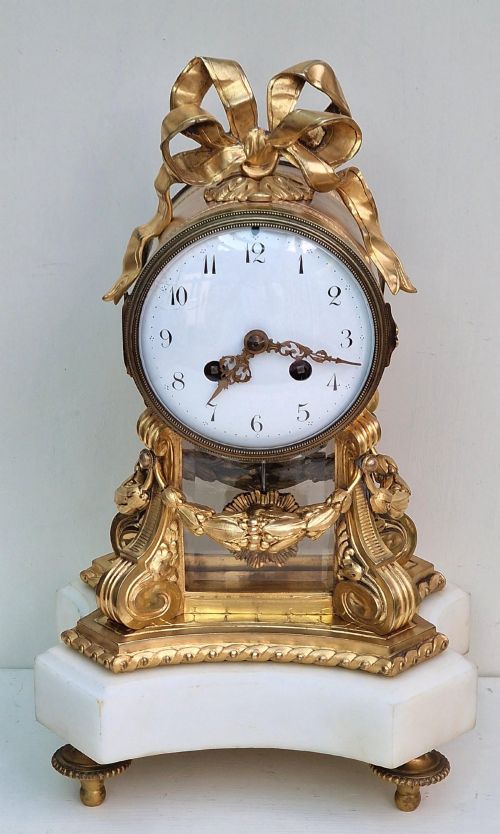
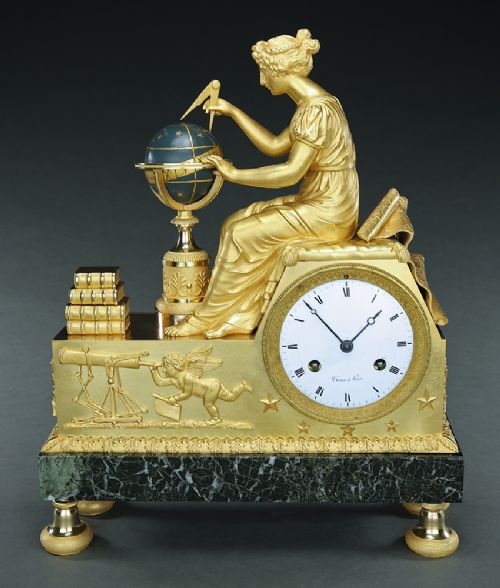
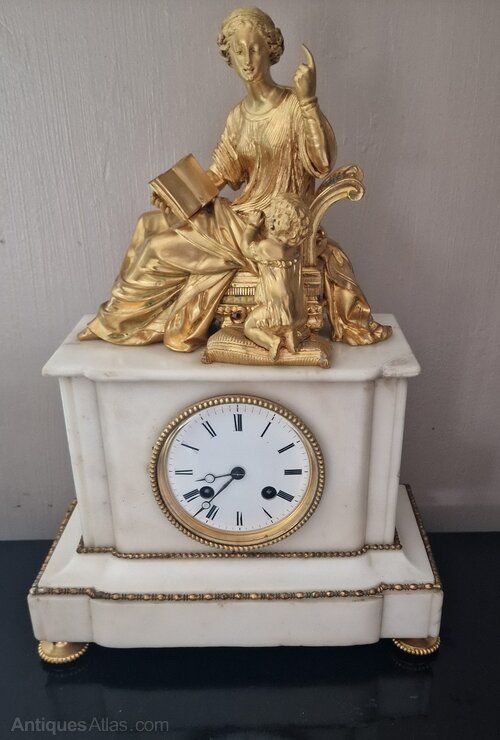
White marble forms the structural body of many examples, paired with contrasting ormolu, gilt bronze, or gilt metal mounts. Buyers encounter portico clocks, figural pieces involving cherubs or historical figures, and architectural designs shaped by French and English horology.
Materials and construction
Makers shaped natural marble into columns, plinths, and architectural cases, frequently combining white marble with darker varieties or onyx. Enamel dials, often signed by Paris makers, display Roman or Arabic numerals behind glass bezels.
Gilded elements utilise fire-gilt bronze, known as ormolu, alongside cast brass and gilt metal to provide decorative mounts, bezels, and figural reliefs. Movements are typically eight-day mechanical systems, sometimes incorporating striking mechanisms or calendar functions.
Listings span periods from the eighteenth century through to the Victorian era, dominated by French neoclassical and Louis XVI revival styles.
Assessing quality
Quality rests in the crispness of the gilt bronze chasing and the density of the marble rather than sheer size alone. Finer pieces demonstrate deep, tactile detail in cast figures and mounts, whereas simpler iterations rely on smoother, unornamented cast metal.
The integration between the stone case and the metal mounts dictates the overall cohesion of the object. Superior examples exhibit harmonious proportions where enamel dials remain unblemished and mechanical movements bear the signatures of known Paris makers.
Japy Freres·Berger, Paris·Louis Goret, Paris·William Hardy London
The Gold and Marble Clock Glossary
- Ormolu
- Gilt bronze produced by applying a mercury and gold amalgam to cast bronze and firing it. This technique creates a durable, golden surface finish found on nineteenth-century French clock mounts.
- Garniture
- A set comprising a central clock flanked by matching decorative objects such as candelabra or vases. These sets were designed to sit symmetrically on a mantelpiece.
- Portico clock
- A clock case shaped like a classical portico, supported by four columns flanking a central suspended pendulum. This architectural style draws on ancient Greek and Roman forms.
- Fusee
- A conical pulley connected to the mainspring by a chain or cord, designed to equalise the torque as the spring unwinds. This mechanism improves timekeeping accuracy in mechanical clocks.
- Enamel dial
- A metal clock face coated with fused glass powder and fired to create a glossy, white surface. Numerals are painted onto this smooth base before firing.
Gold and Marble Clock: Frequently Asked Questions
What is a clock garniture?
A clock garniture is a matched set consisting of a central clock accompanied by subsidiary pieces, typically a pair of candelabra or urns. These matched suites create a balanced arrangement for a fireplace mantel or large sideboard.
The pieces share identical metal mounts, marble types, and stylistic motifs to present a unified decorative scheme across the room.
How do I identify French styles?
French styles reveal themselves through distinct decorative motifs cast into the ormolu mounts and shaped into the marble cases. Louis XVI and neoclassical examples display symmetrical columns, urns, and foliate garlands.
Empire pieces lean towards military trophies, stars, and classical figures, while Rococo revival designs prefer asymmetrical scrolls, shells, and naturalistic flora.
Where were these clocks placed?
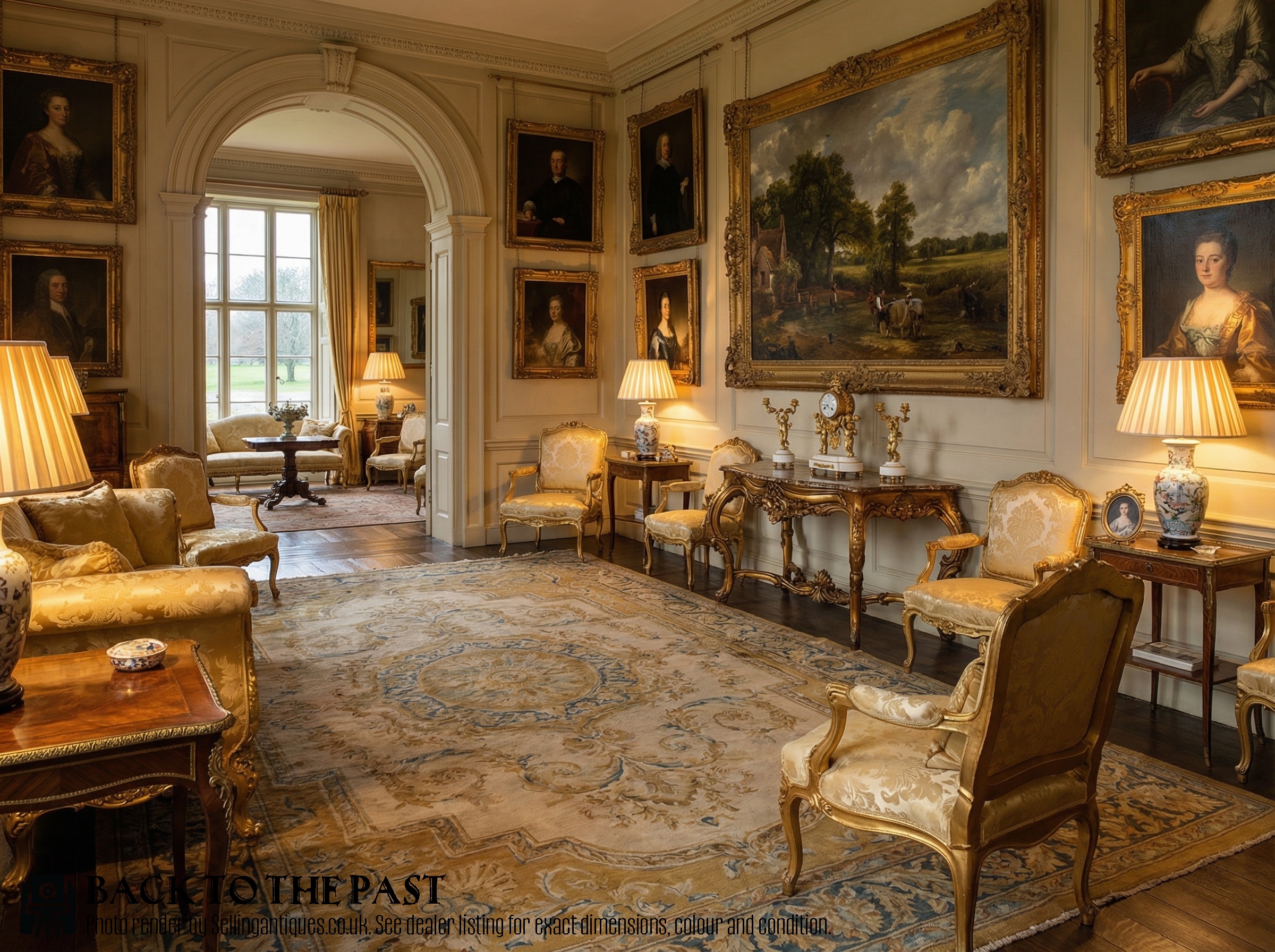
These clocks served as functional centrepieces in nineteenth-century drawing rooms, libraries, and formal dining spaces. They sat predominantly on mantelpieces above fireplaces, where their reflective gilt surfaces caught the light from windows and lamps.
Smaller desk clocks and portico designs occupied writing tables and side cabinets, combining utility with architectural presence.
How do I care for marble and ormolu?
Marble surfaces require dusting with a soft, dry cloth and immediate blotting of any liquid spills to prevent staining. Avoid abrasive cleaners or acidic solutions that can etch the polished stone.
Ormolu mounts should be cleaned gently without chemical polishes that strip the historic mercury gilding. Mechanical movements benefit from professional servicing every few years to ensure proper lubrication.