




Gold Analogue Watch
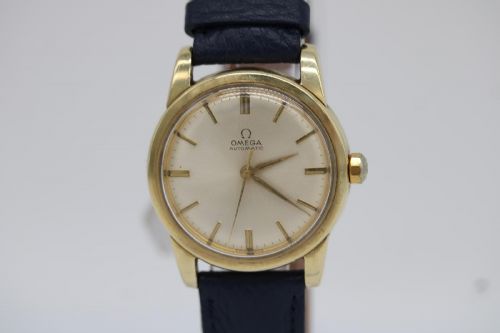
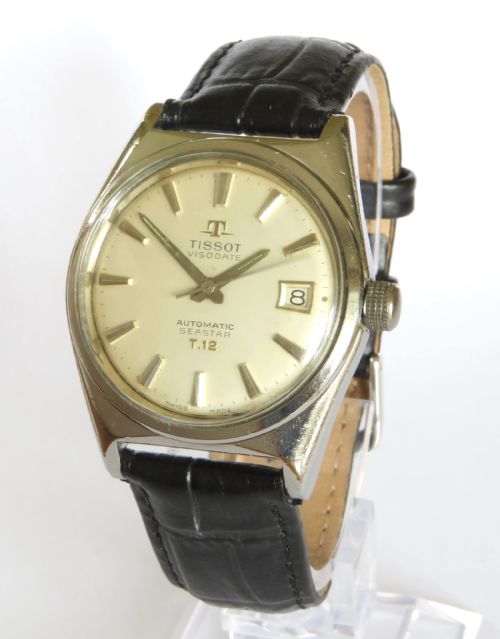
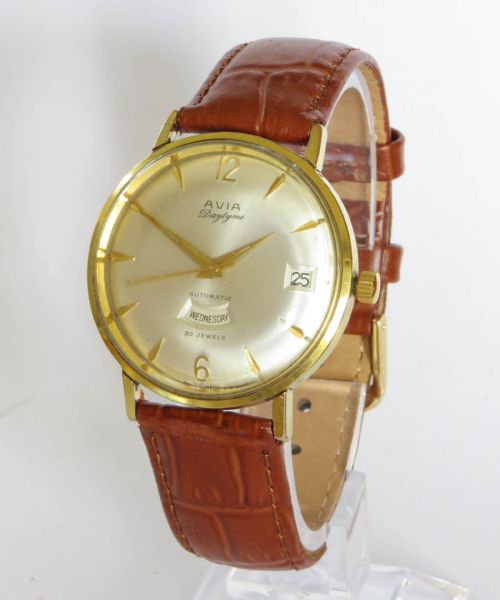
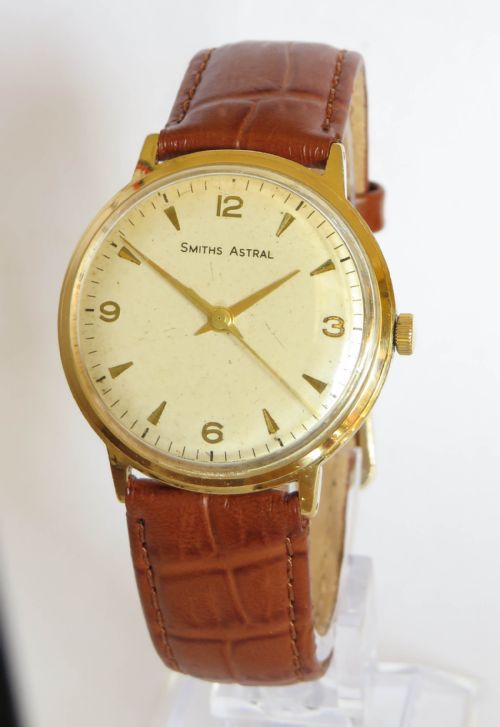
A gold analogue watch brings mechanical timekeeping to the wrist through traditional hands and dials housed in precious metal finishes.
Gold Analogue Watch
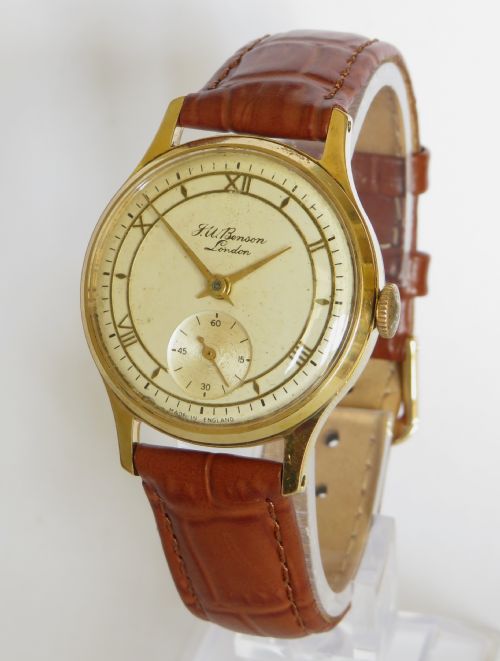
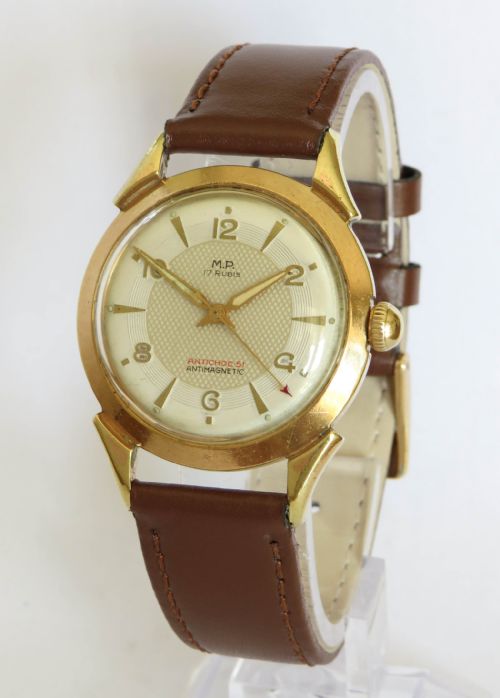
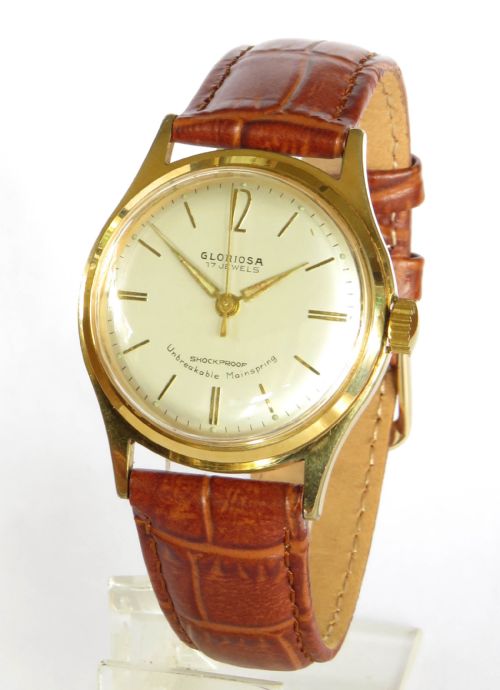
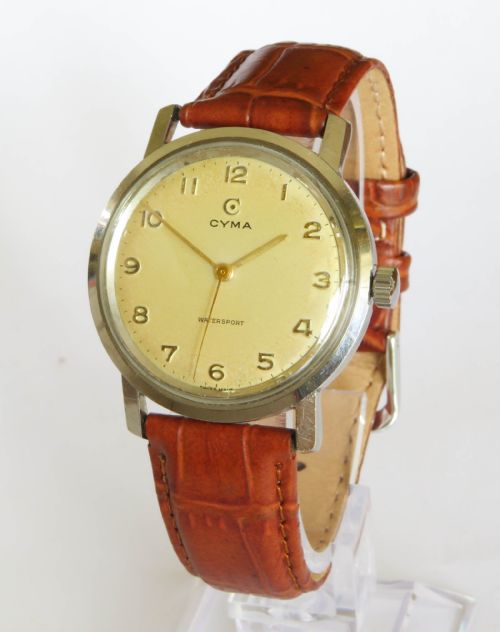
When you search for a gold analogue watch, you are looking at gents wristwatches produced across the 1940s, 1950s, and 1960s. These pieces display time through rotating hands on a dial rather than digital digits.
You are most likely to meet mid-century designs featuring automatic or manual movements. The selection on this page centres primarily on decades spanning the mid-century modern and Art Deco styles.
Origin points include French examples alongside Swiss and British retailers. Formats remain strictly wristwatches intended for gents, housing mechanical inner workings within metal cases.
How they were made
Cases combine gold plate and chrome-plated steel to achieve a precious appearance whilst maintaining structural durability. Acrylic glass or standard glass protects the delicate dials beneath.
Straps utilise leather to secure the watch firmly to the wrist. Movements rely on intricate metal gears and springs operated either manually or through automatic self-winding systems.
Gold Analogue Watch Retail Price Guide 2026
Typical asking prices for gold analogue watch among the pieces listed under this phrase on Sellingantiques today, from the lower quarter to the upper quarter. They describe what is for sale here now, not the wider market.
The listings span three distinct decades: the 1940s, 1950s, and 1960s, showcasing both Art Deco and Mid-Century Modern stylistic influences.
What varies in quality
The standard of a gold analogue watch rests in the refinement of its movement and the preservation of its casing. Finer examples display precise mechanical engineering from established makers with clean dial typography.
Material application also dictates standing, where heavier gold plating and robust steel foundations endure better through decades of wear. The integration of specialised complications like date functions alters the mechanical complexity.
DeRe·Smiths·J W Benson·Avia·Tissot·Gloriosa·Cyma·Omega·Ensign·Felca
The Gold Analogue Watch Glossary
- Analogue watch
- A timepiece that indicates time using hands that sweep around a graduated dial. This contrasts with digital displays that show numbers directly.
- Automatic
- A self-winding mechanical movement that uses the natural motion of the wearer's arm to power the mainspring. This removes the need for daily manual winding.
- Gold plated
- A method where a thin layer of gold is bonded to a base metal such as steel. It provides the visual appeal of solid gold at a different scale.
- Acrylic glass
- A lightweight, shatter-resistant plastic material used for watch crystals. It can be easily polished if minor surface scratches occur.
Gold Analogue Watch: Frequently Asked Questions
What is a gold analogue watch?
A gold analogue watch is a mechanical wristwatch featuring traditional hands and a dial encased in gold plate. These pieces rely on manual or automatic movements to track hours, minutes, and sometimes seconds.
Such watches originated primarily in the mid-twentieth century, offering a blend of utility and dress styling. They represent an era when wristwatches transitioned from pocket transitions into dedicated daily accessories.
How do I wind an automatic watch?
An automatic watch winds itself automatically through the kinetic energy of your wrist movement during daily wear. An internal weighted rotor spins as you move, tensioning the mainspring.
If the watch has sat still and stopped, a few manual turns of the crown can kickstart the movement before putting it on. Once worn, standard daily activity keeps the power reserve topped up.
What does Art Deco mean?
Art Deco is a design style spanning the early to mid-twentieth century characterised by geometric shapes, clean lines, and stylized motifs. In watchmaking, this translates to rectangular or square cases and angular dial layouts.
Pieces from this period prioritize architectural symmetry and distinct typographic choices. The aesthetic remains distinct from the softer, organic curves seen in later mid-century modern designs.
Are these watches waterproof?
Vintage watches from the 1940s, 1950s, and 1960s generally lack modern waterproof seals. Gasket materials degrade over decades, leaving movements vulnerable to moisture ingress.
It is best to keep these timepieces away from water, rain, and humidity to protect the delicate internal gears and paper dials. Regular servicing can help assess the physical integrity of the case closure.