
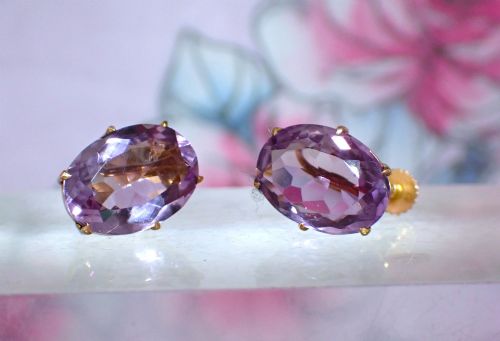


Gold Amethyst Gemstone Studs
Gold amethyst gemstone studs offer a rich flash of purple set in precious metal, combining the deep violet quartz with warm gold or silver settings.
Gold Amethyst Gemstone Studs
When you search for gold amethyst gemstone studs, you are looking at small earrings designed to sit close to the lobe or drop slightly beneath it. The selections span eras from the Georgian period through to the mid-twentieth century, capturing shifts in jewellery design over hundreds of years.
You will most frequently meet pieces from the mid-century decades, particularly the 1950s and 1960s, alongside earlier Edwardian and Victorian revival examples. These pairs utilise various gold purities, including nine-carat yellow and white gold, often paired directly with purple quartz.
Forms range from simple round or emerald cut cluster studs to drop earrings and dress studs intended for fastening garments. The diversity in these earrings reflects changing fashions in stone cutting and metalwork across the centuries.
How they were made
The materials recorded in these pieces rely heavily on nine-carat gold, white gold, and silver settings to secure the stones. Gemstones are shaped using traditional cutting techniques, including flat cut and emerald cuts, to maximise the violet light reflected through the facets.
Construction methods vary from screw-on mechanisms found in earlier Edwardian items to standard post and cluster arrangements in later mid-century designs. Each pair joins the purple quartz securely to the precious metal framework through careful claw or bezel settings.
Materials across the available selection include nine-carat gold, white gold, silver, and certified diamonds alongside amethysts.
What varies in quality
The standard of a pair rests on the depth of colour in the quartz and the precision of the metalwork surrounding it. Finer examples display a uniform violet hue across both stones in a pair, with clean faceting that catches the light evenly.
The integrity of the setting and the durability of the metal fastenings also distinguish finer items from simpler production. Older pieces demonstrate the hand-finished skill of their period, while mid-century examples show more standardised manufacturing techniques.
The Gold Amethyst Gemstone Studs Glossary
- Cluster
- A stone arrangement where a central gem is surrounded by smaller stones or additional metal work to increase visual impact.
- Emerald cut
- A rectangular stone cut with cropped corners and step facets that produces broad flashes of light.
- Screw-on
- A fastening mechanism utilising a threaded post and nut rather than a standard butterfly push back.
- Dress studs
- Small decorative fasteners originally intended for shirts or garments rather than pierced earlobes.
Gold Amethyst Gemstone Studs: Frequently Asked Questions
How do I date these earrings?
Dating relies on the fastening style, the type of gold used, and the cut of the amethyst. Earlier pieces often feature screw-on backs or flat cut stones.
Later mid-century examples incorporate standard post fittings and specific nine-carat yellow or white gold alloys typical of the 1950s and 1960s.
Are all these earrings for pierced ears?
Not all items share the same fastening method, as some historical pairs use screw-on fittings designed for unpierced lobes. Others function as dress studs intended for clothing rather than the ear.
Checking the listing details ensures you find the exact fastening type that suits your requirements.
What gold purity is common?
Nine-carat gold is the predominant metal purity recorded across these listings, appearing in both yellow and white varieties. Silver is also utilised in specific pieces.
This durable alloy provides a sturdy mount for daily wear while maintaining a traditional precious metal appearance.
How should I clean amethyst jewellery?
Amethyst is a quartz variety that benefits from gentle cleaning using warm soapy water and a soft brush. Harsh chemical dips should be avoided to protect the metal settings.
Store the earrings separately in a lined box to prevent the quartz from scratching against harder gemstones.