

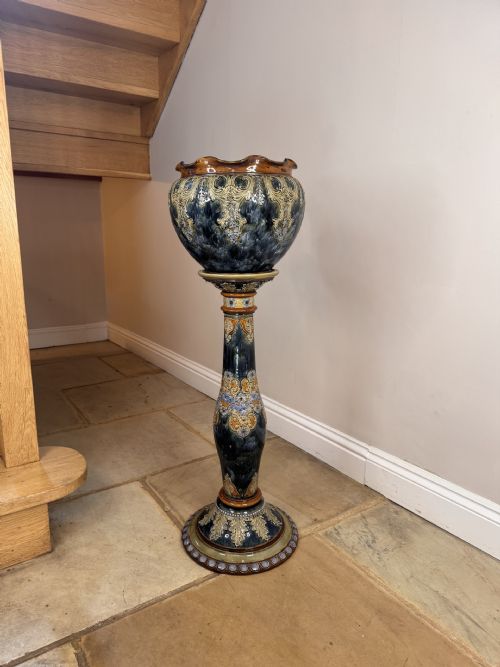
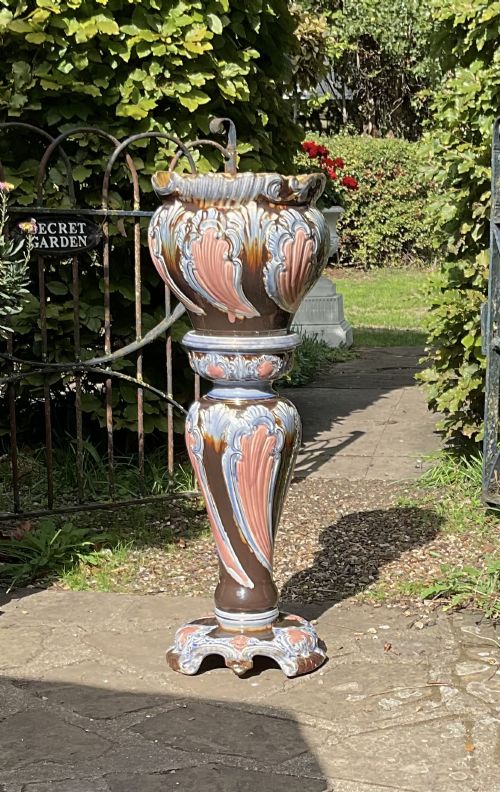


Glazed Plant Pedestal
These glazed plant pedestal pieces lift greenery into the room, bringing colour and height to Victorian and Edwardian interiors.
Glazed Plant Pedestal
A glazed plant pedestal combines a supporting column with a matching bowl or planter designed to elevate botanical displays.
Most examples encountered here date from the Victorian and Edwardian eras, spanning the late nineteenth century into the early twentieth century.
The selections range from tall single columns to matched sets comprising both jardiniere and stand.
Materials and construction
Potters shaped these earthenware, stoneware, and faience bodies to bear substantial weight before applying rich coloured glazes.
Techniques varied from slip-casting and moulding to specialised lustre and salt-glazing methods developed in British and continental potteries.
Glazed Plant Pedestal Retail Price Guide 2026
Typical asking prices for glazed plant pedestal among the pieces listed under this phrase on Sellingantiques today, from the lower quarter to the upper quarter. They describe what is for sale here now, not the wider market.
Some nineteenth-century makers chose to support their glazed botanical bowls upon the backs of sculpted griffins and swans.
Judging the work
Superior execution shows in the depth and uniformity of the glaze coverage across complex sculptural forms and naturalistic moulding.
The best examples maintain structural balance between the heavy planter bowl and its supporting pedestal.
Royal Doulton·Burmantofts Art Pottery·Minton·Julius Dressler·Clement Massier
The Glazed Plant Pedestal Glossary
- Jardiniere
- A large ornamental pot or bowl for holding plants or flowers. These vessels form the upper portion of many plant stands.
- Majolica
- A type of earthenware decorated with opaque coloured glazes over a white tin-glaze ground. This technique produced vibrant greens, blues, and browns on Victorian ceramics.
- Faience
- Tin-glazed earthenware produced in Europe. It often describes decorative pottery with a porous clay body.
- Lustre glaze
- A metallic film applied to pottery that produces an iridescent sheen. Clement Massier utilised this technique for distinctive surface effects.
- Stoneware
- A hard, vitreous ceramic fired at high temperatures. It offers high durability for pieces exposed to moisture.
Glazed Plant Pedestal: Frequently Asked Questions
What is a glazed plant pedestal?
A glazed plant pedestal is a matched set or single column designed to raise potted plants above floor level.
These ceramic fixtures protect interior flooring while adding decorative presence to conservatories and reception rooms.
How were these stands used?
Victorian households utilised them to display large ferns and palms in public rooms.
The elevated position improved plant visibility and kept heavy damp pots away from wooden floorboards.
How do I identify the period?
Dating relies upon stylistic markers such as Art Nouveau motifs, glaze types, and manufacturer stamps.
Nineteenth-century examples frequently employ majolica glazes and naturalistic plant or animal motifs.
Are planters and pedestals always sold together?
Surviving sets often pair the original jardiniere with its matching columnar base.
Due to breakage over time, individual planters or stands also appear independently in collections.