

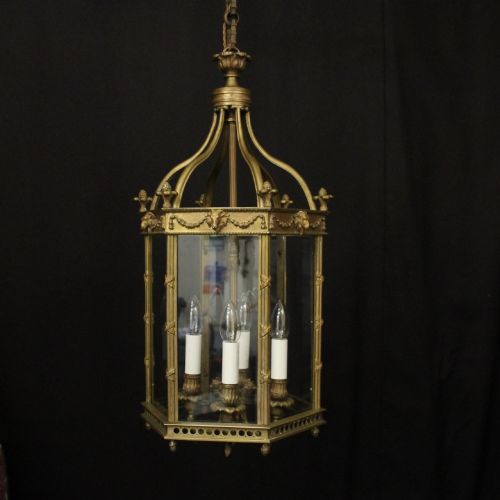
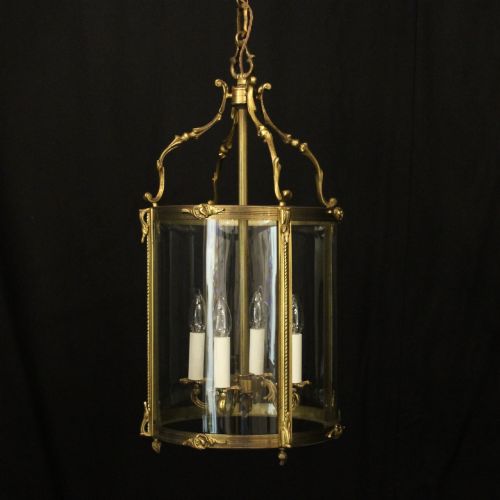
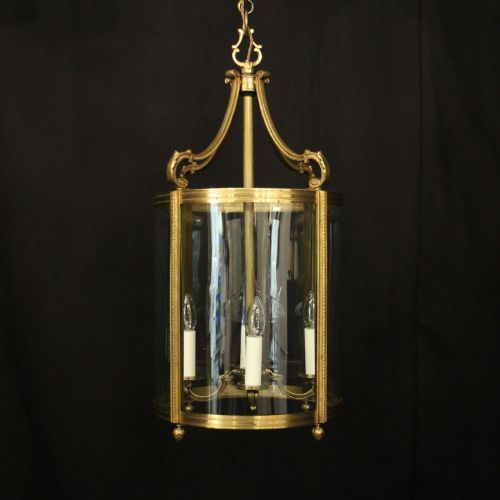


Glazed Metal Hall Lantern
A glazed metal hall lantern sets the tone for an entire interior, casting patterned light across the entrance before guests even step inside.
Glazed Metal Hall Lantern
A glazed metal hall lantern provides overhead illumination in entranceways, corridors, and vestibules. These hanging fixtures combine structural metal frames with glass panels to protect the internal light source while dispersing a warm glow throughout the space.
The selections available here range from compact single-light examples to substantial multi-light fixtures designed for high ceilings. Originating primarily from the nineteenth and early twentieth centuries, these pieces draw upon French and English design traditions.
How they were made
Constructed from durable metals such as brass, steel, wrought iron, and gilded bronze, the frames provide essential structural integrity. Artisans shaped these materials through casting, forging, and soldering to create intricate decorative details and secure housing for the glass.
Panels of glass, including bevelled and flat varieties, were hand-cut and fitted into the metal armatures. Gilt finishes and silvered bronze applications were often applied to enhance light reflection and decorative appeal.
Glazed Metal Hall Lantern Retail Price Guide 2026
Typical asking prices for glazed metal hall lantern among the pieces listed under this phrase on Sellingantiques today, from the lower quarter to the upper quarter. They describe what is for sale here now, not the wider market.
Green man copper lanterns bring mythological forest spirits to keep a watchful eye over your coats and umbrellas.
What varies in quality
The distinction between standard and superior pieces rests upon the precision of the metalwork and the depth of the finish. Heavier bronze castings and hand-forged ironwork demonstrate a higher level of artisanal skill than simpler folded steel constructions.
The quality of the glazing further separates the work, particularly where bevelled or curved glass panels require specialist glass-cutting techniques. Original surface treatments and well-preserved gilt or silvered layers contribute significantly to the standing of an individual piece.
The Glazed Metal Hall Lantern Glossary
- Bevelled glass
- Glass with edges ground and polished at an angle to refract light and create a decorative border. This technique adds depth and visual interest to the lantern panels.
- Gilded bronze
- Bronze coated with a thin layer of gold or gold paint for decorative effect. It offers a warm, reflective surface suited to formal interior lighting.
- Wrought iron
- Iron beaten and twisted into shape by hand while hot. This material yields strong, expressive frames often seen in rustic or revival styles.
- Hexagonal
- Having six sides and six angles. This geometric form allows for balanced light distribution across multiple glass panes.
Glazed Metal Hall Lantern: Frequently Asked Questions
How do I hang a hall lantern?
These fixtures suspend from ceilings using chains or rigid rods attached to a secure mounting bracket. Weight considerations dictate the type of ceiling fixture required for safe installation.
Professional electrical fitting ensures the internal wiring meets current safety standards while preserving the original hanging hardware.
Can these lanterns be used outdoors?
Most antique glazed metal hall lanterns were designed specifically for interior domestic use in entrance halls and vestibules. Exposure to harsh weather can damage delicate metal finishes and vintage wiring.
Covered porches may accommodate certain robust steel or iron designs if protected from direct moisture and wind.
How do I clean the glass panels?
Remove dust using a soft dry cloth before applying a mild glass cleaner to the panels. Care must be taken to avoid harsh chemicals that might strip aged metal patinas or gilding.
Wiping the metal frames with a dry microfiber cloth maintains the surface without risking moisture damage to vintage joins.
What period do these lanterns belong to?
The lighting fixtures span the nineteenth and early twentieth centuries, encompassing Victorian, Edwardian, and various revival styles. French chateau and neoclassical influences appear frequently among the gilded bronze examples.
Design motifs and material choices help distinguish nineteenth-century works from later twentieth-century productions.