



Glazed Majolica Pot
These glazed majolica pot selections bring colourful tin-glazed earthenware and vibrant botanical planters into your rooms.
Glazed Majolica Pot
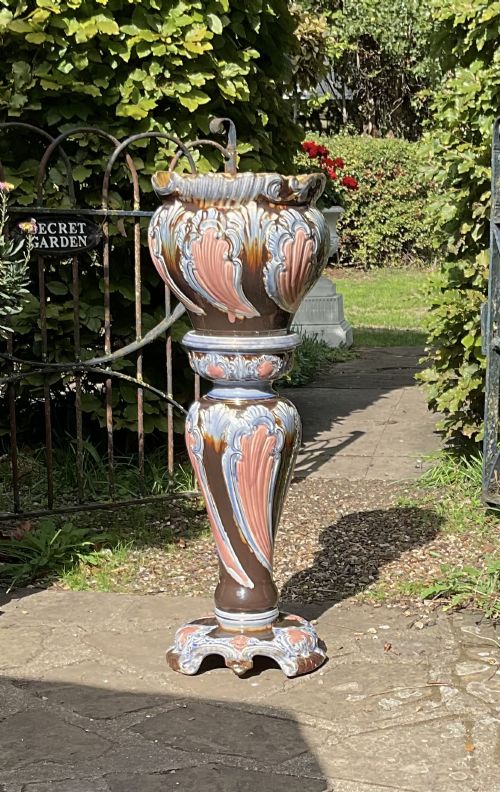
A glazed majolica pot sits at the crossroads of utilitarian pharmacy storage and decorative Victorian horticulture, taking the form of albarello drug jars, wet drug jugs, and large plant stands. These vessels range from eighteenth-century Italian faience pharmacy wares to nineteenth-century English and Scottish garden ornaments.
The pieces you encounter most frequently on this page belong to the Victorian era and the late nineteenth century, spanning elaborate jardiniere planters, pedestal stands, and vases. Alongside these British interpretations, continental Italian tin-glazed examples appear with traditional polychrome palettes and blue-and-white decoration.
Form follows function across the selection, moving from cylindrical apothecary jars designed for dry or wet herbal remedies to bulbous urns and clam-shaped vases. Makers applied tin glazes and colourful lead-based pigments to earthenware bodies, creating surfaces intended to hold plants or medicines while displaying sculptural relief.
Materials and production methods
Potters shaped local clays, earthenware, and terracotta into the desired vessel before applying an opaque tin glaze that provided a smooth white ground for subsequent painting. Artisans then brushed metal oxide pigments directly onto the unfired or biscuit-fired surface, capturing polychrome designs or deep cobalt blue motifs.
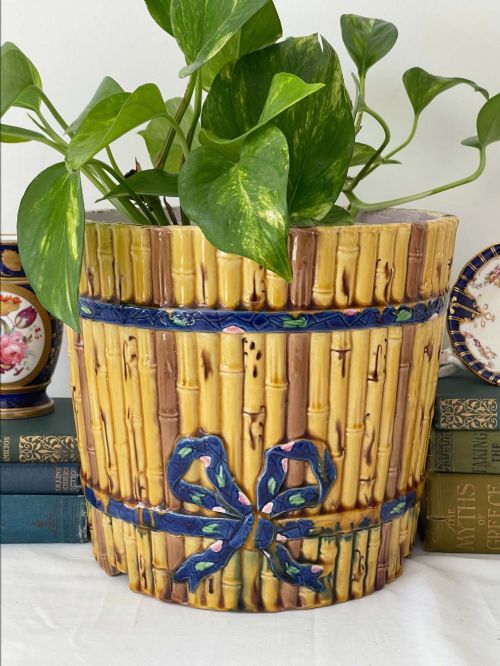
A high-temperature kiln firing fused the metallic oxides into the liquid glaze, yielding the characteristic glossy sheen and brilliant colour saturation seen on nineteenth-century jardiniere planters and eighteenth-century pharmacy jars. Some works incorporated moulded relief details, such as bamboo stalks or figures, before the final glazing stage.
Glazed Majolica Pot Retail Price Guide 2026
Typical asking prices for glazed majolica pot among the pieces listed under this phrase on Sellingantiques today, from the lower quarter to the upper quarter. They describe what is for sale here now, not the wider market.
A Victorian ceramic teapot depicts a Chinese boy sitting comfortably upon a large melon.
Distinctions in craftsmanship and design
Quality rests in the crispness of the moulded relief work and the depth of the tin glaze, where superior pieces display evenly fused polychrome pigments without running or pooling. Master potteries achieved sharper botanical definition and more complex figural modelling, separating mass-produced vessels from finely articulated exhibition pieces.
The integrity of the glaze surface and the precision of the hand-painted underglaze decoration dictate the visual impact of each jar or jardiniere. Examples retaining their matching pedestals or original covers achieve a higher level of completeness, preserving the intended architectural silhouette of the maker.
Minton·Burmantofts·Royal Worcester·Joseph Holdcroft·George Jones
The Glazed Majolica Pot Glossary
- Albarello
- A cylindrical earthenware jar used by apothecaries for storing dry drugs, ointments, and herbal remedies. This shape originated in the Middle East and spread through Italian and European pharmacies.
- Majolica
- Earthenware decorated with an opaque tin glaze and painted with metallic oxide colours. The term covers both traditional Italian tin-glazed pottery and the colourful Victorian lead-glazed wares.
- Faience
- European tin-glazed earthenware, particularly pieces produced in France, Italy, and other continental centres. The technique produces a smooth, white absorbent surface suitable for fine painted decoration.
- Jardiniere
- A large ornamental pot or stand designed to hold growing plants or flowers. These vessels often sit upon matching pedestals in nineteenth-century interiors.
- Tin Glaze
- A ceramic glaze made white and opaque through the addition of tin oxide. It provides the foundational background for painting polychrome designs before the final kiln firing.
Glazed Majolica Pot: Frequently Asked Questions
What is a majolica jardiniere?
A majolica jardiniere is a decorative ceramic plant holder finished with colourful lead or tin glazes. These pieces were designed during the nineteenth century to display ferns and flowering plants in domestic interiors.
Potters often modelled these planters with naturalistic textures, including bamboo, swans, or classical motifs, matching them with tall pedestals to create imposing focal points in hallways and reception rooms.
How do I identify an apothecary jar?
Apothecary jars, or albarelli, typically feature a straight or slightly waisted cylindrical body designed to sit neatly on pharmacy shelves. Many bear abbreviated Latin inscriptions or painted labels denoting the medicinal contents once held inside.
Eighteenth-century examples often display cobalt blue and white tin-glaze painting or polychrome floral arrangements, distinguishing them from later Victorian decorative ceramics.
Where were these glazed pots made?
The pieces originate primarily from British potteries in England and Scotland alongside continental workshops in Italy. British firms adapted Renaissance revival styles and naturalistic motifs during the Victorian period.
Italian examples span earlier centuries of tin-glazed earthenware production, showing traditional blue-and-white palettes and regional Italian baroque or faience techniques.
How should I display a jardiniere?
Jardinieres suit placement on sturdy tables, sideboards, or their matching ceramic pedestals where their colourful glazes catch the light. They function effectively as standalone sculptural objects or as containers for potted foliage.
When housing live plants, place a waterproof liner inside the vessel to protect the historic ceramic body and interior glaze from moisture damage.