
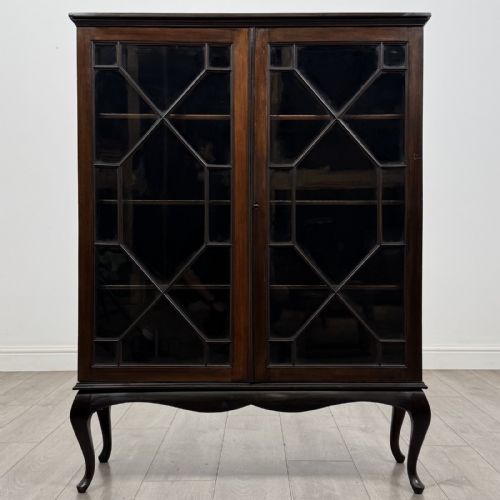
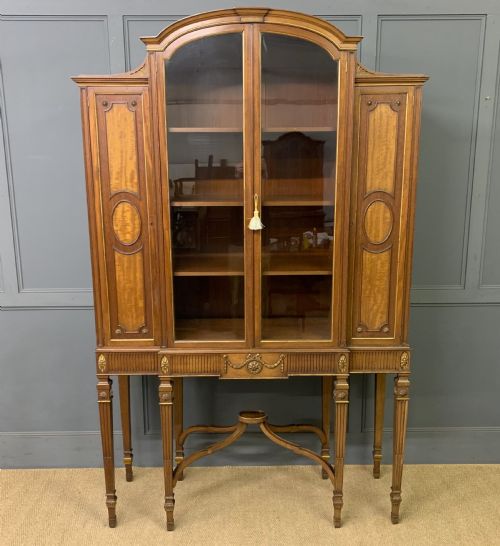
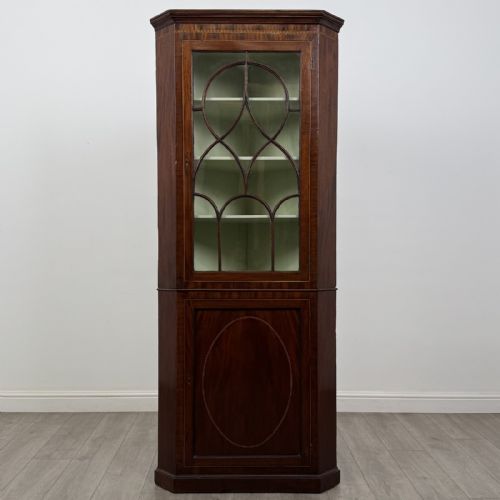
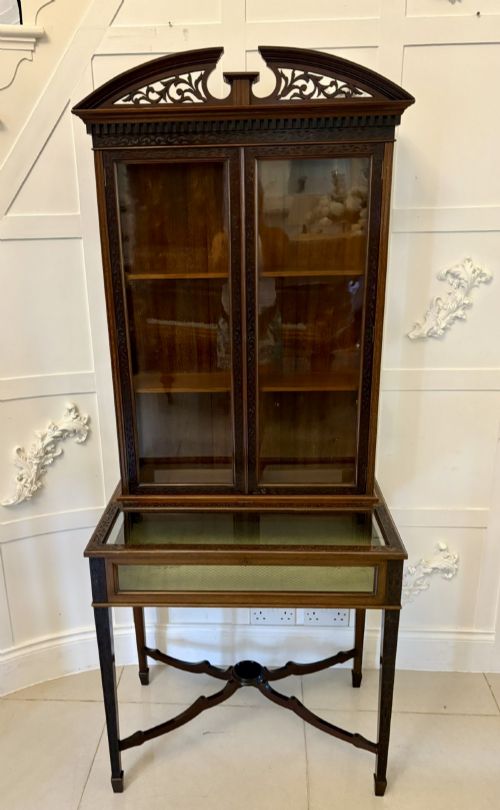
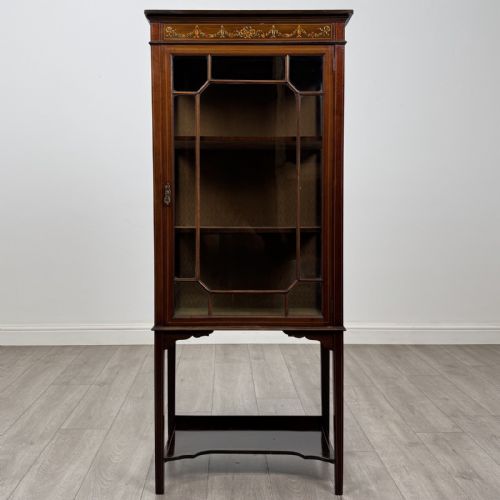
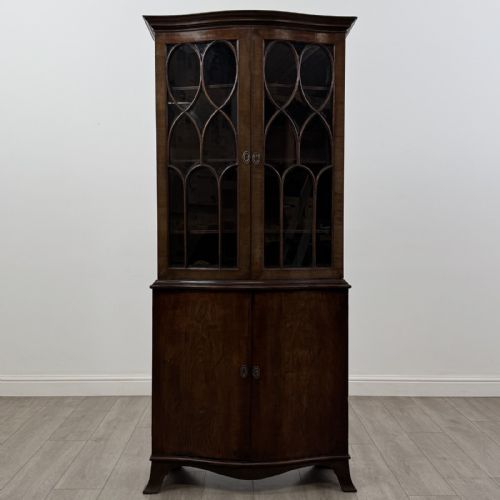
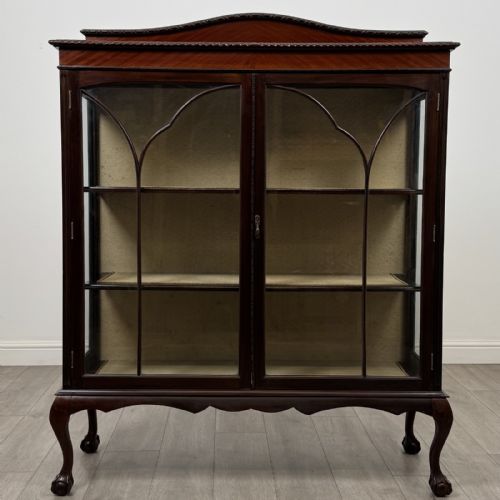
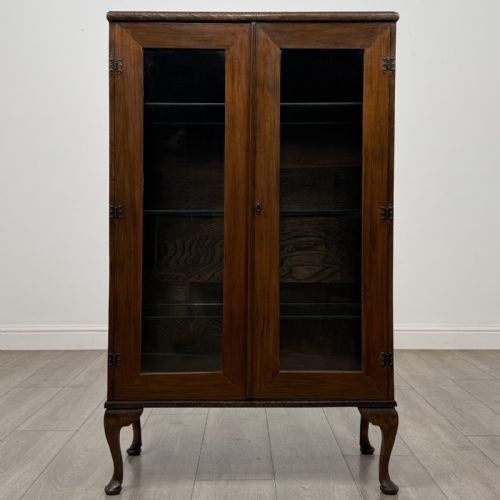
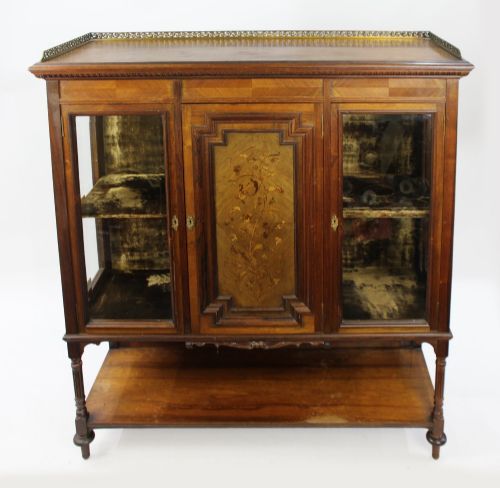
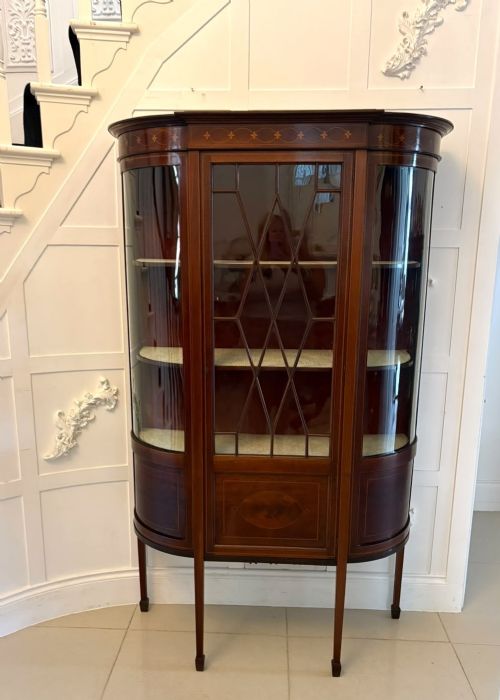
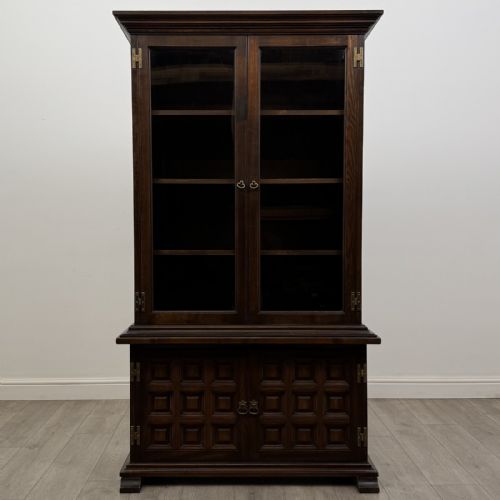
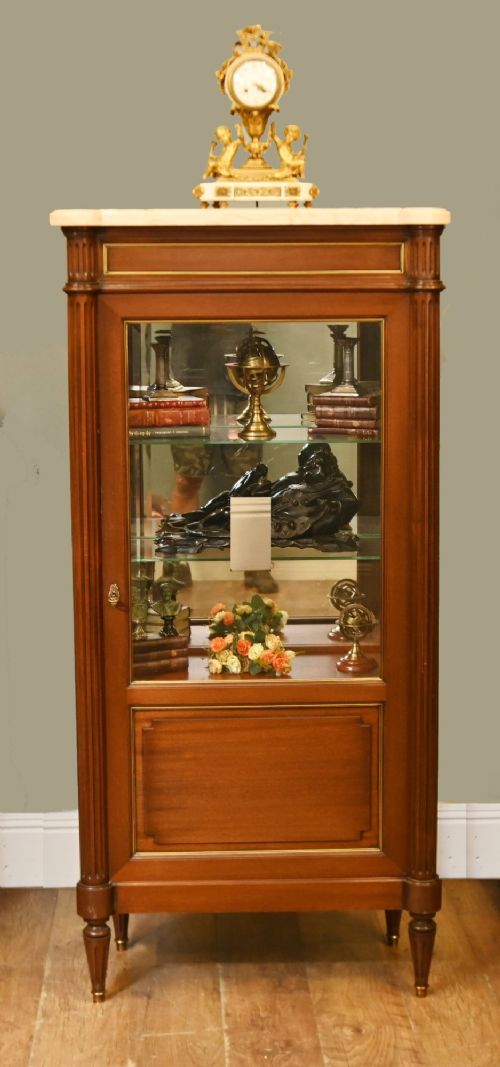
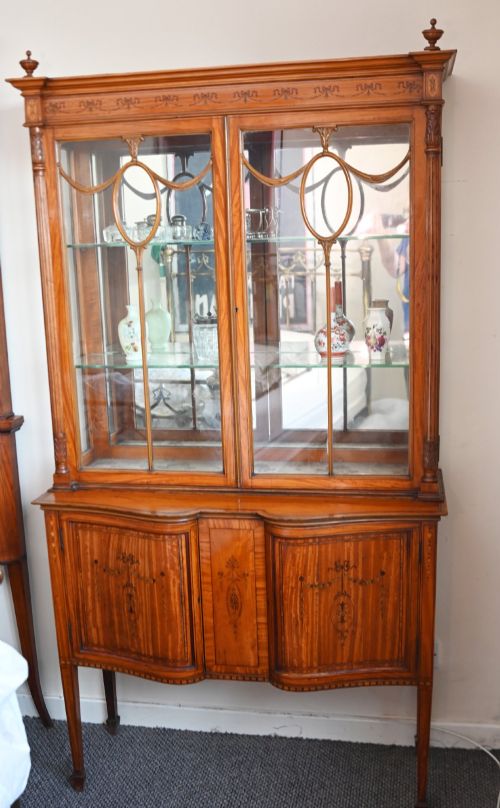
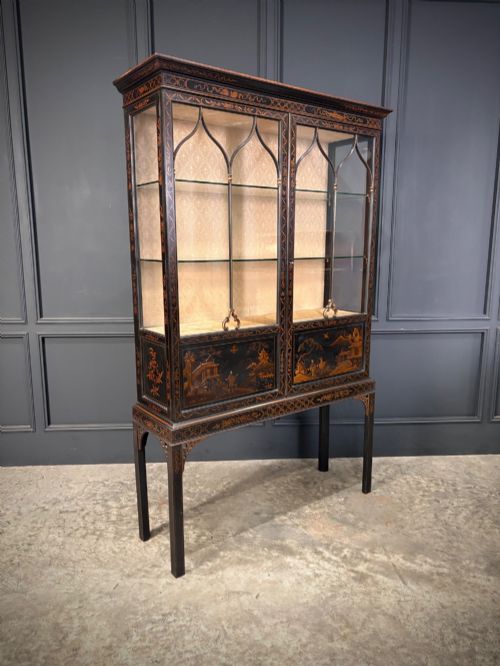
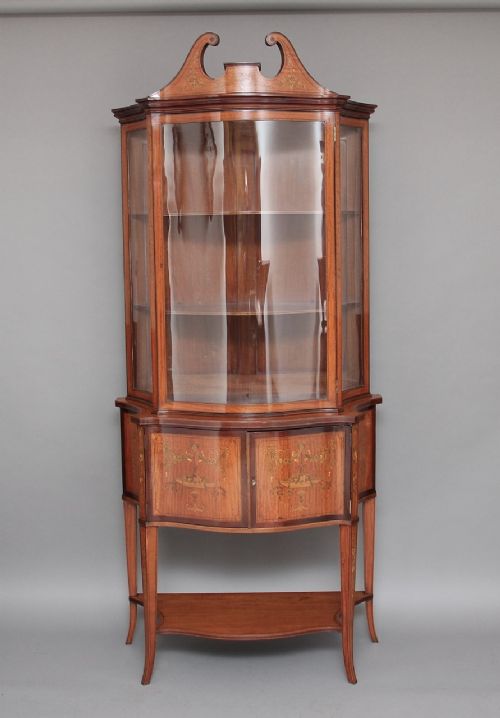
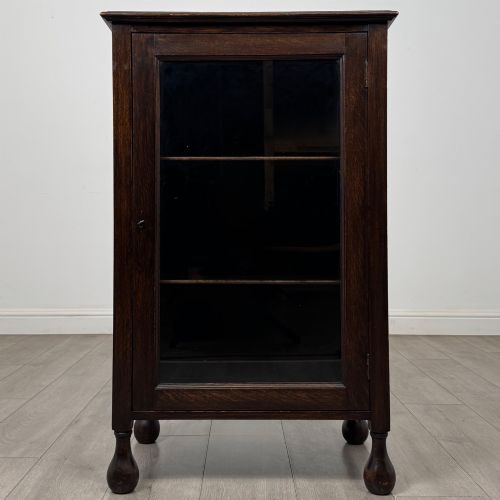
Glazed Display Cabinet on Stand
These glazed display cabinet on stand pieces bring glass-fronted elevation to collections, offering a period focal point for any room.
Glazed Display Cabinet on Stand
A glazed display cabinet on stand combines a glass-fronted upper storage section with a raised supporting base or legs, creating an elevated display piece. These items emerge across several periods, appearing in Georgian, Victorian, Edwardian, and twentieth-century formats.
The form adapts to various interior needs through display cabinets, corner cabinets, bookcases, and side cabinets. Examples range from simple pine and oak constructions to highly finished mahogany, walnut, and satinwood pieces.
Makers and designers applied distinct stylistic revivals, producing Sheraton Revival, Chinese Chippendale, and Queen Anne interpretations. This variety ensures buyers find both floor-standing corner cupboards and refined vitrines suited to specific architectural spaces.
How they were made
Cabinetmakers utilised solid timbers such as mahogany, oak, pine, and walnut for the primary carcases, often incorporating satinwood inlay and fine veneers. Glass doors and side panels permitted maximum light penetration for the objects housed within.
Structural elements relied on brass fittings, carved wooden details, and painted decorations. Some pieces incorporated architectural cornices and astragal glazing bars to divide the glass panes neatly.
Raised stands utilised tapered legs, pedestals, or bracket feet to lift the heavy display portion off the floor. Interior surfaces occasionally featured mirror backs to reflect stored porcelain or silverware.
Listings feature mahogany, walnut, oak, and pine cabinets spanning Georgian, Victorian, and Edwardian periods.
What varies in quality
The refinement of the timber selection and inlay work dictates the overall standard of a piece. Figured walnut, intricate satinwood inlay, and hand-carved mahogany distinguish superior examples from simpler utilitarian cupboards.
Construction methods reveal the maker's hand through the precision of the astragal glazing bars and the integration of the stand with the upper cabinet. Original painted decoration and well-preserved brass hardware further elevate a cabinet's standing.
Collinson and Lock·Maple and Co·Leonard Wyburd·Liberty and Co
The Glazed Display Cabinet on Stand Glossary
- Astragal
- Wooden or metal bars forming a grid to hold individual panes of glass within a door. These slender mouldings define the classic Georgian and Victorian glazed aesthetic.
- Vitrine
- A glass-fronted or glass-sided cabinet designed specifically for displaying fine objects. This term often applies to refined French or English neoclassical display pieces.
- Satinwood
- A durable, lustrous timber native to India and Ceylon, prized for its yellow colour and satiny sheen. It frequently appears as contrasting inlay on mahogany furniture.
- Pedestal
- An upright architectural support or base carrying a cabinet or column. Pedestal forms lift the display chamber firmly off the ground.
- Breakfront
- A piece of furniture whose central section projects forward from the flanking sides. This layout adds visual depth to large mahogany bookcases and cabinets.
Glazed Display Cabinet on Stand: Frequently Asked Questions
What is a display cabinet on stand?
A display cabinet on stand is a raised glass-fronted piece of furniture designed to showcase ceramics, glassware, or small collections. The elevated design separates the main storage compartment from the floor via legs, a stand, or a pedestal.
This form provides an open silhouette compared to heavy floor-standing cupboards, allowing light to circulate freely around the room while keeping delicate items safely enclosed behind glass.
How do I date a glazed cabinet?
Dating relies on observing timber choices, construction techniques, and stylistic markers such as inlay patterns or hardware. Georgian pieces often feature rich mahogany with delicate astragal glazing, whilst Edwardian examples frequently show satinwood inlay on lighter mahogany carcases.
Comparing the secondary woods used inside the carcase, such as pine or oak, alongside the type of glass helps confirm the period of manufacture.
Where should I place my cabinet?
These cabinets suit dining rooms, living spaces, and hallways where natural light can enhance the glass panels and interior contents. Corner variations fit efficiently into unused angles, whilst flat-fronted or breakfront models work well against primary walls.
Positioning the cabinet away from direct sunlight protects both the antique timber finishes and the objects displayed inside from fading.
Are corner cabinets practical?
Corner cabinets utilise awkward room junctions effectively by turning dead space into display storage. Their triangular footprint holds a surprising volume of items without protruding far into the main floor area.
They bring architectural interest to plain corners while securely housing books, porcelain, or curiosities behind glazed doors.