



Glazed Corner Unit
A glazed corner unit turns empty angles into functional display space using glass doors and fitted shelves.
Glazed Corner Unit
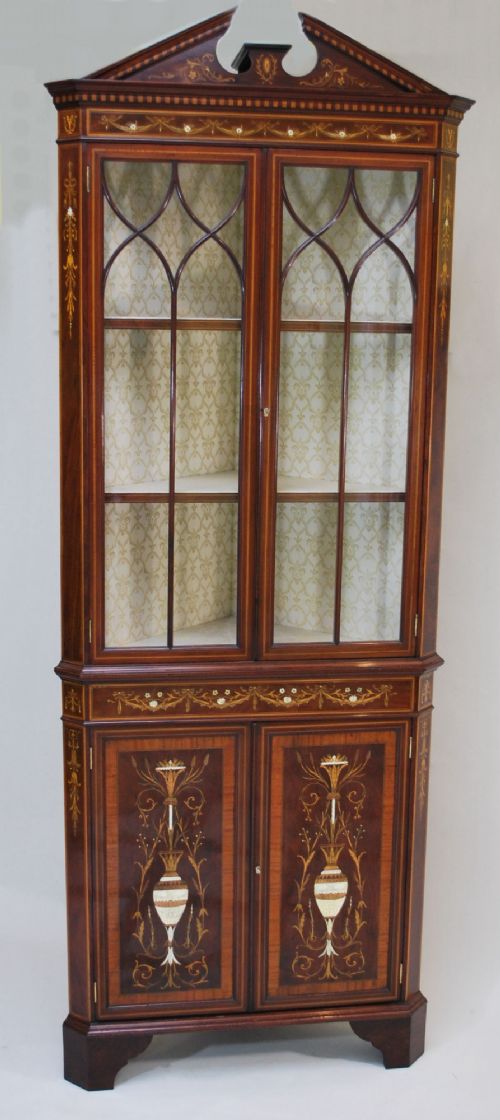
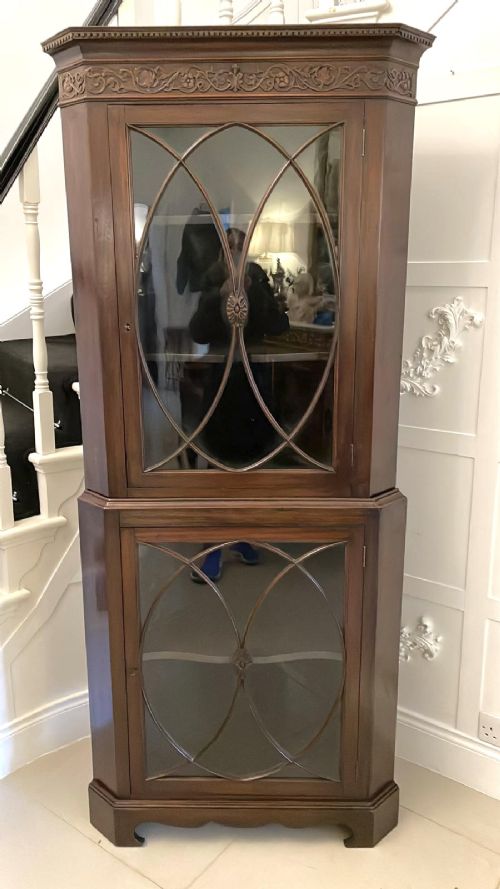
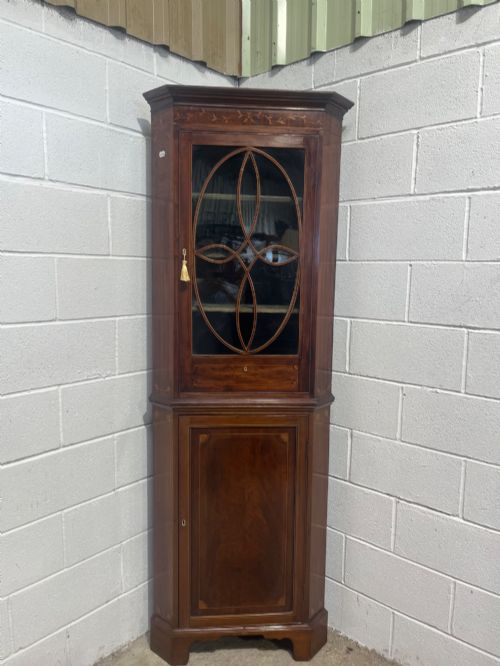
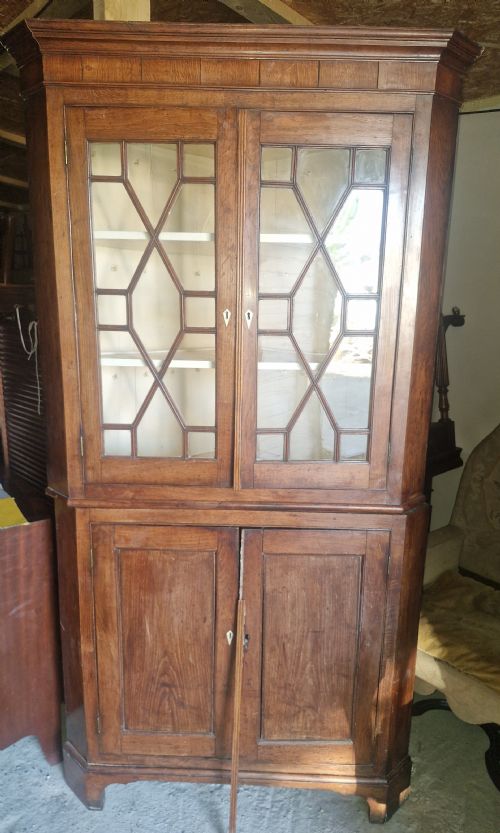
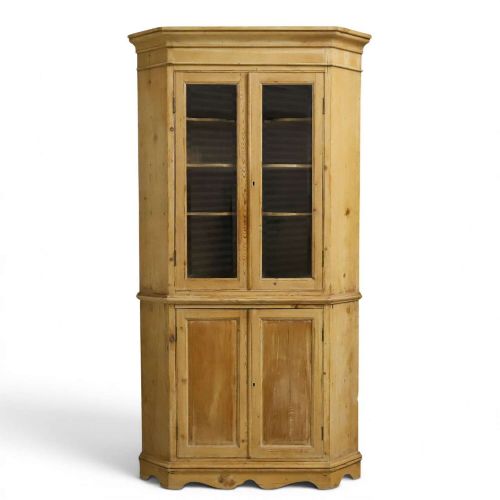
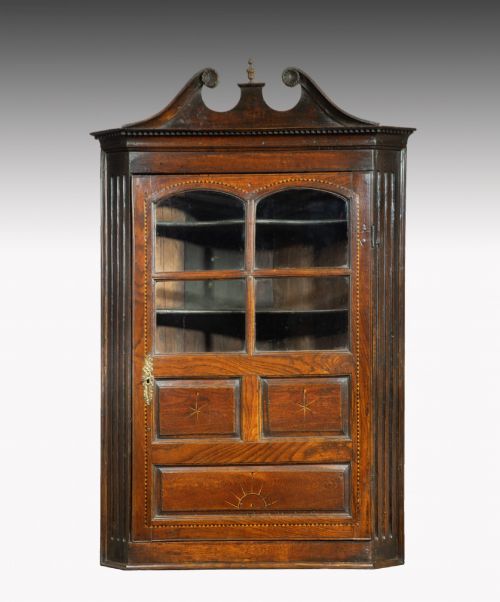
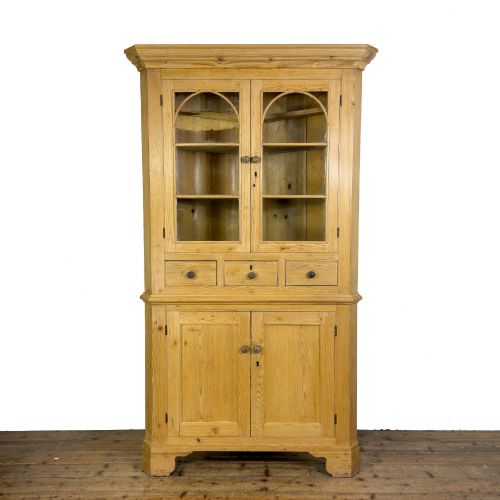
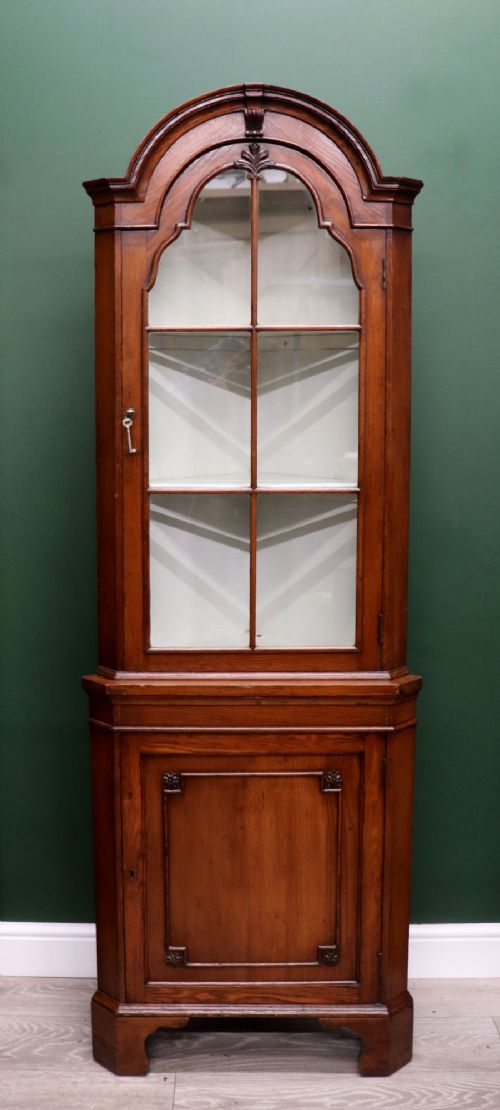
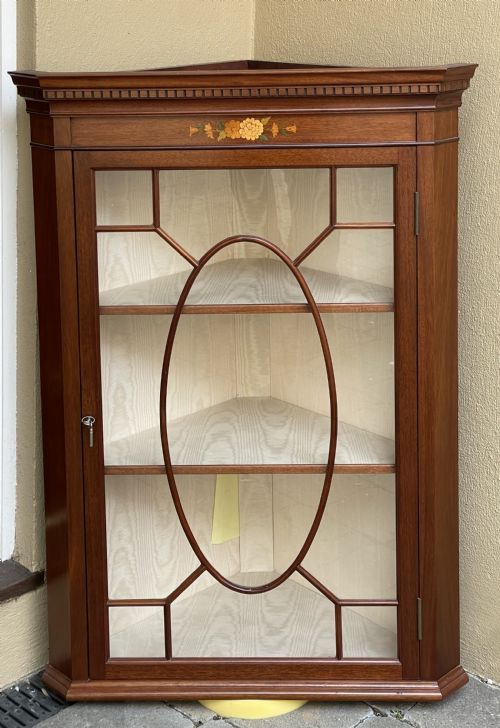
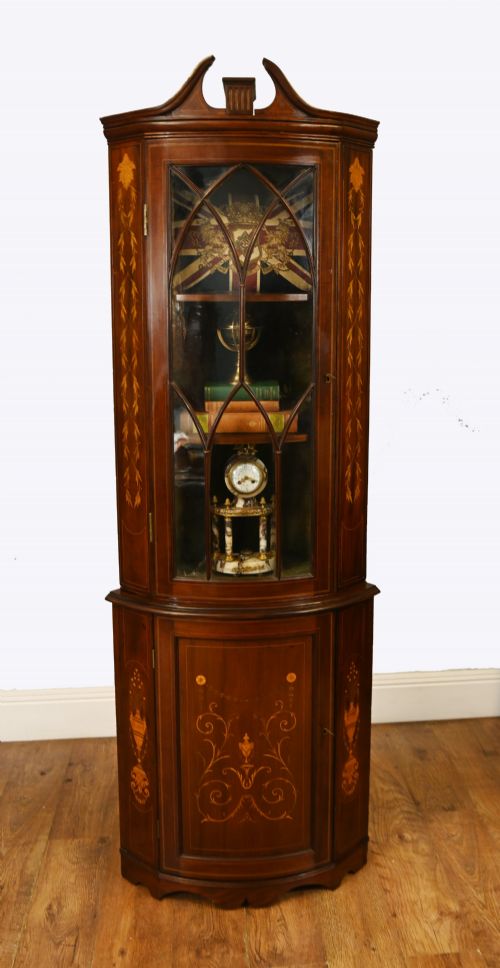
A glazed corner unit solves the problem of difficult room angles by fitting flush against walls while showing off contents through glass panes. These pieces emerge in forms ranging from wall-hanging cupboards to two-part floor-standing cabinets.
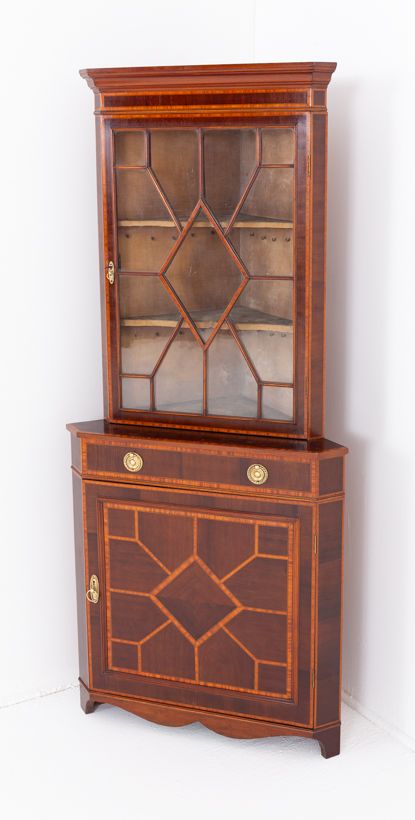
The selection here draws heavily from the Edwardian era and the nineteenth century, alongside pieces from the eighteenth century, the Georgian period, and the 1930s. Mahogany and oak dominate the construction, often enhanced with satinwood inlay or brass hardware.
Makers and regional workshops produced these cabinets in various stylistic revivals, including Sheraton Revival, Georgian Revival, and Jacobean Revival. Buyers encounter single-door wall cabinets, bow-fronted designs, and tall double-height display units.
Materials and construction
Cabinet makers utilised solid timbers such as mahogany, oak, walnut, and pine, frequently pairing denser woods with lighter decorative veneers. Satinwood inlay and brass mounts appear across Edwardian and Georgian examples to add surface contrast.
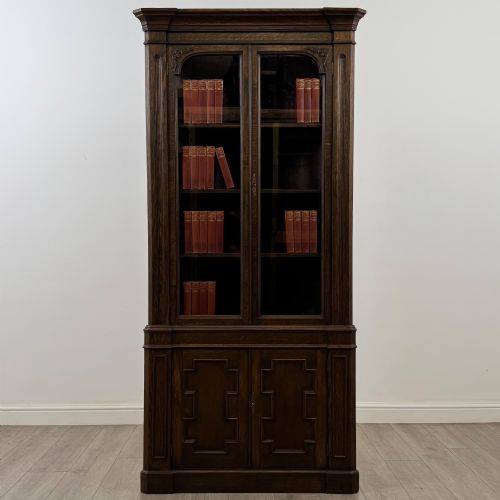
Glass doors utilise traditional framing techniques, from simple panes to intricate astragal bars that divide the glazed area into geometric sections. Two-part forms incorporate a distinct upper display section resting upon a lower cupboard base.
Periods represented stretch from the early eighteenth century through the Victorian and Edwardian eras into the 1930s.
Assessing the construction
Quality rests upon timber selection and the precision of the joinery used in the carcass and the door frames. Superior examples display refined marquetry work, clean internal shelving, and original glass without distortion.
Proportion and scale dictate the visual weight of a corner unit within a room. Well-balanced cornices and crisp inlay distinguish finer workshops from simpler country furniture.
Goodhall, Lamb and Heighway of Manchester·Edwards And Roberts
The Glazed Corner Unit Glossary
- Astragal glazed
- Glazing bars that divide a glass door into smaller panes. These wooden or brass strips secure the individual pieces of glass in the frame.
- Bow front
- A convex curved front section that projects outward. This shape softens the sharp angles typical of corner furniture.
- Two-part form
- A cabinet constructed in separate upper and lower sections. This construction aids transportation and placement of tall furniture.
- Marquetry
- Decorative woodwork where pieces of veneer are fitted into a design on a solid surface. Makers used contrasting timbers to create floral or geometric patterns.
Glazed Corner Unit: Frequently Asked Questions
Where should I place a corner unit?
These cabinets fit directly into ninety-degree room junctions, making use of space that standard rectangular furniture leaves empty.
Floor-standing versions anchor a corner, while wall-hanging models sit comfortably above tables or seating.
How do I date a corner cupboard?
Examine the timber, hardware, and construction methods used in the carcass and shelves. Georgian and eighteenth-century pieces often feature heavier oak framing, whereas Edwardian cabinets frequently display mahogany with delicate satinwood inlay.
Glass types and door framing styles also provide clear chronological indicators.
Are these units one piece or two?
The selection includes both single-piece wall-hanging cabinets and taller floor-standing furniture built in two separate sections.
Two-part forms feature an upper display cabinet that lifts off the lower cupboard base for easier transport.
What is an astragal glazed door?
An astragal glazed door uses slender wooden bars to hold multiple smaller panes of glass in place rather than one large sheet.
This technique creates a traditional grid pattern common on Georgian and Edwardian display cabinets.