
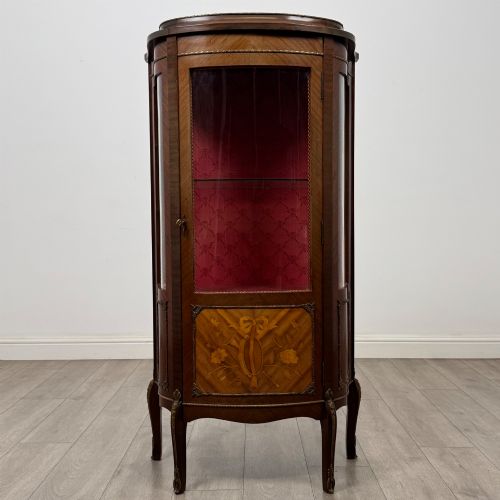
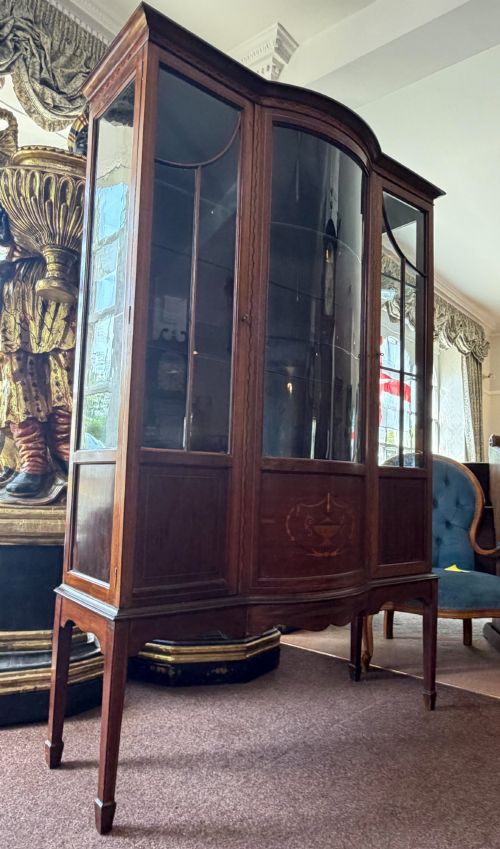
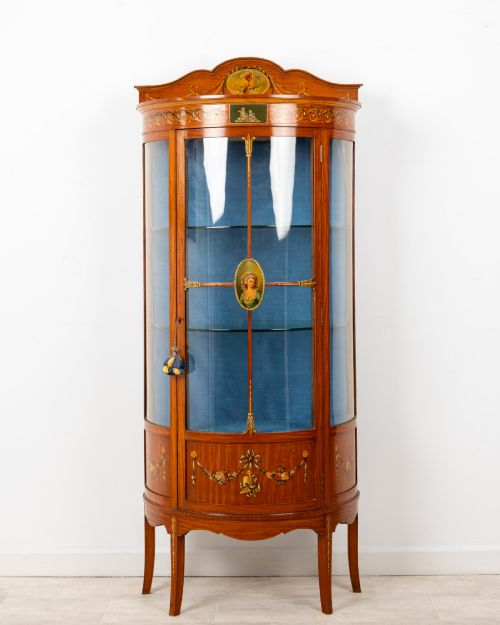
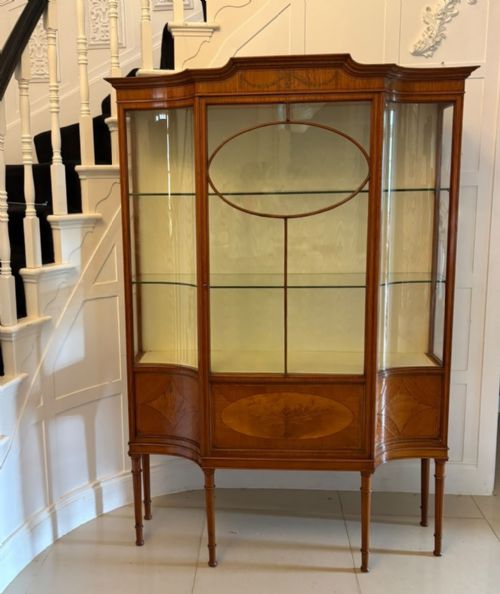

Glazed Bowfront Cabinet
A glazed bowfront cabinet brings curved glass and refined timber into a room to hold treasured possessions.
Glazed Bowfront Cabinet
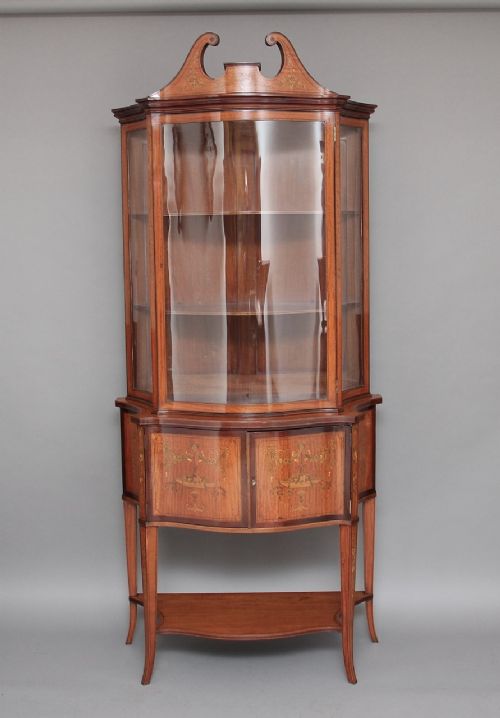
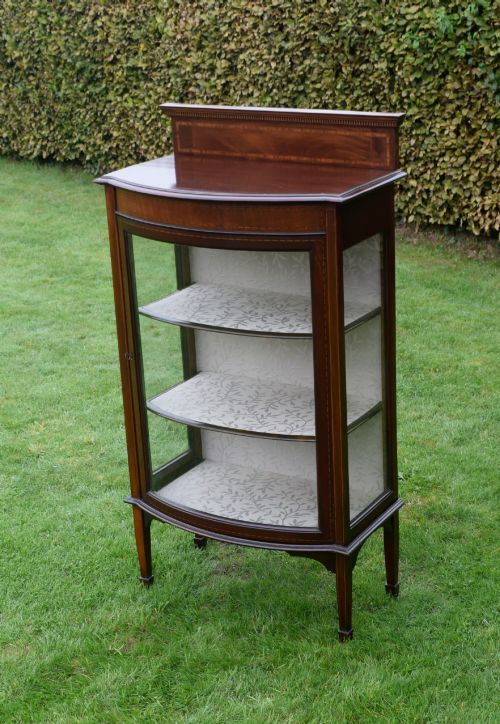
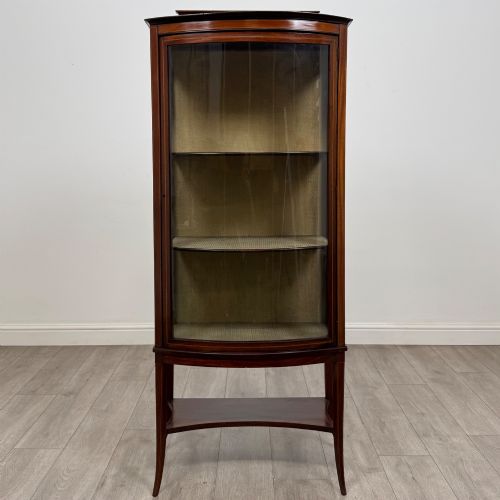
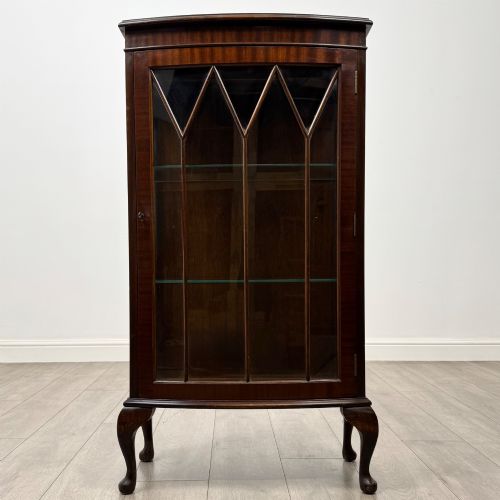
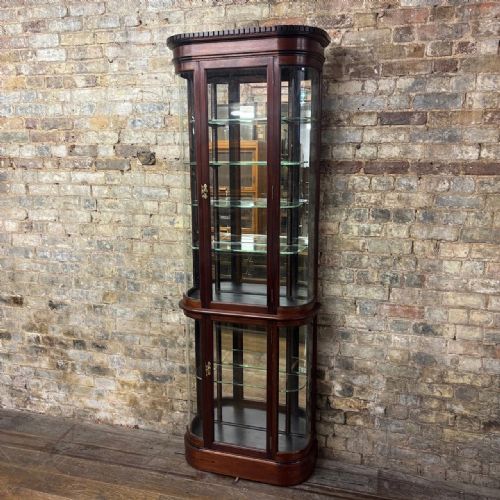
A glazed bowfront cabinet is a piece of furniture designed with a convex curved glass door or panel and transparent viewing areas. These pieces serve primarily to display china, books, and decorative items while protecting them from dust.
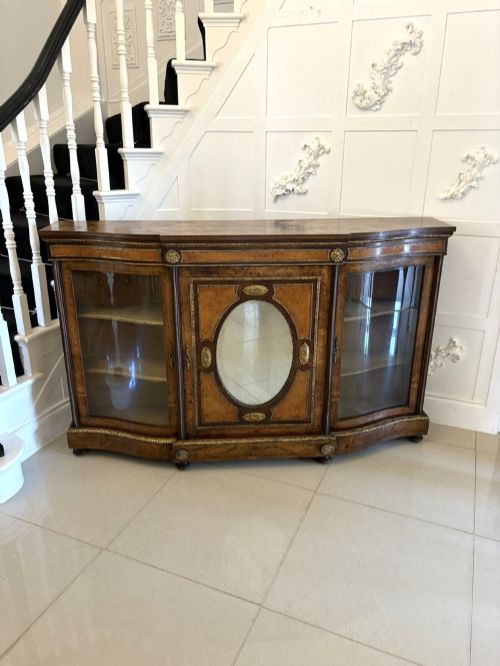
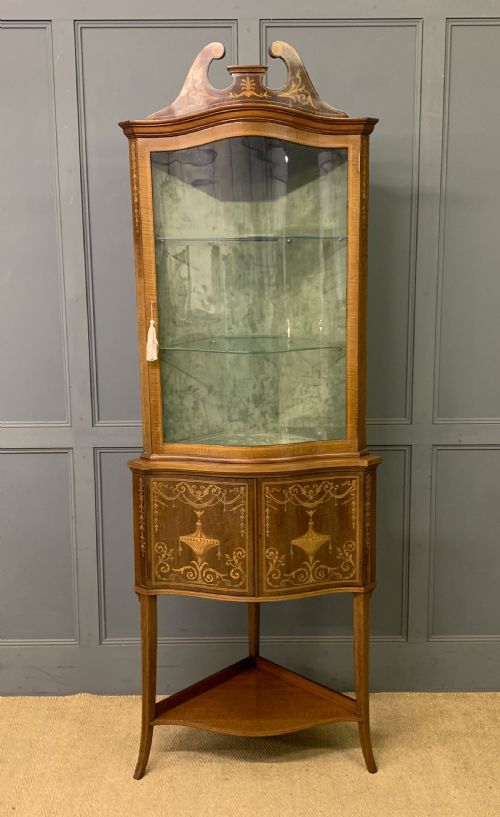
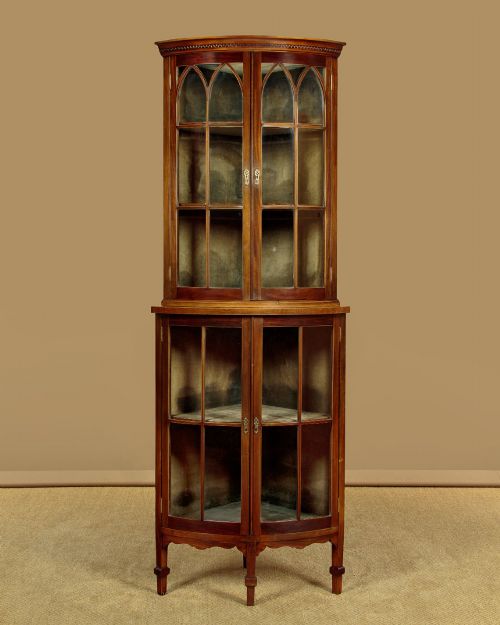
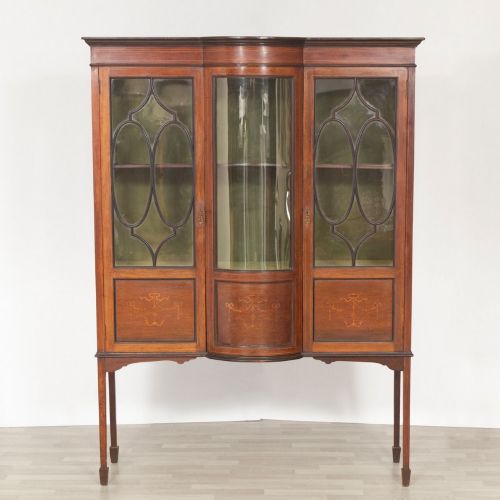
The versions most commonly met on this page date from the Victorian and Edwardian periods, stretching into the nineteen-thirties. They appear in forms ranging from freestanding two-part display cabinets to corner units and credenzas.
Makers drew on various revival styles, including Sheraton Revival, Georgian Revival, and French Belle Epoque. These pieces range from upright display cases to low side cabinets designed to fit snugly into room corners.
Construction and materials
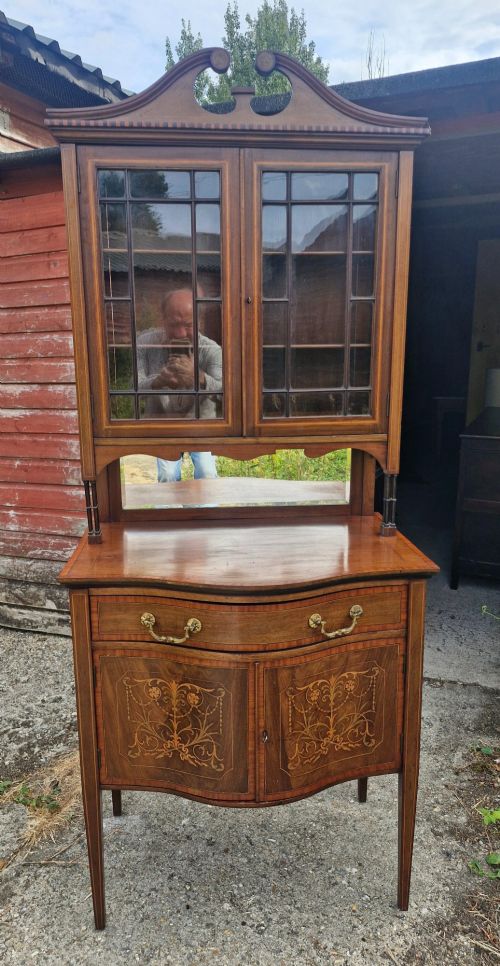
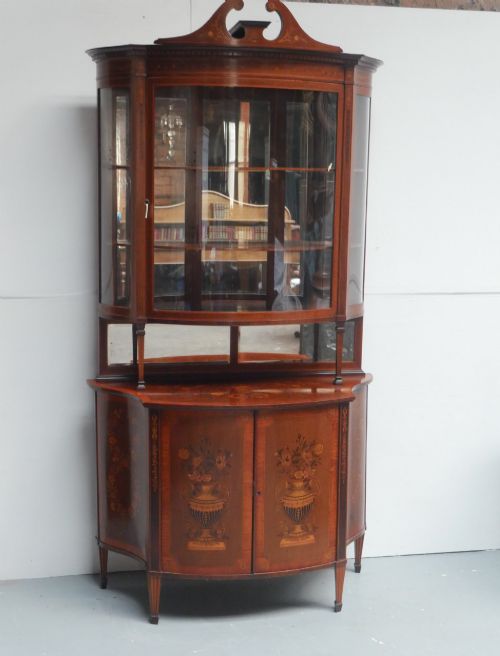
Makers constructed these cabinets using dense timbers such as mahogany, burr walnut, and satinwood, often enhanced with delicate marquetry and inlay work. Glass formed the prominent door and side panels to allow maximum light into the interior.
Brass fittings, fabric linings, and occasionally ormolu mounts were integrated to finish the pieces. Skilled cabinetmakers curved the wooden framing and glass panels to achieve the characteristic rounded front profile.
Some corner cabinets are designed to be entirely freestanding, allowing them to anchor a room angle without touching the walls.
Judging the standard of workmanship
Quality rests in the precision of the curved joinery and the fineness of the timber grain used for the exterior surfaces. Marquetry details and painted floral decorations reveal the level of hand labour invested by the maker.
The integration of the bowed glass and the solidity of the internal shelving separate standard production from exhibition pieces. Superior examples maintain balanced proportions across the curved glass doors and inlaid panels.
Edwards & Roberts·Maurice Adams
The Glazed Bowfront Cabinet Glossary
- Bowfront
- A convex curved front profile that projects outward in a smooth arc. This shape softens the corners of a room and catches light across the glass.
- Vitrine
- A glass-sided cabinet or display case built specifically for showing porcelain and small ornaments. These pieces often feature glass on multiple sides to illuminate the contents.
- Marquetry
- Decorative veneer patterns formed by fitting together small pieces of different coloured woods. Craftsmen applied these intricate designs to the doors and cornices.
- Credenza
- A low cabinet or sideboard, frequently fitted with glass doors and decorative mounts. These items provide surface space on top alongside enclosed display storage below.
- Ormolu
- Gilt bronze mounts used as decorative enrichment on furniture. These metallic details appear on select pieces to accent the timber framing.
Glazed Bowfront Cabinet: Frequently Asked Questions
What is a glazed bowfront cabinet used for?
These cabinets serve to display porcelain, silver, and collection items while keeping them enclosed behind glass doors. The curved front design offers wide-angle viewing of the contents.
They function as focal points in dining rooms, living spaces, and hallways. Their shelving arrangements accommodate various heights of decorative objects.
How do I distinguish Victorian from Edwardian pieces?
Victorian examples often employ darker timbers like burr walnut and heavy marquetry inlay. They lean towards formal, ornate presentation.
Edwardian pieces tend to utilise lighter mahogany and satinwood, frequently featuring delicate painted details and Sheraton Revival influences. The overall aesthetic feels lighter and airier.
Where should I place a corner cabinet?
Corner cabinets fit directly into room angles to utilise unallocated space efficiently. They work well in smaller rooms where wall space is at a premium.
Freestanding corner models can be repositioned easily, while fixed or two-part units anchor securely into the room architecture.
How do I care for the wood and glass?
Dust the timber surfaces regularly with a soft, dry cloth to prevent dirt accumulation. Avoid placing the cabinet in direct sunlight to protect the polish and any interior fabric linings.
Clean the curved glass panels with a gentle glass cleaner applied to a cloth rather than sprayed directly onto the surface. This protects the surrounding wooden frame from moisture damage.