

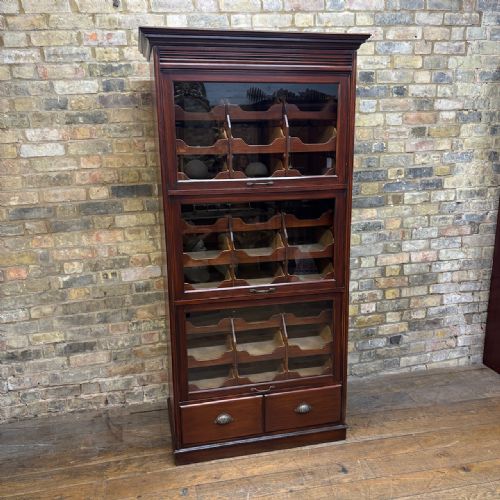
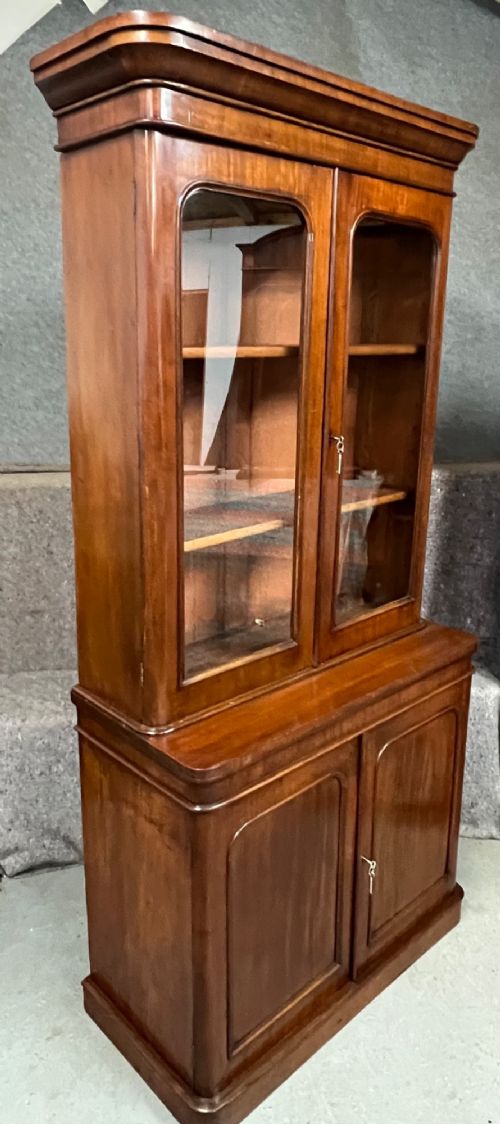
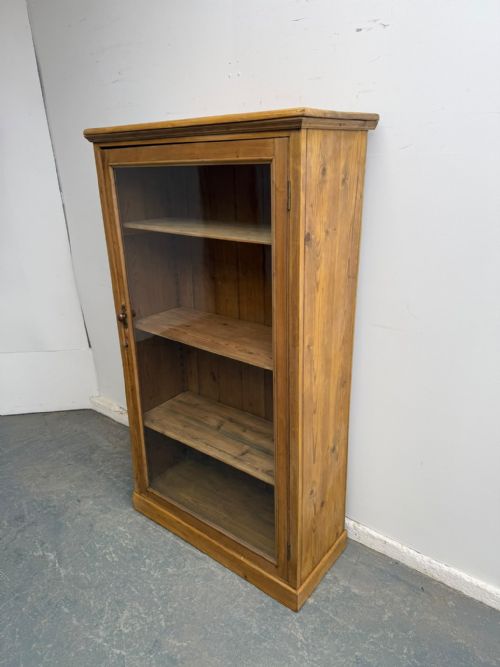
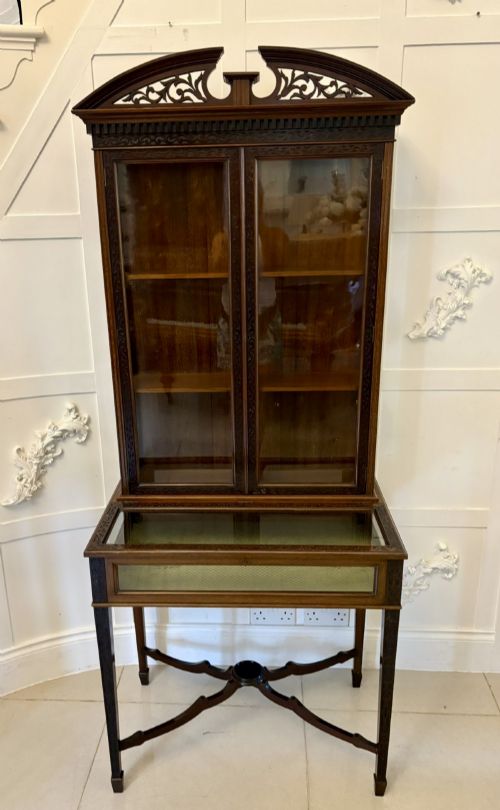
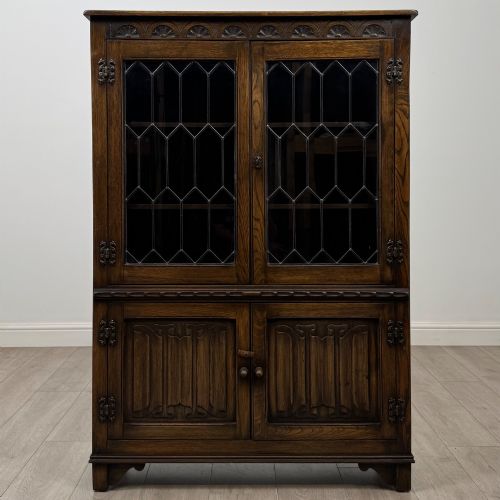
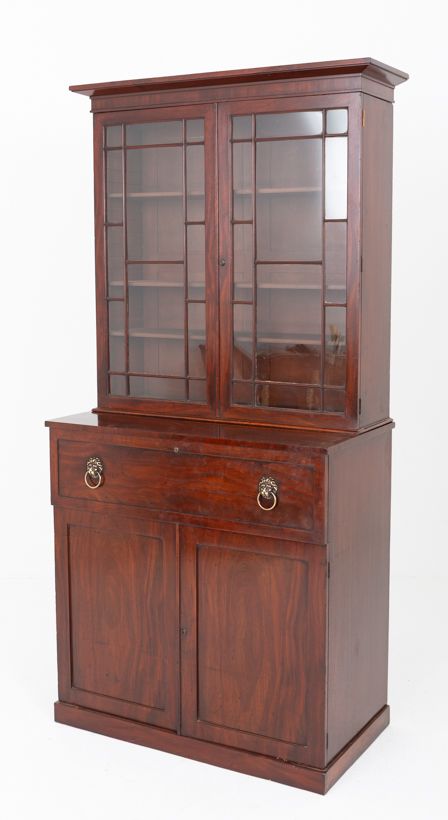
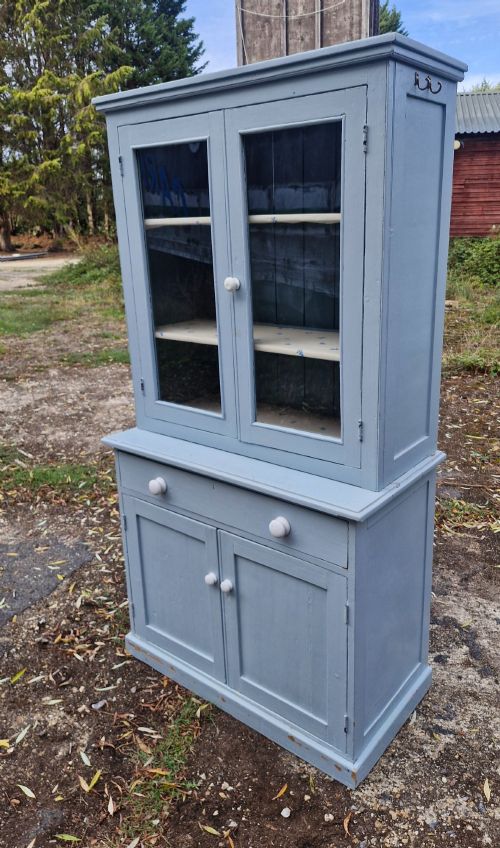
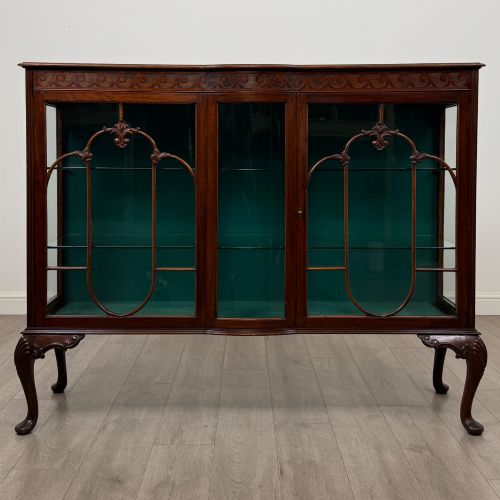

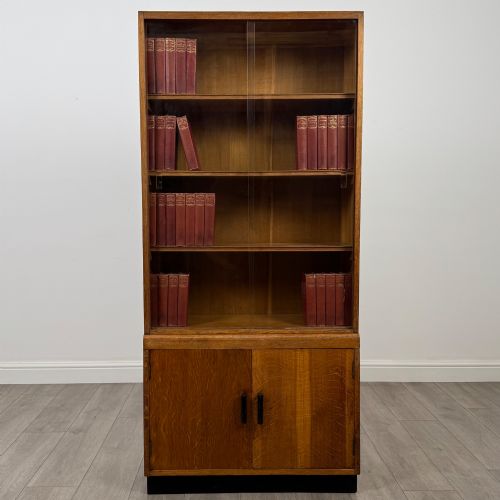
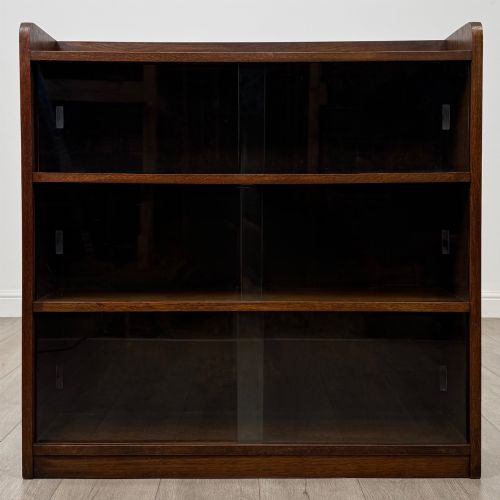
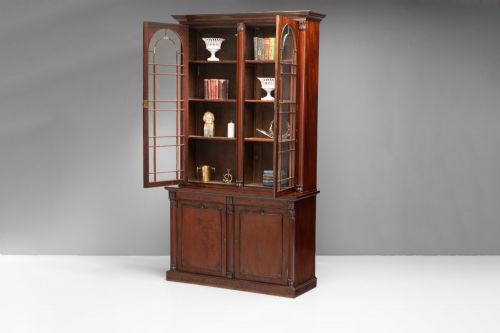
Glazed Bookcase Unit
A glazed bookcase unit brings together timber shelving and glass protection, keeping volumes visible while safeguarding paper and bindings.
Glazed Bookcase Unit
A glazed bookcase unit combines timber storage with glass doors, appearing across periods from the eighteenth century through the 1930s. These pieces function primarily to house books and display objects while protecting contents from dust.
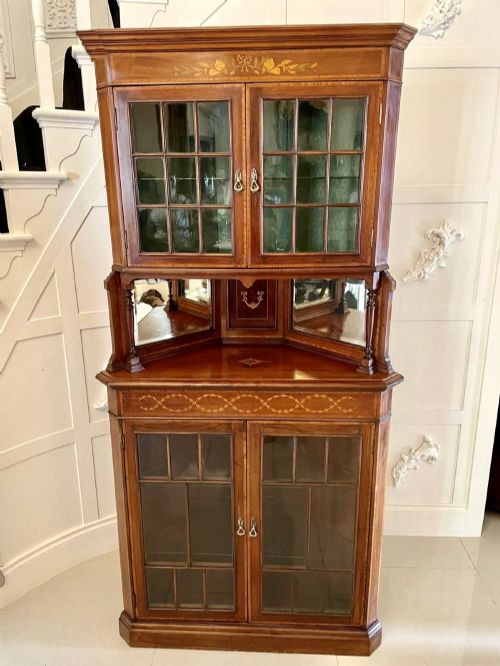
The selections on this page span diverse forms, including corner cabinets, breakfront libraries, secretaire desks, and two-part cupboards. Mahogany and oak dominate the construction, accompanied by walnut, pine, and bamboo.
Makers and revival styles shape the physical forms found here, ranging from Georgian and Regency lines to Edwardian inlay and Art Deco geometry. Buyers encounter everything from compact corner units to large breakfront library bookcases.
Construction and materials
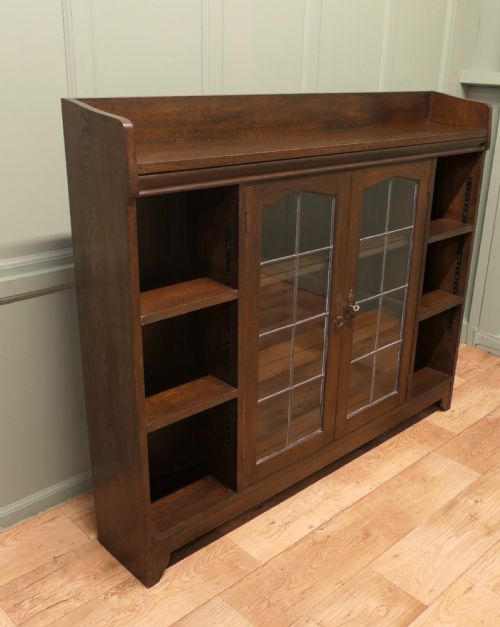
Cabinet makers utilised solid timbers and selected veneers, anchoring glass panes within wooden frames or leaded cames. Brass hardware secures doors and internal fittings, while satinwood and marquetry provide decorative inlay on select mahogany and walnut surfaces.
Joinery methods rely on traditional techniques appropriate to each period, from Georgian cabinet work to Edwardian mass production and Art Deco construction. Glass panes vary from flat sheets to leaded panels and sliding configurations.
Glazed Bookcase Unit Retail Price Guide 2026
Typical asking prices for glazed bookcase unit among the pieces listed under this phrase on Sellingantiques today, from the lower quarter to the upper quarter. They describe what is for sale here now, not the wider market.
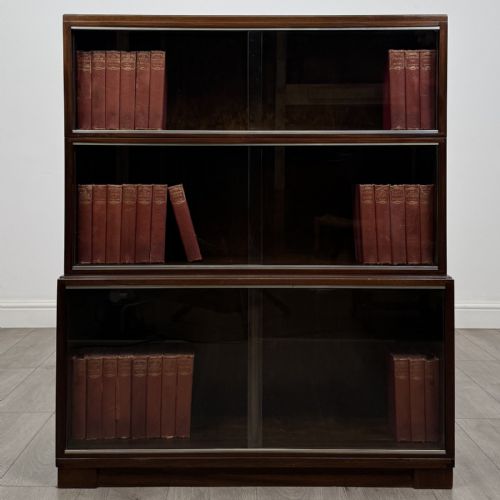
Several items include sliding glass doors, proving that saving space in the sitting room concerned Victorians just as much as it concerns us.
Factors of quality
Quality rests upon timber selection and the precision of the cabinet work, distinguishing standard utility pieces from fine workshop production. Grain alignment in walnut and mahogany veneers alongside crisp carving defines superior examples.
The integrity of the glazing and the retention of original hardware, locks, and internal shelving influence the standing of a piece. Finer items exhibit refined proportion, balanced inlay work, and robust structural joinery.
Epstein·Goodhall Lamb and Heighway·Lambs of Manchester
The Glazed Bookcase Unit Glossary
- Breakfront
- A piece of furniture where the central section projects forward from the flanking wings. This architectural arrangement creates depth and visual interest in large library bookcases.
- Secretaire
- A cabinet incorporating a pull-down writing drawer fitted with small drawers and pigeonholes. It merges desk functionality with upper bookcase storage.
- Leaded glass
- Glass panes held together by narrow strips of lead called cames. This technique forms geometric or decorative patterns within cabinet doors.
- Marquetry
- Decorative veneer patterns formed by fitting together small pieces of coloured wood, shell, or ivory. It adorns the surfaces of fine Edwardian and Victorian cabinets.
- Astral glazed
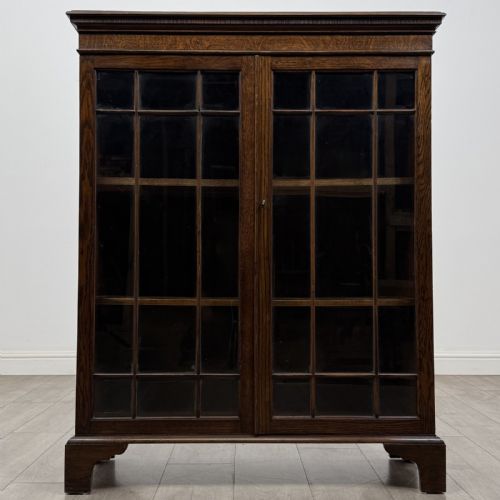
- Cabinet doors featuring a fine lattice framework that divides the glass into multiple smaller panes. This design characterises earlier Georgian cabinetry.
Glazed Bookcase Unit: Frequently Asked Questions
What is a glazed bookcase unit?
A glazed bookcase unit is a cabinet featuring glass-fronted doors designed to store books and display objects while keeping them free from dust.
These pieces range from tall library bookcases to compact corner units and tabletop display cabinets originating from various historical periods.
How do I date a bookcase?
Dating relies on observing timber choices, construction techniques, hardware, and stylistic details such as inlay work or leg shapes.
Victorian and Edwardian pieces often feature machine-sawn elements and specific revival styles, whereas Georgian examples show earlier cabinet-making methods.
How should I clean the glass?
Clean the glass using a soft cloth and a mild, non-ammonia cleaner applied to the cloth rather than sprayed directly onto the wood.
Take care to avoid letting moisture seep beneath the wooden glazing bars or lead cames during maintenance.
Are shelves usually adjustable?
Shelf adjustability depends entirely on the period and the specific design of the individual cabinet.
Older pieces often feature fixed wooden supports, while later Edwardian and twentieth-century examples frequently incorporate adjustable track systems.