


Glazed Bijouterie Table Cabinet
These glazed bijouterie table cabinet examples bring together glass and fine timbers to display small treasures.
Glazed Bijouterie Table Cabinet
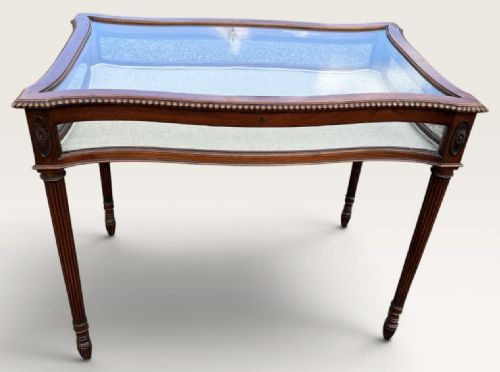
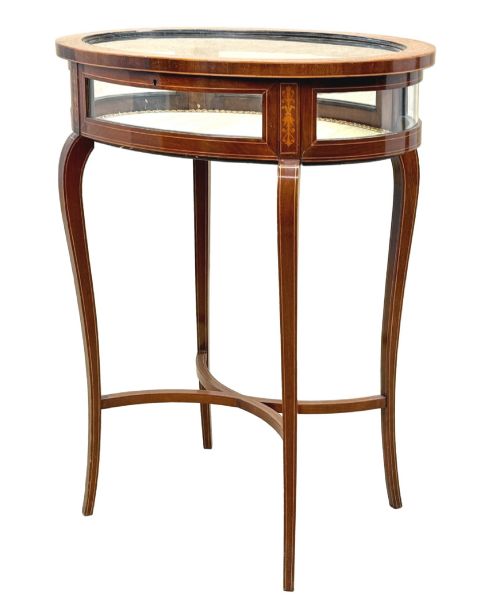
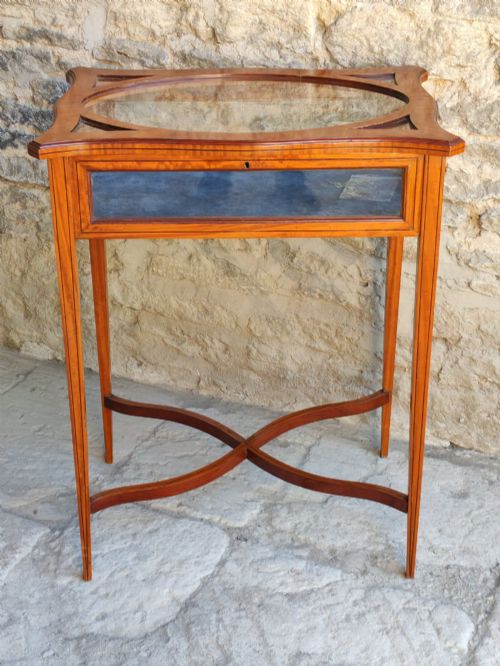
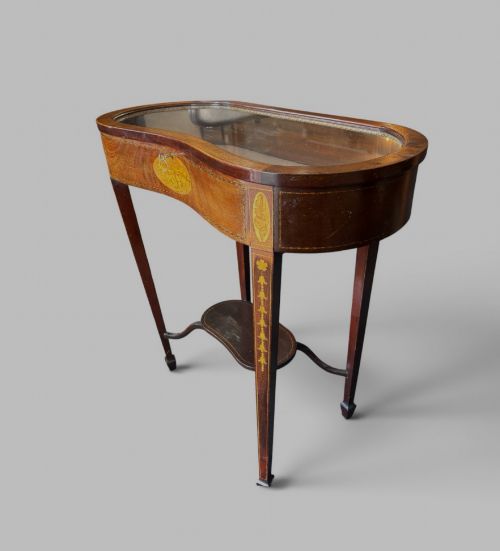
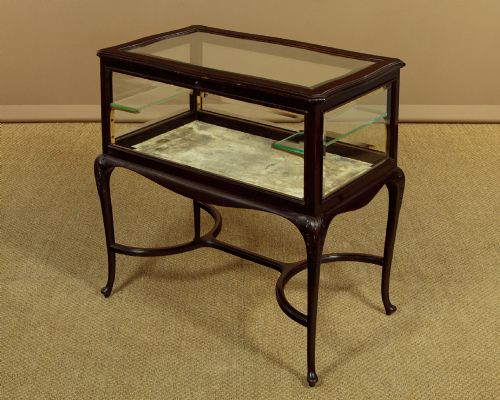
A glazed bijouterie table cabinet serves as a dedicated display case for small valuables, medals and jewellery, raised on legs for tabletop viewing. These pieces appear frequently from the Edwardian and Victorian eras, often taking forms shaped with serpentine curves or kidney outlines.
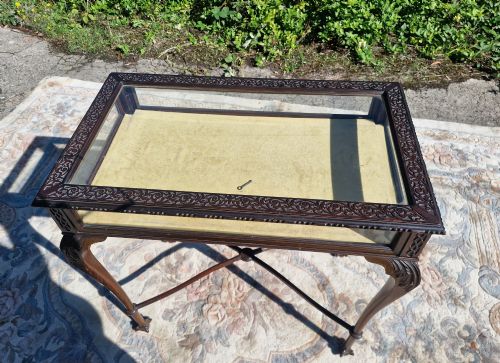
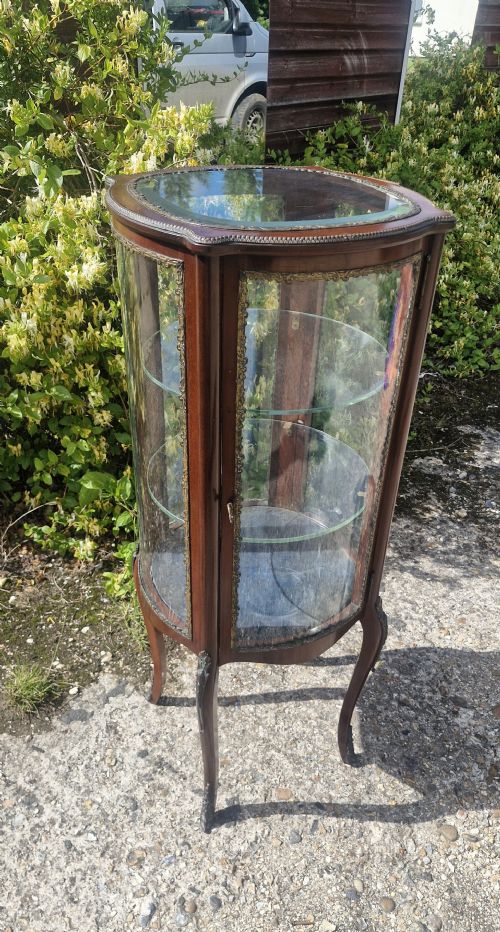
Makers constructed these cabinets using rich timbers such as mahogany, satinwood and kingwood, frequently incorporating glass lids and panels to protect the contents while keeping them visible. Display tables and vitrines from this selection showcase collections at a convenient height for inspection.
Materials and construction
Cabinet makers utilised solid and veneered mahogany, satinwood and kingwood over sturdy timber carcases, applying detailed inlay and marquetry to the surfaces. Glazed panels fit tightly into frames designed to keep dust away from delicate collections.
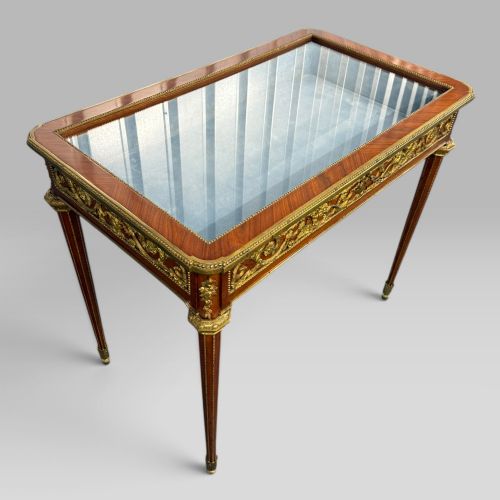
Mounts in brass, ormolu and gilt metal accent corners, legs and hinges, while interiors lined in velvet or fabric cushion the displayed items. Artisans shaped timber into serpentine, oval, kidney and octagonal forms using traditional joinery.
A few unexpected tables carry later sign-written details for Breitling watches, hinting at past commercial shop displays.
Distinctions in quality
The refinement of the timber veneers and the precision of the marquetry inlay separate standard items from superior examples. Better pieces display crisply cast ormolu or brass mounts that fit the contours of the wood precisely.
The integrity of the glass panels and the smoothness of the opening mechanism for the hinged lid indicate the standard of original craftsmanship. Interior fabric linings that remain clean and well-fitted contribute to a higher overall standard.
François Linke
The Glazed Bijouterie Table Cabinet Glossary
- Bijouterie
- A small collection of trinkets, jewellery or decorative objects. These items are housed within specialised display furniture designed specifically for them.
- Vitrine
- A glass cabinet used for displaying fine objects or porcelain. The term originates from the French word for glass.
- Ormolu
- Gilded bronze used for decorative mounts and furniture trim. Makers cast and chased this material to accent furniture corners and legs.
- Marquetry
- Decorative veneer patterns applied to furniture surfaces using thin slices of wood. Craftsmen arranged contrasting timbers to form floral or geometric designs.
- Serpentine
- A furniture outline characterised by a double-curved line that curves inward centrally and outward at the ends. This shape appears on tabletops and cabinet fronts.
Glazed Bijouterie Table Cabinet: Frequently Asked Questions
What fits inside a glazed bijouterie table cabinet?
These cabinets suit small collectables such as pocket watches, medals, rings and delicate silver trinkets. The enclosed glass top keeps dust away while allowing an unobstructed view from above.
Collectors often arrange miniature ornaments or vintage accessories inside the velvet or fabric lined interior wells.
How do I date an antique bijouterie table?
Dating relies on timber choices, construction methods and stylistic revivals present in the piece. Edwardian examples often feature lighter satinwood and delicate inlay work.
Victorian and nineteenth-century versions tend to utilise heavier mahogany constructions with robust brass or ormolu mounts.
Where should I place a display table at home?
These tables work best as freestanding centrepieces in drawing rooms or studies where natural light illuminates the glass top. Placement should avoid direct sunlight to protect interior fabrics and sensitive items.
Ensure adequate surrounding space so guests can walk around the cabinet to view the contents from all angles.
How do I clean the glass and timber surfaces?
Dust timber frames gently with a dry, soft cloth and avoid abrasive polishes that might damage antique finishes. Glass panels require a mild cleaner applied to a cloth rather than sprayed directly onto the surface.
Keep moisture away from fabric linings and brass mounts to prevent tarnishing and water marks.