

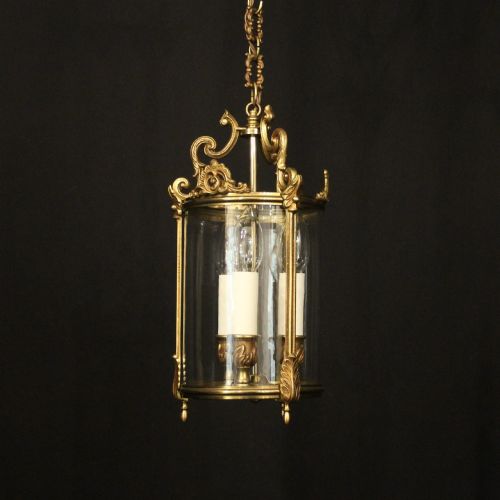
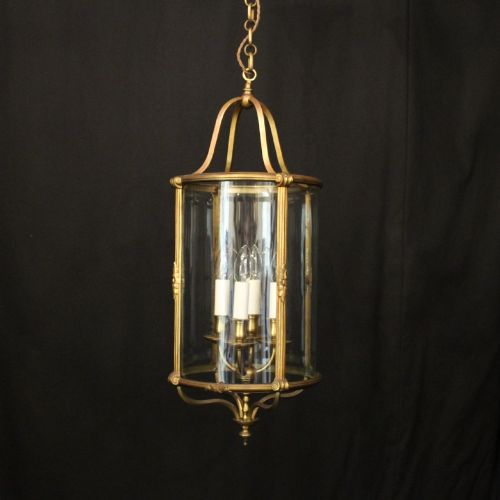
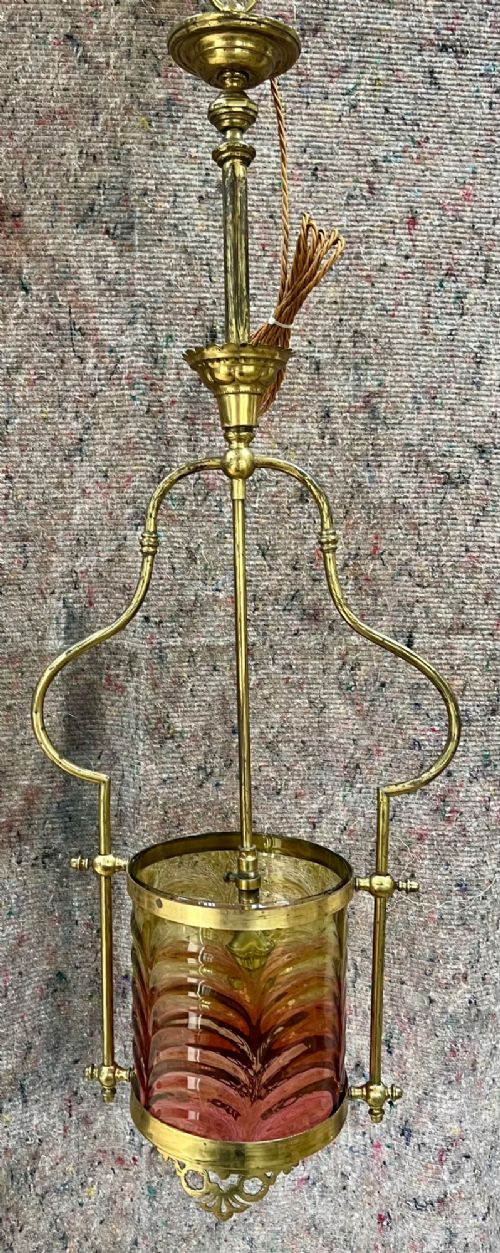
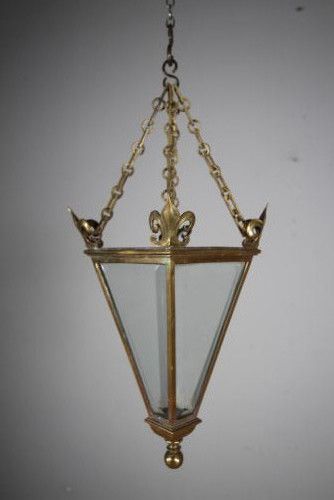
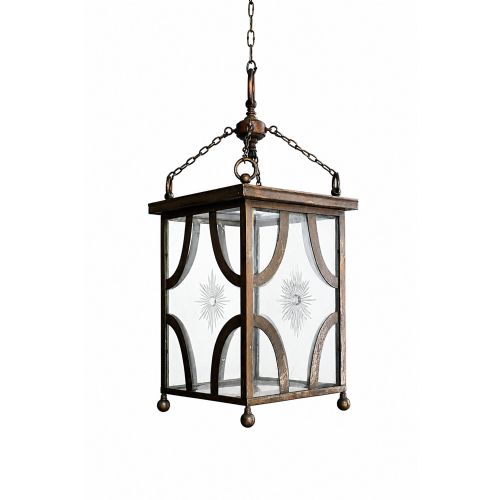
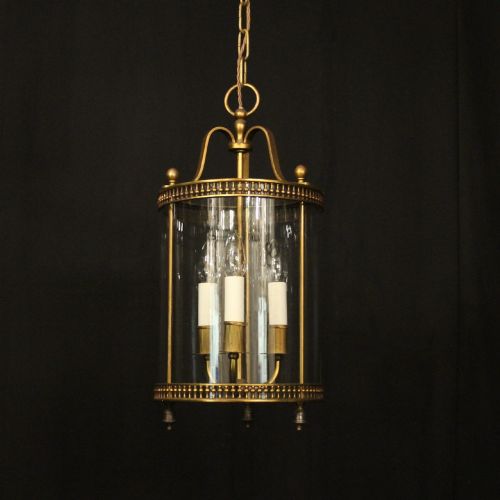
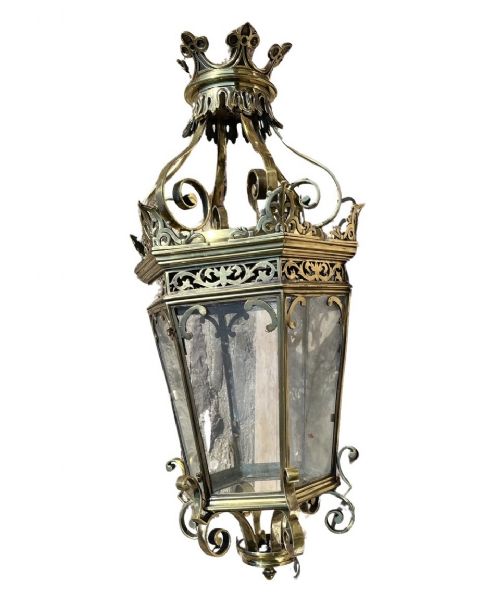
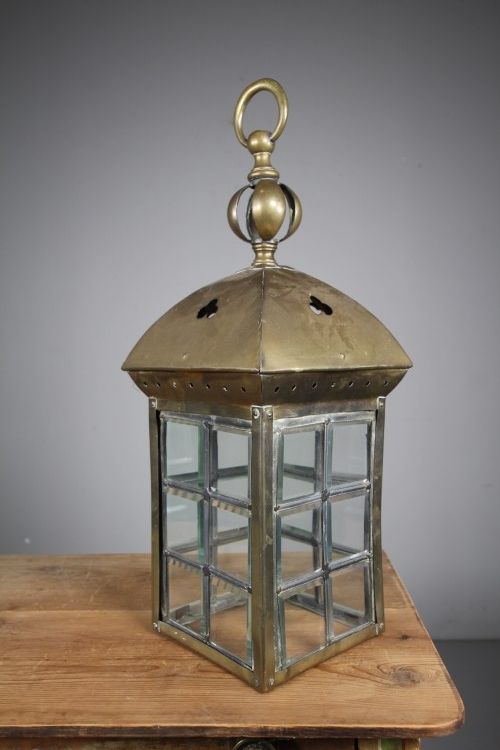
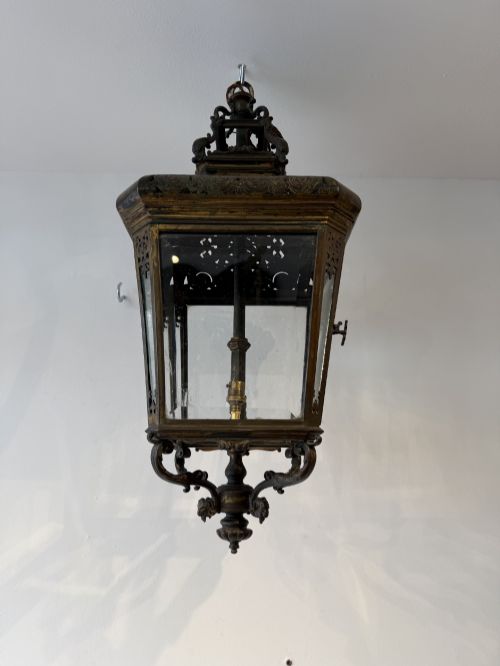
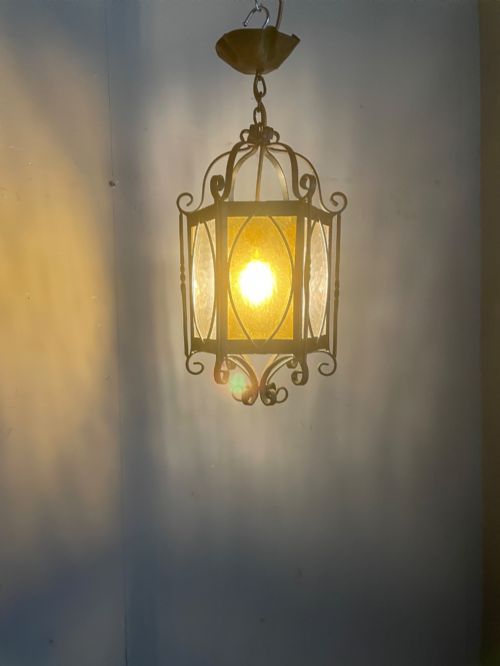
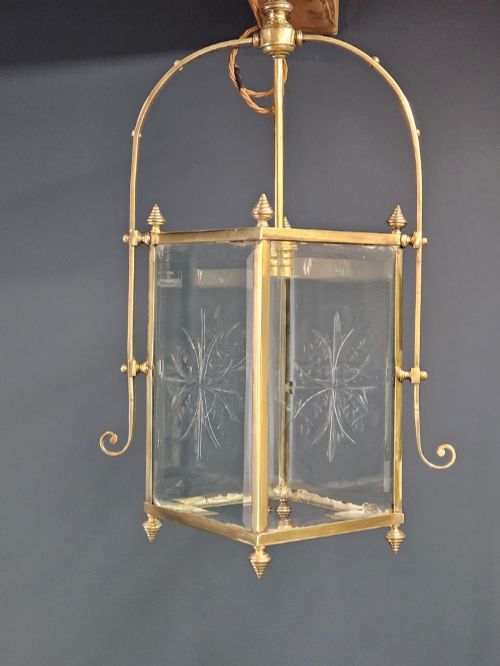


Glass Vestibule Lantern
A glass vestibule lantern sets the tone for an entrance, casting clear or tinted light through metal-framed panes.
Glass Vestibule Lantern
You are most likely to meet French and English examples dating from the Victorian and Edwardian eras through to the nineteen-thirties.
The selections on this page appear as hall lanterns, ceiling lights, and pendant lanterns in various forms from the nineteenth and twentieth centuries.
How they were made
Frames are constructed from metals such as brass, gilt bronze, copper, wrought iron, and steel, shaped to hold glazed panels securely in place.
Glazing ranges from clear panes to frosted or cut glass, sometimes incorporating coloured shades in red and yellow within the hanging lamp design.
Metalwork is cast, forged by blacksmiths, or gilded, featuring styles from French neoclassical and rococo to Gothic revival.
Glass Vestibule Lantern Retail Price Guide 2026
Typical asking prices for glass vestibule lantern among the pieces listed under this phrase on Sellingantiques today, from the lower quarter to the upper quarter. They describe what is for sale here now, not the wider market.
Some nineteenth-century lanterns feature opening doors, designed originally for easy access to light and extinguish candles within.
What varies in quality
The weight and finish of the metal frame dictate the standard of the piece, with heavy cast bronze and detailed gilt work sitting above simpler folded metal.
The crispness of decorative casting and the precision of the glazing define the craftsmanship of the maker.
The Glass Vestibule Lantern Glossary
- Vestibule lantern
- A hanging light fixture specifically proportioned for entrance halls and corridors. These fixtures usually feature glazed panels to protect the internal candle or bulb from draughts.
- Gilt bronze
- Bronze that has been treated with a thin layer of gold or gold-coloured leaf to give a rich metallic surface. This technique appears frequently on nineteenth-century French lighting.
- Hall lantern
- A pendant light hung by a chain or rod in a hallway. They provide direct downward and ambient sideways illumination.
- Frosted glass
- Glass treated to diffuse light and soften glare. This finish creates an even, gentle glow in narrow spaces.
- Gothic revival
- An architectural and decorative style drawing on medieval forms. Lanterns in this style often use pointed arches and heavy ironwork.
Glass Vestibule Lantern: Frequently Asked Questions
Where should I hang a glass vestibule lantern?
These lanterns suit entrance halls, corridors, and high-ceilinged porches where they provide functional illumination and decorative presence.
Hang them high enough to clear head height while ensuring the light reaches the corners of the space.
How do I date an antique lantern?
Dating relies on examining the metal composition, the casting techniques, and the decorative style applied to the frame.
Victorian and Edwardian pieces often display distinct period motifs and traditional assembly methods that separate them from later twentieth-century designs.
Can these lanterns be wired for modern electricity?
Most antique lanterns are adapted to accept modern internal electrical fittings while retaining their historic exterior frames.
Check the internal wiring capacity with a qualified electrician before installation.
What is the difference between brass and gilt bronze?
Brass is an alloy of copper and zinc with a bright golden metallic appearance that polishes easily. Gilt bronze involves a bronze base applied with a golden surface treatment for a deeper lustre.