



Glass Topped Coffee Table
A glass topped coffee table brings lightness and utility to a room, framing a decorative panel or timber base beneath clear protection.
Glass Topped Coffee Table
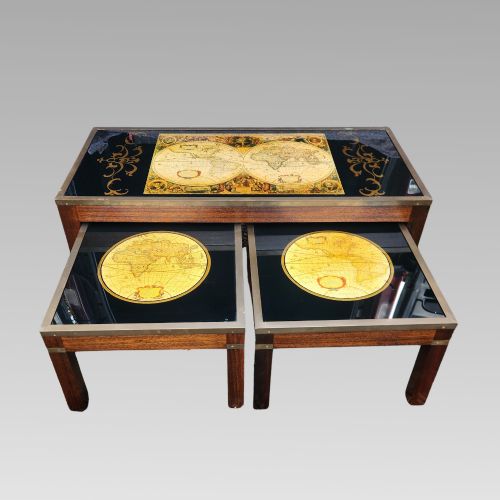
A glass topped coffee table functions as a central surface for a seating area while displaying the craftsmanship of its base. The examples found here span the late nineteenth century through to the mid-twentieth century, encompassing periods such as Art Deco and various revival styles.
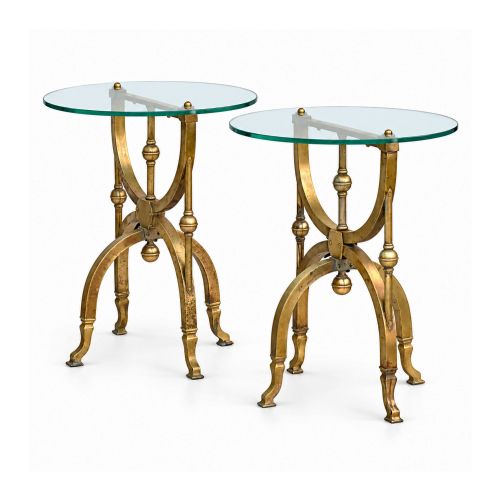
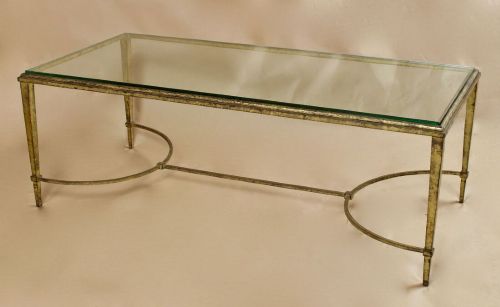
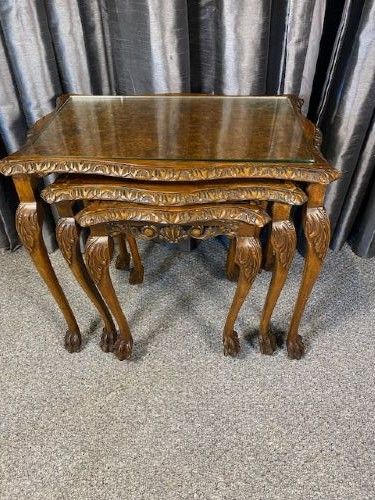
The selection ranges from low coffee tables and occasional tables to nests of tables and side tables adapted with glass tops. Materials vary from walnut and teak to giltwood, wrought iron, brass, and pine, reflecting diverse aesthetic influences including French neoclassical, Asian, and Chinese styles.
How they were made
Makers utilised traditional cabinetmaking techniques alongside metalworking, pairing timbers such as walnut, mahogany, rosewood, and pine with structural elements of brass, chrome, and wrought iron. Surfaces frequently display intricate carving, fretwork panels, or gold leaf and giltwood finishes.
Protection and visibility are achieved by fitting heavy plate glass directly over carved wooden panels, mirrored surfaces, or fabric inserts. Construction methods range from the clean geometry characteristic of Art Deco design to the ornate detailing of French revival and Chinoiserie traditions.
Glass Topped Coffee Table Retail Price Guide 2026
Typical asking prices for glass topped coffee table among the pieces listed under this phrase on Sellingantiques today, from the lower quarter to the upper quarter. They describe what is for sale here now, not the wider market.
Some tables come complete with carved wooden elephants supporting the top.
What varies in quality
Quality in a glass topped coffee table lies in the integrity of the base construction and the finesse of its decorative details. Pieces featuring hand-carved elements, genuine gilding, or specialised elements such as antique Chinese fretwork panels distinguish themselves from simpler utilitarian frames.
The choice of primary timber and metalwork dictates the overall refinement of the piece, with select hardwoods like walnut and rosewood or heavy chrome and gilt wrought iron offering greater visual weight and durability.
Maison Ramsay·Harry and Lou Epstein
The Glass Topped Coffee Table Glossary
- Art Deco
- A design style of the 1920s and 1930s characterised by geometric shapes, streamlined forms, and modern materials like chrome and bleached walnut.
- Giltwood
- Timber that has been coated with a thin layer of gold leaf or gold paint to give a decorative, metallic finish.
- Fretwork
- Ornamental perforated or cutout woodwork, often seen in Asian or Chinese style panels beneath a protective glass top.
- Nest of tables
- A set of graduated tables designed to fit neatly one beneath another when not in use.
- Chinoiserie
- European artistic styles that reflect Chinese decorative motifs and techniques, popular in furniture and panel design.
Glass Topped Coffee Table: Frequently Asked Questions
How do I choose between wood and metal bases?
Choosing between wood and metal depends on the existing interior style and the desired visual weight of the piece. Timber frames in walnut, mahogany, or bleached pine offer warmth and traditional cabinetmaking, while brass, chrome, and gilt wrought iron provide industrial or decorative contrast.
Many twentieth-century designs incorporate both materials, pairing metal accents with timber or mirrored surfaces. Consider how the texture of the base interacts with the surrounding seating and flooring.
Are nesting tables useful as coffee tables?
Nesting tables provide flexible surface area that can be expanded or tucked away according to daily needs. Sets of three or four tables offer multiple points for placement around a room while occupying a compact footprint when combined.
These pieces often feature carved details, teak construction, or Art Deco styling. They function well in smaller spaces where a single large table might restrict movement.
How do I identify Art Deco pieces?
Art Deco furniture typically displays symmetrical geometric forms, clean lines, and materials such as chrome, bleached walnut, and teak. Pieces from this era often embrace a modernist aesthetic distinct from earlier revival styles.
Look for distinctive hardware, tiered structures, and minimalist framing that prioritise streamlined elegance. The era spans the interwar period, reflecting shifts in design preferences towards industrial modernity.