





Glass Three Arm Chandelier
A glass three arm chandelier brings focused upward illumination and period character to a room, drawing the eye upwards through its delicate metal framework and glass dressings.
Glass Three Arm Chandelier
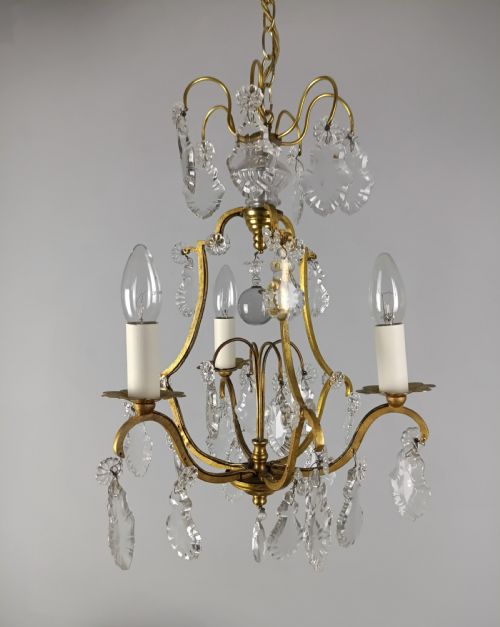
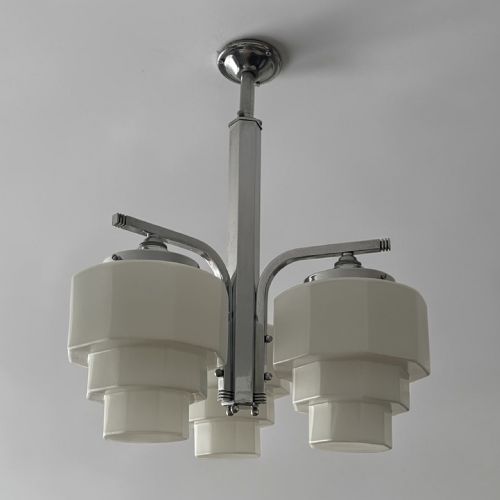
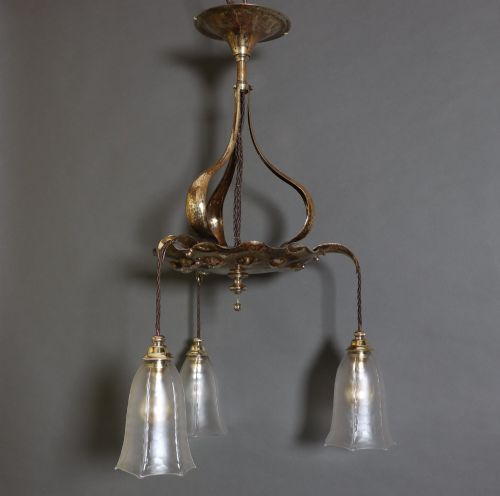
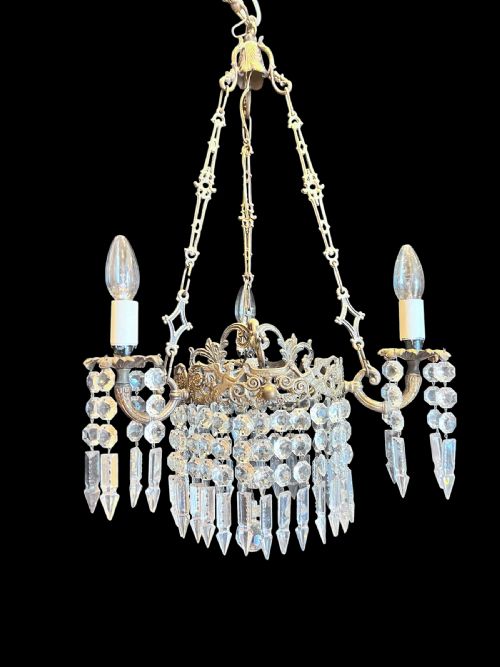
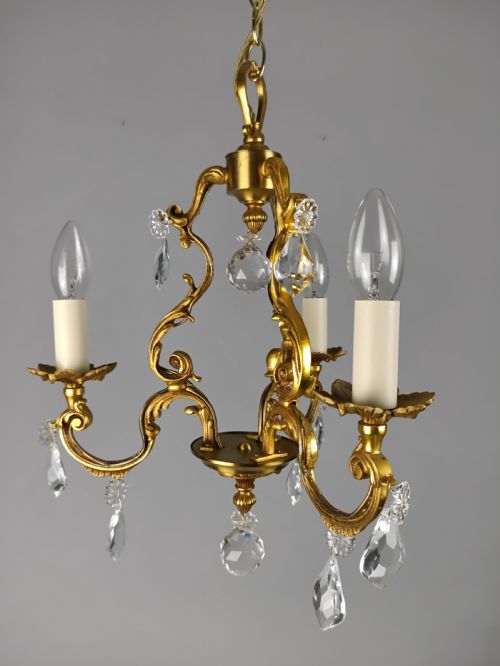
A glass three arm chandelier is a multi-light ceiling fixture designed to distribute light across a space via three distinct branches or arms. These fittings emerge from periods spanning the nineteenth century through the nineteen-thirties, encompassing Edwardian examples alongside pieces from the nineteen-twenties and nineteen-thirties. Buyers encounter various decorative expressions on this page, ranging from French chateau and rococo styles to arts and crafts and art deco designs.
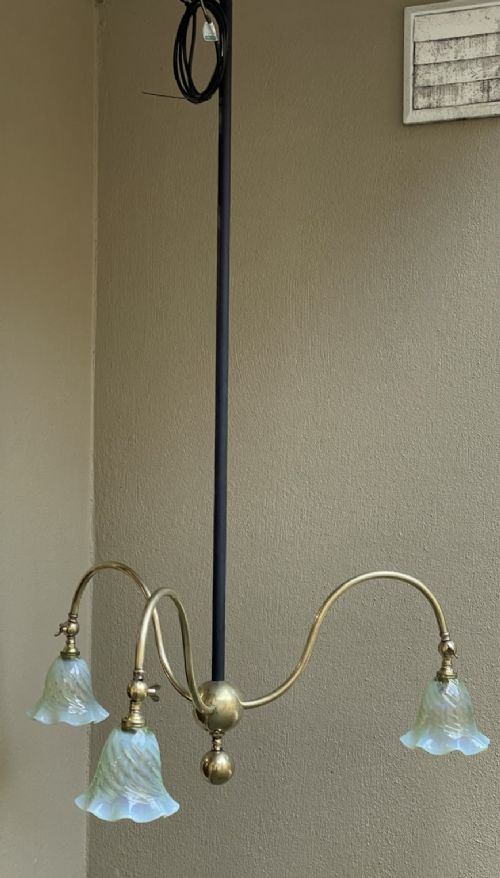
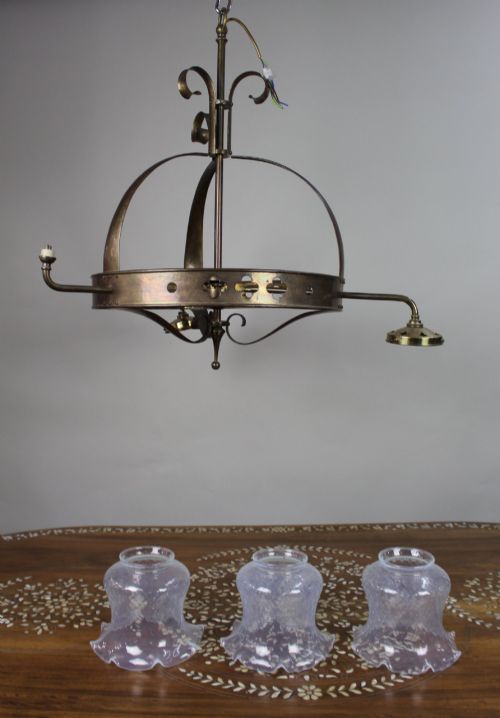
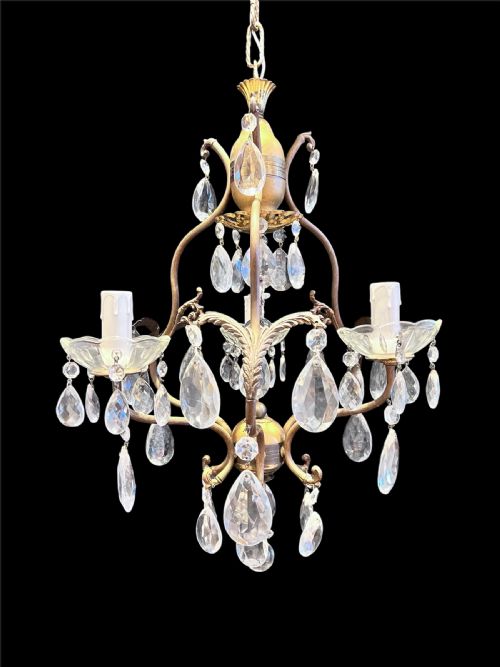
The physical forms include traditional birdcage frameworks, gasolier adaptations, and simpler brass and glass configurations outfitted with frosted, opalescent, or pink crimped glass shades. Certain pieces originate from notable settings such as Manchester City Town Hall, while others exhibit specific decorative motifs like cherub arms or classical bronze castings. Italian baroque revival and French art nouveau aesthetics further broaden the selection available to the discerning buyer.
How they were made
The construction of these fixtures relies heavily on brass, gilt metal, chrome, and bronze to form the structural spine and supporting arms. Artisans combined these metals with glass and crystal components, using cast brass or gilt brass frameworks to support three individual light sources. Some configurations incorporate specialised elements such as opalescent glass shades or crimped pink glass diffusers.
Assembly techniques varied according to the stylistic period, utilising traditional metal casting alongside glass-blowing and cutting methods for the crystal dressings. Surface finishes range from polished or gilded brass to silvered plating, reflecting the prevailing manufacturing practices of the nineteenth century and the early decades of the twentieth century.
Glass Three Arm Chandelier Retail Price Guide 2026
Typical asking prices for glass three arm chandelier among the pieces listed under this phrase on Sellingantiques today, from the lower quarter to the upper quarter. They describe what is for sale here now, not the wider market.
Listings feature periods from the nineteenth century through the nineteen-thirties, including Edwardian designs and arts and crafts styles.
What varies in quality
Quality in these chandeliers is determined by the refinement of the metalwork casting and the clarity of the glass or crystal elements. Finer examples display crisp detailing in the brass arms, bronze mounts, or gilt embellishments, whereas simpler productions rely on standard commercial casting methods. The substance and weight of the frame indicate the level of craftsmanship invested in the piece.
The integrity of the glass components also marks the distinction between standard and superior pieces, particularly in hand-crimped shades, opalescent treatments, or cut crystal drops. Original surface patination and the coherence of the stylistic design scheme, whether French rococo, arts and crafts, or art deco, contribute significantly to the overall standing of the fixture.
F&C Osler
The Glass Three Arm Chandelier Glossary
- Gasolier
- A ceiling-mounted lighting fixture originally designed to burn gas before being converted to electricity. These fittings often retain specialised brass stopcocks and heavy metal tubing characteristic of nineteenth-century domestic gas lighting systems.
- Birdcage Chandelier
- A style of lighting fixture featuring a skeletal metal frame shaped like an avian enclosure. The vertical wires or straps are typically strung with crystal beads and drops surrounding a central stem.
- Opalescent Glass
- Glass that exhibits a milky, semi-translucent appearance with pearlescent colour reflections. It was frequently utilised in shades to soften and diffuse the illumination produced by early electric or gas bulbs.
- Gilt Brass
- Brass that has been coated with a thin layer of gold leaf or a gold-colored chemical finish to enhance its visual warmth. This treatment was widely favored in French chateau and rococo revival lighting designs.
- Crimped Glass
- Glass whose edges have been manipulated into folds or ripples while in a softened state. This technique imparts a decorative ruffled profile to lamp shades, common in nineteenth-century domestic interiors.
Glass Three Arm Chandelier: Frequently Asked Questions
How do I hang a heavy chandelier safely?
Hanging a heavy brass and crystal fixture requires securing the weight directly to a ceiling joist or structural timber using an appropriate steel mounting hook. Independent electrical wiring should be supported separately from the main load-bearing chain to prevent strain on internal connections.
Professional installation by a qualified electrician is strongly recommended to ensure the ceiling structure can adequately support the combined weight of the metal frame and glass components.
Can I convert a gasolier to electricity?
Many antique gasoliers have already been adapted for modern electrical use by running insulated wiring through the original brass or bronze gas channels. This conversion allows period fixtures to function safely with contemporary household circuits while retaining their historic exterior appearance.
During any rewiring process, care must be taken to preserve original burners, stopcocks, and threaded joints so the historical integrity of the metalwork remains undisturbed.
What rooms suit a three arm chandelier?
A three arm lighting fixture provides balanced illumination well-suited to moderate spaces such as bedrooms, studies, hallways, or smaller dining areas. The compact spread of three light sources ensures adequate brightness without overwhelming the proportions of a modest interior.
Matching the stylistic period of the chandelier, whether art deco, arts and crafts, or French rococo, with the surrounding room decor creates a cohesive visual environment.
How should I clean crystal and glass shades?
Cleaning glass shades and crystal drops involves removing the components from the metal frame whenever possible to wash them gently in lukewarm water with mild soap. Rinsing with distilled water helps prevent mineral spots from forming on the surface as the glass dries.
For the brass or gilt metal framework, a soft dry cloth is sufficient to remove dust without damaging original patination or gilded finishes.