




Glass Flower Trumpet Vase
These glass flower trumpet vase examples bring distinct Victorian and Edwardian character to a room.
Glass Flower Trumpet Vase
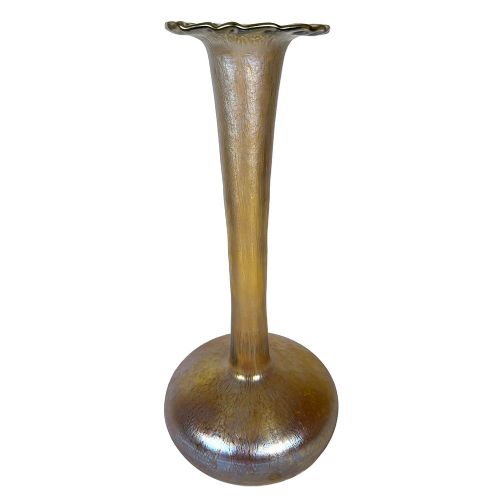
When you search for a glass flower trumpet vase, you encounter tall, slender vessels designed primarily to hold single stems or narrow arrangements. The pieces span periods from the nineteenth century through the Art Deco era, including Victorian, Edwardian, and Art Nouveau styles.
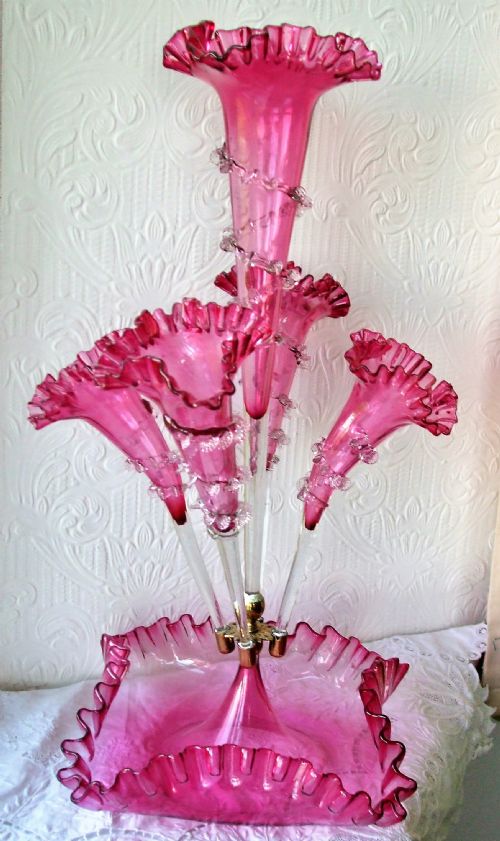
You meet various forms on this page, ranging from standalone table centrepieces and epergnes to posy vases and spill vases with metal bases. Cranberry glass, clear crystal, and cased glass dominate the selection, often accompanied by silver plate, sterling silver, or brass mounts.
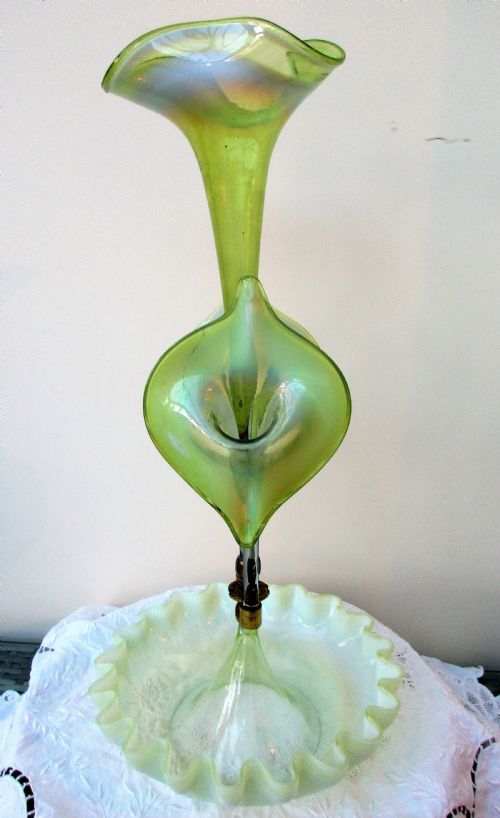
English and French makers created these items, utilising techniques that produced lily vases, flutes, and green or pink vessels with trails and cane decoration. Collectors select them for display on tables and mantelpieces where their distinctive silhouettes stand out.
Materials and Manufacture
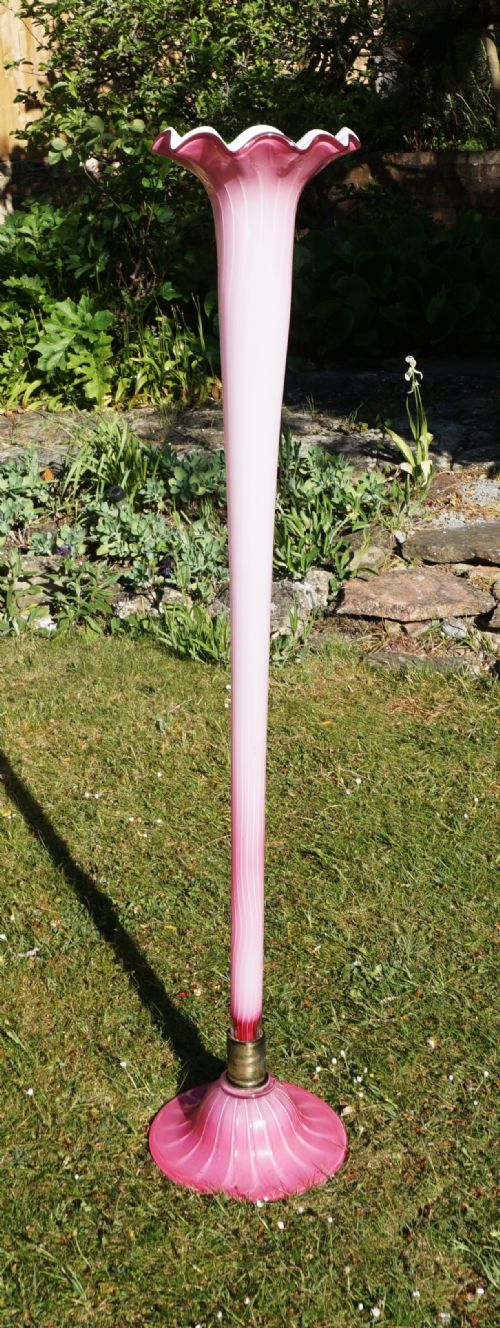
Hot-worked glass forms the primary body of these vessels, shaped into flutes and trumpets while pliable. Craftsmen employed cased glass methods, fusing layers of differently coloured glass together, as seen in pink and white examples.
Molten trails, white cane decorations, and surface cutting added texture and visual contrast to the clear, cranberry, and green glass bodies. Metal components such as sterling silver bases, silver-plated holders, brass mounts, and gilt bronze frames were secured to support the slender glass forms.
Materials recorded across the selection include Cranberry Glass, Clear Glass, Crystal, Cased Glass, Brass, Silver Plate, and Sterling Silver.
Assessing Quality
Quality rests in the precision of the glassblower's hand and the depth of colour within the material. Rich, uniform cranberry hues and clean cased layers distinguish finer vessels from simpler production pieces.
The integration of metal elements, such as pierced sterling silver bases or cast gilt bronze mounts, separates standard items from superior works. Weight, clarity of the crystal, and the crispness of any cut decoration further define the tier of each piece.
The Glass Flower Trumpet Vase Glossary
- Cased glass
- Glass made by blowing a gather of one colour inside or outside another colour, creating layered walls. This technique allows skilled makers to cut through the outer layer to reveal the contrasting colour beneath.
- Epergne
- A large table centrepiece featuring a central trumpet vase surrounded by smaller hanging or attached vases. They were popular dining table decorations during the Victorian period.
- Posy vase
- A small vessel designed to hold a short bunch or single posy of flowers. These items often feature wide bases for stability on tables.
- Spill vase
- A tall, narrow container originally used to hold wax spills for lighting fires and candles. They transitioned into decorative flower holders by the late nineteenth century.
Glass Flower Trumpet Vase: Frequently Asked Questions
What is a glass flower trumpet vase?
A glass flower trumpet vase is a tall, flaring vessel designed to display single stems or narrow floral arrangements. These pieces often feature flared rims and slender stems.
They appear in various styles including Victorian, Edwardian, and Art Nouveau, utilising materials like cranberry glass, crystal, and cased glass.
How were these vases used originally?
These vases served as table centrepieces and decorative vessels for dining rooms and drawing rooms. Their narrow profiles held cut flowers upright without crowding the table.
Larger examples formed parts of multi-piece epergnes or sat within silver-plated and sterling silver frames.
How do I style a trumpet vase today?
You can place a single long-stemmed flower or a slender green branch inside to highlight the flared silhouette. Their height makes them suitable for mantelpieces and side tables.
Pairing them with other Victorian or Edwardian glass items creates a cohesive display on a dining surface.
How do I tell Victorian from Art Deco pieces?
Victorian pieces frequently feature rich cranberry glass, epergne configurations, and applied glass trails or ornamentation. Edwardian and Art Nouveau items often introduce flowing organic lines and green glass.
Art Deco pieces from the 1930s display more geometric forms and distinct maker signatures like Julien Glass from France.