

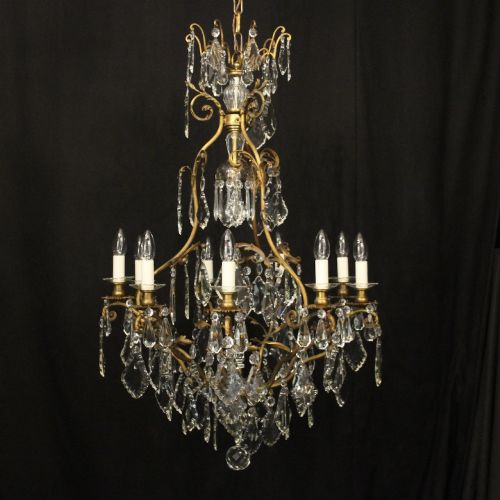
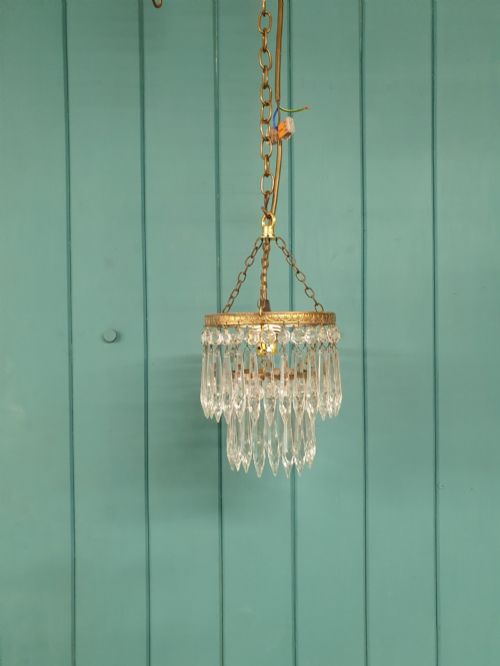
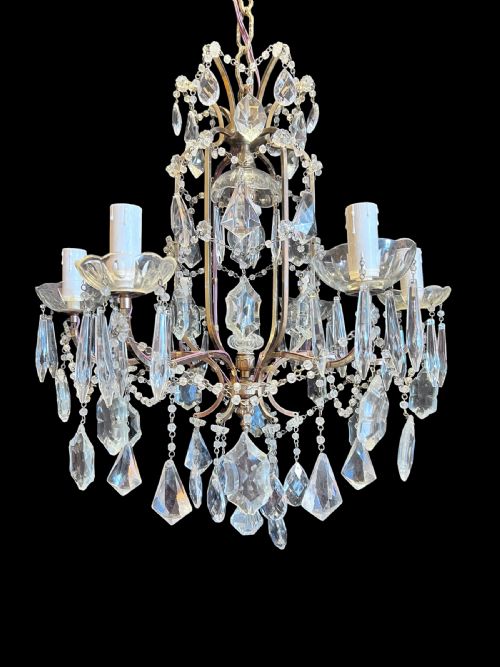
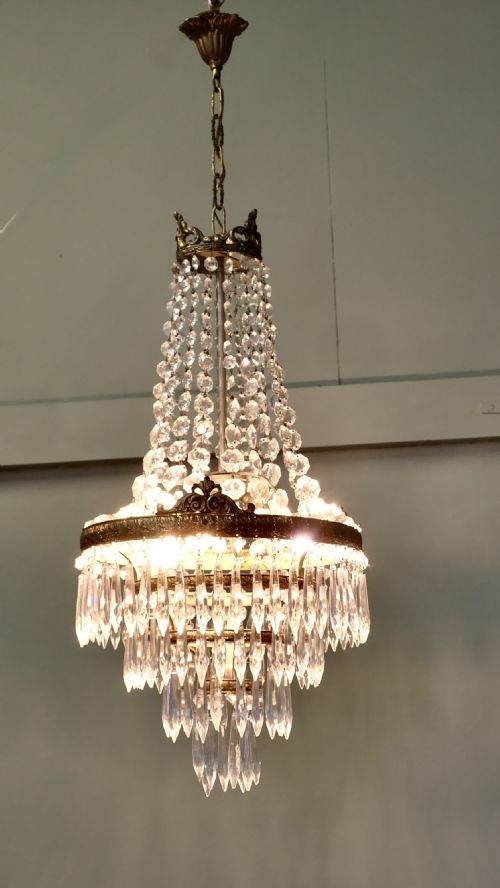
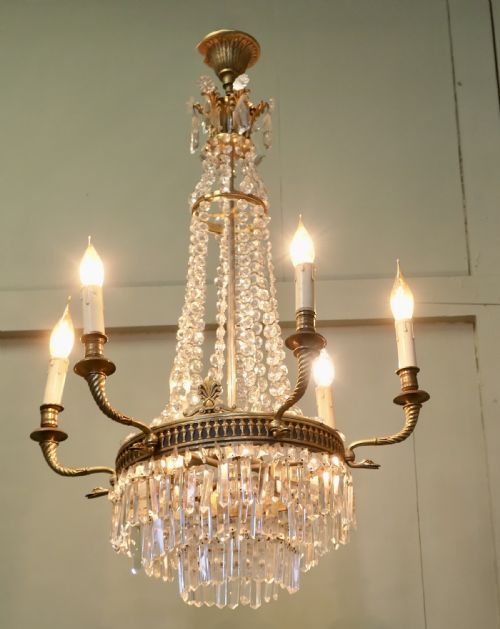
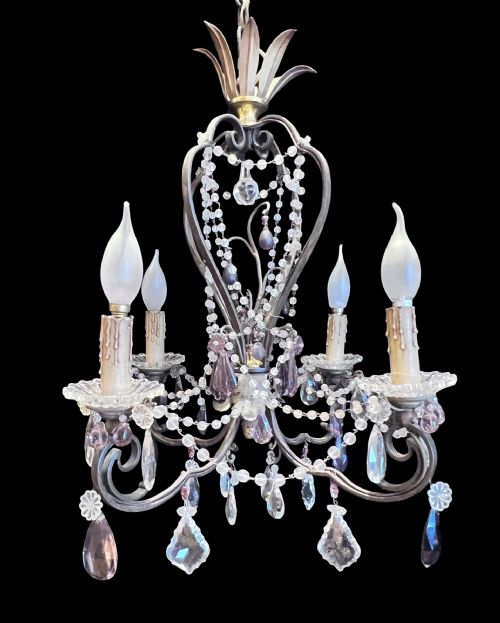
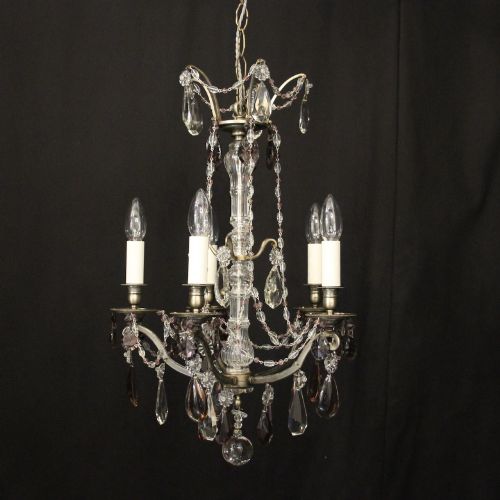
Glass Drop Pendant Light
These glass drop pendant light fixtures bring brilliant illumination and period character to a room through faceted crystal drops and delicate metal frames.
Glass Drop Pendant Light
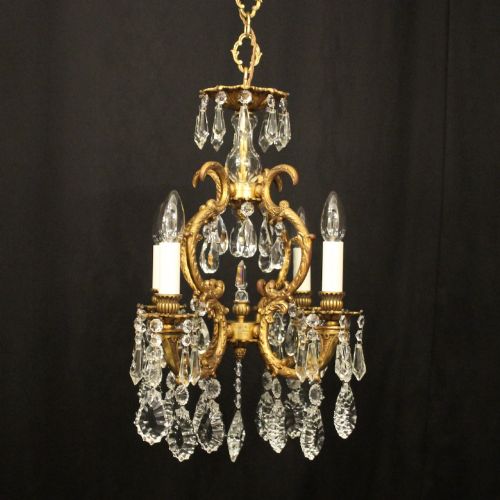
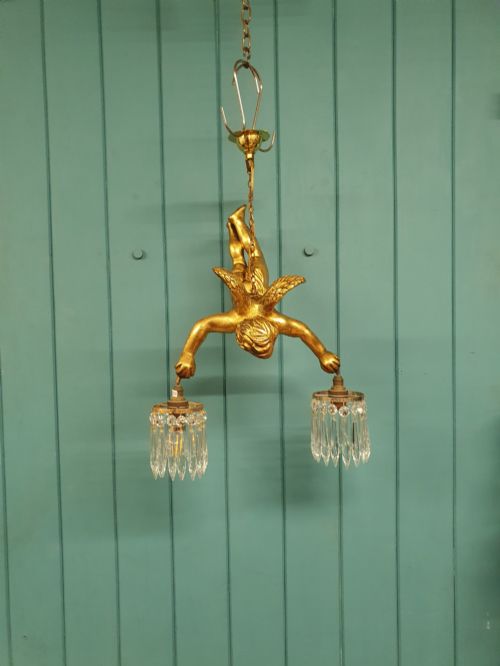
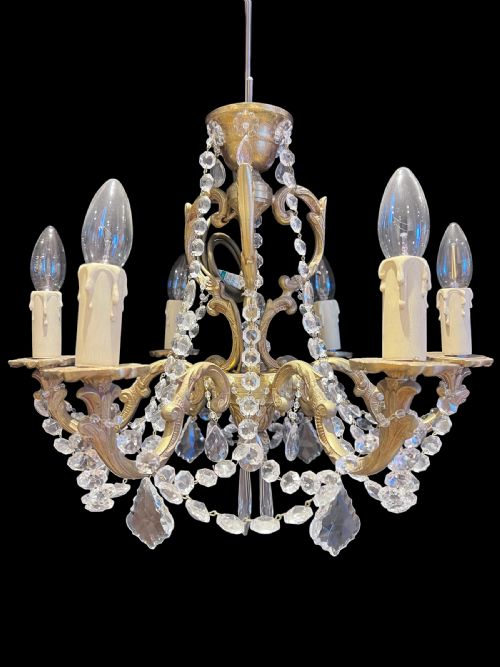
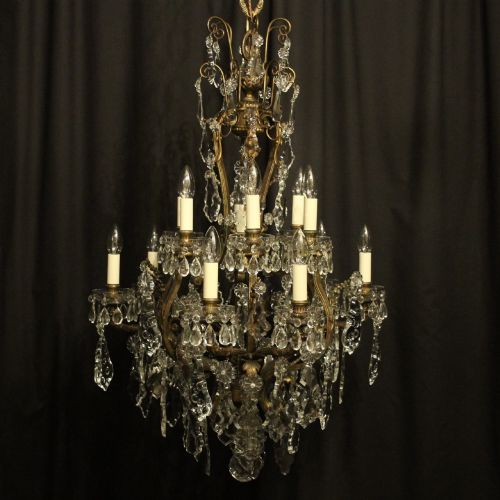
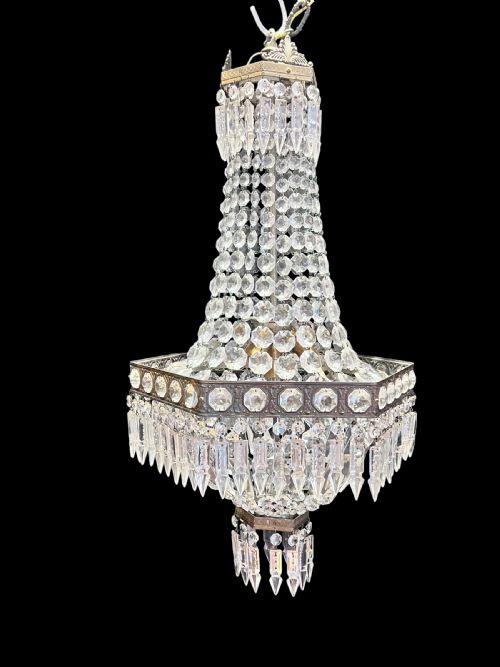
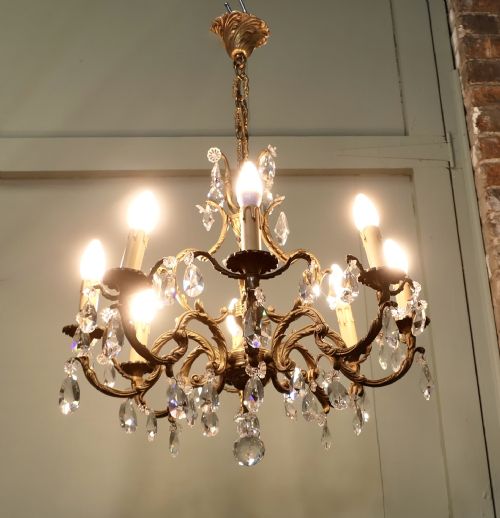
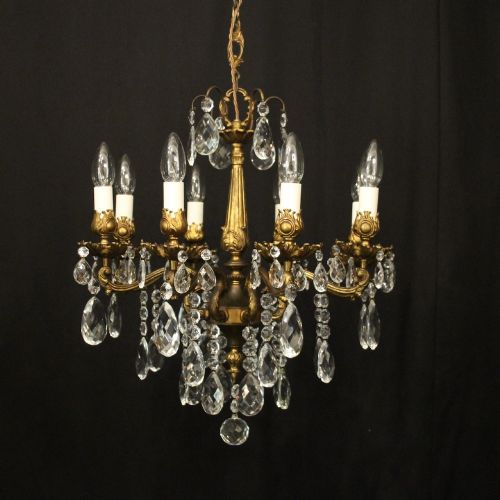
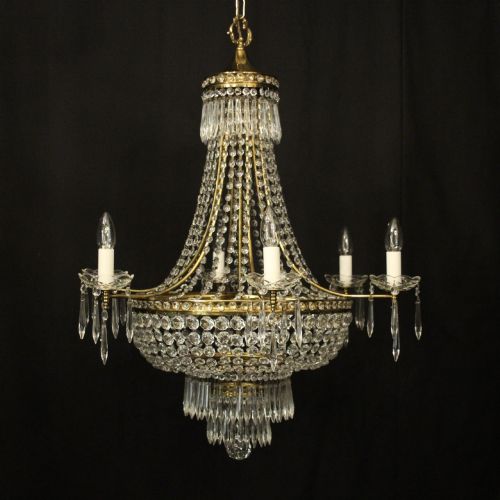
When you search for a glass drop pendant light, you discover decorative ceiling fixtures adorned with crystal and cut glass elements designed to refract light across a space. These pieces draw heavily on French Empire, Edwardian, and Art Deco traditions, often taking the form of multi-arm chandeliers, basket fixtures, or smaller pendant lights.
The selections on this page span the late nineteenth century through the 1930s, featuring brass, gilt bronze, and crystal construction. Buyers frequently encounter French and Italian examples incorporating tent and waterfall arrangements, lustres, and coloured crystals.
Materials and construction methods
Makers built the metal frameworks of these fixtures using cast and forged brass, gilt bronze, and silver gilded metals to provide sturdy support for numerous candle arms or electric lights. Structural components frequently incorporate decorative toleware, spelter, or gilt metal detailing alongside the primary metalwork.
The glass elements rely on traditional cutting and moulding techniques to produce crystal spikes, coffin prisms, tear drops, and faceted beads. Metal pins and wire link these glass components together, allowing the crystal drops to hang freely and catch the light.
The listings on this site feature brass, gilt bronze, and cut glass materials spanning the nineteenth century, Edwardian era, and 1930s.
Distinctions in quality
Quality reveals itself in the clarity and depth of the glass or crystal drops, where precision cutting creates sharper light refraction than simpler moulded pieces. The heft and finish of the underlying brass or gilt bronze frame also dictate the calibre of the fixture, with finely chased mounts and heavy cast branches sitting at the upper end of the scale.
The complexity of the design plays a role, as seen in elaborate multi-tiered tent and waterfall configurations compared to simpler single-light pendants. Intricate hand-wired crystal arrangements and integrated coloured glass accents demonstrate superior craftsmanship from period workshops.
The Glass Drop Pendant Light Glossary
- Lustre
- A cut glass pendant or drop hung from the arms or frame of a light fixture. These pieces swing slightly and disperse illumination around the room.
- Tent and waterfall
- A specific hanging arrangement where crystals form an upper triangular tent shape that cascades down into a wider waterfall effect over the frame.
- Spelter
- A zinc alloy frequently used as a base metal for decorative figures and mounts on lighting fixtures, often given a gilt or bronze finish.
- Coffin prism
- A long, flat-backed cut glass drop with bevelled edges, commonly found on Edwardian and early twentieth-century chandeliers.
- Toleware
- Painted or enamelled sheet metal utilised for decorative sections of the frame, adding colourful contrast to the metal and crystal elements.
Glass Drop Pendant Light: Frequently Asked Questions
How do I hang a glass drop pendant light?
These fixtures typically suspend from a ceiling hook and chain, requiring secure attachment to a ceiling joist to support the weight of the metal frame and glass crystals.
Electrical wiring runs down through the centre tube or chain, and installation usually involves connecting the internal leads to a standard domestic ceiling circuit.
Were these lights originally for candles or electricity?
Many examples from the nineteenth century and Edwardian period were originally constructed to hold candles before being later converted to accept electrical fittings.
Later pieces from the 1920s and 1930s often incorporated electrical wiring from the outset while maintaining traditional candle-style drip pans and sleeves.
How do I clean the crystal drops safely?
Cleaning involves wiping individual glass drops with a mild solution of warm water and a gentle cleaning agent while the crystals remain attached to the frame.
Taking down the entire fixture is rarely necessary unless a deep restoration of the metalwork and re-wiring is required by a specialist.
What rooms suit these pendant lights best?
These fixtures suit dining rooms, hallways, and living spaces where the height allows the hanging crystals to catch natural and artificial light effectively.
Smaller single-light versions work well in compact entryways or bedrooms, while larger multi-arm configurations command attention in principal reception rooms.