




Glass Door Music Cabinet
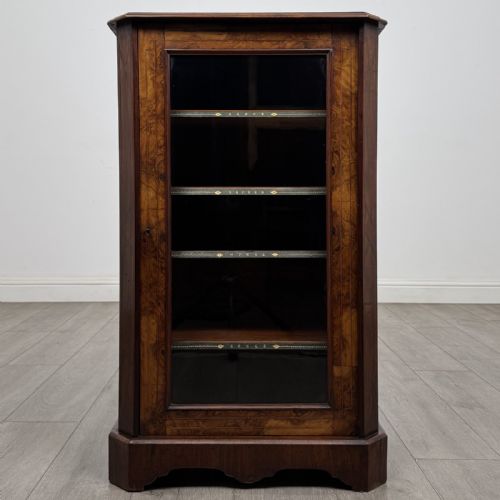
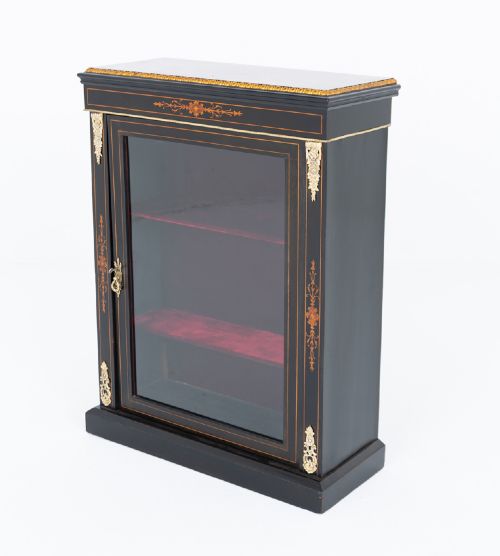
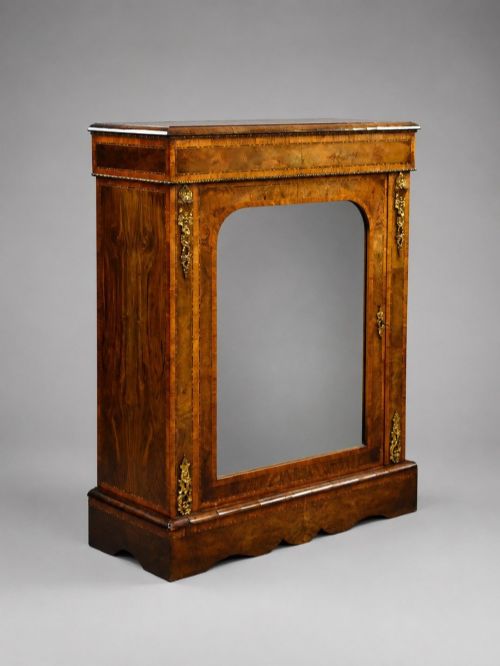
A glass door music cabinet is a refined nineteenth-century piece that keeps scores protected behind glass while adding striking burr walnut and mahogany to a room.
Glass Door Music Cabinet
A glass door music cabinet is typically encountered as a Victorian or Edwardian piece designed to house sheet music and scores. These refined household items appear in forms such as side cabinets, pier cabinets, and dedicated music cabinets dating from the mid-nineteenth century up to nineteen hundred.
The primary forms found here utilise rich woods like burr walnut and mahogany, often enhanced by boxwood inlay, ebonised wood, or brass mounts. Such pieces combine practical compartmentalised storage with display capabilities through their glazed doors and mirrored backings.
Materials and construction
Cabinet makers utilised burr walnut and walnut veneers over solid carcases, capitalising on the swirling, highly figured grain patterns. These wooden structures were frequently embellished with precise boxwood marquetry and fine brass details.
Glazing forms the central visual feature of the doors, occasionally complemented by interior mirror glass and ormolu mounts. Ebonised wood finishes provide striking contrast to the warm brown tones of the walnut.
Glass Door Music Cabinet Retail Price Guide 2026
Typical asking prices for glass door music cabinet among the pieces listed under this phrase on Sellingantiques today, from the lower quarter to the upper quarter. They describe what is for sale here now, not the wider market.
Victorian musicians kept their sheet music safely behind glass, anticipating the digital playlist by hiding their heavy paper scores behind polished burr walnut.
Distinctions in quality
Quality rests upon the choice of burr timber and the precision of the boxwood inlay. Superior examples display carefully matched grain across the entire front elevation rather than random patching.
The refinement of the brass mounts and the depth of the ebonised detailing further separate standard utility pieces from finer cabinet work. Proportion and the crispness of the marquetry dictate the standing of each item.
The Glass Door Music Cabinet Glossary
- Burr Walnut
- A highly prized timber obtained from the gnarled growths of walnut trees. It yields complex, swirling grain patterns that decorators value for principal cabinet surfaces.
- Pier Cabinet
- A slender cabinet designed to fit wall spaces between windows. These tall, narrow forms suit smaller rooms while offering display shelving.
- Marquetry
- Decorative veneer work arranged in intricate patterns. Craftsmen piece together different coloured woods, such as boxwood, to form geometric or floral designs.
- Ebonised Wood
- Timber treated with a dark stain or chemical process to imitate ebony. This dark finish creates sharp visual contrast against lighter inlaid woods.
Glass Door Music Cabinet: Frequently Asked Questions
What is a glass door music cabinet?
A glass door music cabinet is a nineteenth-century furniture form created to store and display sheet music. These pieces combine internal shelving with glazed front doors.
They reflect the Victorian and Edwardian domestic focus on parlour entertainments and organised sheet music collections.
How do I date a music cabinet?
Dating relies on timber choices, construction methods, and stylistic details like boxwood inlay or ebonised finishes. Victorian examples often feature burr walnut veneers from the eighteen seventies and eighties.
Later Edwardian versions around nineteen hundred tend to employ mahogany with different marquetry motifs.
Where should I place one?
These cabinets suit living rooms, studies, or music rooms where their glazed doors protect contents while displaying books or collections. Their slender proportions allow them to fit narrower wall spaces.
They pair well with traditional interiors that feature dark woods and period furnishings.
Are these cabinets purely for music?
While originally built for sheet music, today they function well as general display cabinets for small collections, porcelain, or books. The interior shelving accommodates diverse display needs.
Their glass doors keep delicate items free from dust while maintaining visibility.