

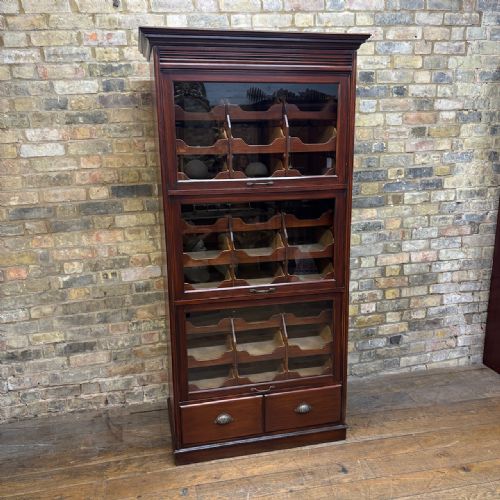
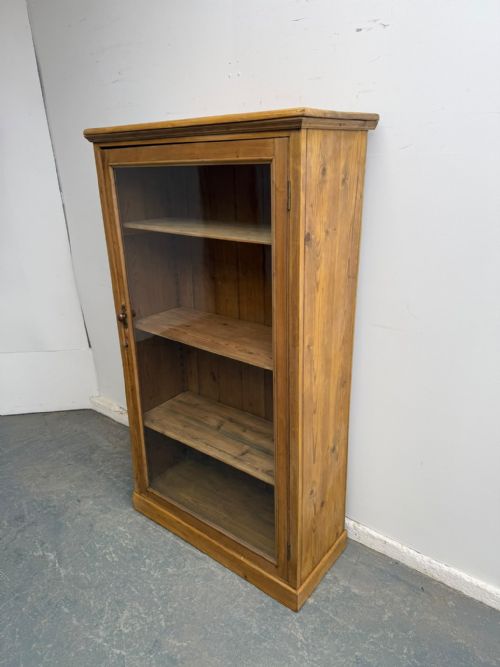
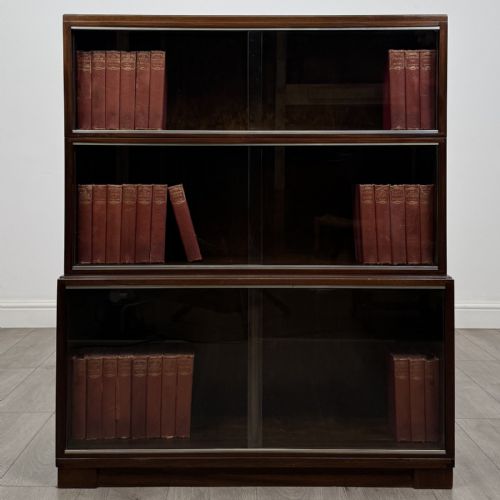
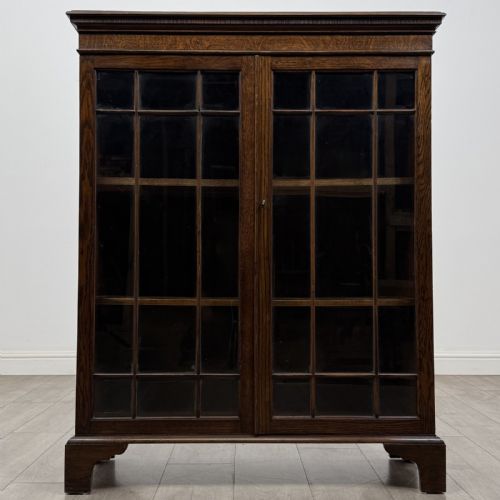
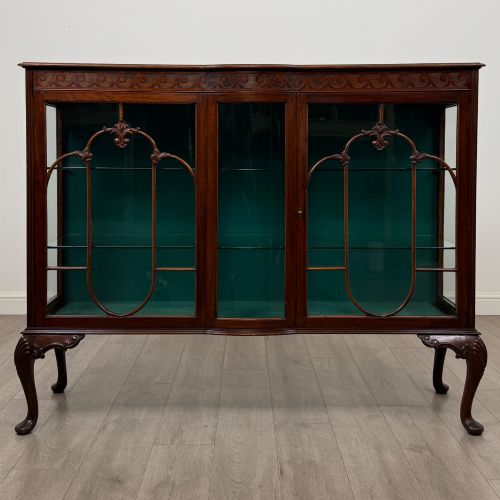
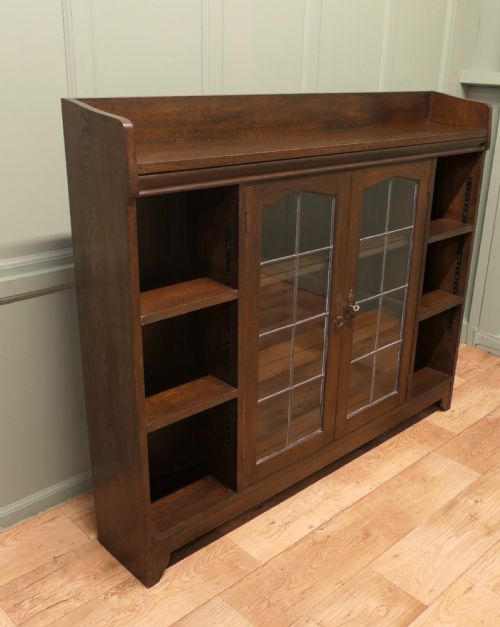
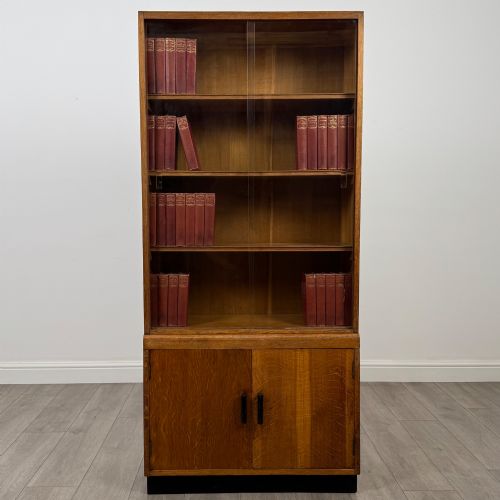
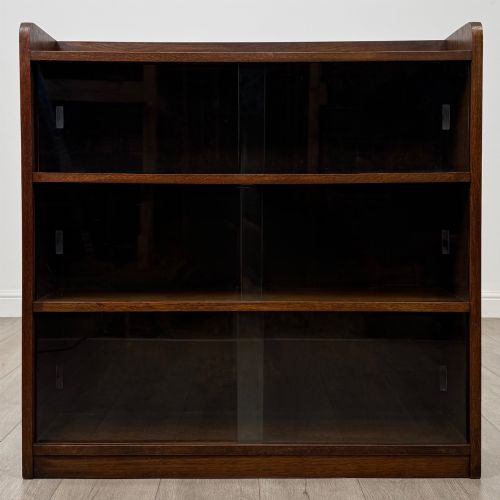
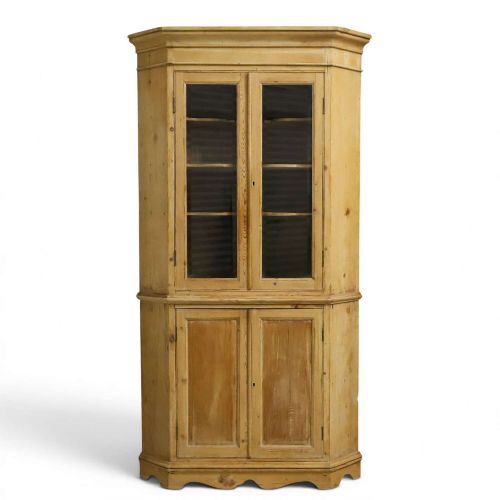
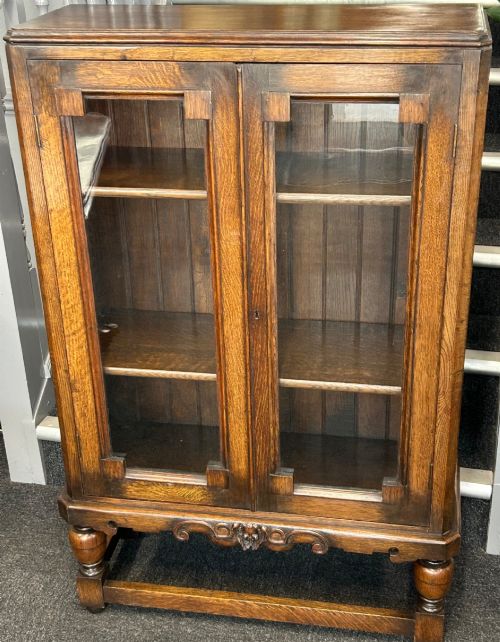


Glass Door Display Unit
These glass door display units bring period craftsmanship and clear shelving together to show off your collection.
Glass Door Display Unit
A glass door display unit combines shelving with transparent panels, providing a dust-free space to exhibit porcelain, books or curiosities. You will frequently encounter Edwardian and 1920s versions on this page, alongside earlier nineteenth-century pieces and later mid-century designs.
The forms range from tall corner cabinets and narrow bookcases to wide two-part cupboards and single armoires. Oak and mahogany appear most often as the primary timbers, shaped in styles from Georgian Revival and Arts and Crafts to Art Deco and Mid-Century Modern.
These cabinets serve to protect treasured objects while keeping them entirely visible from across a room. They suit both traditional period interiors and modern settings that mix historical timber with clean glass panes.
Materials and construction
Cabinet makers utilised solid and veneered hardwoods like oak, mahogany, walnut and pine, often framing the structure with brass hinges, locks and handles. Glass panes are held securely within wooden or leaded cames, requiring steady joinery to support the weight of the doors.
Inlaid marquetry, carved mouldings and bamboo framing provide decorative surface detail across different periods. Interior shelving rests on wooden supports or adjustable brackets, designed to bear the heavy load of books and ceramics.
Glass Door Display Unit Retail Price Guide 2026
Typical asking prices for glass door display unit among the pieces listed under this phrase on Sellingantiques today, from the lower quarter to the upper quarter. They describe what is for sale here now, not the wider market.
Listings feature timbers including oak, mahogany, walnut and bamboo, spanning the eighteenth to the mid-twentieth century.
The markers of quality
Quality rests on the selection of timber and the precision of the joinery, particularly in the fit of the doors and the stability of the frame. Cabinets with crisp carved details, fine marquetry inlay and clean, unblemished glass display superior craftsmanship.
The integrity of the internal shelving and the smoothness of sliding or hinged mechanisms separate standard utilitarian pieces from finer workshop productions.
Epstein·Lambs of Manchester·Phoenix Gallery
The Glass Door Display Unit Glossary
- Glazed
- Fitted with glass panels to enclose a cabinet. This term distinguishes display furniture from open shelving.
- Leaded glass
- Small panes of glass held together by strips of lead, commonly found in Edwardian and Arts and Crafts cabinets. This technique creates geometric or decorative patterns across the door front.
- Marquetry
- Decorative veneer work arranged in pictorial or geometric patterns on the wood surface. It requires skilled cutting and fitting of contrasting timbers.
- Corner cupboard
- A cabinet specifically constructed with an angled back to fit neatly into the corner of a room. These maximise floor space while offering display capacity.
- Cabriole leg
- A furniture leg that curves outward and then tapers inward, finishing in a pad or foot. This form is typical of eighteenth-century design and its later revivals.
Glass Door Display Unit: Frequently Asked Questions
What is a glass door display unit?
A glass door display unit is a piece of furniture designed with transparent panels to hold and exhibit items like china, books and collections. These cabinets keep objects protected from dust while maintaining full visibility.
They appear in various forms, including corner cupboards, tall bookcases and double-door cabinets spanning several historical periods.
Where should I place a corner cabinet?
A corner cabinet fits into unused room junctions, making it practical for smaller spaces where a flat wall unit would dominate. They draw the eye upward and utilise corner angles effectively.
Ensure the door has enough clearance to swing open fully without hitting surrounding furniture.
How do I clean leaded glass doors?
Clean leaded glass gently using a soft cloth and a mild, non-ammonia glass cleaner sprayed onto the cloth rather than directly onto the door. This prevents moisture from seeping behind the lead cames and damaging the internal joints.
Support the glass from behind when wiping to avoid placing undue pressure on older lead work.