





Glass Decanters in Stand
Glass decanters in stand bring together practical serving vessels and fitted metal frames for entertaining.
Glass Decanters in Stand
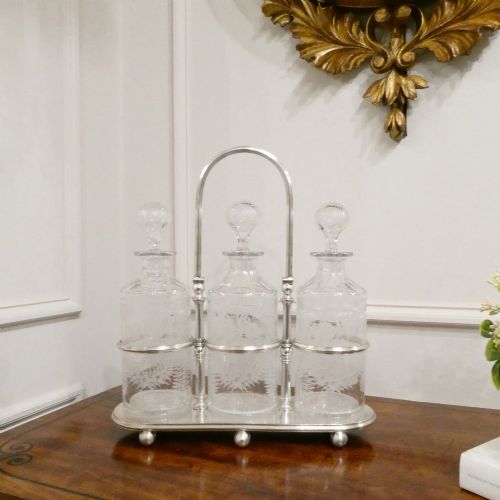
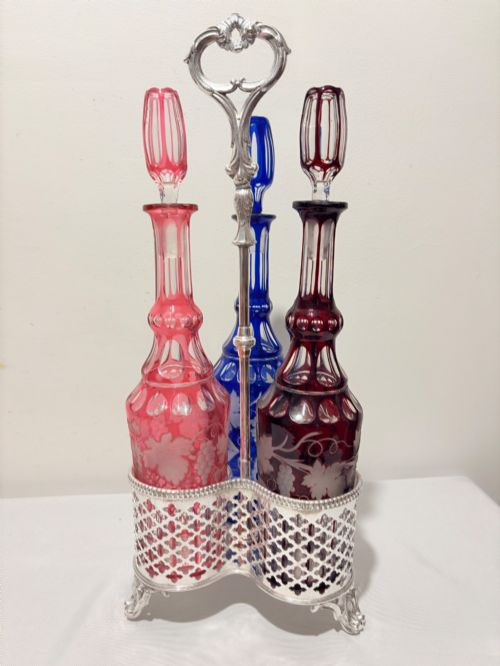
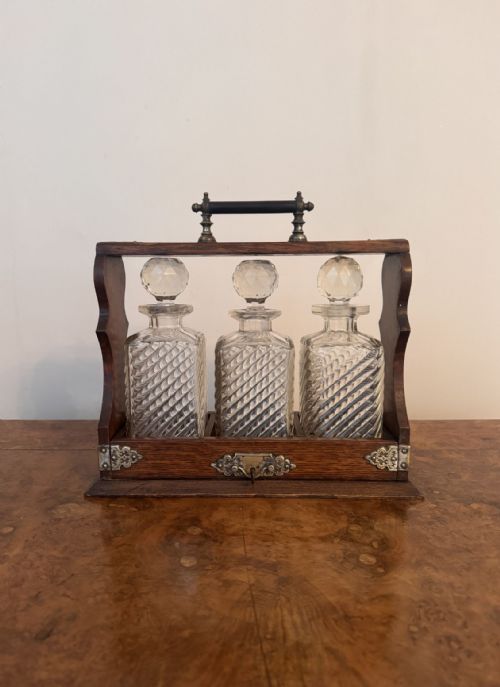
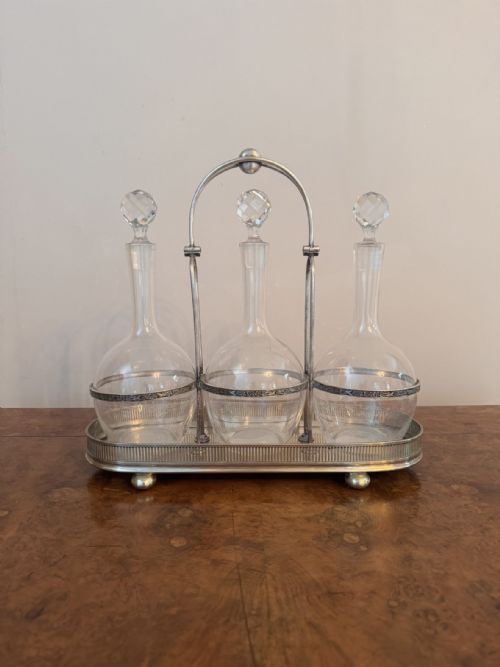
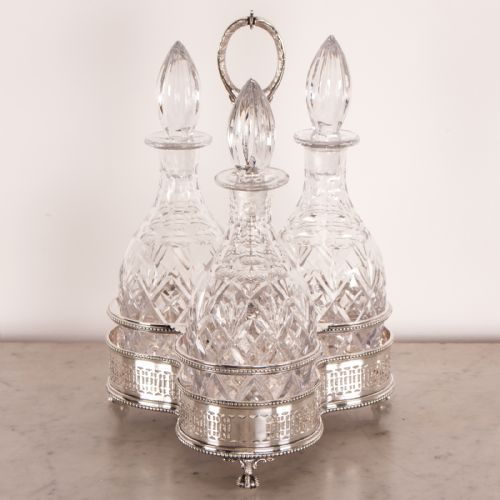
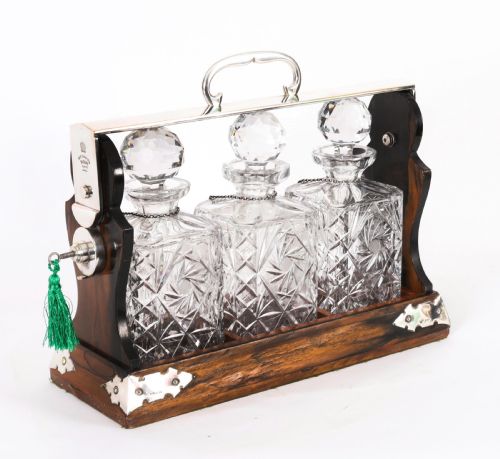
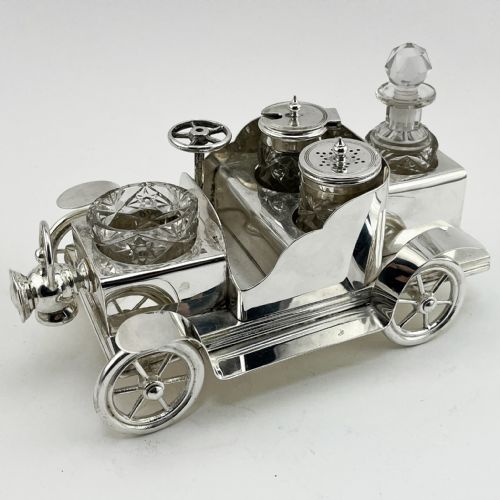
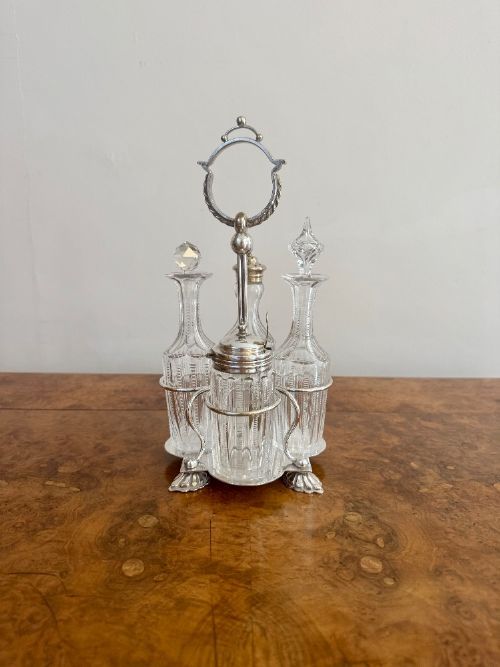
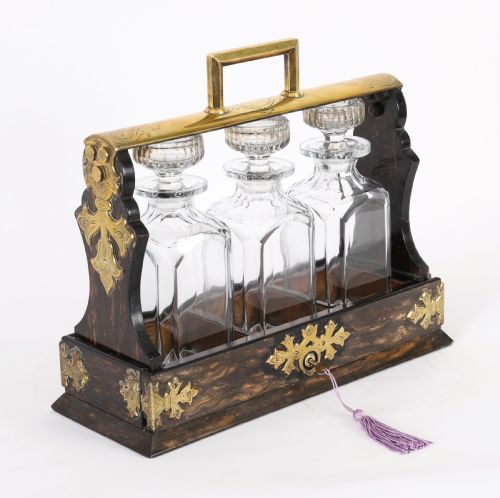
Glass decanters in stand encompass fitted frames housing multiple bottles, ranging from open cruet sets to locking tantalus frames designed to secure spirits. These pieces serve dining and entertaining needs by keeping bottles and glasses organised on a single portable base.
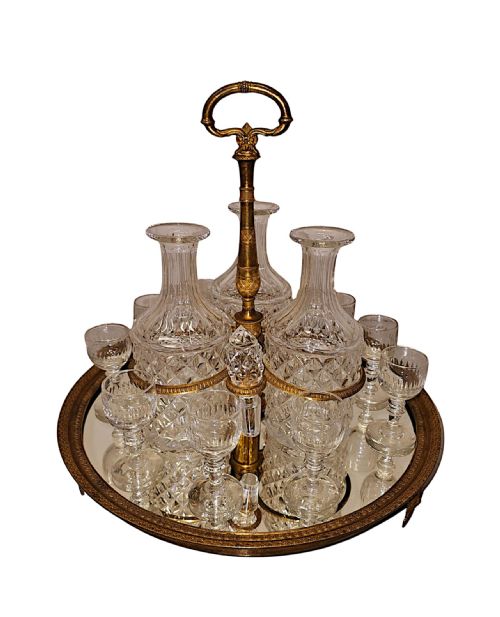
The versions most commonly met on this page belong to the Victorian and Edwardian eras, constructed with robust wooden bases or metal frameworks. Oak and silver plate dominate the selection, alongside rarer examples utilising exotic timbers and ornate ormolu mounts.
Materials and construction
Makers built these pieces using solid timbers like oak, walnut and coromandel, often framing them in silver plate, brass or ormolu. Glass components relied on heavy cutting or blowing techniques to produce clear crystal decanters and decorative carafes.
Locking mechanisms on tantalus frames required precision metalwork to secure the stoppers in place, while open cruet stands relied on cast and soldered silver-plated frames to support numerous individual bottles.
Glass Decanters in Stand Retail Price Guide 2026
Typical asking prices for glass decanters in stand among the pieces listed under this phrase on Sellingantiques today, from the lower quarter to the upper quarter. They describe what is for sale here now, not the wider market.
Victorian households occasionally needed locking tantalus frames to stop clever but thirsty butlers from sampling the best spirits.
Factors that separate examples
The refinement of the metal plating and the weight of the timber frame set finer pieces apart from standard production items. Marquetry stringing, ornate cast mounts and branded mechanisms indicate superior workshop output.
The clarity and depth of cut on the glass vessels, combined with the presence of matching original stoppers, determine the overall integrity of the set.
Walker & Hall·Charles Thomas Fox·Betjemann·Elkington·Hester Bateman·Wade Wingfield Wilkins·Hukin and Heath
The Glass Decanters in Stand Glossary
- Tantalus
- A locking frame designed to hold decanters securely so that liquid cannot be poured without a key. This device gained popularity in the Victorian period for safeguarding spirits.
- Cruet set
- A collection of small glass bottles or cruets held in a frame for condiments, oil or vinegar. These sets often sat on dining tables during the Georgian and Victorian eras.
- Silver plate
- A thin layer of silver fused to a base metal such as copper or Britannia metal. This technique provided the appearance of solid silver at a lower production cost.
- Ormolu
- Gilt bronze ornamentation applied to furniture and decorative metalwork. This technique involved coating bronze in a finely ground gold mercury amalgam.
Glass Decanters in Stand: Frequently Asked Questions
How do you lock a tantalus?
A tantalus operates via a metal bar that swings down over the glass stoppers to prevent them from being removed. Turning a key in the lock secures the side arms into place.
Once locked, the decanters remain trapped within the wooden or metal base until the key releases the mechanism.
What is the difference between a tantalus and a cruet set?
A tantalus specifically holds spirit decanters under a locking mechanism to restrict access to alcohol. These pieces typically feature heavy wooden frames made of oak or coromandel.
Cruet sets are open frames designed to hold multiple small bottles for condiments, oils and vinegars at the dining table without any locking mechanism.
How do you date an antique silver plated stand?
Dating relies on maker marks, style characteristics and the construction methods used on the base metal. Early examples often utilise Old Sheffield Plate techniques before electroplating became widespread.
Design styles such as heavy Victorian casting or later Art Nouveau curves also provide clear chronological indicators for the piece.
Were these stands used for daily dining?
Cruet sets and liqueur stands served an active role during formal meals and evening entertaining in wealthy households. They allowed hosts to present various condiments or spirits directly to guests.
Tantalus frames additionally served to secure expensive spirits from household staff in large Victorian and Edwardian homes.