
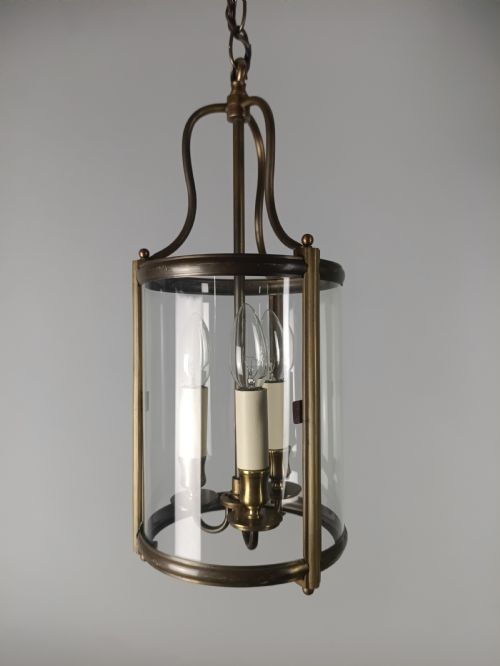
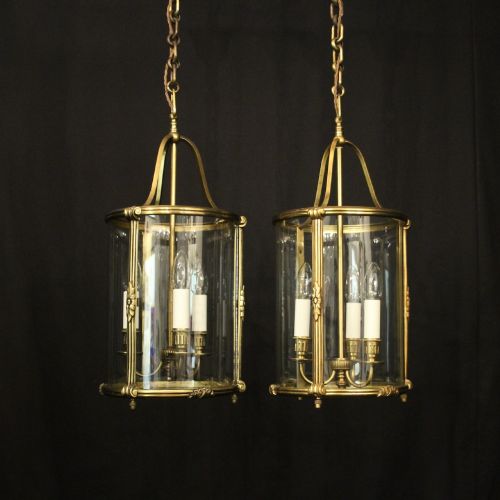


Glass Cylinder Hall Light
A glass cylinder hall light offers crisp illumination for an entranceway, combining polished metal frames with clear or frosted glass to welcome visitors.
Glass Cylinder Hall Light
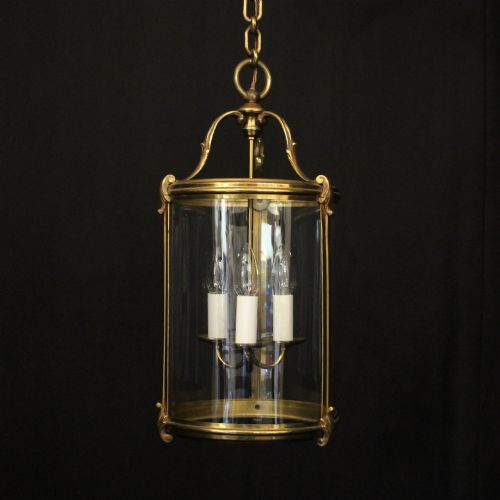
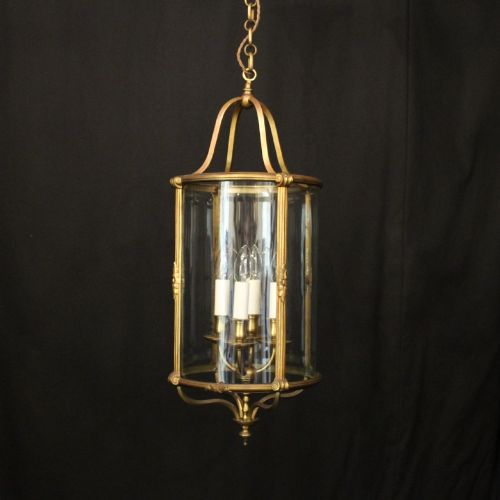
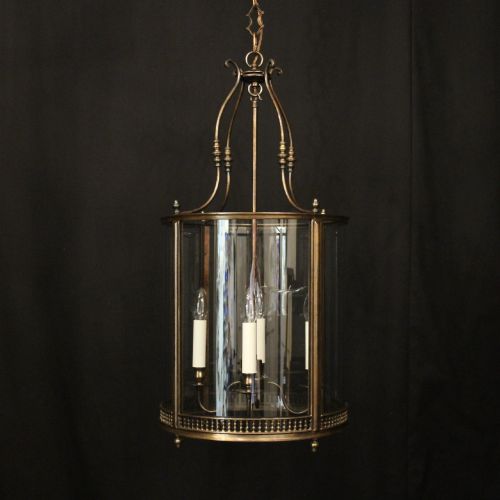
A glass cylinder hall light is a ceiling-hung fixture designed specifically for narrow entrance spaces and corridors. These hanging lanterns utilise tubular or rounded glass panels held within a metal framework to diffuse light evenly across an entryway.
Most examples found here date from the early twentieth century, spanning Edwardian output through the decades of the 1900s, 1910s, 1920s, and 1930s. The selection relies heavily on French and English workshop designs.
Common stylistic influences include French Neoclassical, French Chateau, English Regency, and Arts & Crafts aesthetics. The typical format suspends a single compartment containing one to four internal lights.
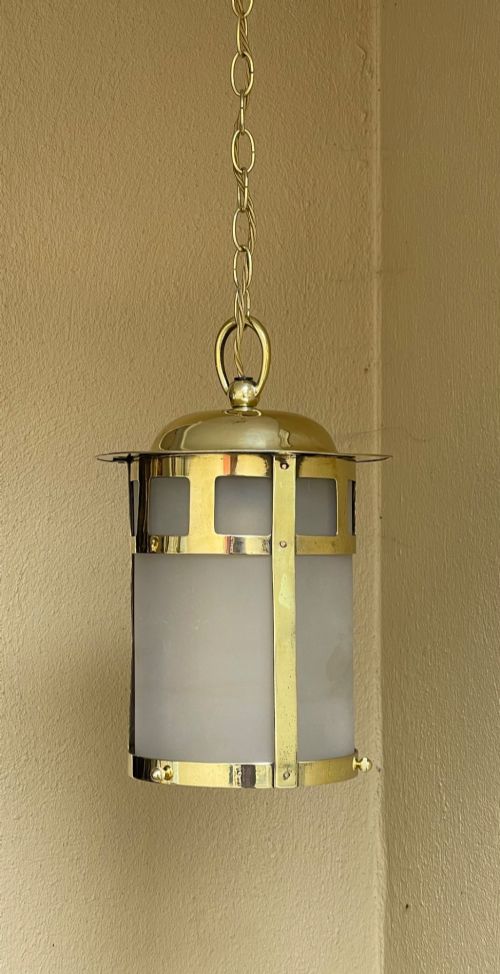
Buyers will encounter various configurations ranging from simple domestic brass frames to large, ornate gilded or silvered bronze structures. Convex glass panels also appear frequently, adding gentle curve and depth to the cylindrical form.
Materials and construction
The framework of these lanterns typically employs brass, gilt bronze, or silvered bronze, shaped by casting and hammering. Metal components are often gilded to impart a rich surface finish that catches ambient hall light.
Glass panels are fitted securely into the metal skeleton, utilising both plain clear sheets and frosted varieties to soften the interior bulb glare. Frames are assembled with visible screws, hinges, and hanging loops designed for ceiling suspension.
Brass and gilt bronze dominate the metal options recorded across these ceiling and hanging lantern inventories.
Judging quality in early lighting
Quality rests upon the weight of the metal casting and the crispness of decorative chasing on the bronze or brass framework. Thicker metal components maintain structural rigidity and hold heavier glass panels securely.
The clarity and thickness of the glass panes themselves distinguish finer items from standard commercial production. Well-made fixtures demonstrate tight joints and proportional symmetry across the cylindrical body.
The Glass Cylinder Hall Light Glossary
- Convex glass
- Curved glass panels that project outward from the frame. This shaping alters the refraction of internal light.
- Gilt bronze
- Bronze metal treated with a thin layer of gold leaf or gold paint. It provides a bright, durable decorative surface.
- Hall lantern
- A ceiling-suspended lighting fixture intended for corridors and entrance halls. These pieces direct illumination downwards and outwards.
- Silvered bronze
- Bronze treated with a silver finish or plating. This technique creates a cooler metallic tone than traditional gilding.
Glass Cylinder Hall Light: Frequently Asked Questions
How high should I hang a hall lantern?
Hang the fixture so the bottom sits well above head height, typically allowing clear passage underneath for taller guests. In spaces with standard ceiling heights, the base often rests around seven feet from the floor.
For double-height entrance halls, suspend the lantern slightly lower to bridge the vertical gap and bring illumination closer to the ground level.
Can these antique lanterns be rewired safely?
Most surviving hanging lanterns require modern electrical updates to meet current domestic standards. Professional electricians can easily adapt the internal wiring while preserving the original metal body.
Ensure your electrician checks the socket fittings and suspension chains to support the weight of the brass and glass structure securely.
How do I clean frosted glass panels?
Remove the glass panels carefully from the metal framework if the retention clips allow safe handling. Wash them gently in warm soapy water using a soft cloth to avoid scratching the textured surface.
Dry each panel thoroughly before slotting it back into the brass or bronze channel to prevent moisture spotting on the metal frame.
What bulb wattage works best?
Select low-wattage LED bulbs that replicate the warm glow of historic lighting without generating excessive heat. Clear or frosted bulbs depend on whether you want sharp light transmission or a softer diffused ambiance.
Keep total wattage within the limits recommended by the modern lampholder fitted inside the lantern during rewiring.