



Glass Apothecary Bottles
Glass apothecary bottles bring the functional history of nineteenth-century medicine into the home with deep coloured glass and simple, honest forms.
Glass Apothecary Bottles
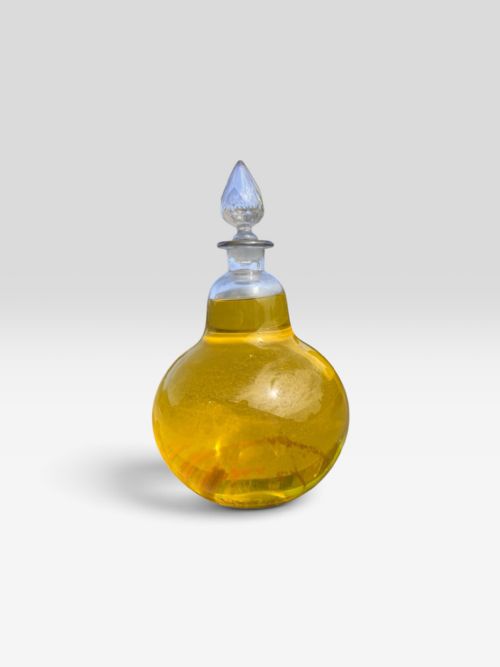
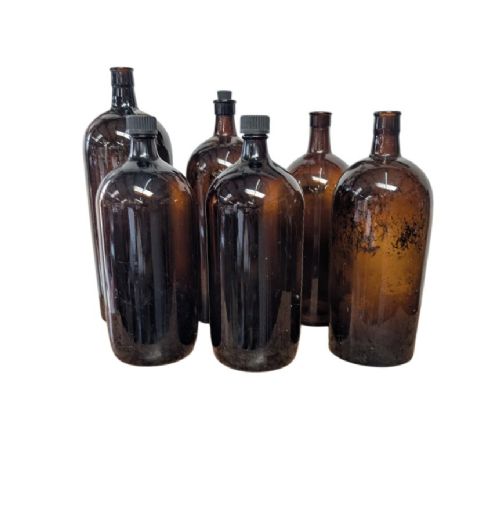
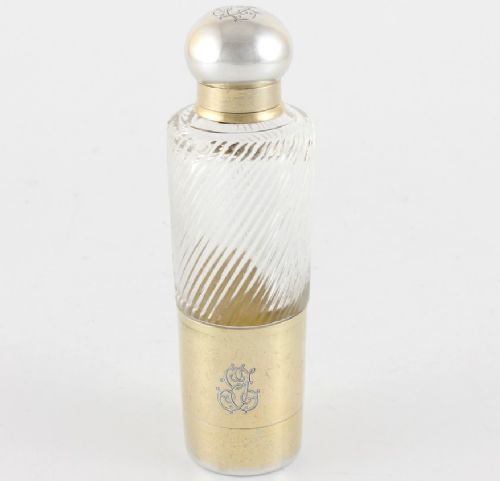
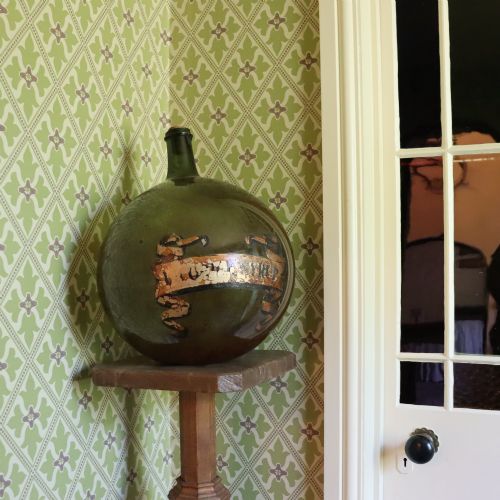
Glass apothecary bottles encompass storage jars, carboys, and chemist bottles that once held medicinal compounds and dry drugs. Collectors encounter these vessels in various forms, from large window carboys to smaller shelf bottles and complete travel chests.
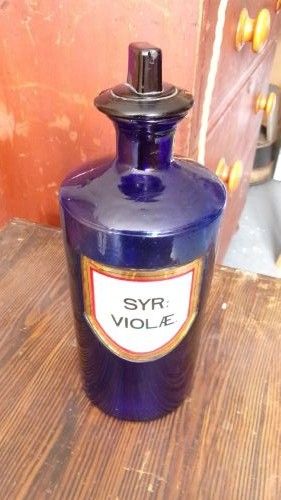
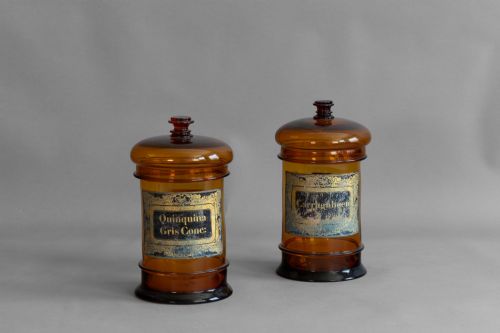
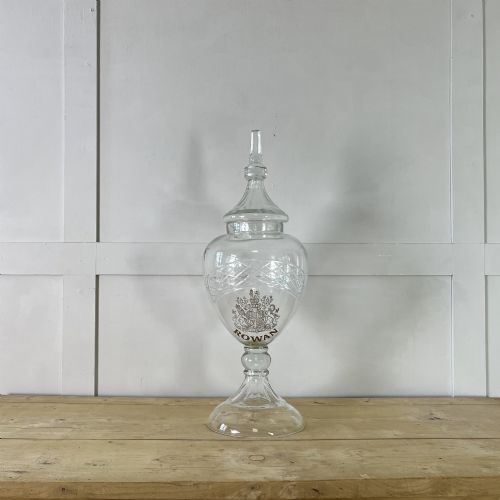
The pieces on this page originate predominantly from the nineteenth century, alongside examples from the Georgian, Edwardian, and later periods. Clear glass, amber, Bristol blue, and green glass dominate the selection, often accompanied by paper labels or etched lettering.
Beyond standalone bottles, the category includes fitted mahogany boxes and chests containing smaller medicine vials. These fitted compartments demonstrate the portable nature of medical storage during the Georgian and Victorian eras.
How they were made
Makers utilised free-blowing and mould-blowing techniques to shape the glass, producing thick walls designed to protect contents. Pontil marks on the base indicate the manual separation of the glass from the blowing iron.
Secondary materials such as mahogany, brass, and gold leaf appear in fitted boxes and labelled bottles. Velvet linings and paper labels complete the construction of portable apothecary chests and storage jars.
Listings feature glass, mahogany, brass, and paper, spanning Georgian, Victorian, and Edwardian periods.
What varies in quality
Quality rests in the depth and clarity of the glass colour, particularly in desirable blue, green, and amber examples. Heavy, hand-blown metal with minimal distortion commands greater attention from collectors.
The presence of original stoppers, intact paper labels, and complete fitted wooden cases elevates an object. Completeness within fitted boxes, retaining original glass bottles and small drawers, distinguishes superior survivals.
Tonnel Paris
The Glass Apothecary Bottles Glossary
- Carboy
- A large globular glass bottle enclosed in protective housing or standing alone in a window. These vessels held bulk liquids in dispensaries.
- Pontil mark
- The scar left on the base of a hand-blown glass vessel where the pontil rod was attached during manufacture. It confirms traditional hand-working methods.
- Tincture bottle
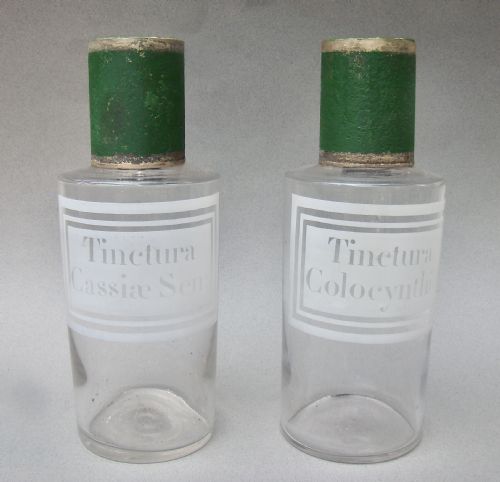
- A small glass container specifically designed to hold alcoholic medicinal extracts. They frequently feature ground glass stoppers to prevent evaporation.
- Chemist bottle
- A general term for pharmacy vessels used to store dry or liquid preparations. They often display painted or paper labels denoting specific contents.
Glass Apothecary Bottles: Frequently Asked Questions
How were apothecary bottles used?
Apothecaries and chemists utilised these bottles to store dry drugs, liquid compounds, and medicinal tinctures safely on pharmacy shelves.
Larger carboys sat in shop windows to catch the light and advertise the practitioner's trade to the street.
How do I clean old glass bottles?
Washing glass gently in warm soapy water preserves the fragile surface and any remaining interior residue or historic paper labels.
Avoid harsh scrubbing or soaking that might loosen original hand-applied gold leaf or paper remnants.
Can I date bottles by their colour?
Colour offers a helpful guide, with deep Bristol blue and rich amber characteristic of nineteenth-century production methods.
Clear glass and green variations span multiple eras, requiring form and pontil evidence to confirm precise age.
Where should I display medicine chests?
Mahogany apothecary boxes look best placed on sturdy sideboards or desks away from direct, strong sunlight.
Opening the drawers occasionally allows air to circulate around the internal velvet and glass components.