



Giltwood Wall Mirror Set
A giltwood wall mirror set brings together reflective glass and carved, gilded timber to create a matched focal point for any room.
Giltwood Wall Mirror Set
When you search for a giltwood wall mirror set, you encounter matched combinations of wall mirrors and console tables, alongside coordinated frames. These decorative arrangements primarily date from the nineteenth and early twentieth centuries, reflecting enduring classical and revivalist tastes.
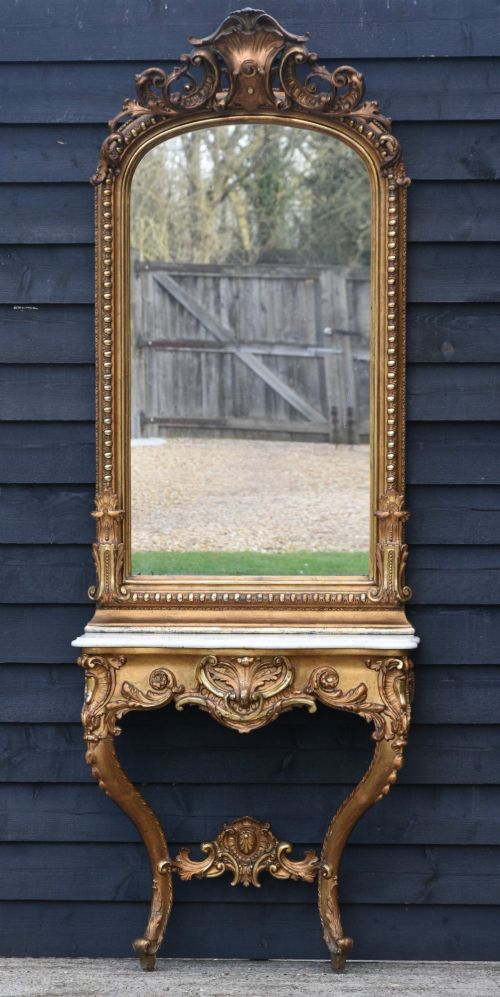
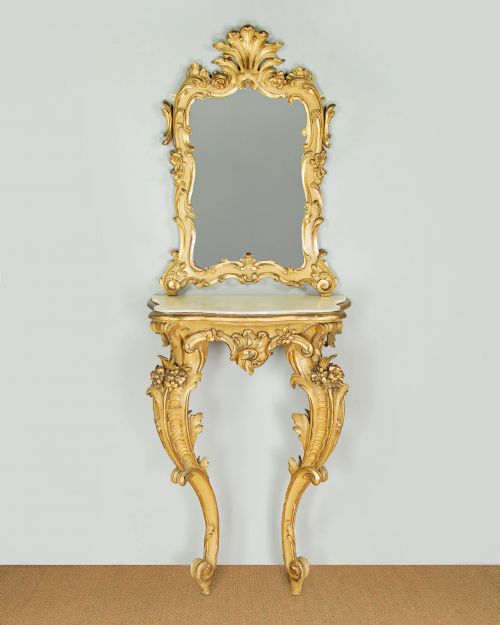
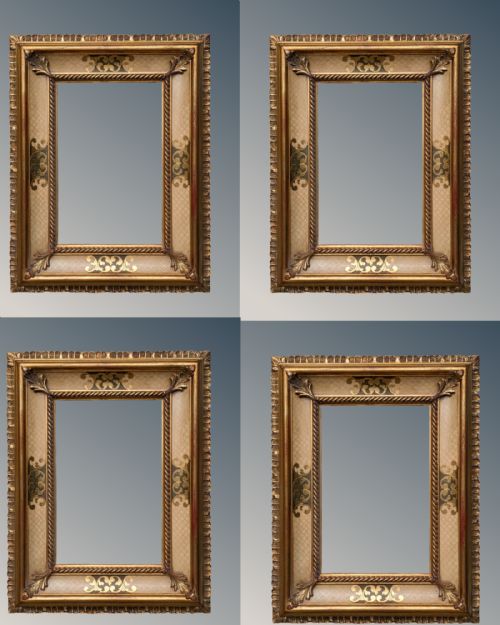
The most common formats on this page pair a tall pier mirror or wall glass with a matching console table, frequently featuring marble tops. You also find sets of gilt frames designed to work together as a cohesive decorative grouping.
Originating largely from French, Italian, and Swedish workshops, these sets showcase regional interpretations of rococo and neoclassical styles. The pieces combine reflective surfaces with sculptural wooden frames to transform domestic interiors.
How they were made
Maker's workshops built these pieces using timber frames coated in gesso before applying thin layers of gold leaf to create the characteristic giltwood finish. Carvers worked wood and plaster layers by hand to produce ornate scrolls, foliage, and architectural motifs.
Console tables frequently incorporate inset marble tops resting upon the gilded wooden structures, paired with heavy mirror glass secured within shaped frames. Canvas and timber backing materials provide structural support for the larger wall-mounted mirror assemblies.
Several console tables arrive complete with their original heavy marble tops, which have spent over a century quietly supporting gilded glass.
What varies in quality
The distinction between standard and exceptional pieces rests upon the depth and crispness of the hand-carving within the wooden frame. Sharper relief work and more complex sculptural detail indicate superior craftsmanship from skilled workshops.
The preservation of the original gilt surface and the quality of the marble top significantly influence the character of each set. Intact gold leaf and substantial, well-figured stone elevate the visual impact of the combination.
The Giltwood Wall Mirror Set Glossary
- Giltwood
- Timber that has been coated in gold leaf over a prepared surface. This technique produces a luminous metallic finish characteristic of high-status furniture.
- Gesso
- A plaster mixture applied to wood frames to provide a smooth base for gilding. Artisans carved intricate details directly into this hardened compound.
- Console Table
- A table designed to stand against a wall, frequently supported by decorative brackets or legs. These tables often accompany matching wall mirrors.
- Trumeau Mirror
- A decorative wall mirror featuring an upper glass plate paired with a lower panel or artwork. French makers frequently integrated these into grand interior schemes.
- Rococo Revival
- A nineteenth-century design style drawing on eighteenth-century motifs. It is distinguished by asymmetric curves, C-scrolls, and naturalistic shell ornamentation.
Giltwood Wall Mirror Set: Frequently Asked Questions
What is a giltwood wall mirror set?
A giltwood wall mirror set comprises a matching mirror and console table, or a coordinated group of frames, finished in gold leaf over carved wood.
These pieces were designed to coordinate interior decoration, frequently positioned between windows or above fireplaces in formal rooms.
How were console tables used?
Console tables served as decorative side surfaces positioned flat against a wall, often anchored underneath matching wall mirrors.
They provided a surface for display objects while echoing the carved motifs and gilding of the glass frame above.
Where were these sets made?
Surviving sets originate primarily from European workshops in France, Italy, and Sweden during the nineteenth and early twentieth centuries.
Regional cabinetmakers and carvers applied distinct national interpretations of rococo and neoclassical styles to the timber frames.
How do I identify a revival style?
Revival styles appropriate historical design vocabularies, such as French rococo or Italian renaissance aesthetics, executed using later nineteenth-century techniques.
Examining the underlying timber, gesso application, and carving style helps determine whether a piece belongs to a specific revival period.