


Giltwood Tapestry Armchairs
These giltwood tapestry armchairs are grand seating adorned with gold leaf and woven textile, bringing historic French style directly to a room.
Giltwood Tapestry Armchairs
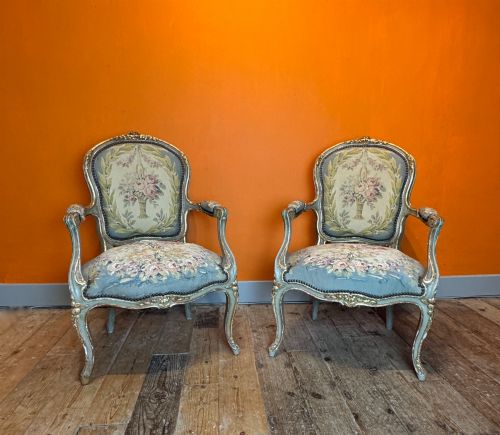
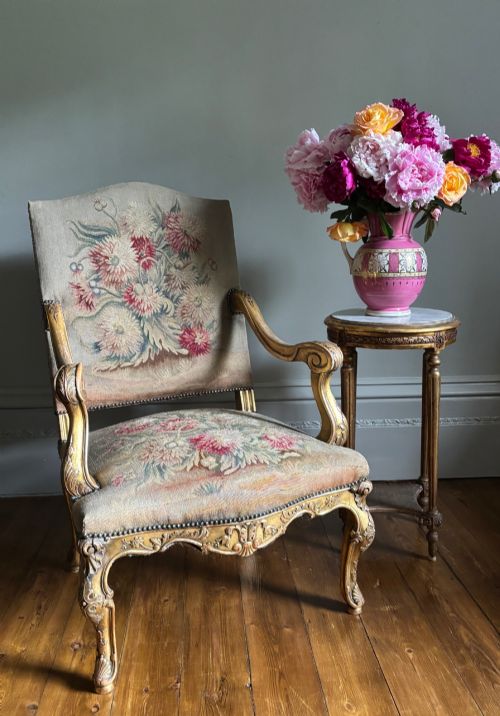
When you search for giltwood tapestry armchairs, you encounter seating designed for formal rooms, originating primarily from French traditions across the eighteenth and nineteenth centuries. These pieces combine carved wooden frames finished in gold with upholstered panels of woven textile.
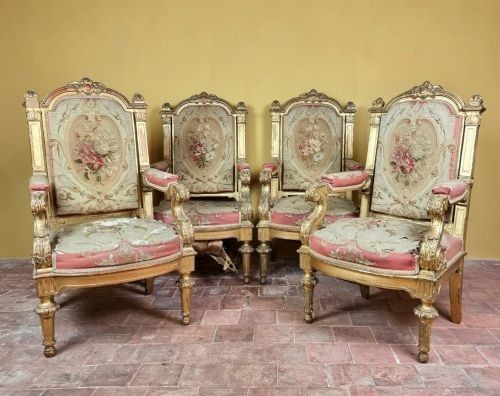
The versions most commonly met on this page date to the nineteenth century, often reflecting earlier stylistic revivals such as Louis XV, Louis XVI, and Regence. They appear singly, in pairs, or occasionally as part of larger salon suites.
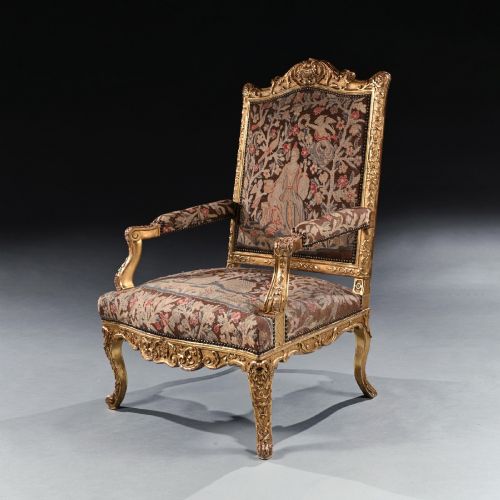
Makers and workshops constructed these armchairs for display in reception rooms and salons, where seating signified social standing. Their forms range from open armchairs to throne chairs and larger salon suites.
How they were made
Craftsmen shaped frames from timber such as beechwood, which accepted intricate carving before receiving its surface finish. Artisans applied layers of gold leaf or paint over the wood to create the characteristic giltwood appearance.
Upholsters integrated tapestry covers into the frames, securing the edges with brass tacks. The woven textiles typically depict figurative scenes or floral patterns, complementing the carved flourishes of the wooden structure.
Some nineteenth-century makers evidently enjoyed the Louis style so much they built entire thrones just for sitting by the window.
What varies in quality
The depth and crispness of the carved detail on the wooden frame distinguish finer examples from simpler production. Master carvers achieved clean lines and balanced proportions that hold the eye across the entire chair.
The integration of the tapestry upholstery also marks a difference in standard, where hand-woven historic textiles and precise tension elevate the piece. The application of the gold leaf layer determines how light catches the surface over time.
Holland and Sons
The Giltwood Tapestry Armchairs Glossary
- Giltwood
- Timber coated with gold leaf or powder. This finish creates a luminous metallic surface on the carved frame.
- Tapestry
- A thick woven textile featuring pictorial or decorative designs. It serves as the primary upholstery for the backrest and seat.
- Fauteuil
- An open-armed upholstered armchair originating in France. The wooden arms typically feature padded elbow rests.
- Regence
- A transitional decorative style bridging seventeenth and eighteenth-century French design. It precedes the full development of Rococo forms.
- Aubusson
- A town in France renowned for producing woven tapestries. Covers from this origin often adorn high-status seating.
Giltwood Tapestry Armchairs: Frequently Asked Questions
How do I clean giltwood frames?
Dust the carved wooden surfaces gently using a soft, dry brush to prevent accumulation. Avoid commercial polishes and moisture, which can damage the delicate gold leaf finish over time.
Keep the chairs away from direct sunlight and strong heat sources to preserve both the timber framework and the applied metallic layers.
Are these chairs comfortable for daily use?
These armchairs were built for formal reception rooms rather than lounging, offering an upright and supportive posture. Their sturdy timber frames and padded seats provide a firm sit suitable for conversation.
Consider placing them in low-traffic areas of your home to protect the historic textiles and decorative gilt surfaces from excessive wear.
How do I identify a revival piece?
Nineteenth-century revival pieces often replicate eighteenth-century French designs such as Louis XV or Regence styles. Examine the construction methods and wood ageing to distinguish between original eighteenth-century production and later nineteenth-century interpretations.
Stylistic cues combined with material analysis help determine whether a chair belongs to the original period or a later revival movement.
What rooms suit these armchairs best?
Giltwood tapestry armchairs suit formal sitting rooms, libraries, or spacious hallways where their decorative presence can be appreciated. Pairs work well positioned beside a fireplace or flanking a console table.
Their ornate carved frames and textured covers add visual weight and historic character to traditional and eclectic interiors alike.