



Giltwood Occasional Chair
A giltwood occasional chair brings gilded French elegance and carved framework straight into a formal salon or drawing room.
Giltwood Occasional Chair
A giltwood occasional chair is a decorative seating form found across the eighteenth, nineteenth, and early twentieth centuries. These pieces appear in forms such as salon chairs, armchairs, tub chairs, and side chairs.
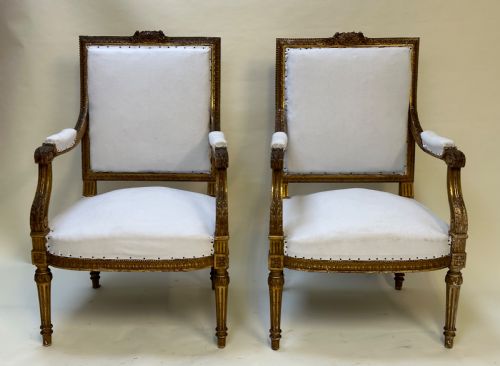
The version most commonly met on this page is the nineteenth-century French revival piece, particularly in the Louis XVI style or Rococo Revival taste. Makers and manufacturers shaped these seats for formal reception rooms, employing carved wood finished in gold leaf or gesso.
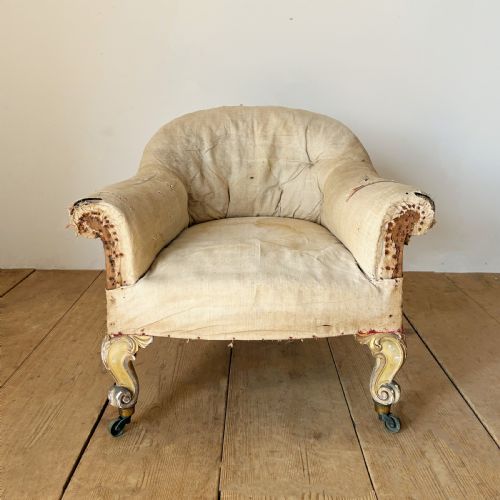
Examples span various revival movements, including Regency, Victorian, and Edwardian interpretations, alongside simulated bamboo creations. Each piece serves as a light, movable seat designed to accent a specific corner or conversational grouping.
Construction and Materials
Makers constructed these frames primarily from wood, applying layers of gesso to smooth the surfaces before laying down gold leaf for a brilliant metallic finish. This traditional gilding method creates the characteristic reflective surface seen on nineteenth-century frames.
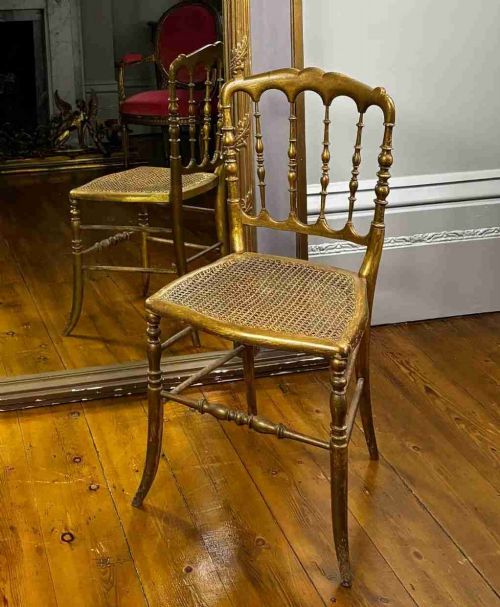
Seating portions utilise traditional upholstery, fabric coverings, or woven cane panels fitted directly into the carved wooden rails. These materials combine structural rigidity with decorative textile surfaces suited to formal interiors.
Giltwood Occasional Chair Retail Price Guide 2026
Typical asking prices for giltwood occasional chair among the pieces listed under this phrase on Sellingantiques today, from the lower quarter to the upper quarter. They describe what is for sale here now, not the wider market.
Among the gilded frames, some makers introduced unexpected whimsy by crafting entire chairs to resemble simulated bamboo.
Assessing Quality and Execution
The standard of a giltwood occasional chair rests on the crispness of the carved ornamentation and the depth of the gilding on the wood framework. Superior examples display sharply defined scroll arms, foliage, and structural motifs without softening from wear or over-restoration.
The integrity of the underlying timber and the fidelity of the period style - whether Louis XVI Revival or Rococo - dictate the standing of the piece within the range. Pieces retaining their original gold leaf finish and authentic texturing demonstrate higher workshop execution.
The Giltwood Occasional Chair Glossary
- Giltwood
- Wood that has been coated with gold leaf or gold paint for a decorative metallic finish. This surface treatment defines the primary visual characteristic of these seating forms.
- Gesso
- A plaster-based mixture applied to wooden chair frames to create a smooth base before gilding. It allows carvers to achieve fine detail on the decorative mouldings.
- Caned
- A seating surface woven from peeled rattan strips in an open mesh pattern. This technique appears on specific salon chairs to provide a lightweight, patterned base.
- Louis XVI Revival
- A nineteenth-century design style referencing the neoclassical French aesthetic of the eighteenth century. Pieces in this manner typically feature straight tapered legs and classical carved motifs.
- Scroll Arms
- Armrests shaped in a curving, spiral scroll profile. These elements provide ergonomic support while enhancing the decorative silhouette of armchairs.
Giltwood Occasional Chair: Frequently Asked Questions
What is a giltwood occasional chair?
A giltwood occasional chair is a decorative seating piece featuring a gold-leafed wooden frame, designed for supplementary use in formal rooms.
These chairs encompass salon chairs, armchairs, and side chairs originating from the eighteenth to the early twentieth centuries.
How were these chairs used historically?
Historically, these chairs served as movable seating in parlours, drawing rooms, and salons where guests gathered for conversation.
Because they were relatively light, inhabitants could reposition them around a room as needed for social occasions.
How do I care for giltwood?
Giltwood requires careful dusting with a soft, dry cloth to protect the delicate gold leaf finish from abrasion.
Keep these chairs away from direct sunlight and moisture to prevent the gesso and underlying wood from deteriorating.
How do I distinguish revival styles?
Revival styles draw on the distinct architectural and decorative vocabulariy of earlier historical eras, such as the neoclassical lines of Louis XVI or the ornate curves of Rococo.
Examining the leg shapes, carving motifs, and overall silhouette helps identify which historical period a nineteenth-century piece is interpreting.