

Giltwood Marble Top Console
A giltwood marble top console brings grand proportion and brilliant reflective warmth into a room.
Giltwood Marble Top Console
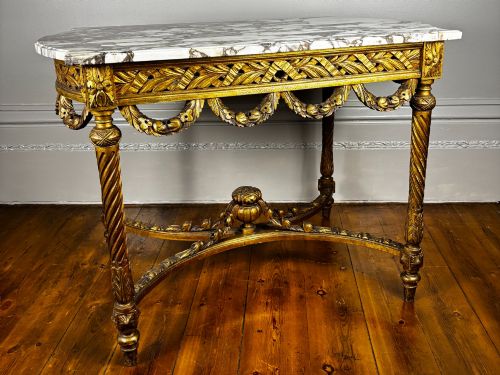
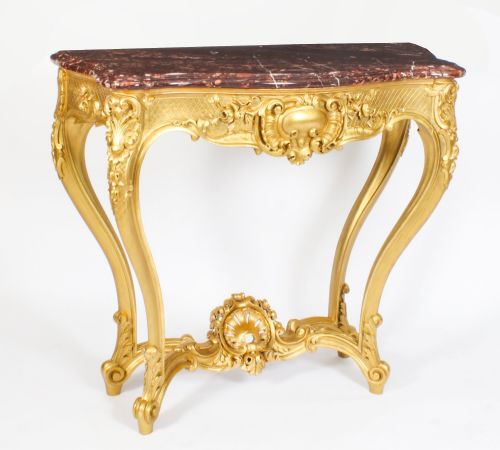
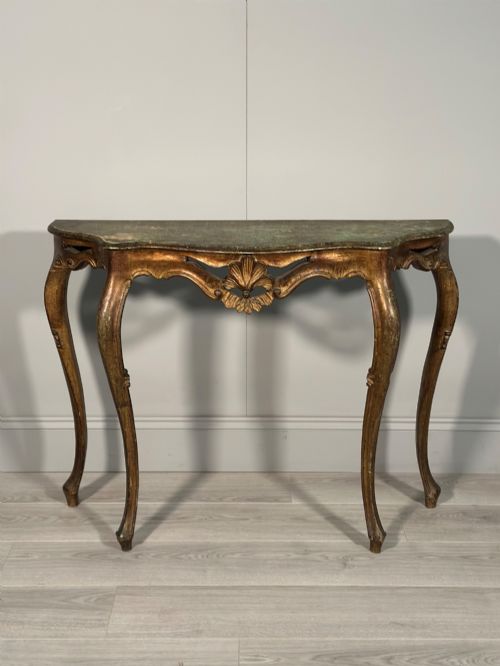
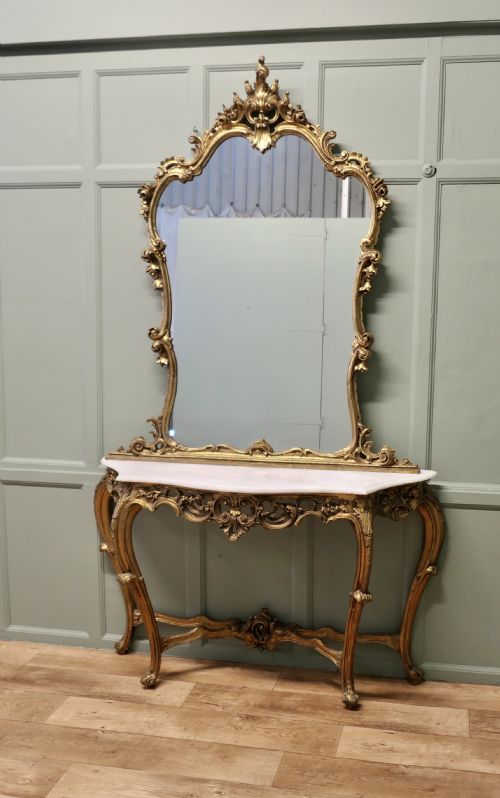
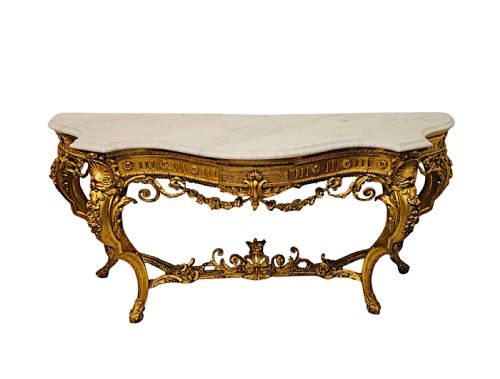
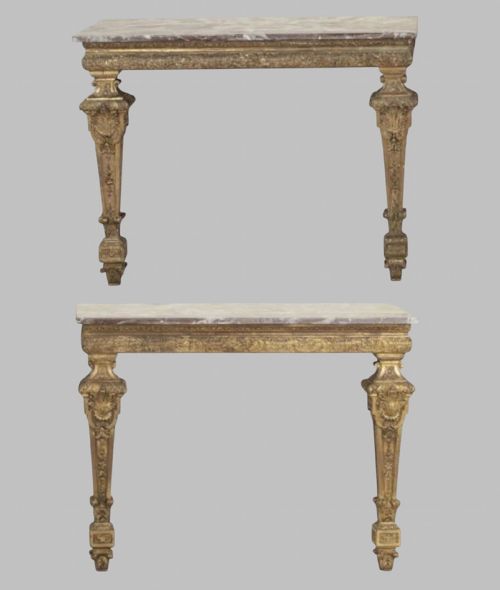
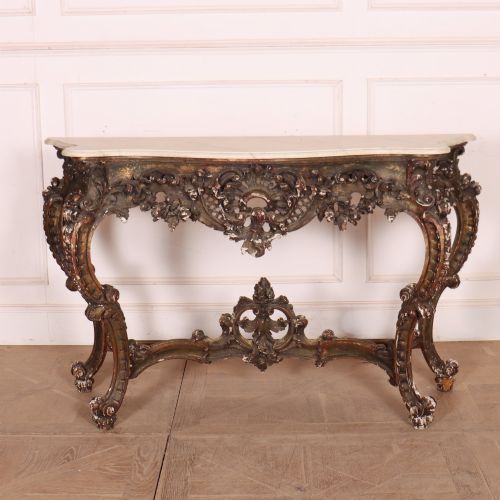
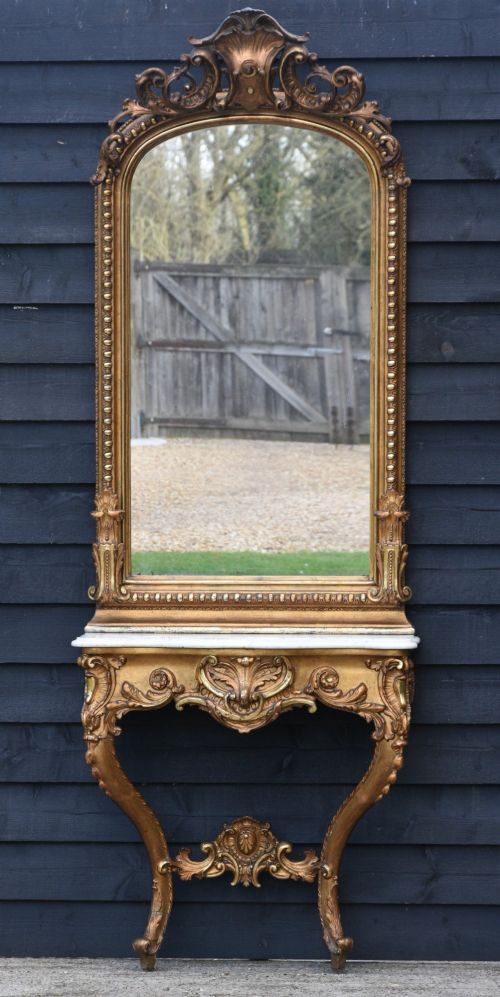
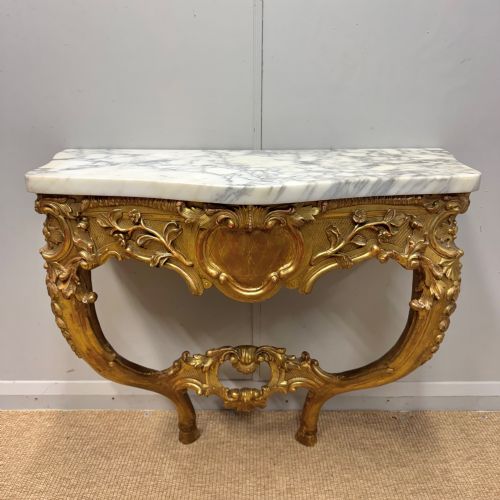
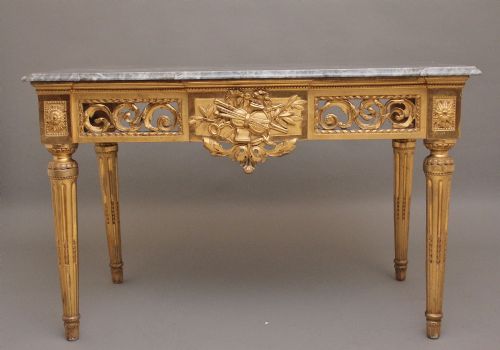
A giltwood marble top console stands against a wall, frequently paired with a matching pier mirror to complete a formal interior scheme. These tables display substantial stone surfaces supported by heavily carved wooden frames finished in gold.
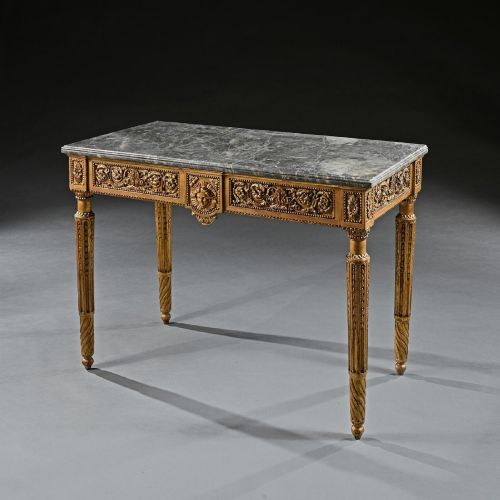
The version most commonly encountered on this page originates from the nineteenth or eighteenth century, reflecting French and Italian aesthetic movements. Makers drew upon Rococo, Neoclassical and Louis XVI vocabularies to shape these architectural furnishings.
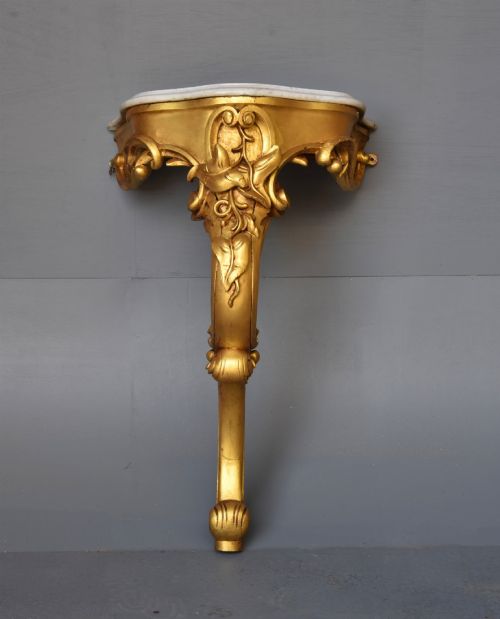
Beyond standard console tables, the selection includes serpentine front designs, demi-lune shapes, and occasional side cabinets or centre tables sharing similar materials. Proportions range from small, intimate pieces to monumental pairs.
Distinctions in craftsmanship
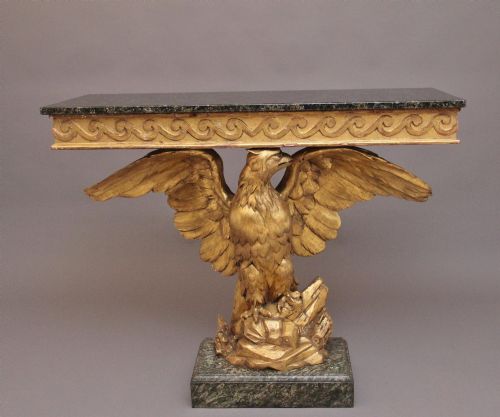
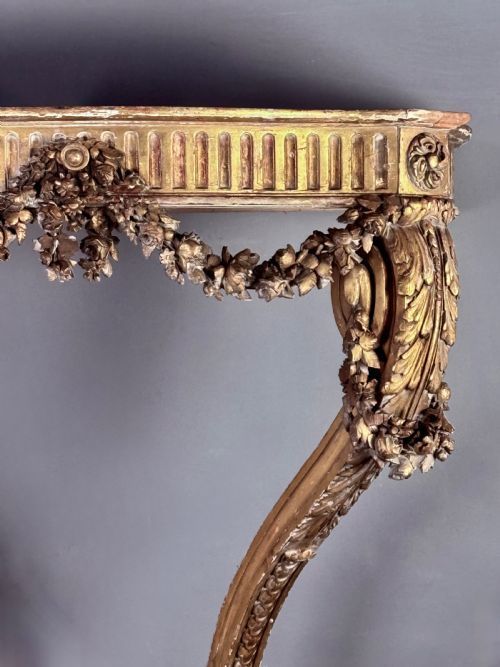
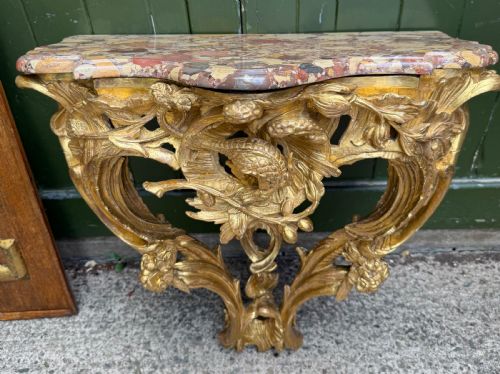
Depth and precision of the wood carving distinguish standard production from superior examples. Master carvers achieved fluid, undercut foliage and animal motifs that project dynamism, whereas lesser pieces rely on shallow, rigid execution.
The integrity of the gilding and the quality of the marble slab dictate overall merit. Thick gold leaf applied over carefully prepared gesso ages gracefully, while high-grade mineral tops exhibit striking natural coloration and sound structural mass.
Giltwood Marble Top Console Retail Price Guide 2026
Typical asking prices for giltwood marble top console among the pieces listed under this phrase on Sellingantiques today, from the lower quarter to the upper quarter. They describe what is for sale here now, not the wider market.
Listings feature eighteenth and nineteenth century pieces utilising marble, giltwood, gesso and gold leaf across French and Italian design styles.
Felix Alfred Ternisien
The Giltwood Marble Top Console Glossary
- Giltwood
- Wood covered with thin sheets of gold leaf. This finish provides a brilliant metallic sheen that resists tarnishing over centuries.
- Console table
- A table supported by wall brackets or decorative legs, designed to sit flush against a wall. These furnishings served primarily for display in formal reception rooms.
- Breccia marble
- A multicoloured stone composed of angular rock fragments embedded in a fine-grained matrix. It creates a bold, variegated pattern across the tabletop.
- Trumeau mirror
- A decorative wall mirror featuring an upper painted or carved panel. It is frequently associated with console tables in period French interiors.
- Demi-lune
- A half-moon shape used for table surfaces and frames. This outline allows large tables to occupy less floor space against a flat wall.
Giltwood Marble Top Console: Frequently Asked Questions
Where should I place a console table?
These tables find their natural home in entrance halls, living rooms or dining areas against a flat wall. Placing a mirror above the table creates a balanced architectural focal point.
Because these pieces project outward into the room, measure your corridor or reception space carefully to maintain comfortable clearance for walking past.
How do I clean the marble top?
Wipe the stone surface using a soft, damp cloth with mild, pH-neutral soap. Avoid acidic cleaners, vinegar or abrasive scrubbers, which etch and dull polished marble.
Dry the stone thoroughly after washing to prevent water marks. Treat the giltwood frame separately with a dry feather duster, keeping moisture away from the gold leaf.
Can these tables support heavy objects?
The thick marble slabs add substantial downward weight, keeping the console stable against the wall. However, most antique consoles rely on the wall for ultimate balance.
Avoid placing excessively heavy items on the outer edges. For monumental or freestanding centre tables, weight distribution is engineered directly into the sturdy wooden frame.
How do I distinguish French and Italian styles?
French designs from periods like Louis XVI or Rococo tend to emphasise asymmetrical curves, delicate floral swags and refined restraint. Italian examples frequently display bolder relief work, monumental scale and dramatic motifs like lion paws.
Reviewing the carved ornamentation and the specific type of marble helps clarify the regional origin of each piece.