


Giltwood French Bed
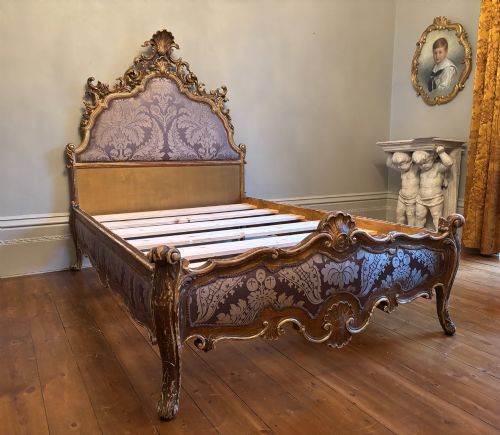
A giltwood french bed brings gilded warmth and stately presence into a bedroom, offering grand forms shaped by continental revival styles.
Giltwood French Bed
When you search for a giltwood french bed, you encounter substantial sleeping furniture and seating driven by continental design vocabularies. These pieces combine wooden frames finished in gold with upholstered panels or exposed carved timber.
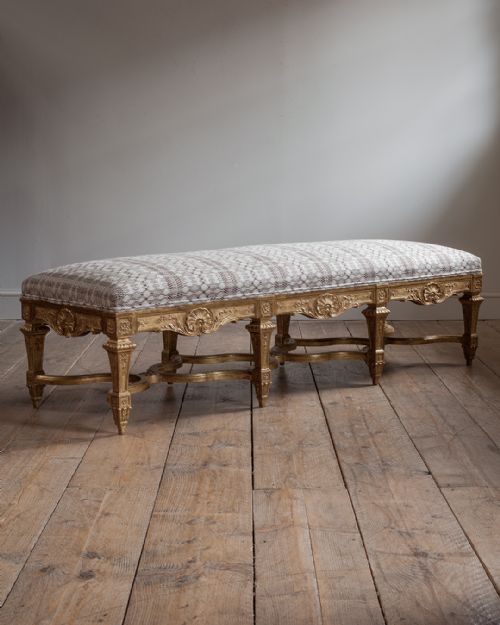
The selections available range from full bed frames and headboards to daybeds and long stools originating across the nineteenth and early twentieth centuries. Italian Rococo, French Chateau, and Louis revival styles dominate the forms currently seen.
Most examples lean towards nineteenth century production alongside early twentieth century interpretations. Alongside standard bed frames, you will spot daybeds, headboards, and benches sharing the same gilded aesthetic.
How they were made
Wood serves as the foundational substrate, utilising timber and walnut shaped through carving before receiving its surface finish. Giltwood and parcel gilt applications apply thin layers of gold or metallic leaf over prepared grounds to create the characteristic luminance.
Upholstery elements integrate traditional textiles including fabric, damask, and tapestry into the frames. Certain variations incorporate cane work alongside wood and metal components such as brass.
A discreetly opulent king size bed shares space with diminutive country house stools and grand marriage beds.
What varies in quality
The depth and crispness of the carved ornamentation dictate much of the visual hierarchy across these pieces. Hand-carved details in solid timber hold sharper definition than simpler moulded or decorated surfaces.
The integrity of the gilding and the preservation of the underlying wood structure separate standard decorative items from finer examples. Original upholstery choices and the retention of supportive cane work also influence the character of each piece.
The Giltwood French Bed Glossary
- Giltwood
- Timber decorated with gold leaf or metallic powder applied over a prepared base. This finish creates a reflective golden surface that defines the aesthetic of the frame.
- Damask
- A reversible figured fabric traditionally woven on a jacquard loom with patterns visible in both matte and lustrous threads. It frequently appears as upholstery on headbeds and daybeds.
- Rococo
- An ornate design style characterised by asymmetry, scrollwork, and naturalistic curves. Italian and French variants of this style heavily influence the carved woodwork seen here.
- Caning
- Woven rattan or plant material stretched across wooden frames to form supportive panels. This technique lightens the visual weight of large headboards and daybeds.
- Parcel gilt
- A decorative treatment where only specific carved portions of a painted or stained wooden object receive gold leaf. It highlights particular architectural details without covering the entire surface.
Giltwood French Bed: Frequently Asked Questions
How do I style a giltwood bed?
These beds demand neutral walls and understated bedding to let the gilded carved frame remain the visual focal point of the room. Layering simple linens prevents the elaborate woodwork from feeling overwhelmed.
Matching auxiliary seating such as a giltwood stool or daybed helps anchor the aesthetic across the wider bedroom space. Keeping surrounding furniture subtle allows the historical proportions to stand out naturally.
What is the difference between a daybed and a bed?
A daybed functions primarily for lounging and resting during daytime hours, featuring raised ends or backs styled after sofas. Standard beds are engineered specifically for overnight sleeping and typically feature taller headboards.
While both share giltwood finishes and carved stylistic traits, their structural proportions and intended uses in a home differ.
How do I identify a Louis revival piece?
Louis revival items emulate the formal decorative arts of seventeenth and eighteenth century French royal courts. Look for symmetrical neoclassical lines or sweeping Rococo scrolls combined with carved wooden frames.
These pieces were frequently produced during the nineteenth century as historicism swept European furniture design.
Are these beds standard modern sizes?
Historical sleeping furniture often adheres to nineteenth century dimensions rather than contemporary mattress standards. King size and super king proportions appear alongside custom configurations.
Checking exact internal measurements ensures modern mattresses fit comfortably within antique wooden rails.