

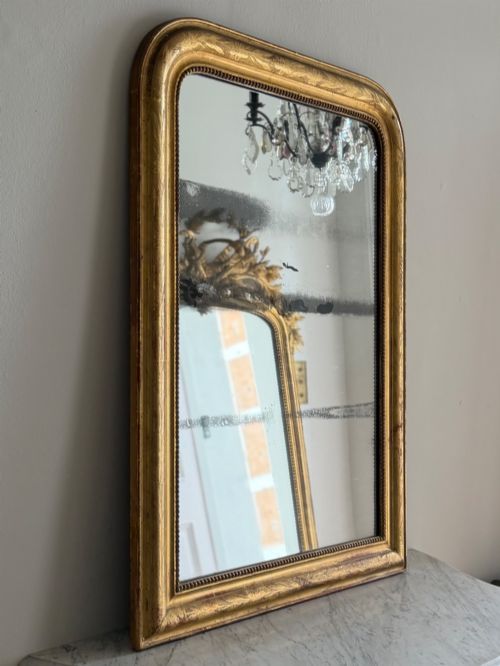
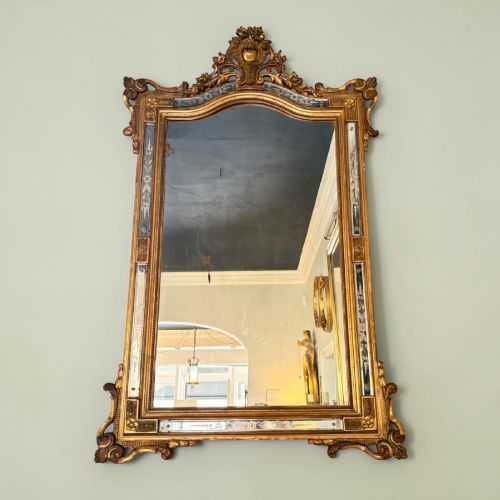
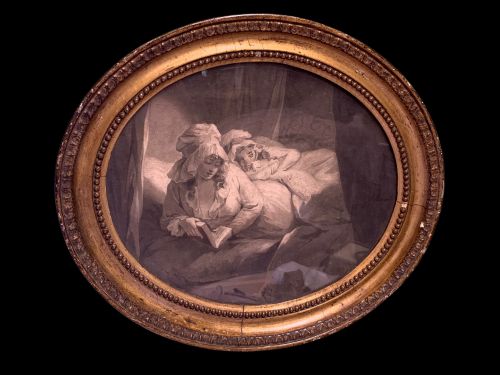
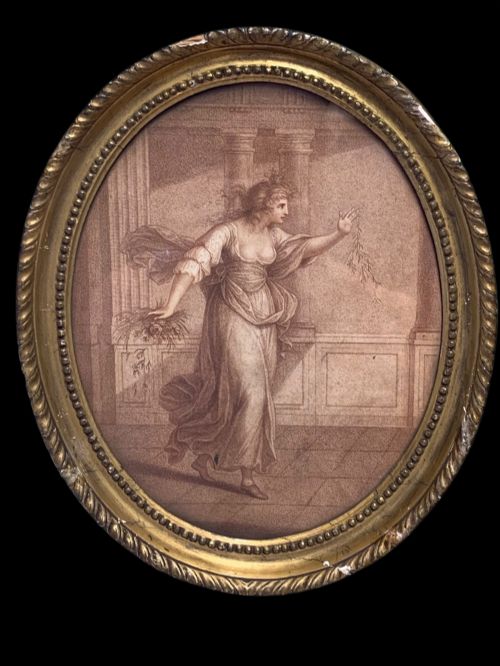


Giltwood Framed Engraving
These giltwood framed engraving works bring classic eighteenth and nineteenth century imagery straight to your wall, catching the light with traditional gold leaf.
Giltwood Framed Engraving
When you search for a giltwood framed engraving, you are looking at printed works on paper encased in wooden frames finished with gold leaf, plaster, and gesso. The pieces span periods from the eighteenth century through the nineteenth century and into the Edwardian era.
The subjects range from classical mythology and portraits to natural history studies by makers like Buffon. You will encounter single plates as well as matched pairs and multi-plate sets housed together.
How they were made
The images themselves are printed on paper using techniques such as stipple engraving, etching, and mezzotint. These print methods rely on inked metal plates pressed under weight to transfer fine lines and tonal gradations onto the sheet.
The surrounding frames utilise wood carved or moulded with plaster and gesso layers before the application of gold leaf. This traditional construction gives the borders their characteristic reflective metallic sheen.
Giltwood Framed Engraving Retail Price Guide 2026
Typical asking prices for giltwood framed engraving among the pieces listed under this phrase on Sellingantiques today, from the lower quarter to the upper quarter. They describe what is for sale here now, not the wider market.
Hippos made an unexpected appearance in eighteenth-century drawing rooms thanks to detailed natural history plates by Buffon.
What varies in quality
Quality rests in the crispness of the impression left on the paper and the depth of detail in the engraved lines. Finer plates yield sharper tones and more expressive figures.
The standard of the frame construction also dictates value, particularly the hand-carved intricacy of the gesso and the warmth of the original gold leaf finish.
Buffon·Adam Buck·Henry Corbould
The Giltwood Framed Engraving Glossary
- Engraving
- A printmaking method where an artist cuts lines directly into a metal plate with a sharp tool called a burin. The resulting incisions hold the ink for the press.
- Mezzotint
- A tonal print process that works from dark to light by roughening the metal plate to hold ink uniformly. This technique creates soft gradients rather than stark lines.
- Giltwood
- Timber decorated with gold leaf or powder applied over a prepared surface. It forms the bright metallic frame surrounding the paper artwork.
- Gesso
- A plaster mix applied to wooden frame mouldings to create a smooth surface for gilding. It allows for crisp ornamental detail.
- Stipple engraving
- A technique using dots rather than continuous lines to build up the image. It produces gentle flesh tones and subtle shadows.
Giltwood Framed Engraving: Frequently Asked Questions
How do I hang a heavy giltwood frame?
These frames often carry significant weight due to the wood, plaster, and glass construction. Secure fixings directly into wall studs or use heavy-duty wall anchors rated for the load.
Ensure the hanging wire or brackets on the back are robust and securely attached to the wooden frame structure rather than the backing board.
Are these antique frames original to the prints?
Many pieces retain their period frames, which show matching signs of age alongside the paper artwork. Georgian and Regency pieces often feature characteristic moulding styles unique to their decade of production.
Examining the backing materials and corner joins helps confirm whether the frame and engraving have a long-standing history together.
How should I care for antique giltwood?
Keep the frame away from direct sunlight and sources of heat to prevent the gesso and wood from drying out and cracking. Dust gently with a dry, soft feather duster.
Avoid liquid cleaners, polishes, or damp cloths, as moisture damages delicate gold leaf and historical water-gilt surfaces.
What is the difference between an engraving and a mezzotint?
An engraving relies on precise lines cut into a plate to define form and shadow. The process results in sharp, graphic details.
Mezzotint works with tonal areas and subtle gradations, creating velvety dark backgrounds and soft transitions without harsh outlines.