
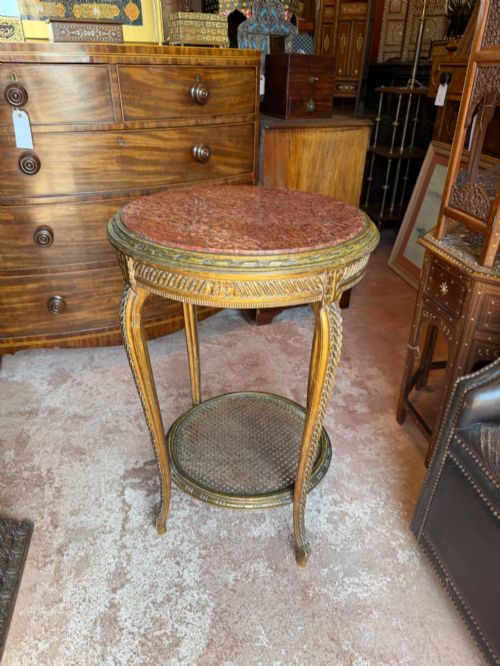
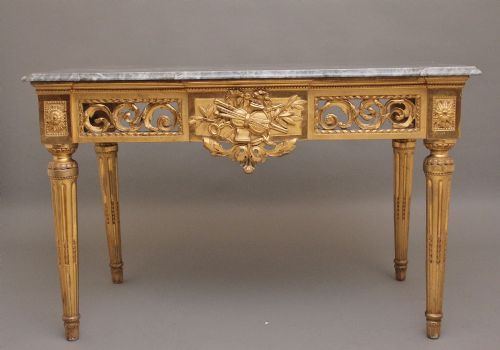
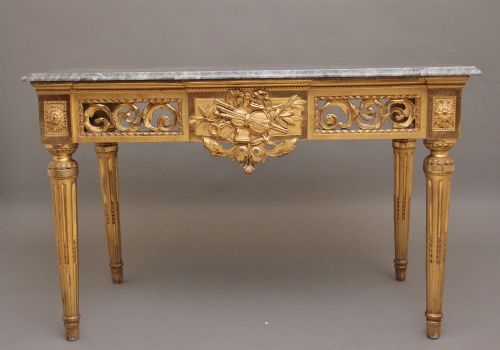
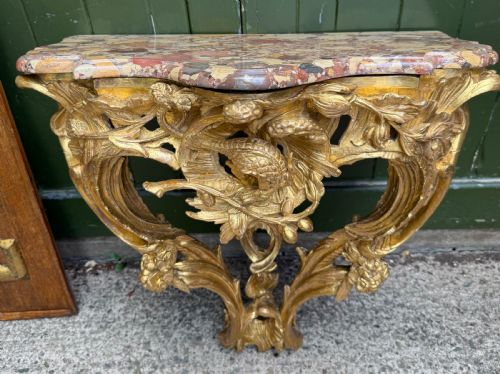
Giltwood and Marble
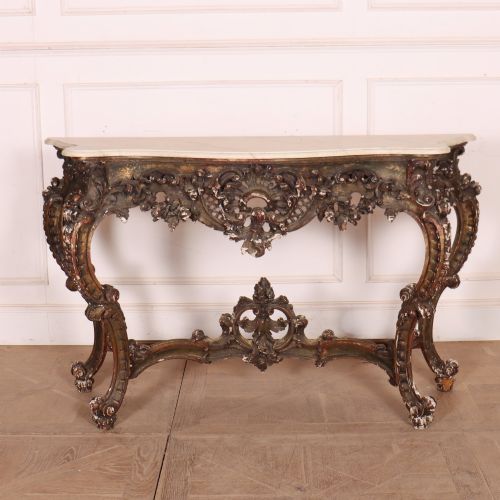
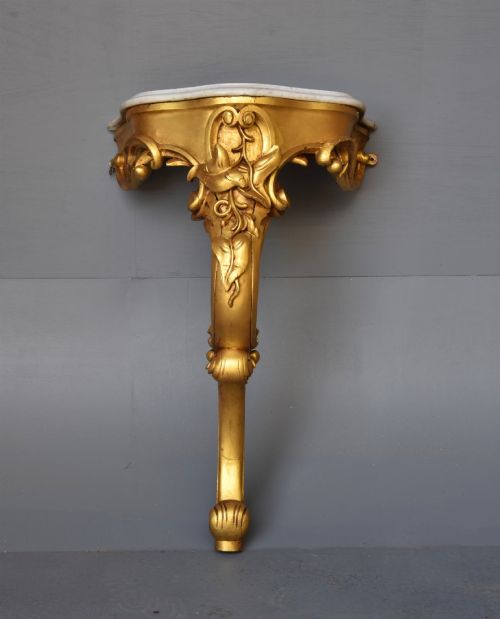
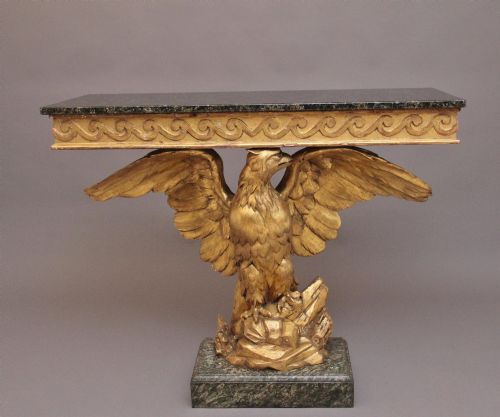
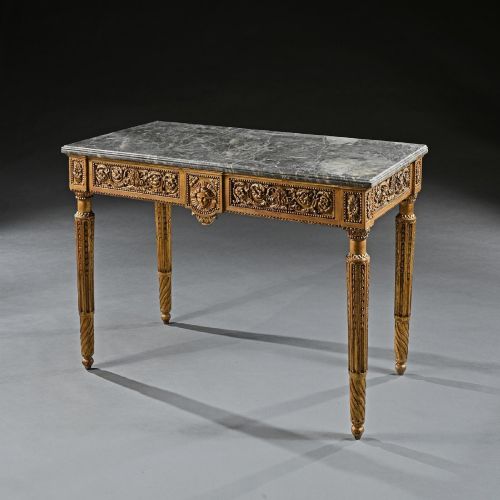
Giltwood and marble pieces unite carved, gilded timber with heavy stone surfaces to create striking tables and consoles.
Giltwood and Marble
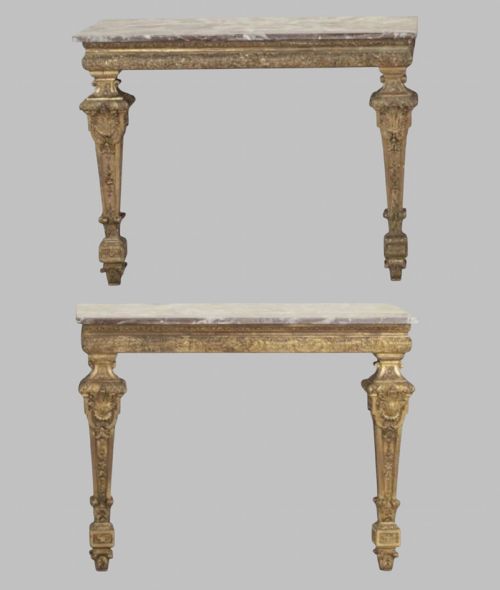
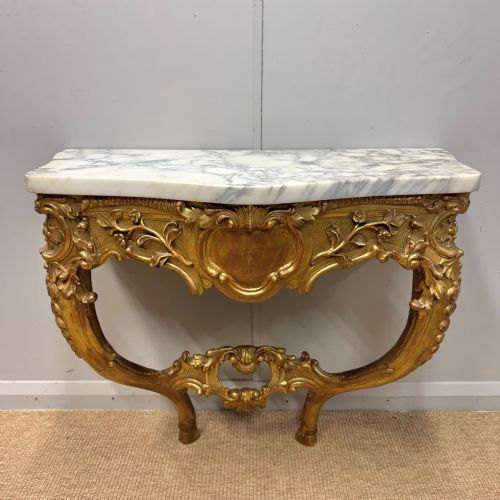
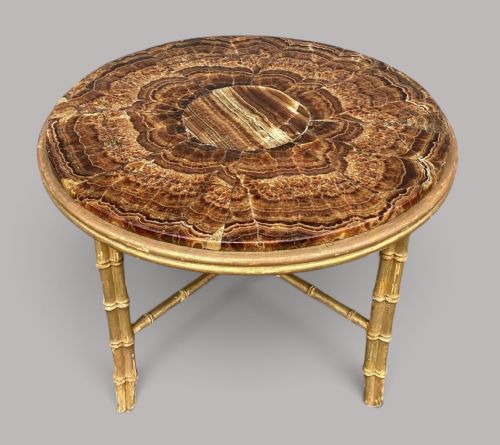
When you search for giltwood and marble, you encounter grand console tables, side tables, and coffee tables designed to anchor a formal interior. These forms draw heavily on 18th-century French and Italian aesthetics, spanning periods from the 18th century through the Regency era and into later revivals.
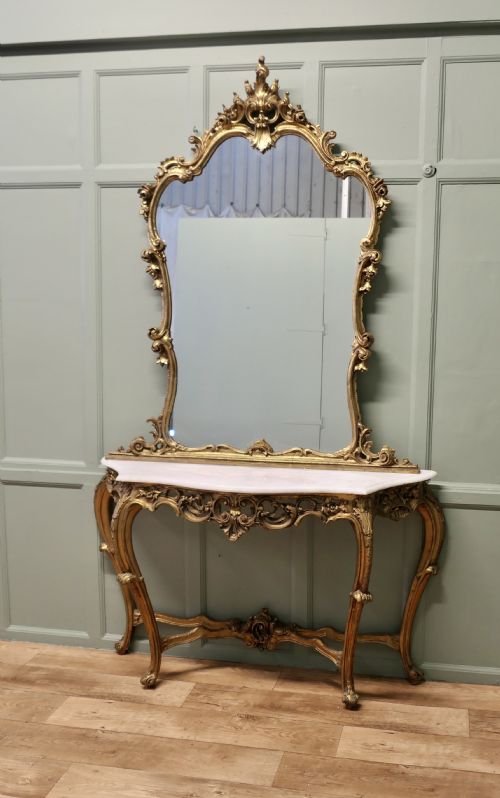
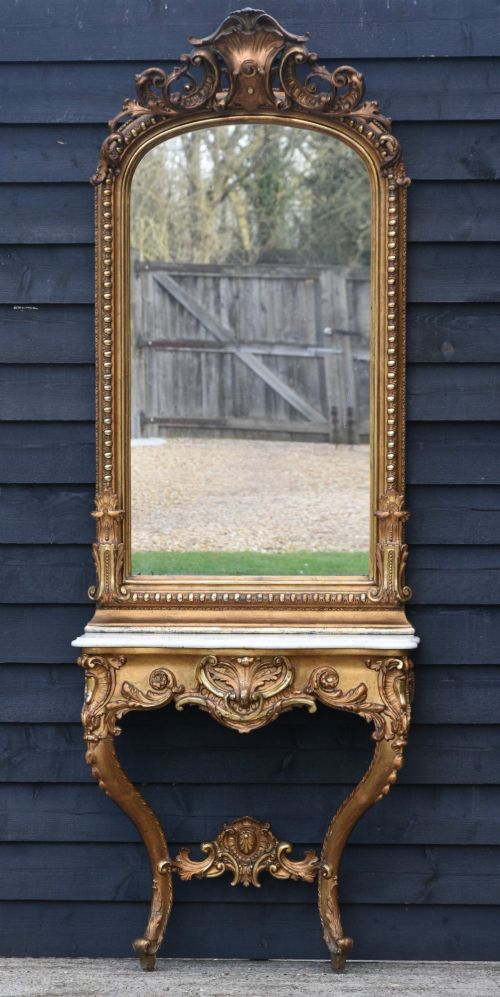
Console tables dominate the selection, frequently paired with matching pier mirrors or shaped with serpentine fronts. You also meet low coffee tables, occasional tables, and occasional games surfaces resting upon heavily carved bases.
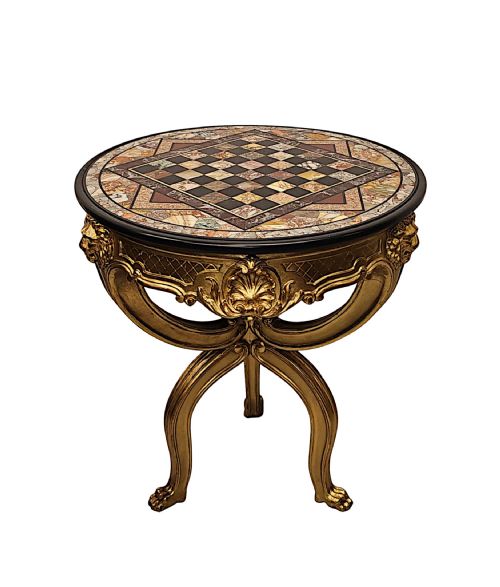
Italian and French workshops produced the majority of these examples, employing styles such as Neoclassical, Baroque, and Rococo. The forms range from small, restrained occasional pieces to monumental console tables supported by lion heads and paw feet.
How they were made
Craftsmen built the structural frames from woods like oak, lime, or general timber, applying layers of gesso to smooth the surface before adding gold leaf or paint. This layered preparation created the reflective giltwood finish characteristic of the style.
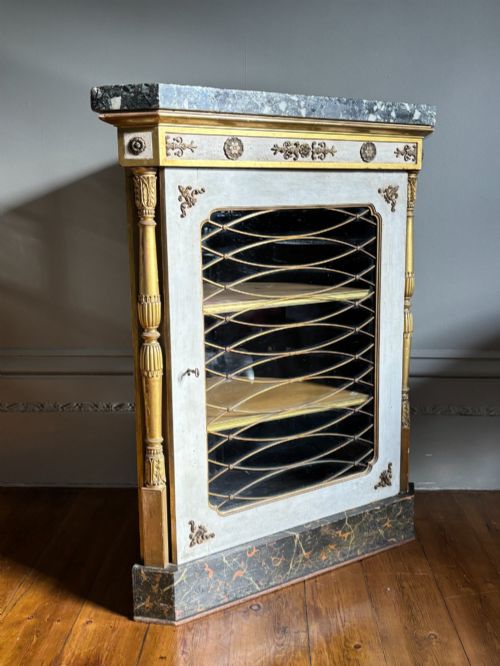
Heavy marble slabs, including varieties like rouge, siena, and breccia, were cut and polished to fit precisely onto the wooden bases. These stone tops often feature shaped or serpentine edges that complement the elaborate carving below.
Lion heads and paw feet peer out from beneath stone slabs, guarding tables designed to hold nothing more strenuous than a chess board.
What varies in quality
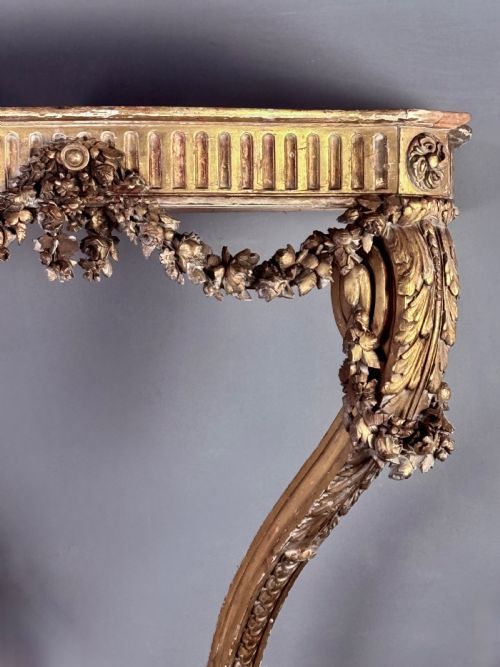
The depth and crispness of the wood carving set examples apart, with hand-carved acanthus leaves, lion heads, and figural details showing distinct artistic command. Lesser pieces rely on shallow moulding or repetitive cast elements.
The selection and treatment of the marble slab also dictate the standing of a piece, as figured stones with rich natural veining outclass plain or uniform alternatives. Furthermore, the preservation of the original gold leaf and gesso layer governs the visual integrity of the frame.
Felix-Alfred Ternisien
The Giltwood and Marble Glossary
- Giltwood
- Wood that has been coated with gold leaf over a prepared gesso ground. This technique gives furniture a brilliant, reflective metallic surface.
- Console table
- A table designed to stand against a wall, frequently supported by ornamental brackets or legs rather than four independent vertical posts.
- Gesso
- A plaster mixture applied to wooden furniture bases to create a smooth surface for gilding or painting. It holds fine detail during the carving and finishing process.
- Breccia marble
- A multicoloured stone composed of angular rock fragments embedded in a fine-grained matrix. It provides highly decorative, variegated surfaces on tabletop slabs.
- Serpentine front
- A furniture front characterised by a wavy contour, curving outward in the centre and inward at the sides. This shape requires precise stone-cutting and joinery.
Giltwood and Marble: Frequently Asked Questions
Where do I put a console table?
Console tables suit entrance halls, living rooms, and dining spaces where floor space is limited. Their shallow depth allows them to sit flush against a wall without obstructing movement.
Many examples were originally designed to stand beneath large wall mirrors, creating a unified decorative display in formal reception rooms.
How do I clean marble tops?
Stone surfaces require gentle wiping with a soft, damp cloth and neutral soap. Avoid acidic cleaners, vinegar, or citrus products, which etch and dull polished marble.
Dry the surface thoroughly after cleaning to prevent water spots and maintain the natural lustre of the stone.
Are these tables structurally fragile?
The carved wooden frames are surprisingly sturdy, though the heavy stone slabs rest upon them by weight alone. Care must be taken when moving these pieces to avoid shifting or chipping the marble top.
Lift the assembly from the wooden base rather than the stone top, ensuring multiple people share the weight of heavier specimens.
How do I recognise a revival period piece?
Revival pieces from the 19th and early 20th centuries imitate 18th-century French and Italian designs using contemporary manufacturing methods. Closer inspection of the underlying timber, fixings, and gesso application helps distinguish these later interpretations from original 18th-century work.
Stylistic cues like Louis XV or Baroque motifs often appear with a heavier, more uniform execution in revival pieces.