

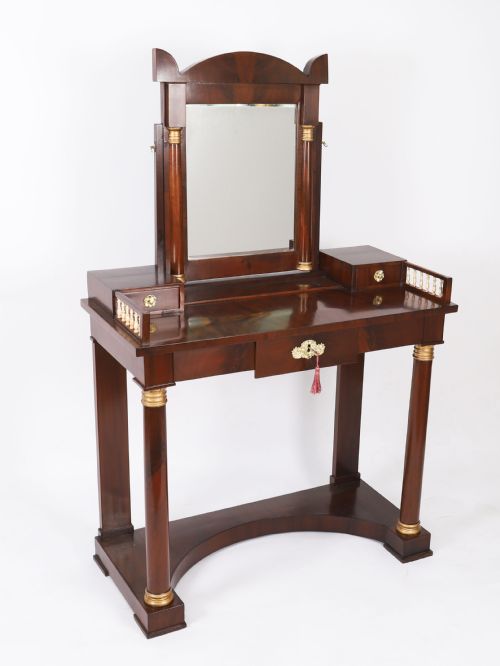


Gilt Wood Table Mirror
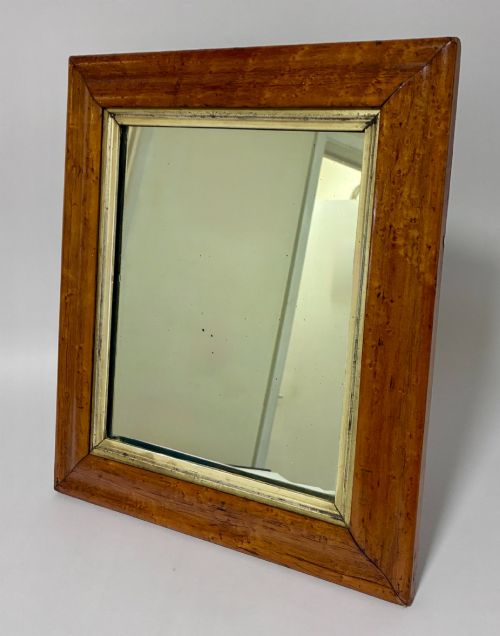
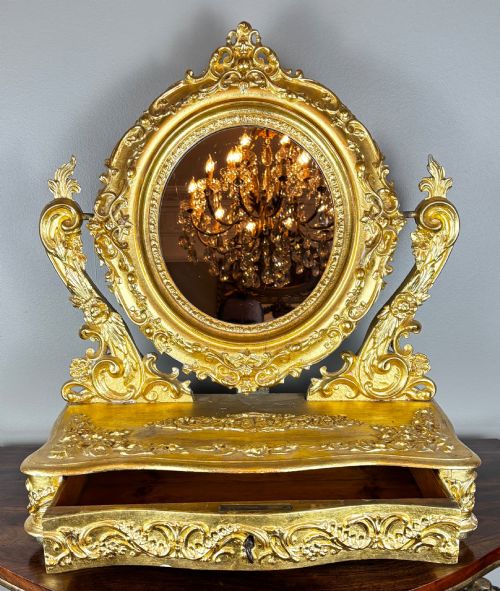
A gilt wood table mirror sits neatly upon a surface, reflecting candlelight or room details through carved and gilded frames.
Gilt Wood Table Mirror
A gilt wood table mirror brings portable reflection into a room, often taking the form of a compact dressing glass or an easel mirror for a surface rather than a wall. When searching for a gilt wood table mirror, buyers encounter pieces originating primarily from the eighteenth and nineteenth centuries, alongside later twentieth-century examples.
The selection frequently includes items fashioned in continental styles, such as French Rococo and Italian Baroque, alongside domestic British iterations. These objects often pair mirror glass with carved wooden structures, sometimes accompanied by small mahogany or parcel-gilt supports.
How they were made
Maker's hands shaped these items using solid timbers such as mahogany, walnut, and rosewood as a base for intricate decorative schemes. Craftsmen applied layers of gesso directly onto the carved wood to create a smooth, responsive surface suitable for subsequent gilding.
Gold leaf or metallic gilding was then laid over the prepared gesso base, often burnished to catch the light. Mirror glass was set securely within the frames, sometimes held by simple wooden backs or adjusted with brass hinges and pivots.
Gilt Wood Table Mirror Retail Price Guide 2026
Typical asking prices for gilt wood table mirror among the pieces listed under this phrase on Sellingantiques today, from the lower quarter to the upper quarter. They describe what is for sale here now, not the wider market.
Listings feature items spanning from the eighteenth century through to the 1920s, utilising materials including glass, gesso, mahogany, and brass.
What varies in quality
The distinction between tiers rests upon the depth and precision of the wood carving. Crisp, deeply undercut foliage and scrollwork demonstrate superior hand dexterity compared to softer, shallower moulding.
The integrity of the original gilt surface and gesso foundation determines the visual cohesion of the piece. Uniform application of gold leaf and minimal disturbance to the underlying preparation layers elevate the stature of an example.
John Franklin London
The Gilt Wood Table Mirror Glossary
- Gesso
- A plaster-like mixture applied to wood surfaces as a preparation for gilding or painting. It provides a smooth base that carvers could detail before applying gold leaf.
- Parcel-gilt
- A decoration method where only specific portions of an object are gilded, leaving the underlying wood grain or paint visible elsewhere. This technique highlights particular carved details.
- Rococo
- An ornate design style characterised by asymmetrical scrolls, shell motifs, and naturalistic curves. It heavily influenced continental frames and furniture during the eighteenth century.
- Easel mirror
- A freestanding glass supported by a hinged rear leg for desk or dressing table placement. Such designs allow the mirror angle to be adjusted.
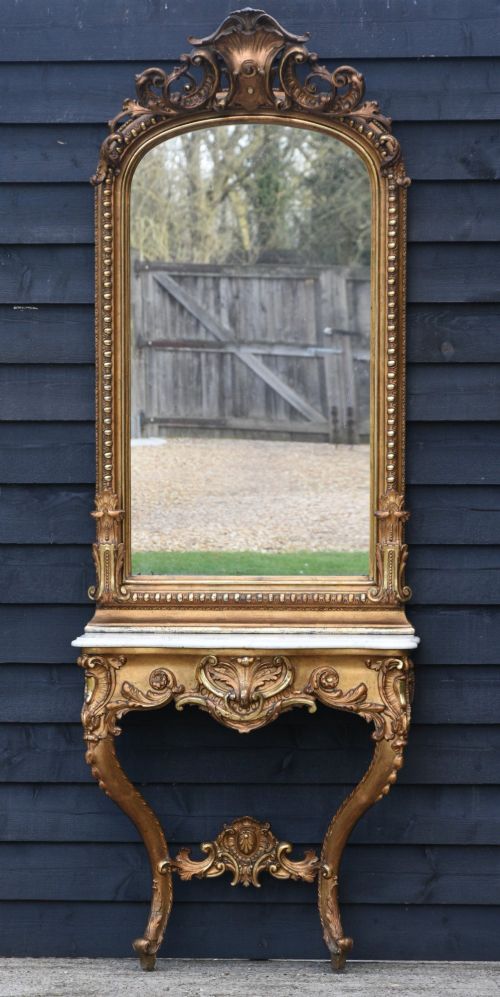
- Console table
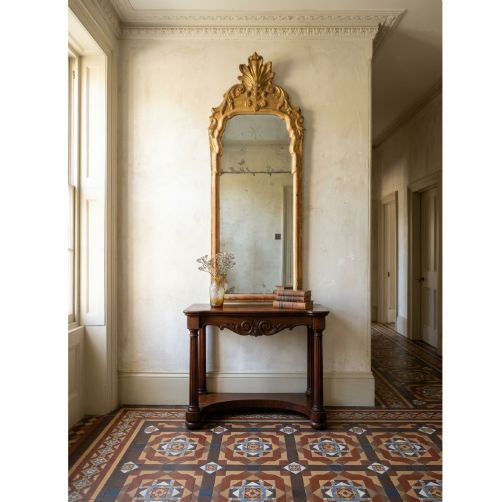
- A wall-mounted or freestanding table frequently paired with matching mirrors in domestic interiors. These larger companion pieces share the gilded vocabulary of table mirrors.
Gilt Wood Table Mirror: Frequently Asked Questions
What is a gilt wood table mirror?
A gilt wood table mirror is a small reflective glass encased in a carved and gilded wooden frame designed to stand on furniture.
These pieces typically sit on dressing tables, chests of drawers, or sideboards to provide functional reflection close at hand.
How do I date a table mirror?
Dating relies upon examining the timber species, the composition of the gesso, and the style of the carving. Eighteenth-century examples often feature different joinery and weight compared to nineteenth-century revivals.
The backing boards, screw types, and mirror glass manufacturing techniques also offer clues regarding the age of the object.
Where should I place it?
These mirrors suit surfaces where they can bounce natural light around a room while remaining stable. Placing one on a dressing table or a sturdy sideboard works well.
Ensure the supporting surface balances the weight of the frame and allows safe adjustment of any pivoting mechanisms.
Are original mirror plates common?
Many older pieces retain their original glass, which often exhibits minor foxing, distortion, or silvering loss. These natural signs of age confirm the historical continuity of the object.
Replacement glass does appear in records, particularly when earlier plates suffered breakage over centuries of domestic use.