


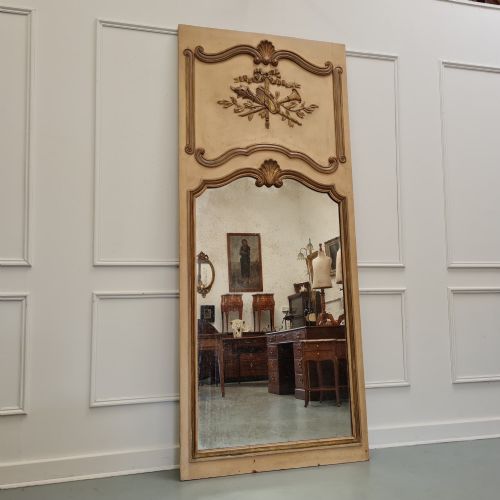


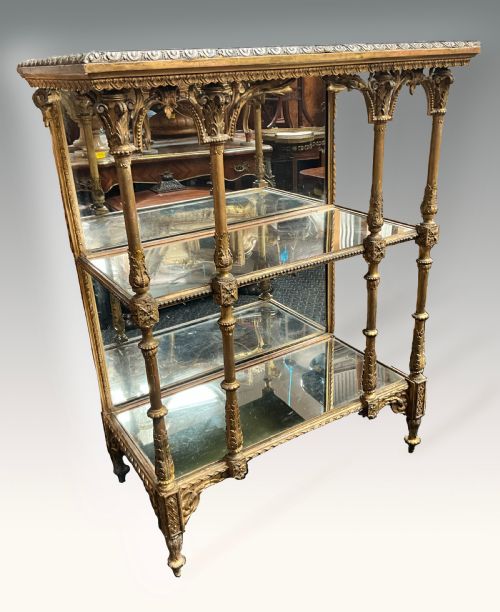


Gilt Wood Standing Mirror
A gilt wood standing mirror brings height and reflected light to a room, ranging from full-length leaner frames to pivoted cheval designs.
Gilt Wood Standing Mirror
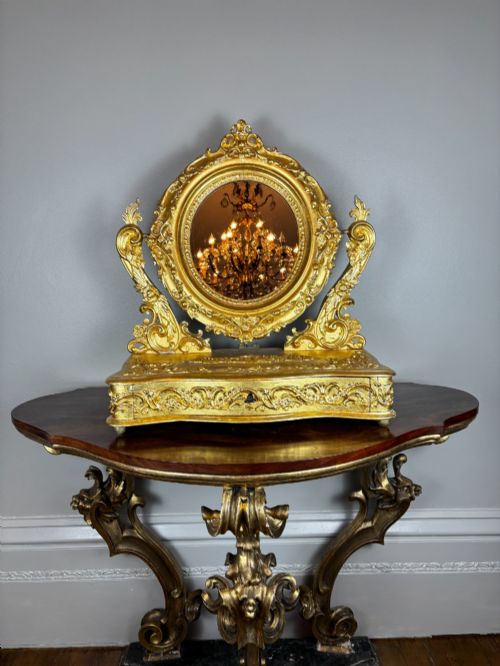
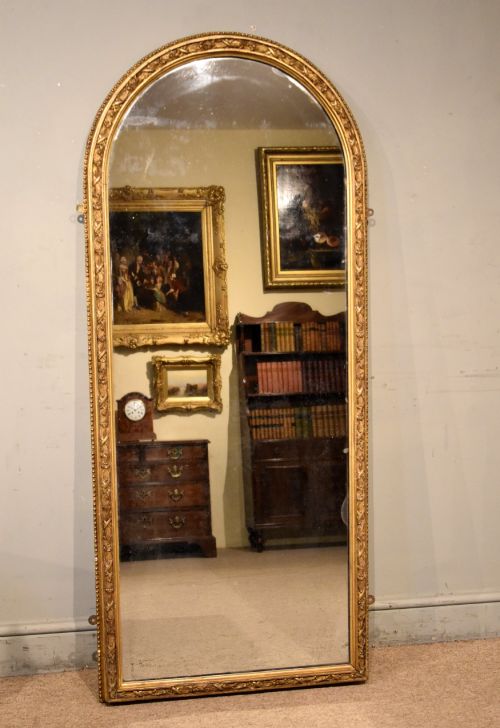
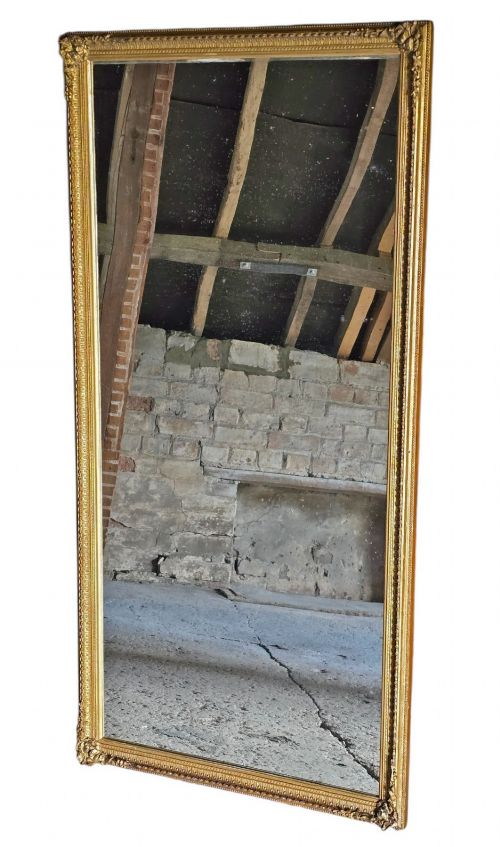
When you search for a gilt wood standing mirror, you look at large floor-standing glasses, cheval mirrors on pivots, and full-length leaner frames designed to stand directly against a wall. The pieces recorded here span from the eighteenth century through the nineteenth century and into the early twentieth century, taking in English and continental European origins.
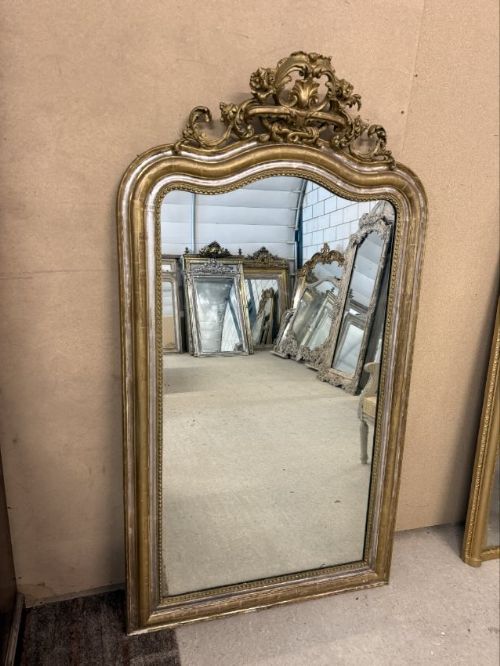
You are most likely to meet substantial French and English interpretations in styles such as Victorian, French Rococo Revival, and Napoleon III. These objects serve both a practical dressing purpose and a decorative architectural role, often scaling quite large to dominate a wall or corner.
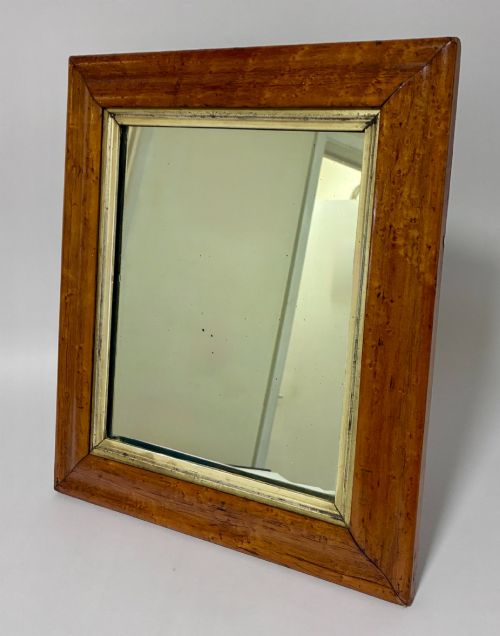
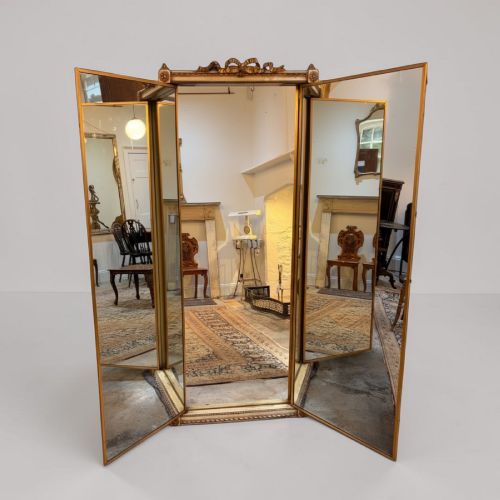
The selection also touches upon related forms like triptych mirrors, easel glasses, and cheval dressing mirrors alongside standard floor-standing formats. Their presence shifts between ornate carved frames and simpler architectural mouldings depending on the specific period and regional taste.
How they were made
Carvers shaped the foundational wooden structures from timber before applying layers of gesso and plaster composition to build up intricate relief ornaments. Artisans then laid gold leaf or applied paint and silver leaf over the prepared surfaces to achieve the characteristic metallic sheen.
The glazing incorporates heavy mirror glass, frequently mercury glass in older examples or bevelled plate glass in later nineteenth and twentieth-century pieces. These glasses were secured into the back of the frames with wooden backing boards and traditional fixings.
Gilt Wood Standing Mirror Retail Price Guide 2026
Typical asking prices for gilt wood standing mirror among the pieces listed under this phrase on Sellingantiques today, from the lower quarter to the upper quarter. They describe what is for sale here now, not the wider market.
The listings include pieces spanning the Georgian era, the 18th century, the 19th century, and the early 20th century.
What varies in quality
The depth and crispness of the hand-carved wooden ornament distinguish finer frames from simpler moulded versions. Superior examples show intricate detailing in the gesso relief work where scrolls, foliage, and architectural motifs remain sharp and well-defined.
Originality of the surface finish and the glass itself plays a major part in the standing of a piece. Retaining the original mercury glass or early gold leaf without heavy modern overpainting preserves the authentic character and historical integrity of the mirror.
The Gilt Wood Standing Mirror Glossary
- Cheval mirror
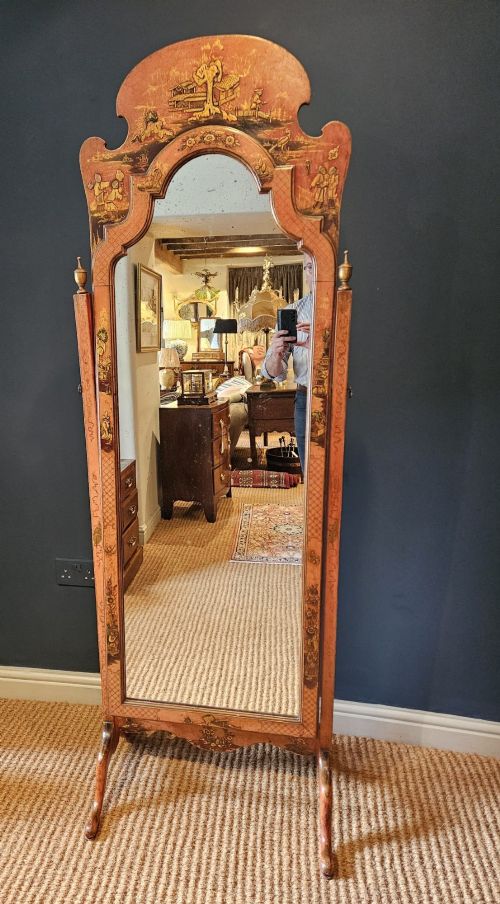
- A freestanding full-length mirror suspended on a vertical frame with pivots that allow the glass to tilt. This form became particularly popular for bedroom dressing during the nineteenth century.
- Leaner mirror
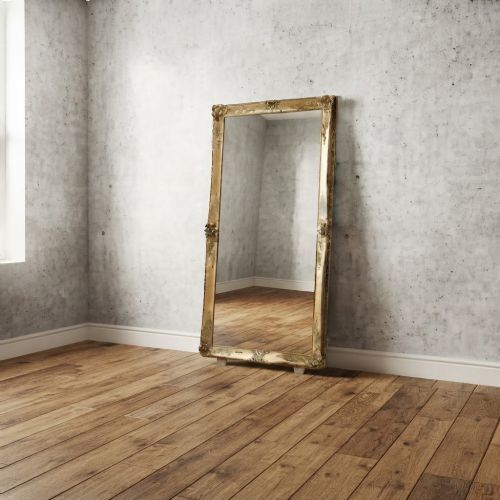
- A large floor-standing mirror designed to lean directly against a wall rather than hang from brackets. These tall glasses create an expansive sense of space in a room.
- Gesso
- A plaster-like mixture applied to wood frames to create a smooth surface for gilding and to build up low-relief ornamentation. Master carvers incised and modelled this layer before applying gold leaf.
- Mercury glass
- An early type of double-walled glass blown with a silvering mixture inserted between the layers. It creates a distinctive mottled and reflective appearance unique to antique mirrors.
- Trumeau mirror
- A decorative wall mirror fitted into a wood-panelled wall or designed with an integrated painted panel above the glass. Originating in French interiors, these pieces combine art and reflection.
Gilt Wood Standing Mirror: Frequently Asked Questions
How do I secure a large leaner mirror?
Large floor-standing mirrors are heavy and require proper wall anchoring to prevent tipping forward. Manufacturers and makers built these frames for stability, but safety brackets fixed to the wall behind the top of the frame are essential.
Position the mirror on a flat floor surface away from heavy foot traffic. Ensuring the weight distributes evenly against the wall protects both the antique frame and the floor below.
What is the difference between a cheval and a leaner mirror?
A cheval mirror stands on its own four-legged or trestle base with pivot pins that let the glass tilt back and forth. A leaner mirror lacks a built-in stand and rests directly against the wall at an angle.
Cheval versions function well in dressing rooms where adjustable angles are useful. Leaner formats suit living spaces and hallways to reflect maximum light and room depth.
How do I clean antique giltwood frames?
Dust antique giltwood gently with a soft dry brush or feather duster to remove surface particles. Avoid liquid cleaners, polishes, or abrasive cloths that can strip the delicate gold leaf and gesso.
Water and chemical solvents react badly with nineteenth-century surface treatments. Regular, gentle dry maintenance preserves the original metallic finish without harming the composition underneath.
Are antique mirror glasses always replaced?
Many antique standing mirrors retain their original mercury or early silvered glass, showing characteristic foxing and dark spots. Some pieces have received replacement glass over the decades due to breakage or deterioration.
Original glass with age spots adds historical character to the piece. Clearer replacement glass offers a sharper reflection but reduces the period authenticity of the mirror.