

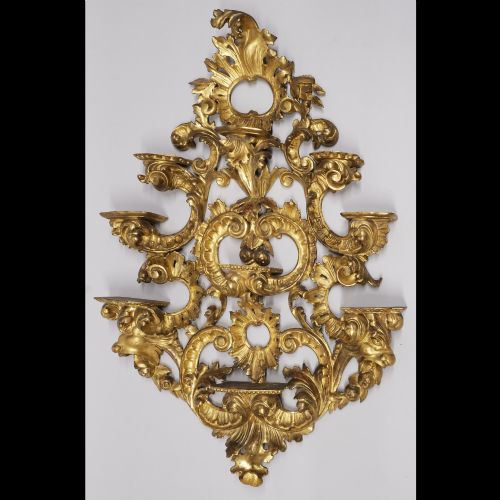


Gilt Wood Shelf
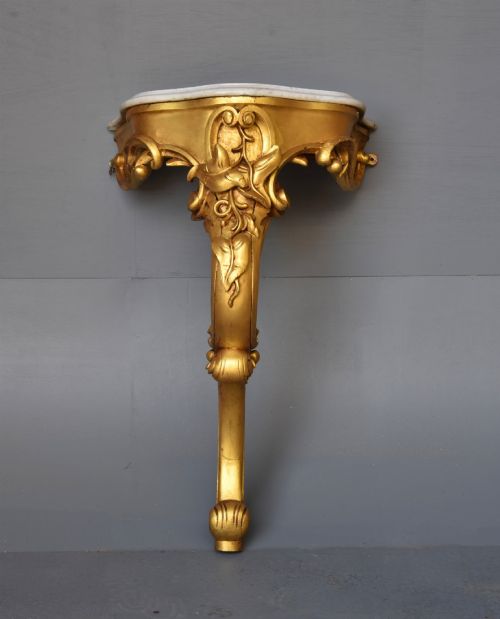
A gilt wood shelf brings reflective warmth and architectural depth to a room, catching candle or window light against carved surfaces.
Gilt Wood Shelf
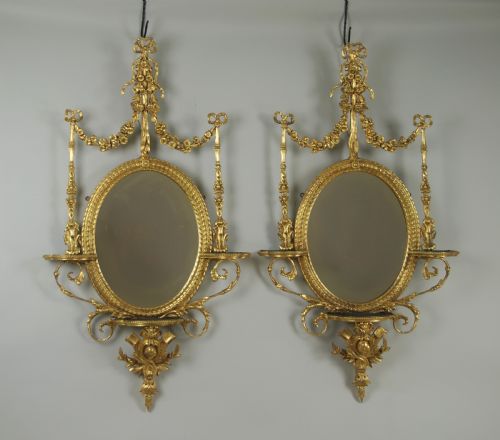
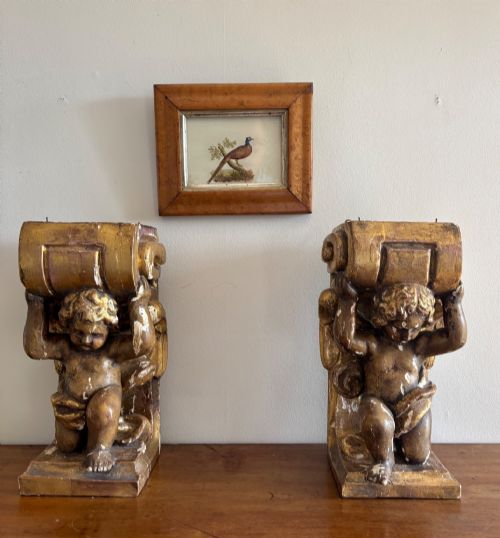
When you search for a gilt wood shelf, you encounter decorative ledges, small wall brackets, and mirrored display shelves designed to project ornamental objects into a room. These pieces range from compact eighteenth-century Italian wall brackets to Victorian overmantel mirrors fitted with integral display ledges.
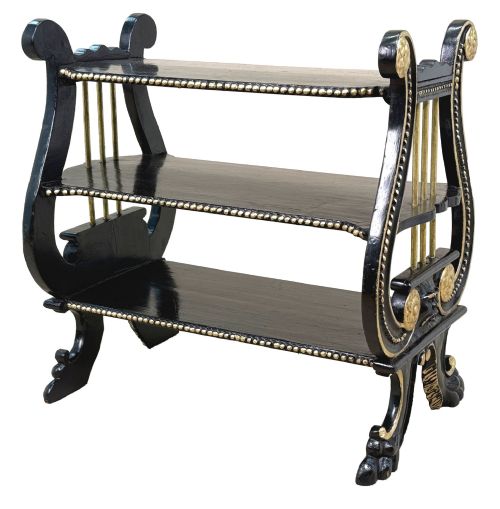
The selection here draws heavily on nineteenth-century examples alongside earlier eighteenth-century forms and later revival pieces. You will frequently find carved wall brackets, console tables with surface ledges, and multi-tiered étagères utilising gilt finishes.
Originating largely from English, French, and Italian workshops, these items serve both a practical display function and a sculptural role on the wall. They anchor small collections of porcelain or clocks while introducing metallic brilliance to domestic interiors.
How they were made
Cabinet makers and carvers typically shaped these supports from timber substrates such as wood, walnut, or mahogany before applying preparatory layers of gesso to smooth the surface. This gypsum and glue mixture provided a receptive base for subsequent gilding techniques.
Gold leaf or metallic leaf was then laid over the prepared gesso, often combined with painted wood elements or parcel gilding to highlight carved details. Skilled artisans utilised brass hardware and ormolu mounts to secure structural joints and enhance decorative depth.
Gilt Wood Shelf Retail Price Guide 2026
Typical asking prices for gilt wood shelf among the pieces listed under this phrase on Sellingantiques today, from the lower quarter to the upper quarter. They describe what is for sale here now, not the wider market.
Some nineteenth-century wall brackets were built with secret ledges just wide enough to hide a pocket watch from visiting tax collectors.
What varies in quality
The distinction between ordinary and exceptional pieces lies in the crispness of the hand-carved detail within the gesso and wood substrate. Superior examples display deep, fluid relief work in styles like Rococo Revival or Neoclassical, whereas lesser pieces rely on shallow, repetitive moulding.
The integrity of the original gilt surface dictates much of the visual success of the object. Pieces retaining their original gold leaf without heavy overpainting or crude repair demonstrate the authentic hand of period gilders and command greater appreciation from collectors.
Henri Dasson
The Gilt Wood Shelf Glossary
- Giltwood
- Timber that has been coated with gold leaf or metal leaf over a prepared gesso ground. This technique creates a luminous surface finish characteristic of fine antique wall brackets and mirrors.
- Gesso
- A plaster-like mixture of gypsum and binding size applied to wood surfaces to create a smooth ground for gilding. It allows carvers to achieve sharp relief details before the gold leaf is laid.
- Étagère
- A piece of furniture consisting of open shelves for displaying small objects or ornaments. These tiered stands frequently incorporate inlaid woods, marble tops, or parcel-gilt details.
- Parcel-gilded
- Partially gilded, where gold leaf is applied only to specific carved highlights while the underlying wood or painted finish remains visible. This method contrasts metallic brilliance with darker wood grains.
Gilt Wood Shelf: Frequently Asked Questions
How do I hang a heavy antique gilt wood shelf safely?
These wall-mounted pieces require direct fixing into structural wall studs or heavy-duty masonry fixings to support the combined weight of the timber and gesso. Professional installation ensures the bracket bears decorative objects without pulling away from the plaster.
Because many nineteenth-century wall brackets feature delicate carved projections, positioning them above shoulder height protects them from accidental knocks while maintaining their intended visual balance.
What objects look best displayed on a gilt wood shelf?
Small porcelain figurines, miniature bronzes, and pocket watch displays contrast sharply against the reflective gold leaf background. The metallic surface naturally frames whatever small cabinet pieces you place upon the ledge.
Avoid overloading the timber surface with heavy items that exceed the scale of the bracket. Keeping the display curated lets the carved gesso work remain visible.
How can I tell an eighteenth-century shelf from a Victorian revival piece?
Earlier eighteenth-century carvings display hand-tooled gesso grounds and deeper, more organic asymmetry characteristic of Rococo work. Victorian revival pieces often show machine precision in the timber substrate and denser composition.
Examining the backboards, fixing joints, and tool marks under magnification reveals the age of the woodwork and the specific preparation methods used by the gilder.