



Gilt Wood Seascape Art
Gilt wood seascape art brings maritime views into a room through oil and watercolour paintings set within gilded frames.
Gilt Wood Seascape Art
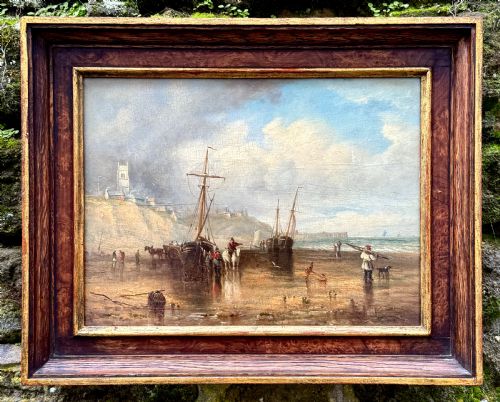
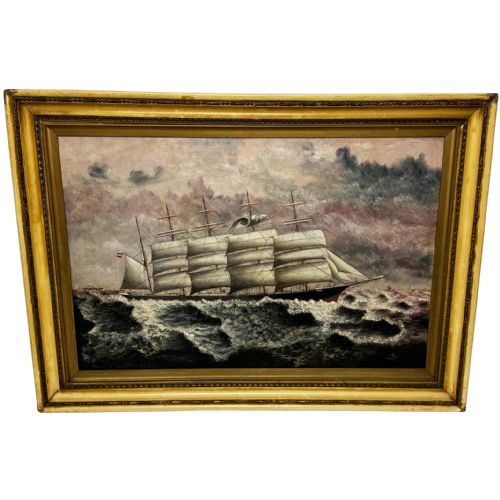
Gilt wood seascape art encompasses oil paintings, watercolours, and framed artwork depicting marine views, coastal scenes, and harbours. These works span the nineteenth century, the Edwardian era, and into the nineteen-thirties.
Buyers encounter framed pieces executed in oil on canvas, oil on board, and watercolour on paper. Subjects range from large sail ships and fishing boats in choppy seas to quiet coastal landscapes and Italian harbour scenes.
How they were made
Artists painted marine subjects using oil or watercolour applied to canvas, board, or paper. Many works capture coastal light and maritime movement through brushwork typical of nineteenth-century and early twentieth-century painters.
Frames combine wood with gilt or gilded surfaces, occasionally featuring hand enamelled polychrome decoration. These surrounds complement the maritime paintings they enclose.
Gilt Wood Seascape Art Retail Price Guide 2026
Typical asking prices for gilt wood seascape art among the pieces listed under this phrase on Sellingantiques today, from the lower quarter to the upper quarter. They describe what is for sale here now, not the wider market.
Stormy coasts and choppy seas prove far more popular with nineteenth-century artists than calm waters.
What varies in quality
Quality rests in the handling of water, light, and maritime vessels by the artist. Works by named painters exhibit greater command of composition and atmospheric detail in coastal scenes.
The condition and craftsmanship of the gilt wood frames contribute to the overall presentation of the artwork. Intricate gilding and framing enhance the visual impact of the seascape.
Thomas Creswick·John Moore of Ipswich·Fred Waugh·T.S. Wallis·George Dodgson Callow·Frank Wood·Charles France·Charles Martin Powell·Francis Moltino·Arthur Joseph Meadows·Alfred Montague·Stephen Brownlow
The Gilt Wood Seascape Art Glossary
- Gilt wood
- Wood coated with gold leaf or a gold-coloured finish. This material forms the decorative frames enclosing the paintings.
- Seascape
- A work of art depicting the sea, coast, ships, or maritime activity. These subjects dominate the oil and watercolour paintings found in this category.
- Oil on canvas
- Pigment mixed with oil applied to a stretched fabric support. This medium records coastal scenes and sailing ships.
- Watercolour
- Paint consisting of water-soluble pigments used on paper. These paintings often capture delicate atmospheric effects in marine settings.
Gilt Wood Seascape Art: Frequently Asked Questions
What periods do these seascapes date from?
The works originate largely from the nineteenth century, extending into the Edwardian period and the nineteen-thirties. Dates range from early nineteenth-century harbour views to twentieth-century marine paintings.
Specific pieces carry dates or attributions pointing to decades such as the eighteen-seventies, eighteen-eighties, and nineteen-hundreds.
What subjects appear in these paintings?
Paintings show sailing ships, fishing boats, and naval vessels navigating coastal waters, choppy seas, and estuaries. Scenes include British, Dutch, and Italian harbours alongside coastal landscapes.
Artists also recorded specific locations such as the Thames, Whitby, the Isle of Wight, and St Michaels Mount.
How should I hang gilt wood framed art?
Select a wall with stable humidity and away from direct sunlight to protect both the watercolour or oil painting and the gilt wood frame. Ensure wall fixings match the weight of the framed artwork.
Allow sufficient space around the piece so the gilded frame complements rather than crowds surrounding decor.
How do I identify a watercolour from an oil painting?
Watercolour paintings use paper supports, often displayed under glass, showing transparent washes of pigment. Oil paintings utilise canvas or board, presenting heavier texture and opaque paint layers.
Examining the surface reveals the distinct working methods of nineteenth-century painters.