

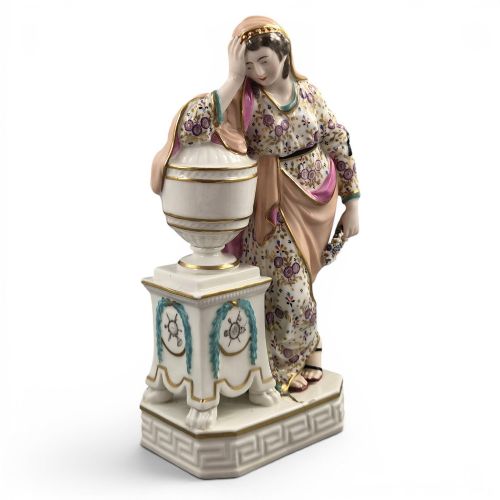
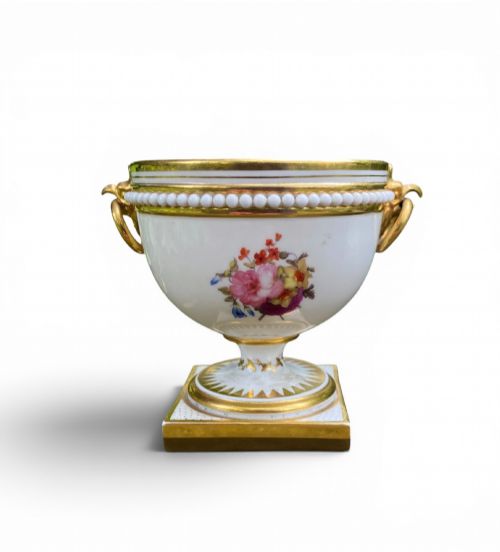


Gilt White Porcelain Urns
Gilt white porcelain urns bring classical elegance and rich gilding to a room, drawing the eye with their bright ceramic bodies and metallic trim.
Gilt White Porcelain Urns
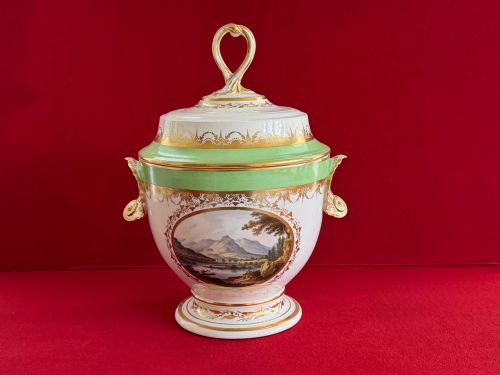
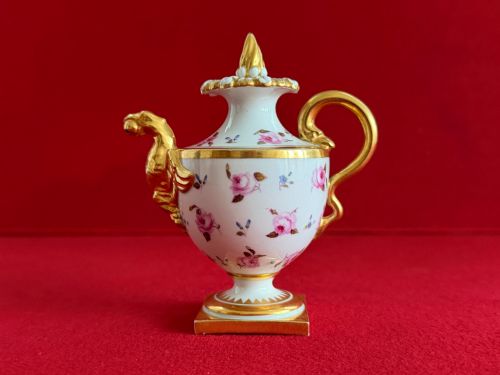
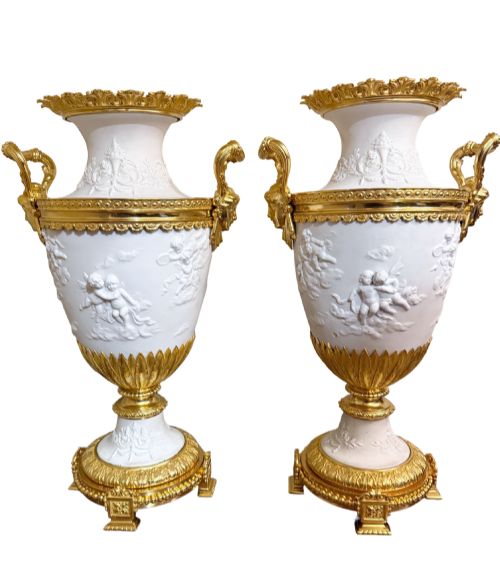
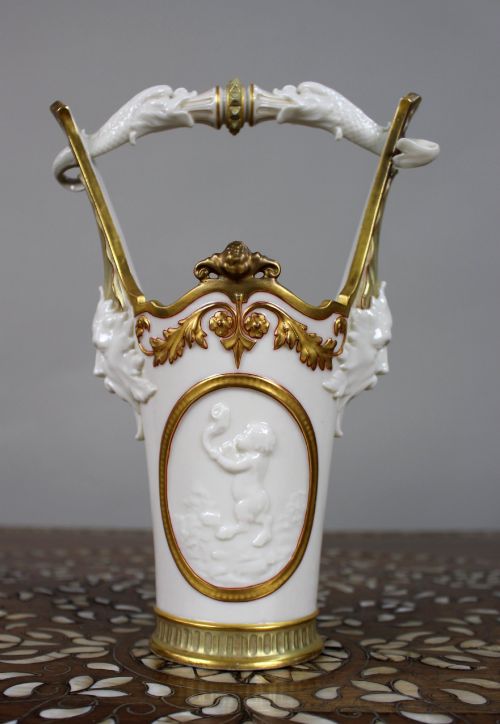
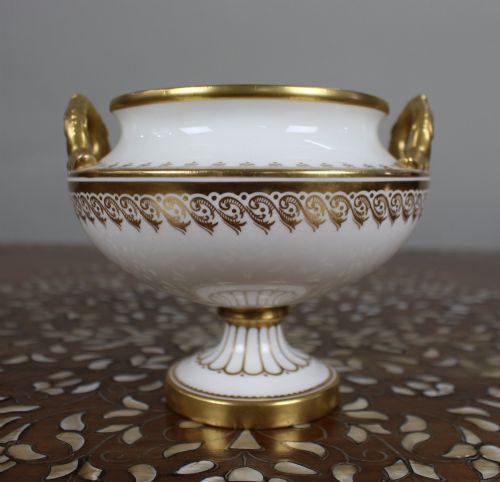
When you search for gilt white porcelain urns, you encounter decorative vessels shaped for display, often featuring crisp white ceramic bodies highlighted with gold leaf or metallic paint.
The selections span the Georgian and Victorian eras, alongside Regency designs, offering classic shapes derived from antiquity such as Medici profiles and classical urn forms.
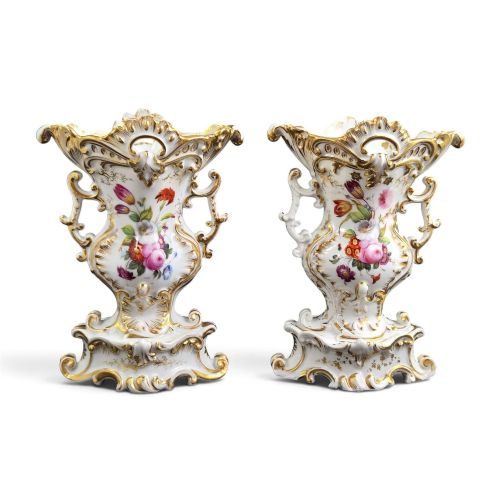
Many items survive as pairs, functioning historically as mantel ornaments, decorative table pieces, or centrepieces in period drawing rooms.
How They Were Made
Potters shaped fine clay bodies on the wheel or in moulds before firing the ceramic at high temperatures to achieve a hard, durable surface.
Makers applied hand-painted floral motifs, enamel details, and metallic accents using gold leaf, bronze mounts, or liquid gilding fired onto the glaze.
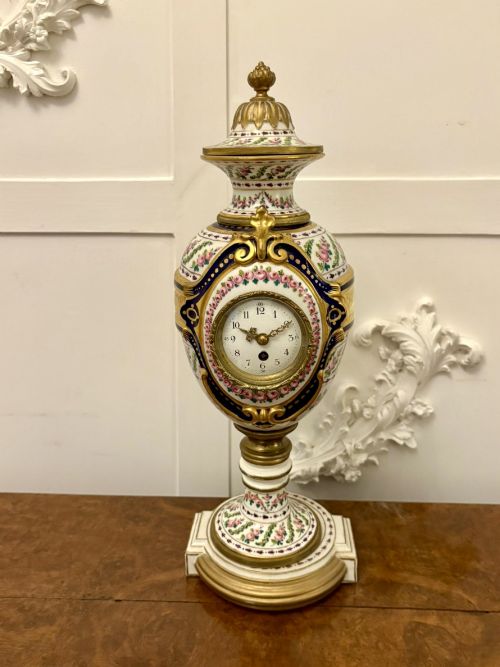
Many pieces combined porcelain with cast gilt bronze mounts or brass fittings to enhance structural presence and decorative appeal.
Some nineteenth-century decorators hid tiny painted beetles beneath the handles of their floral vases just to amuse sharp-eyed guests.
What Varies in Quality
The precision of the hand-painted brushwork and the crispness of the moulded relief define the artistic ambition of each piece.
The application of the gold leaf or gilding reveals the skill of the decorator, with finer examples showing burnished highlights and well-preserved metallic lustre.
The integration of secondary materials, such as bronze mounts fitted securely to the ceramic body, indicates the workshop's standards.
Flight Barr and Barr·Royal Worcester·Jacob Petit·Meissen·Samson of Paris·Derby Porcelain
The Gilt White Porcelain Urns Glossary
- Gilding
- The application of gold leaf or gold dust to the surface of porcelain or bronze mounts. This technique creates the metallic highlights seen on classical vessels.
- Medici Vase
- A bell-shaped garden urn form originating in antiquity, featuring a rounded body flaring outward toward a decorated rim. Potters reproduced this classical silhouette in porcelain during the Georgian and Victorian periods.
- Enamel
- Opaque glass paste fused to the ceramic body through firing, used to build raised coloured designs. Skilled artisans applied this material to add tactile depth to floral scenes.
- Potpourri
- A covered vessel pierced with small holes to allow scent to diffuse from dried herbs and petals inside. These lidded containers frequently used decorative porcelain bodies.
Gilt White Porcelain Urns: Frequently Asked Questions
What periods do these urns come from?
The listings span the late 18th century through the early 20th century, encompassing Georgian, Regency, and Victorian manufacturing periods.
Craftsmen from English, French, German, and Japanese potteries produced these decorative vessels across different eras.
How were these urns used historically?
These vessels served primarily as decorative garniture sets placed on mantelpieces, tables, or brackets in formal rooms.
Some specialised forms, such as potpourri jars and rose water sprinklers, held fragrant materials to scent the air in domestic interiors.
How do I distinguish French and English pieces?
English pieces from factories like Worcester and Derby often display understated neoclassical painting or Imari patterns inspired by oriental exports.
French makers like Jacob Petit and Old Paris workshops frequently utilised bolder rococo curves and heavier gilding combined with vivid colours.
Are these items strictly decorative?
Most examples were created for visual display rather than utility, serving as focal points within period interior schemes.
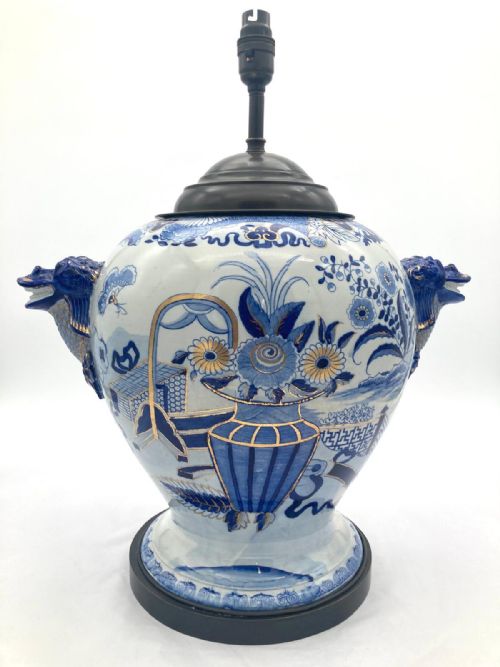
Certain pieces have been adapted over time into table lamps or fitted with clock movements while retaining their original ceramic urn bodies.