


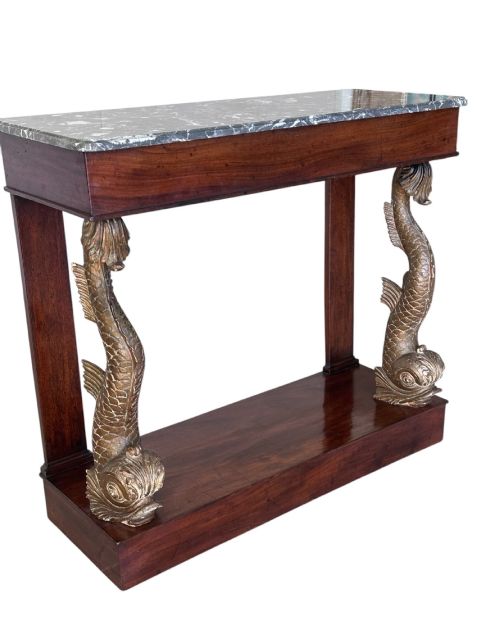
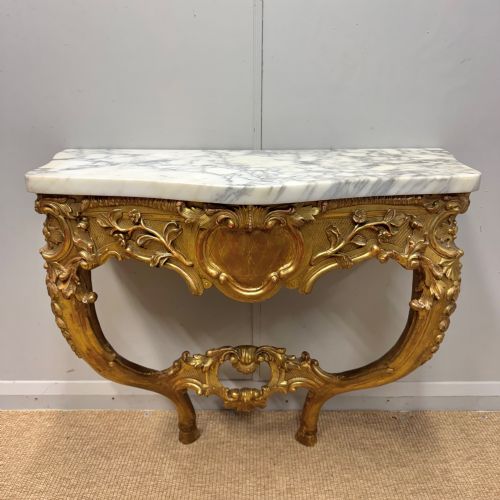
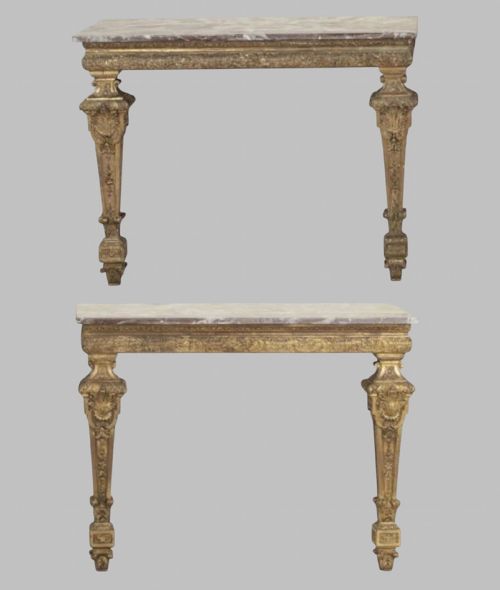
Gilt Wall Console
A gilt wall console brings architectural presence and reflective depth to a room through carved timber, gold leaf and fitted marble.
Gilt Wall Console
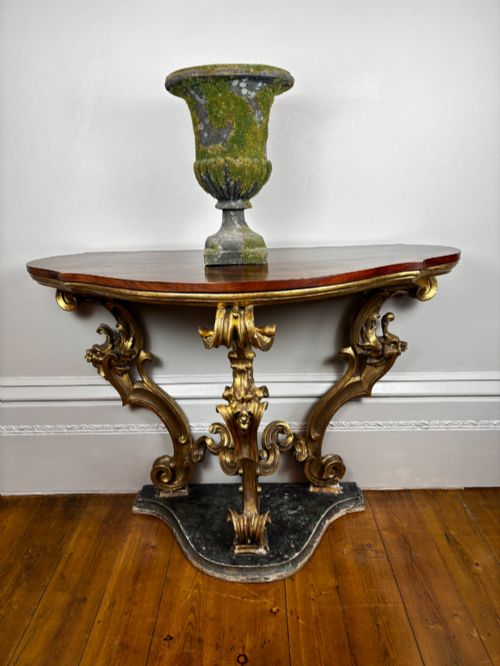
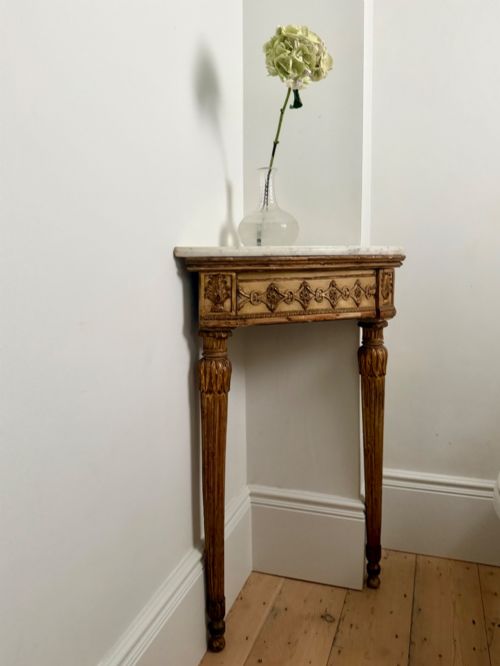
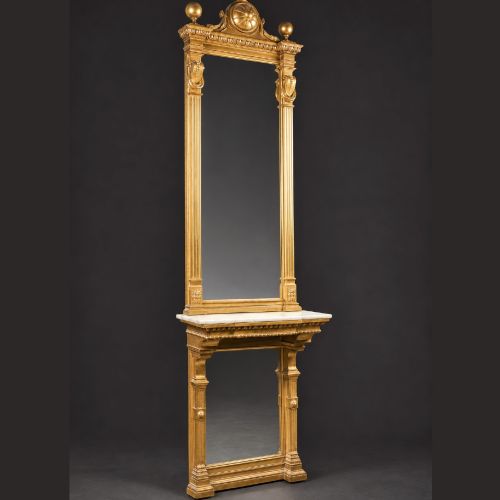
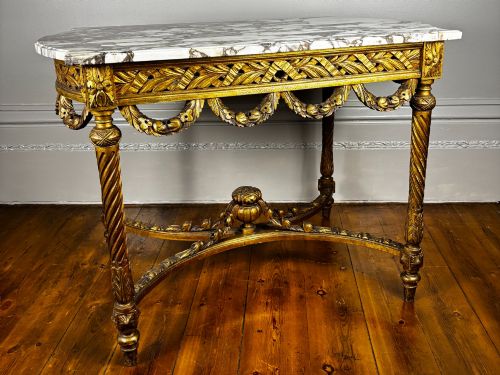
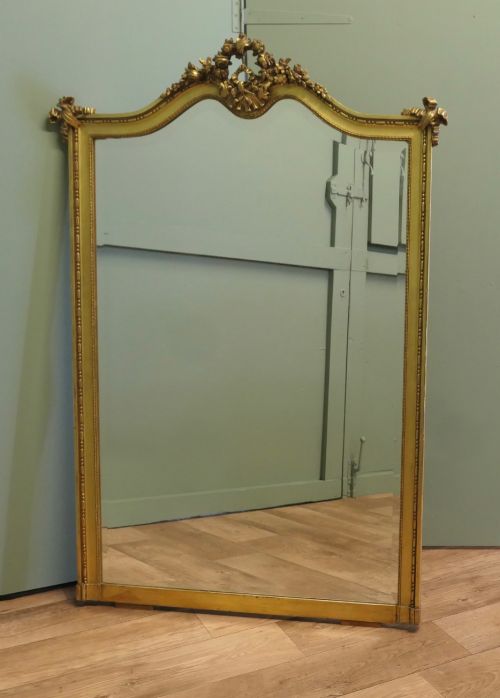
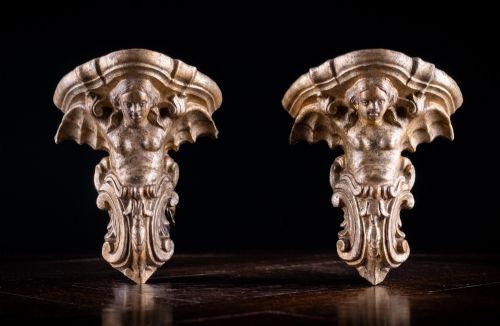
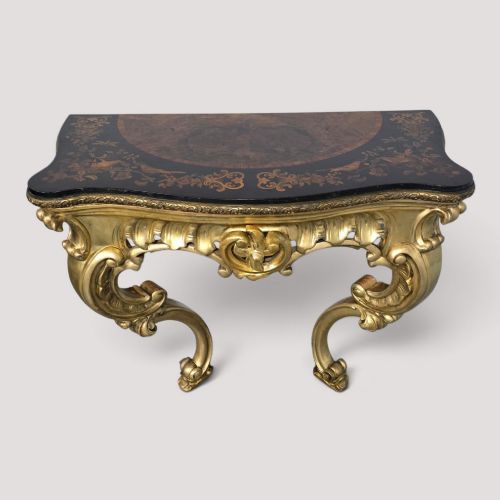
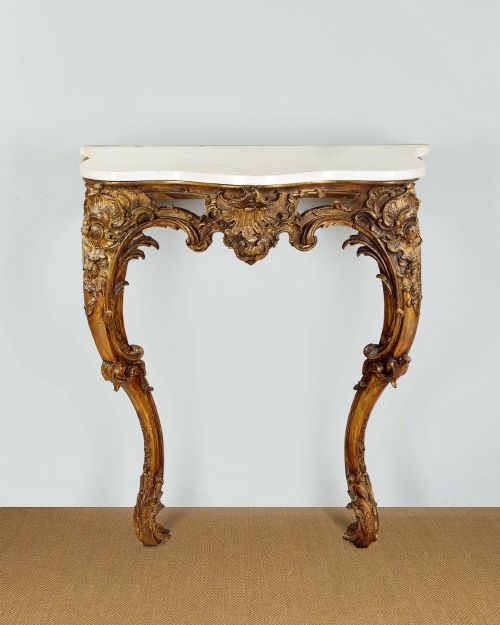
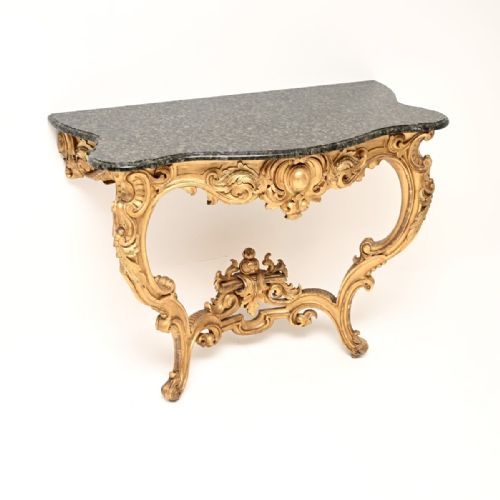
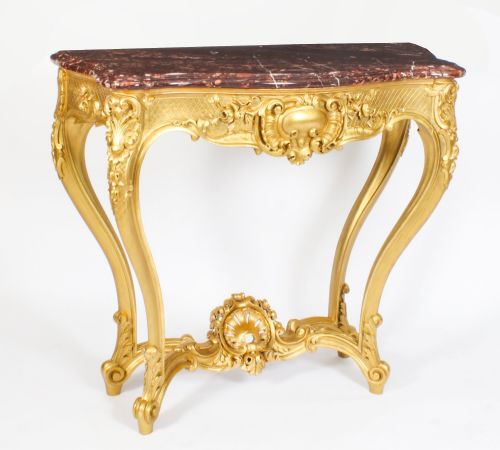
A gilt wall console is a decorative table or shelf designed to fix directly against a wall, frequently paired with matching pier mirrors. These pieces originate across the eighteenth and nineteenth centuries in French, Italian and English workshops, taking forms such as demi-lune tables, serpentine side tables and compact wall brackets.
The versions most commonly met on this page date from the nineteenth century, including Victorian interpretations and revival pieces alongside genuine eighteenth-century examples. They combine gilded woodwork with heavy stone surfaces, serving traditionally as formal display furniture in reception rooms and hallways.
How they were made
Carved wood provides the structural foundation for the gilt surface, shaped from timbers such as walnut, mahogany and painted softwood before receiving applications of gesso. Artisans then applied thin sheets of gold leaf or silver gilt over the prepared base, burnishing the metal to achieve a reflective finish.
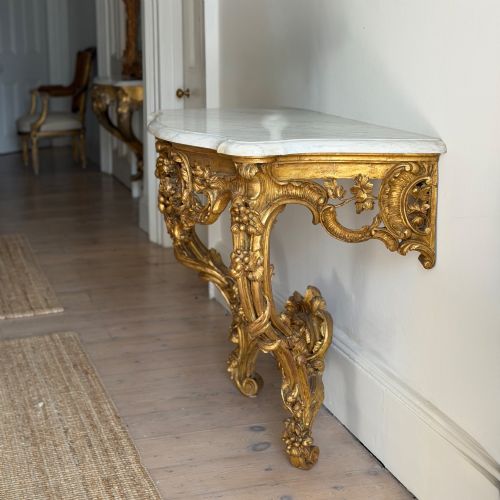
Fitted table tops utilise heavy stone varieties including marble and breccia, cut to follow the serpentine or demi-lune contours of the wooden frame. Wall brackets and smaller consoles often integrate carved terracotta or gilt bronze elements secured directly to the wall mountings.
Gilt Wall Console Retail Price Guide 2026
Typical asking prices for gilt wall console among the pieces listed under this phrase on Sellingantiques today, from the lower quarter to the upper quarter. They describe what is for sale here now, not the wider market.
Listings feature Italian and French origins spanning the eighteenth century through the 1920s, dominated by Neoclassical and Rococo revival styles.
What varies in quality
Quality rests upon the depth and precision of the wood carving, distinguishing brisk, mechanical tool marks from fluid, hand-chiselled acanthus leaves, scrolls and figurative elements. The calibre of the gilding further separates examples, where layered gold leaf applied over smooth gesso retains a warmer lustre than flat, modern metallic paints.
The selection and thickness of the marble top also dictate the tier of the piece, with figured stones like breccia shaped precisely to complex wooden profiles. Structural integrity in the wall fixings and the original retention of matching mirrors or brackets indicate higher workshop origins.
Felix-Alfred Ternisien·Nosotti
The Gilt Wall Console Glossary
- Giltwood
- Timber that has been coated with gold leaf or powder over a prepared gesso ground. This technique creates a rich, metallic surface typical of formal antique furniture.
- Gesso
- A plaster mixture applied to carved wood to create a smooth surface for gilding. It holds fine detail well before the application of gold leaf.
- Demi-lune
- Half-moon shape in furniture design, featuring a flat back for wall placement and a curved front. Many console tables and wall brackets utilise this silhouette.
- Pier glass
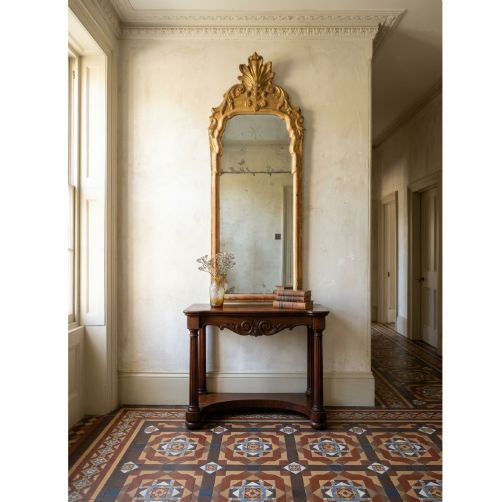
- A large vertical mirror designed to hang on the wall between windows, often paired directly with a console table placed below it.
- Breccia
- A type of marble composed of broken rock fragments embedded in a fine-grained matrix. It provides highly figured, multicoloured surfaces for antique table tops.
Gilt Wall Console: Frequently Asked Questions
What is a gilt wall console used for?
These pieces function primarily as decorative architectural tables designed to display ornaments, urns or clocks against a reception room or hallway wall. Their narrow depth allows them to occupy circulation spaces without blocking passage.
When paired with a matching pier mirror, they create a vertical focal point that reflects light and visually expands the proportions of the interior.
How do I fix a wall console safely?
Most antique wall consoles require direct attachment to structural wall studs or masonry using appropriate brackets to bear the combined weight of the wooden frame and the heavy marble top. Professional installation is recommended given the substantial weight of the stone components.
Many designs also rely partly on a floor-resting front leg or pedestal to help distribute the downward load.
How can I tell an eighteenth-century console apart from a nineteenth-century revival?
Eighteenth-century pieces display hand-cut joinery, older secondary timbers and hand-applied gesso layers that show minor shrinkage cracks and wear consistent with age. Revival pieces from the Victorian era often feature machine-sawn elements and brighter, more uniform gilding techniques.
Examining the underside and the reverse of the carved wooden frame usually reveals the tool marks and construction methods characteristic of a specific period.
How do I care for antique giltwood?
Giltwood requires gentle dusting with a soft, dry brush to prevent accumulation in the intricate carved recesses without disturbing the delicate gold leaf. Moisture and liquid polishes must be kept away from the surface to avoid lifting the underlying gesso.
Marble tops can be cleaned using a damp cloth and mild neutral soap, ensuring no liquids drip onto the vulnerable gilded wood below.