



Gilt Urn Desk Light
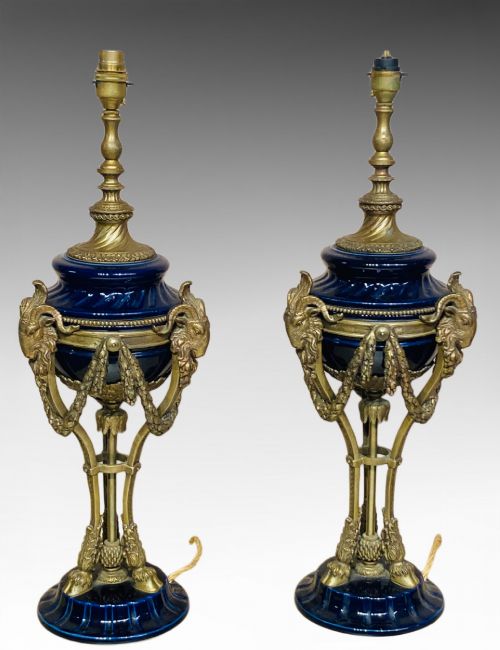
These gilt urn desk light pieces combine classical forms with illumination, offering a decorative metal or stone vessel base suited for a study.
Gilt Urn Desk Light
A gilt urn desk light takes the form of a classical vessel adapted for illumination, drawing upon historical shapes like amphorae and ewers. When you search for a gilt urn desk light, you encounter pieces originating primarily in the nineteenth century and the early decades of the twentieth century.
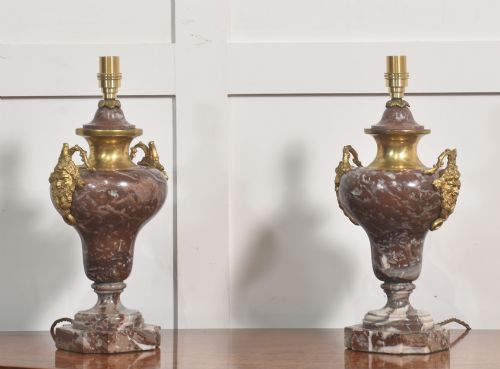
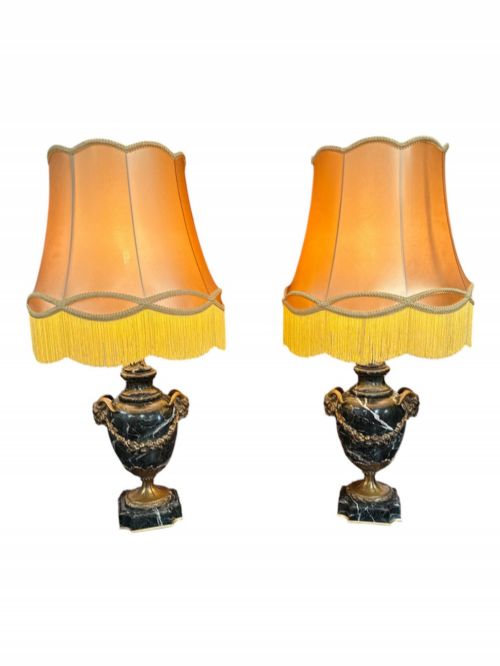
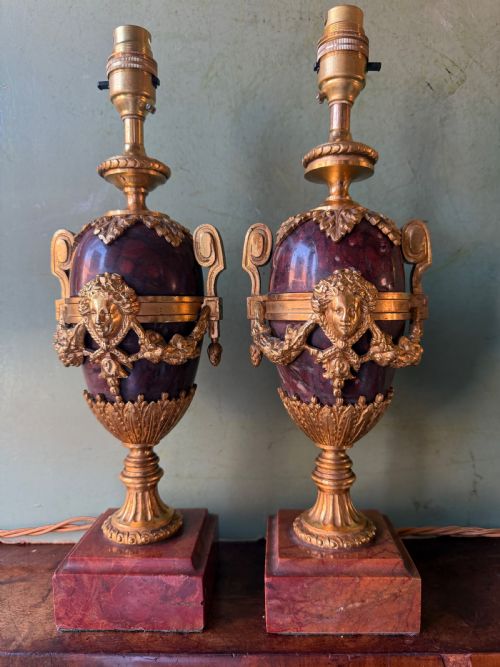
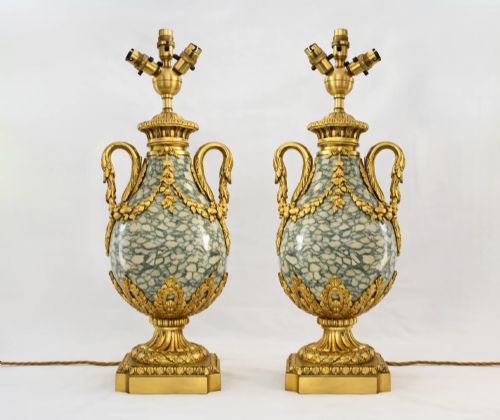
The prevailing examples on this page stem from French workshops working in Neoclassical, Empire, and Louis XVI styles. These pieces frequently employ urn-shaped bodies raised on square or circular plinths, combining sculptural metalwork with functional lighting.
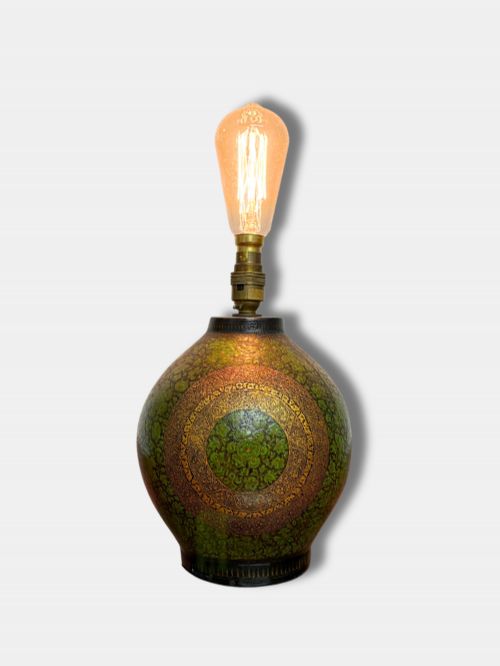
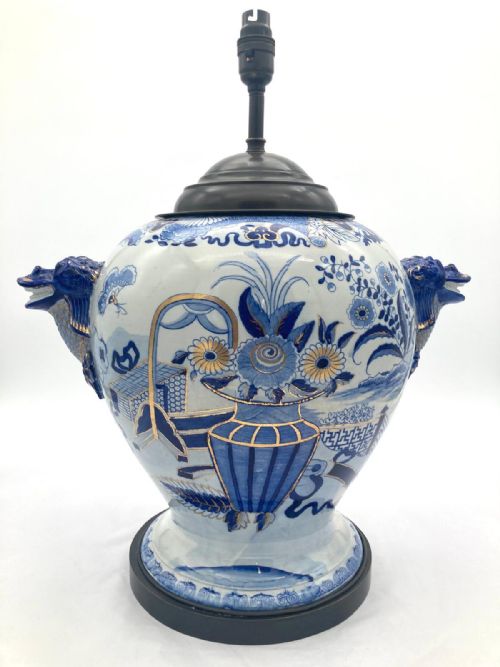
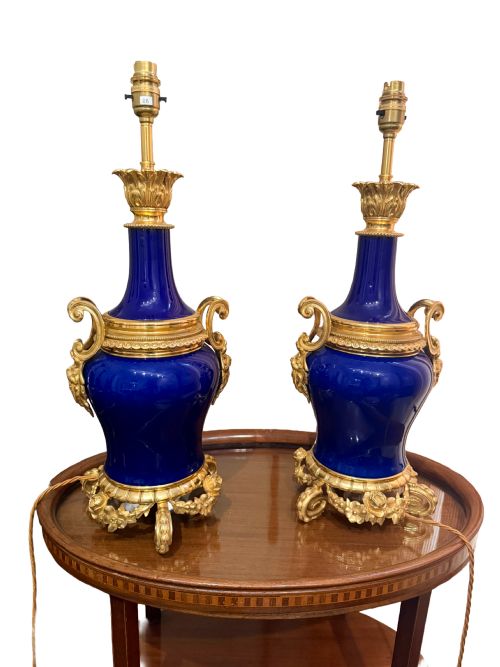
Makers and converters utilised diverse source objects, turning traditional porcelain vases, marble vessels, and bronze ewers into domestic lamps. Many of these items started life as decorative ornaments or cassolettes before receiving electrical fittings at a later date.
How They Were Made
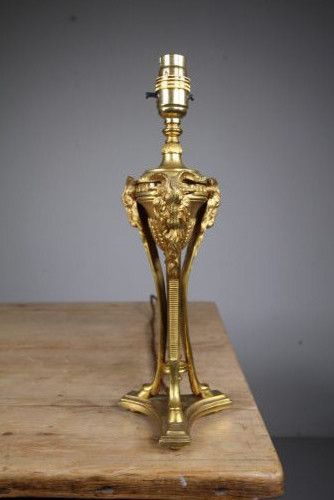
The construction of these lamps relies heavily on cast metals combined with natural stones, specifically ormolu, gilt bronze, brass, and gilt metal paired with rouge marble, white marble, Siena marble, or onyx. Artisans cast the metallic mounts using traditional foundry methods before applying fire gilding or chemical platings to achieve the characteristic golden surface.
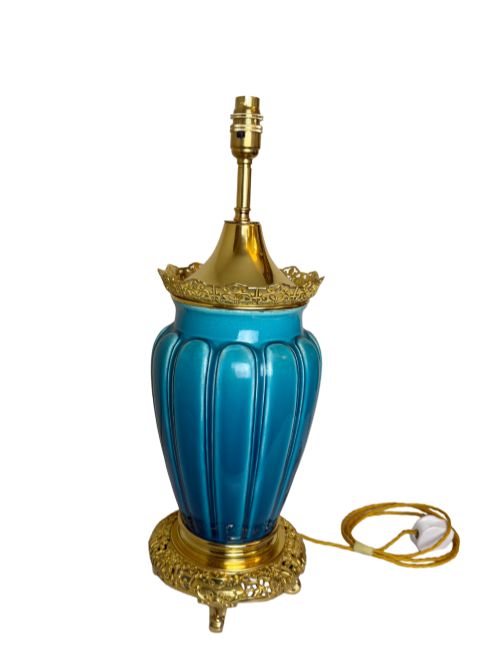
Ceramic components such as porcelain and ironstone bodies frequently form the central urn, decorated with hand-painted floral motifs or glazed in blue, turquoise, and white. These ceramic sections are secured with threaded metal rods running through the centre, flanked by cast handles, ram heads, or paw feet.
The selection includes repurposed Asian ceramics, featuring Japanese Satsuma earthenware and Chinese cloisonné mounted with European metal fittings.
What Varies in Quality
Material selection also separates standard production from exceptional work. Dense, flawless marble bases and hand-painted porcelain bodies with rich glaze depth command greater attention than simple spun brass or unadorned metal vessels.
The Gilt Urn Desk Light Glossary
- Ormolu
- Gilded bronze produced by applying a mercury and gold amalgam to a bronze object and heating it until the mercury vaporised. This historic technique leaves a durable, warm golden finish.
- Cassolette
- A decorative vessel shaped like an urn, designed with a reversible lid that functions either as a solid vase or an incense burner. Many period cassolettes were later adapted into table lamps.
- Neoclassical
- A design movement inspired by the art and architecture of classical antiquity, prevalent during the eighteenth and nineteenth centuries. It relies on symmetry, urn motifs, and restrained ornamentation.
- Ewer
- A large jug with a wide spout and a curved handle, traditionally used for pouring water. In lighting forms, the ewer body serves as the central vertical column.
- Rouge marble
- A deep red natural limestone with white or grey calcite veins, quarried extensively in France. It provides a heavy, colourful base for gilt metal mounts.
Gilt Urn Desk Light: Frequently Asked Questions
Are these lamps originally electrified?
Most of these pieces started as decorative vases, candlesticks, or oil lamps before receiving electrical wiring. Conversions happened at various stages in their history.
Buyers should expect modern wiring installed inside historical bodies, often retaining period switches and plugs where appropriate.
How do I identify French nineteenth-century lighting?
French pieces from this era typically display distinct casting characteristics, such as heavy bronze or brass mounts secured with threaded hardware. Look for stylistic cues rooted in the Louis XVI or Empire revivals.
Materials like rouge marble and finely chased ormolu further point towards nineteenth-century Parisian workshops.
Where should I place an urn lamp?
These lights suit prominent locations such as sideboards, entrance hall tables, and large desks where their sculptural presence stands out. Their height and reflective metal surfaces distribute light effectively in traditional rooms.
Pairing them with neutral fabric shades allows the decorative marble and gilt bronze base to remain the focal point.
What is the difference between ormolu and gilt brass?
Ormolu specifically denotes fire-gilded bronze, a method involving mercury that creates a deep, matte golden lustre characteristic of antique French manufacturing. Gilt brass uses a different base alloy and often employs modern plating techniques.
Closer inspection of the metal weight and the crispness of the surface chasing helps distinguish between the two materials.