
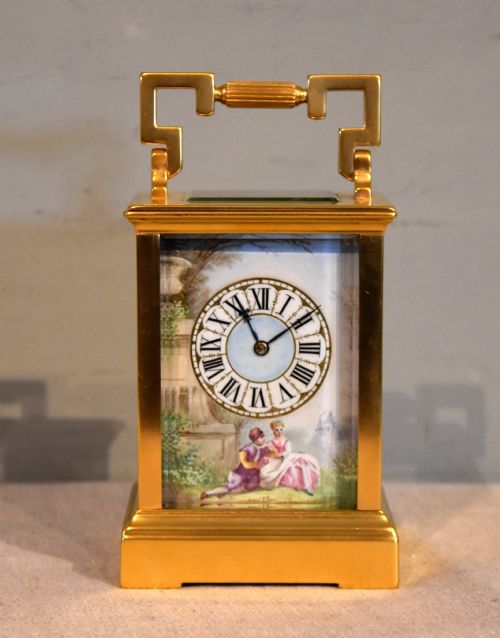
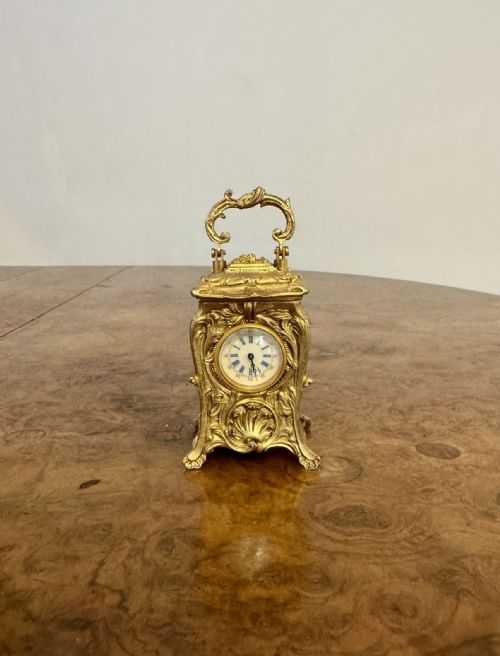


Gilt Travel Clock
A gilt travel clock is a portable timepiece designed for mobility, bringing mechanical precision and bright metallic elegance to journeys or domestic mantelpieces.
Gilt Travel Clock
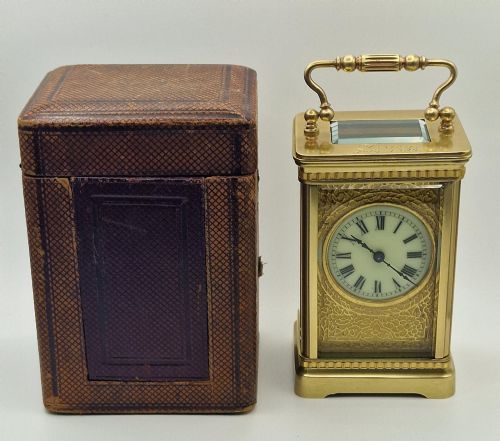
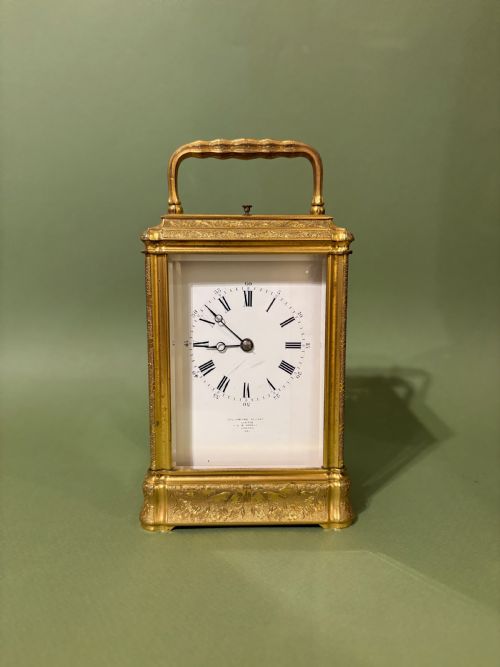
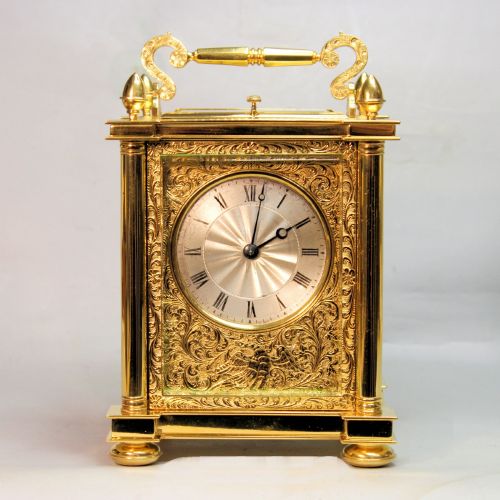
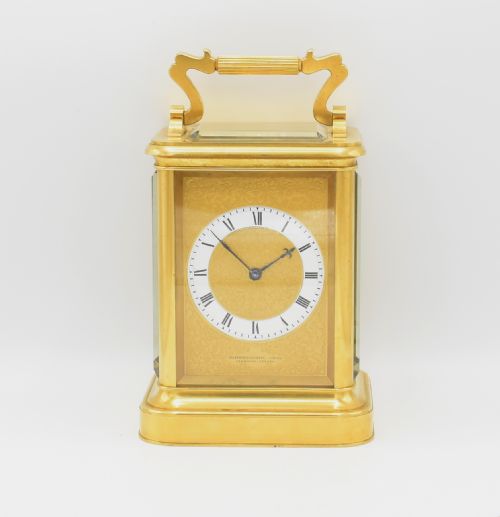
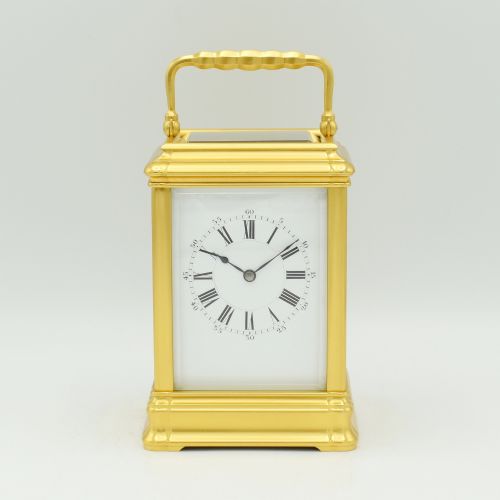
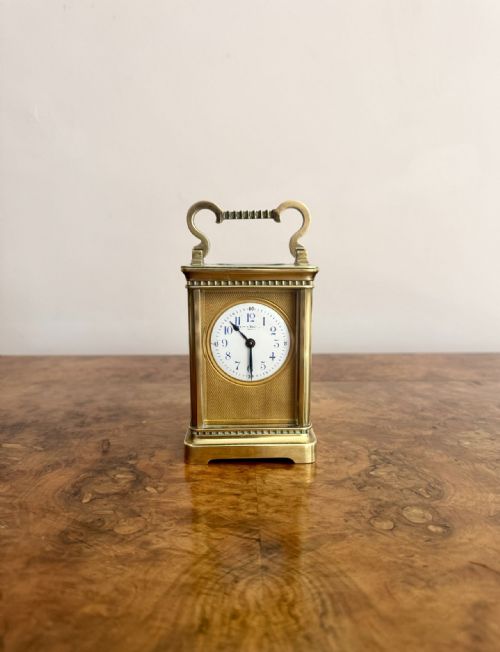
A gilt travel clock sits at the intersection of mechanical ingenuity and portable luxury, offering timekeeping housed in protective metallic cases. When exploring a gilt travel clock selection, you encounter predominantly nineteenth-century French and British examples, often styled as carriage clocks or folding travelling timepieces.
The objects span periods from the mid-nineteenth century through the Edwardian era, incorporating styles such as Victorian, French Empire, and Second Empire aesthetics. Miniature variants and full-sized striking models appear alongside pieces complete with original leather travel cases.
Originating largely from Parisian workshops and London retailers, these mechanisms were built for travellers who required accurate time away from stationary household clocks. Today, collectors seek them for their visible gear trains, decorative enamel dials, and polished gilt housings.
Assessing quality in manufacture
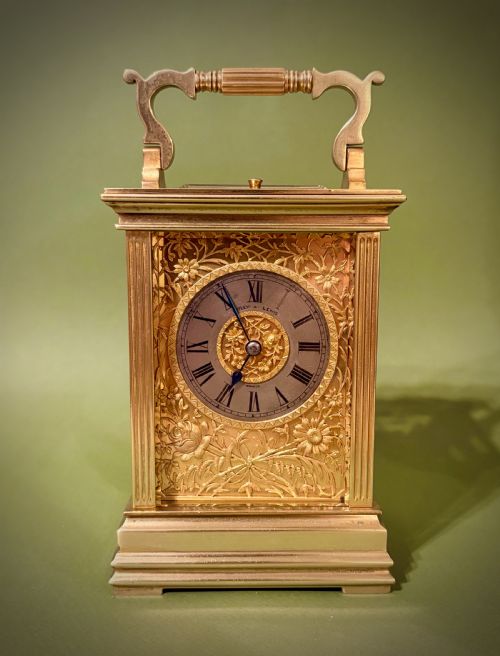
Superior examples distinguish themselves through the complexity of their movements, such as repeating mechanisms, grand sonnerie striking, or specialised platform escapements. The depth and crispness of hand engraving on the gilt brass case further separate standard production from exceptional masterwork.
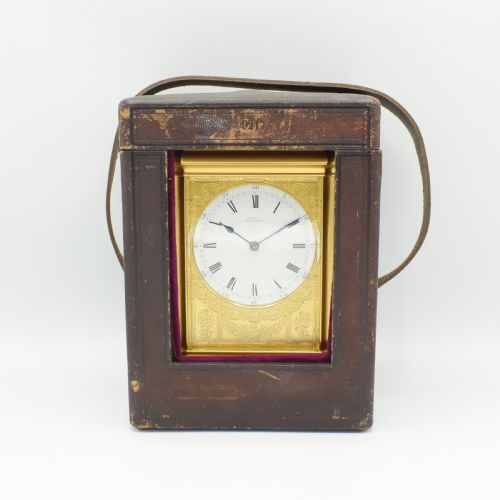
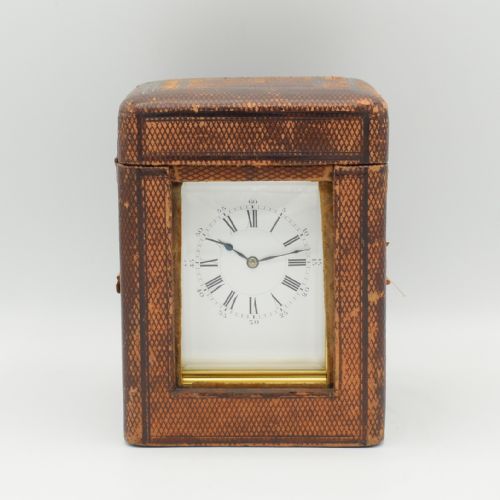
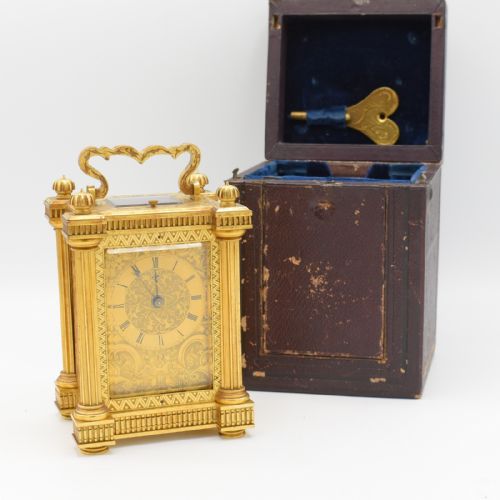
The retention of original components, including matching case keys and fitted leather travel cases, contributes significantly to the standing of a piece. Finer specimens also display superior gilding thickness and meticulously painted enamel dials without restoration compromise.
Several travel clocks retain their tiny winding keys nestled inside custom velvet slots within the original leather case.
Henri Jacot·Cousens And Whiteside·Goldsmiths Alliance Ltd·Howell And James·Mappin And Webb·Gontard And Bolviller·Paul Garnier
The Gilt Travel Clock Glossary
- Carriage clock
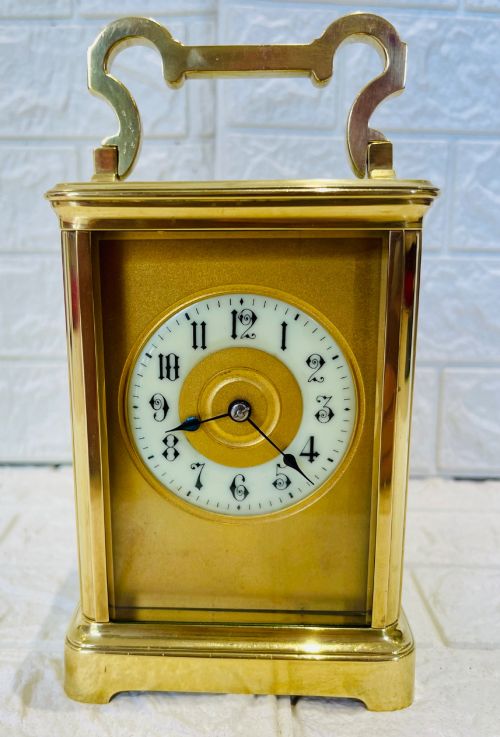
- A portable spring-driven timepiece designed for travel during the eighteenth and nineteenth centuries. These clocks typically feature a rectangular brass case with glass panels and a swing handle.
- Platform escapement
- A self-contained escapement unit mounted on a small platform within the clock movement. This innovation allowed portable clocks to maintain accuracy regardless of their orientation.
- Repeater
- A mechanism that strikes the hours and quarters upon demand when a lever or button is pressed. This complication was particularly useful for telling time in the dark during journeys.
- Ormolu
- Gilded bronze produced by applying a finely ground high-carat gold-mercury amalgam to a bronze object. The process creates a rich, durable golden surface finish characteristic of fine nineteenth-century metalwork.
- Guilloche enamel
- Decorative enamel applied over a metal surface that has been machined with an intricate geometric pattern. The underlying engraving shows through the translucent enamel to create a shimmering visual depth.
Gilt Travel Clock: Frequently Asked Questions
How do I wind a carriage clock?
Most models use a dedicated key to wind the spring barrels through apertures on the backplate or dial face. Care must be taken not to overwind the mainspring.
Clock keys should be turned smoothly until resistance is felt, engaging the internal click to hold the tension safely.
What is a pendulum d'officier?
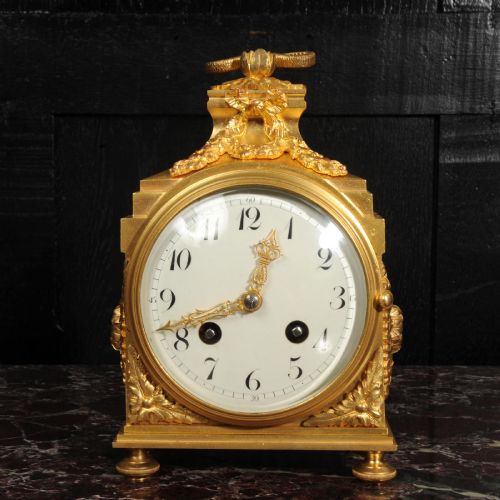
This term describes a specific French military or travel timepiece style from the nineteenth century. They often feature distinctive architectural cases and robust movements built for field use.
Officers required reliable portable timekeeping during campaigns, leading to robust construction combined with refined exterior gilding.
Why do some clocks repeat the time?
Repeating complications allowed owners to hear the hour and quarters chime in unlit rooms during travel. Pressing a button on the case activates hammers that strike internal gongs.
This intricate mechanical feature represents a high degree of watchmaking skill common in top-tier nineteenth-century workshops.
Are original travel cases important?
Original leather outer cases provide historical context and protect the gilt brass housing from knocks during transit. Surviving cases often feature velvet or silk linings moulded to the clock shape.
Finding a piece complete with its fitted case enhances the completeness and desirability of the item for collectors.