

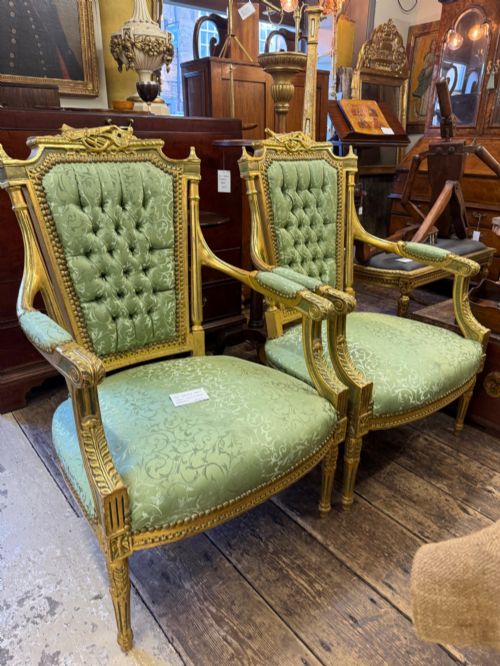
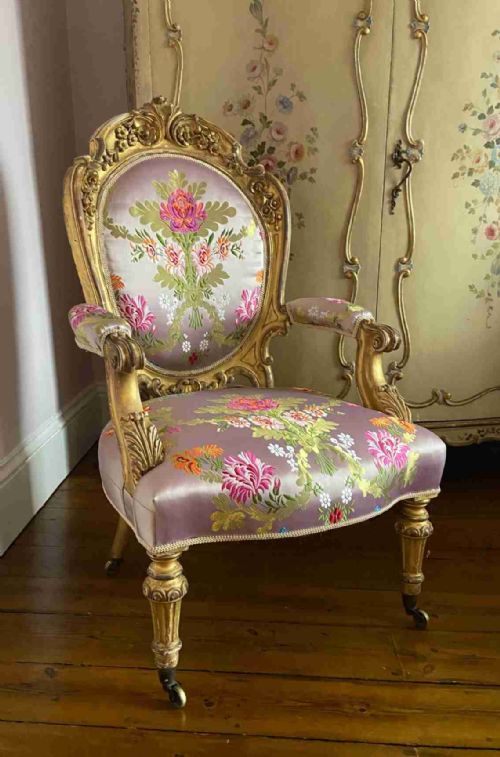
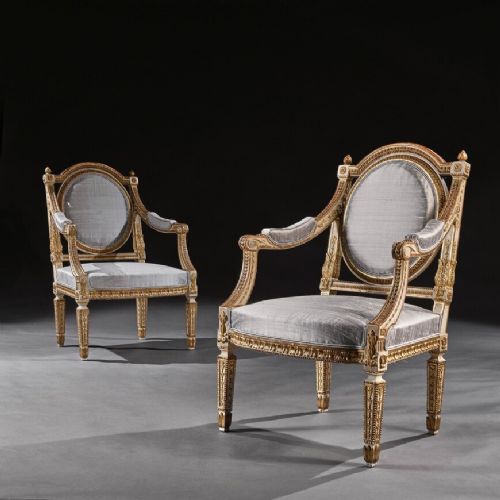
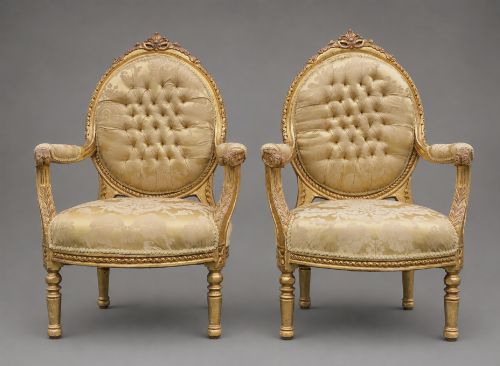

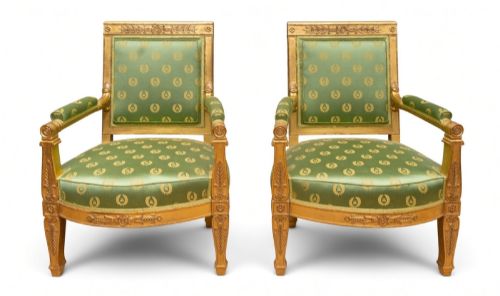
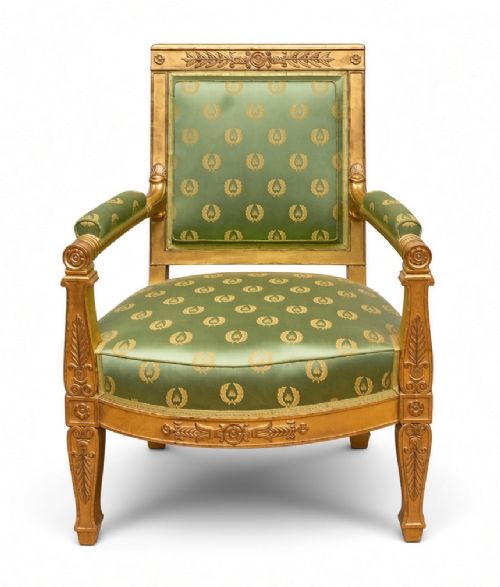
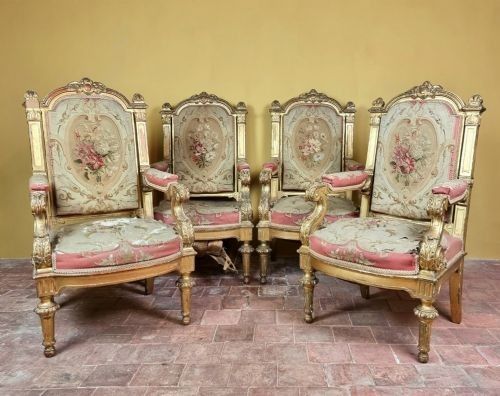
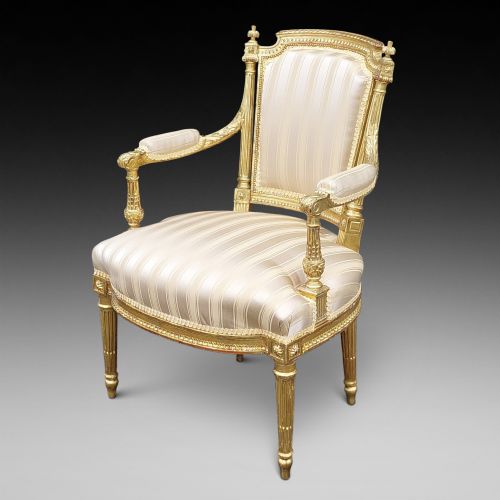
Gilt Salon Armchair
A gilt salon armchair brings structured French elegance and gilded wood into a formal reception space.
Gilt Salon Armchair
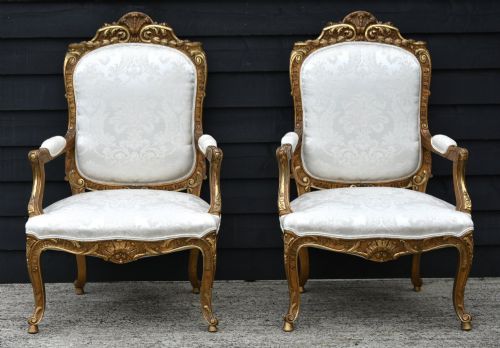
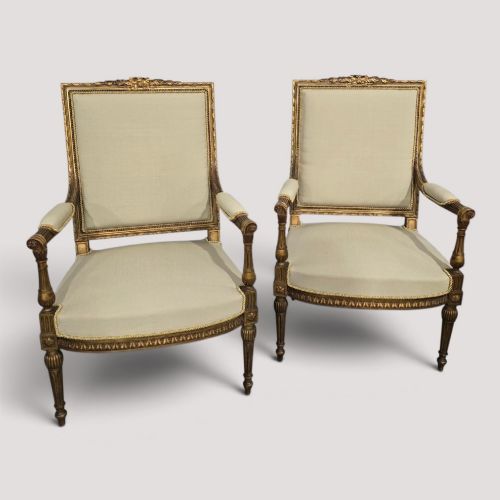
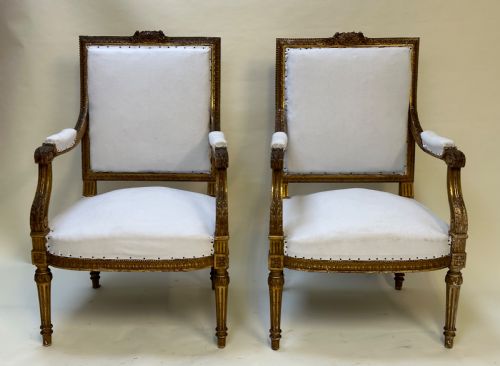
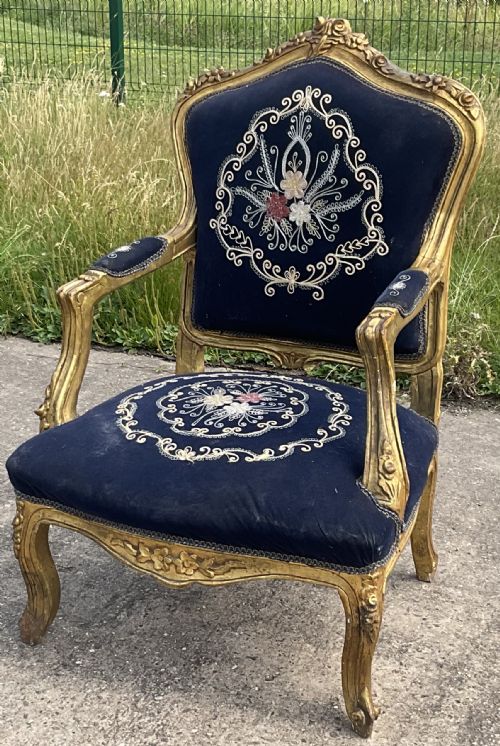
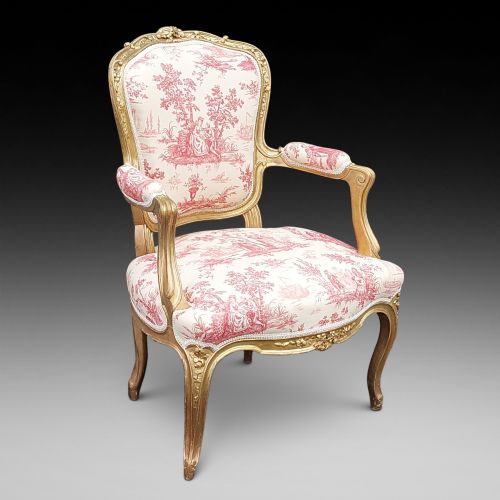
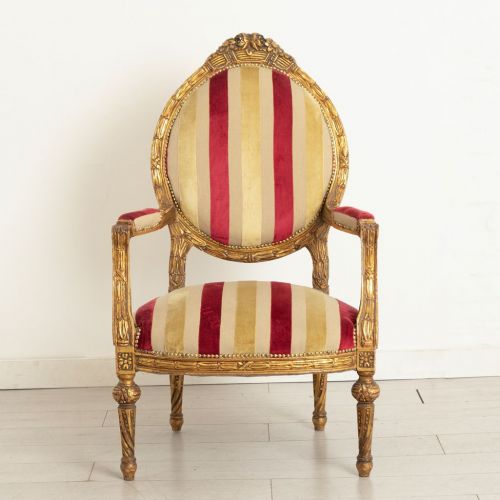
A gilt salon armchair is a formal seating piece designed for drawing rooms and reception spaces, typically following French decorative traditions. These chairs are most frequently encountered in variations of Louis XVI and Louis XV styles, dating predominantly from the nineteenth century.
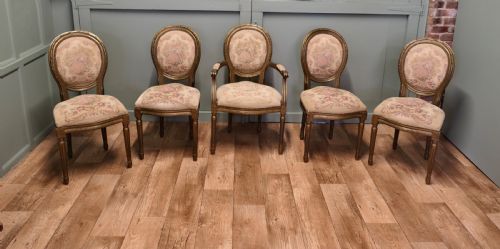
The selection ranges from single open-arm chairs to matched pairs and larger salon suites complete with settees. Makers drew heavily on historical revivals, producing carved wooden frames intended for display and comfortable entertaining.
Materials and Construction
Frames are constructed primarily from carved woods such as beech, walnut, and general hardwoods, providing a sturdy skeleton for intricate ornamentation. These wooden structures were then coated with fine layers of gold leaf or paint and parcel gilt to achieve a brilliant metallic finish.
Upholstery relies on traditional textile applications, utilising silk, velvet, tapestry, and fabric supported by internal webbing and stuffing. Brass tacks and detailed joinery secure the coverings to the carved giltwood chassis.
Gilt Salon Armchair Retail Price Guide 2026
Typical asking prices for gilt salon armchair among the pieces listed under this phrase on Sellingantiques today, from the lower quarter to the upper quarter. They describe what is for sale here now, not the wider market.
Listings feature 19th-century pieces alongside 18th-century examples, using giltwood, beech, silk, and velvet.
Evaluating Quality
Quality separates through the depth and crispness of the hand-carved wooden ornamentation upon the frame. Superior examples display refined proportions and clean detailing rather than heavy or blunt mouldings.
The application of the gilt surface and the integrity of the underlying joinery distinguish standard production from exceptional pieces. Original upholstery treatments and documented workshops further elevate the standing of individual chairs.
Jacob-Desmalter·Blaise Maucuy·Holland and Sons
The Gilt Salon Armchair Glossary
- Giltwood
- Wood that has been treated with gold leaf or a gold-coloured finish across its carved surfaces. This technique creates the bright metallic appearance characteristic of formal antique seating.
- Fauteuil
- An open-arm armchair featuring upholstered back and armrests with exposed wooden framing. It originated in France and remains a staple of formal salon seating.
- Bergère
- An enclosed armchair with upholstered sides and a built-in upholstered back. It often incorporates a loose seat cushion for added comfort.
- Parcel Gilt
- A decorating technique where only specific portions of a painted or natural wood object are highlighted with gold leaf. This creates a subtle contrast between the gilded details and the base colour.
- Rococo Revival
- A nineteenth-century design movement that re-interpreted the asymmetrical curves and organic motifs of the eighteenth-century French Rococo period.
Gilt Salon Armchair: Frequently Asked Questions
Where were gilt salon armchairs originally used?
These chairs were created for the principal reception rooms and parlours of grand houses and chateaux. They served as both functional seating and visual markers of status during formal gatherings.
Placed around the perimeter of a salon, they remained easily movable to facilitate conversation among guests.
How do I distinguish Louis XVI style from Louis XV?
Louis XVI pieces are defined by straight lines, symmetry, and neo-classical motifs like fluted columns and rectangular backs. The framing appears more geometric and restrained compared to earlier periods.
Louis XV pieces, by contrast, embrace asymmetrical curves, cabriole legs, and flowing organic scrollwork without rigid straight edges.
Can I use antique gilt armchairs daily?
While structurally robust, these chairs were designed for lighter formal use rather than heavy modern lounging. Sitting in them safely depends on the strength of the historic joinery and the condition of the internal webbing.
Many owners place them in low-traffic settings or use them as accent seating to preserve their delicate frames and textiles.