
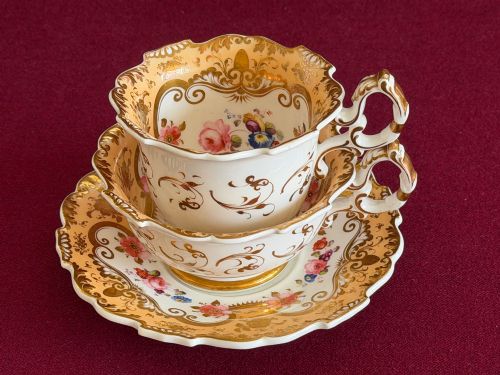
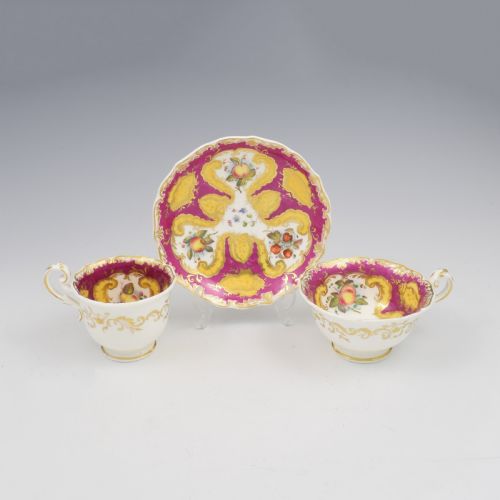


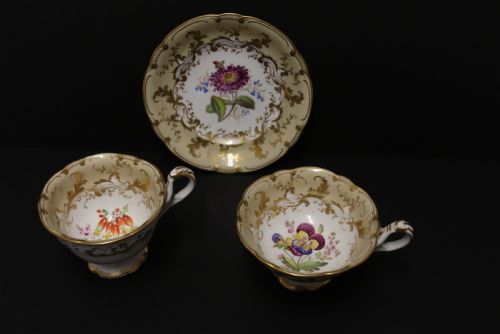

Gilt Porcelain Teacup Trio
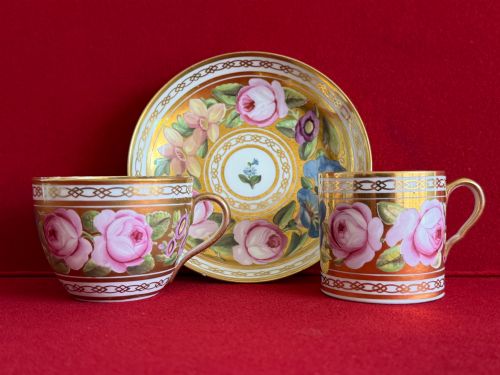
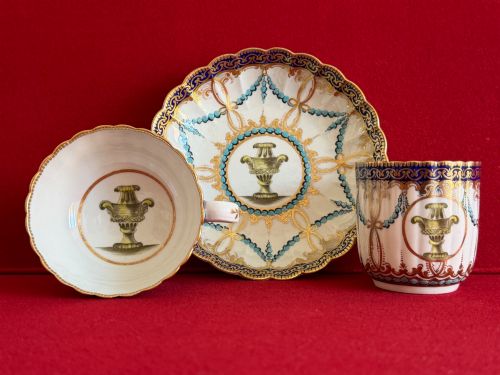
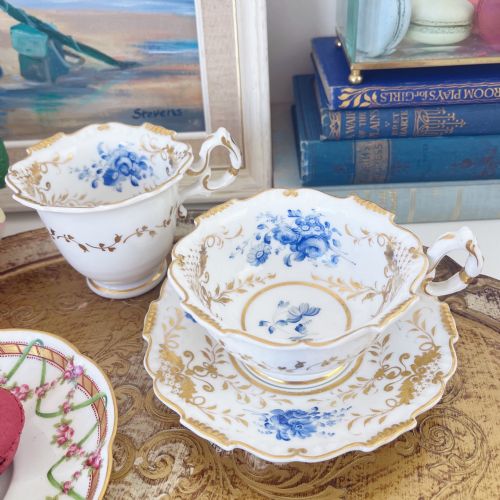
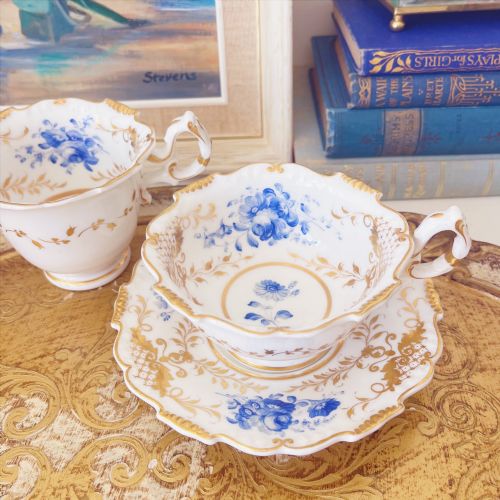
A gilt porcelain teacup trio brings together a cup, coffee cup and saucer united by precious metallic leaf and handpainted detail.
Gilt Porcelain Teacup Trio
A gilt porcelain teacup trio comprises matching ceramic pieces designed for both tea and coffee service at the table. These sets typically include a teacup, a coffee cup and a matching saucer, often produced by prominent English factories.
Most examples found in these listings span the Regency and Victorian periods, with pieces dating from the eighteenth century through to the Edwardian era. Makers such as H and R Daniel, Coalport, Derby, Davenport, Spode and Royal Worcester dominate the selection.
Forms range from the specific Shrewsbury shape to cabinet trios and blush ivory tea sets. The inclusion of gold leaf and handpainted enamel decoration defines the category across all recorded eras.
How they were made
Potters shaped these vessels from fine porcelain or bone china before applying a smooth porcelain glaze. Artisans then handpainted delicate patterns onto the fired surface.
Gilding involved the meticulous application of gold leaf or gold gilding by hand around rims, handles and central motifs. Subsequent firing fixed the metallic lustre and enamel colours permanently to the ceramic body.
Early nineteenth-century drinkers apparently needed two distinct cups at breakfast just to keep their tea and coffee appropriately separated.
What varies in quality
The refinement of the ceramic body and the precision of the handpainted brushwork determine the distinction between standard production and superior craftsmanship. Factory execution ranges from simple factory output to detailed cabinet pieces.
The richness and preservation of the gold leaf application also dictate the standing of a set. Well-executed gilding with minimal wear retains its brilliance more effectively than utilitarian examples.
H and R Daniel·Coalport·Derby·Davenport·Spode·Royal Worcester
The Gilt Porcelain Teacup Trio Glossary
- Trio
- A matched set consisting of a teacup, a coffee cup and a saucer. This grouping reflects the nineteenth-century fashion for serving both hot beverages from a single matched service.
- Gilding
- The application of gold leaf or powdered gold to ceramic surfaces. This decorative technique adds metallic lustre to rims, handles and painted scenes.
- Bone China
- A type of porcelain incorporating bone ash. It produces a strong, translucent ceramic body favoured by English makers.
- Enamel
- Opaque vitreous material fused to pottery by firing. It provides the vibrant colours seen in handpainted floral and landscape motifs.
Gilt Porcelain Teacup Trio: Frequently Asked Questions
What is a teacup trio?
A teacup trio is a matching set comprising a teacup, a coffee cup and a saucer. The addition of the second cup allowed drinkers to take both tea and coffee from a single coordinated service.
Such sets became popular during the Georgian and Regency periods. They demonstrate the specialised nature of nineteenth-century table settings.
How do I date a gilt porcelain trio?
Dating relies on factory marks, ceramic bodies, painting styles and recorded shapes. Regency examples often feature distinct handle designs and vibrant handpainted enamels.
Later Victorian and Edwardian pieces show shifts in colour palettes and paste composition. Comparing known factory patterns helps narrow the timeline.
Are these trios safe to use?
Most antique gilt porcelain trios are intended for display or light collection rather than daily dining. The delicate handpainted enamels and gold leaf can wear down with frequent washing.
Handwashing in lukewarm water without harsh detergents preserves the surface. Modern dishwashers and microwaves will damage the historic gilding.
Why are there two cups in a trio?
The inclusion of both a teacup and a coffee cup reflects historical dining habits. Tea and coffee were served concurrently or consecutively from matching table services.
Guests selected the cup suited to their beverage while using the shared saucer. This convention persisted through the Regency and early Victorian eras.